
Christopher Lee Simmons
Homicide Jack Kevorkian
Homicide · USA · 1990
Jack Kevorkian (born May 26, 1928) was a controversial American pathologist. He…
130 victims
Jack Kevorkian
Homicide · USA · 1990
Jack Kevorkian (born May 26, 1928) was a controversial American pathologist. He…
130 victims
 David Koresh
Homicide · USA · 1993
David Koresh (born Vernon Wayne Howell; August 17, 1959 – April 19, 1993) led t…
79 victims
David Koresh
Homicide · USA · 1993
David Koresh (born Vernon Wayne Howell; August 17, 1959 – April 19, 1993) led t…
79 victims
 Todd Hall
Homicide · USA · 1996
Todd Hall was described by neighbors as "mentally slow" and was said to have su…
9 victims
Todd Hall
Homicide · USA · 1996
Todd Hall was described by neighbors as "mentally slow" and was said to have su…
9 victims
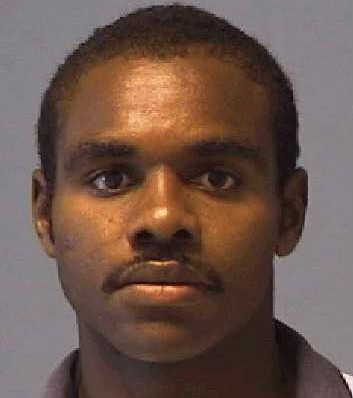 Clinton Bankston
Homicide · USA · 1987
15 August 1987 — Ann Morris (63), her sister Sally Nicholson (59), and Sally’s…
5 victims
Clinton Bankston
Homicide · USA · 1987
15 August 1987 — Ann Morris (63), her sister Sally Nicholson (59), and Sally’s…
5 victims
 Joshua Jenkins
Homicide · USA · 1996
Joshua Jenkins was a 15-year-old American killer who killed five members of his…
5 victims
Joshua Jenkins
Homicide · USA · 1996
Joshua Jenkins was a 15-year-old American killer who killed five members of his…
5 victims
 Mitsuhiro Kobayashi
Mass murderer · Japan · 2001
Mitsuhiro Kobayashi was a former taxi driver. During the trial, he admitted set…
5 victims
Mitsuhiro Kobayashi
Mass murderer · Japan · 2001
Mitsuhiro Kobayashi was a former taxi driver. During the trial, he admitted set…
5 victims
 Violette Nozière
Murderer · France · 1933
Violette Nozière was convicted of parricide in 1934 for poisoning her parents i…
1 victim
Violette Nozière
Murderer · France · 1933
Violette Nozière was convicted of parricide in 1934 for poisoning her parents i…
1 victim
 Don William Davis
Murderer · USA · 1990
Don William Davis was sentenced to death on March 6, 1992. Trial counsel for Do…
1 victim
Don William Davis
Murderer · USA · 1990
Don William Davis was sentenced to death on March 6, 1992. Trial counsel for Do…
1 victim
 Bert Leroy Hunter
Murderer · USA · 1968
Bert Leroy Hunter Bert Hunter, acting with accomplice Tomas Ervin, forced their…
3 victims
Bert Leroy Hunter
Murderer · USA · 1968
Bert Leroy Hunter Bert Hunter, acting with accomplice Tomas Ervin, forced their…
3 victims
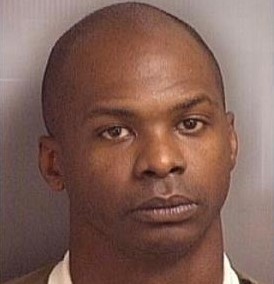 Donald Younge
Murderer · USA · 1999
Donald Eugene Younge was an inmate at Utah State Prison. He was originally from…
4 victims
Donald Younge
Murderer · USA · 1999
Donald Eugene Younge was an inmate at Utah State Prison. He was originally from…
4 victims
- Gender
- male
- Country
- USA
- Location
- Cape Girardeau County, Missouri, USA
- Date of birth
- April 26, 1976
- Age at first offence
- 17
- Characteristics
- juvenile (17), mentally ill, drug addict, abuse, torture
- Victim profile
- Shirley Crook, 46
- Method of murder
- Drowning ( threw her off a bridge)
- Date(s) of murder
- September 9, 1993
- Years active
- 1993
- Date of arrest
- Next day
- Status
-
Life imprisonment
Sentenced to death in 1994; Missouri Supreme Court resentenced Christopher Lee Simmons to life without parole on August 26, 2003
Case record: Christopher Lee Simmons
Christopher Lee Simmons was 17 years old at the time of his arrest for the September 9, 1993 murder of Shirley Crook.
Timeline
- September 9, 1993 — Christopher Simmons discussed with his friends Charlie Benjamin (age 15) and John Tessmer (age 16) the possibility of committing a burglary and murdering someone.
- September 8, 1993 — Simmons arranged to meet Benjamin and Tessmer at around 2:00 a.m. for the purpose of carrying out the plan.
- September 10, 1993 — Simmons was arrested the next day at his high school.
- 1993 — Simmons abducted Shirley Crook; he drove her to a railroad trestle spanning the Meramec River and pushed her off into the river.
- 1994 — A Cape Girardeau County jury found Simmons guilty of 1st-degree murder and recommended the death sentence; the trial court imposed a death sentence.
- April 24, 2002 — The Missouri Supreme Court postponed execution of juvenile offender.
- May 27, 2002 — Murderous adolescents, Napoleon and Chris, awaited their turn to die.
- May 28, 2002 — The Missouri Supreme Court stayed Simmons’ execution.
- November 26, 2002 — The Missouri Supreme Court issued an order granting a writ of habeas corpus in Simmons’ case; Missouri was to respond in 15 days, Simmons in 30 days, Missouri in 20 days, and Simmons in 10 days.
- March 5, 2003 — The Missouri Supreme Court heard oral arguments on Simmons’ case.
- August 26, 2003 — The Missouri Supreme Court vacated Simmons’ death sentence and resentenced him to life without parole.
- October 13, 2004 — The U.S. Supreme Court heard oral arguments.
- January 26, 2004 — The U.S. Supreme Court granted certiorari in Simmons’ case.
- March 1, 2005 — The U.S. Supreme Court ruled in favor of Simmons, holding that it was unconstitutional to impose capital punishment for crimes committed while under the age of 18.
The offence
Simmons had discussed a plan to commit burglary and murder by breaking and entering, tying up a victim, and tossing the victim off a bridge. The three met in the middle of the night; Tessmer then dropped out of the plot. Simmons and Benjamin broke into Mrs. Crook’s home, bound her hands and covered her eyes, drove her to a state park, and threw her off a bridge spanning the Meramec River.
At the time she fell, Mrs. Crook was alive and conscious.
The medical examiner determined that the cause of her death was drowning. Her body was found in the Meramec River in St. Louis County. Her body was later found downriver by two fishermen on the afternoon of the attack.
Before the crime, Simmons had no previous criminal record.
Investigation and evidence
Simmons confessed to the murder.
He performed a videotaped reenactment at the crime scene.
There was testimony from Tessmer against Simmons showing premeditation, including that Tessmer discussed the plot in advance and later bragged about the crime.
Arrest
Simmons was arrested on September 10, at his high school.
Trial
The jury sentenced Simmons.
The jury that sentenced Simmons was never adequately informed of Simmons’ social history or the possible efforts on his behavior, including his abusive childhood, possible mental condition, and drug dependency.
The only testimony presented portrayed Simmons as a good brother, a loving son, and a compassionate person who provided support to his friends and family.
Defense attorneys failed to elicit critical information from the few witnesses called to testify, including the effects of Simmons’ childhood abuse on his development and behavior, his drug abuse history, his mental functioning, and his potential mental illness.
The evidence was described as minimal, and at least one member of the jury, James V. Biundo, a professor at Southeast Missouri State University, was left wondering how it was possible that Simmons, a loving brother and good neighbor, could have participated in the crime.
The jury recommended a death sentence in 1994, and the trial court imposed it.
In statements attributed to the Jefferson County prosecutor at trial, it was said: “Seventeen years old,” and “Doesn’t that scare you? Mitigating? Quite the contrary, I submit.”
Sentencing
Simmons first moved for the trial court to set aside the conviction and sentence, citing, in part, ineffective assistance of counsel.
His age, and thus impulsiveness, along with a troubled background were brought up as issues Simmons claimed should have been raised at the sentencing phase. The trial court rejected the motion.
A Cape Girardeau County jury in 1994 found Simmons guilty of 1st-degree murder and recommended the death sentence. The trial court imposed a death sentence.
The death sentence was imposed in 1994.
Appeals
After exhausting his regular avenues of appeal in state and federal courts, Simmons was scheduled for execution in June 2002.
He sought a writ of habeas corpus, and the court granted it.
Missouri Supreme Court resentencing
On August 26, 2003, the Missouri Supreme Court vacated Simmons’ death sentence.
The decision was issued in a 4-3 split and was written by Judge Laura Denvir Stith. The Missouri Supreme Court set aside Simmons’ death sentence and resentenced him to life imprisonment without eligibility for probation, parole or release except by act of the governor.
Judge Wolff concurred in the majority opinion and wrote a separate concurring opinion. Judge Price dissented. In dissent, Judge Price wrote that the 4-3 ruling was “directly in conflict” with U.S. Supreme Court precedent, and that “It is the United States Supreme Court's prerogative, and its alone, to overrule one of its decisions.”
The majority found that the execution of persons for crimes committed when they were under 18 violated “the evolving standards of decency that mark the progress of a maturing society” and was prohibited by the Eighth Amendment.
U.S. Supreme Court consideration (Roper v. Simmons)
The Missouri Supreme Court resentencing meant that the case proceeded to further review. The State of Missouri appealed the decision to the U.S. Supreme Court.
The U.S. Supreme Court granted certiorari on January 26, 2004, and oral arguments were heard on October 13, 2004.
In Roper v. Simmons, the U.S. Supreme Court held that it was unconstitutional to impose capital punishment for crimes committed while under the age of 18.
The case was decided on March 1, 2005, by a vote of 5-4.
Majority rationale
The Court used an “evolving standards of decency” test and held it was cruel and unusual punishment to execute a person who was under the age of 18 at the time of the murder.
Justice Kennedy wrote the majority opinion and cited research finding that juveniles have a lack of maturity and a lack of sense of responsibility compared to adults.
The Court noted that juveniles are overrepresented statistically in categories of reckless behavior.
The Court noted that almost every state prohibited those under age 18 from voting, serving on juries, or marrying without parental consent.
It also noted that juveniles are more vulnerable to negative influences and outside pressures, including peer pressure, and have less control over their environment. It further noted that juveniles have less freedom that adults have in escaping a criminogenic setting.
The Court looked to international law and referenced that only the U.S. and Somalia had not ratified Article 37 of the United Nations Convention on the Rights of the Child (September 2, 1990), which expressly prohibits capital punishment for crimes committed by juveniles.
Dissenting opinions
Justice Scalia wrote a dissent joined by Chief Justice Rehnquist and Justice Thomas.
Justice O’Connor also wrote a dissenting opinion.
Justice Scalia challenged whether a “national consensus” had formed and argued that the relevant question was whether execution of juveniles was considered cruel and unusual at the point at which the Bill of Rights was ratified.
The dissent stated that the Court accused the majority of “invok[ing] alien law when it agrees with one's own thinking, and ignor[ing] it otherwise,” and that it used foreign law guidance inconsistently.
A quoted exchange included:
- Justice Scalia said: “what is the criterion for whether or not to adopt foreign precedent? That it agrees with you?”
Justice Scalia also cited the Federalist Papers to argue that the role of the judiciary was to interpret the law as formulated in democratically selected legislatures, not to revise the Constitution in practice.
At a roundtable discussion with Justice Breyer, Justice Scalia posed the question: “what is the criterion for whether or not to adopt foreign precedent? That it agrees with you?”
Other details
Simmons was also described as suffering from schizotypal personality disorder, described as marked by acute discomfort and a reduced capacity for close relationships and cognitive and perceptual distortions. Dr. Smith testified to a conclusion that Simmons had low self-esteem, lack of self-confidence, and distorted views about his relationships, and that he felt insecure, alone, depressed and hopeless.
Simmons’ stepfather, Bob Hayes, an alcoholic, was described as abusive physically and mentally during Simmons’ childhood. It was said that Hayes would scream at Simmons, intimidate him, and beat him severely.
One incident attributed to Bob Hayes described that Hayes tied Simmons, a toddler at the time, to a tree so that he would not have to supervise him while fishing. This example was reported by Bob Hayes himself in an interview with Dr. Robert Smith, a clinical psychologist who evaluated Christopher Simmons after the sentence of death.
Christopher Simmons’ friend, Christie Brooks, testified that she saw the stepfather hit Simmons so hard in the ear that blood trickled down his neck, and that it was later discovered his eardrum had burst.
Christie Brooks also asserted she witnessed Simmons’ embarrassment, crying, and sobbing as a result of the abuse.
Simmons’ mother, Cheryl Hayes, was described as too intimidated by her husband to intervene. In an interview with Dr. Smith after Simmons’ trial, Cheryl Hayes confessed: “taken on a “victim” mentality, viewing herself as helpless and unable to function independently.” It was stated that, as a result, she was unable to defend her son from emotional and physical abuse. It was also stated that this emotional abandonment led Christopher Simmons questioning his mother’s love him and his personal value”.
Simmons’ maternal aunt, Maria Osburn, could have also testified to the abuse he suffered. She viewed Simmons’ role in the home as essentially that of a “slave”.
Simmons was exposed to alcohol at an early age. It was said that his maternal aunt saw him being served alcohol at his mother’s wedding. When Simmons was four years old, it was said his father took him to a bar and gave him alcohol for the amusement of other patrons.
By his teenage years, Simmons was described as drinking hard liquor and smoking marijuana almost daily. It was also said that he used magic mushrooms, LSD, and cocaine on occasion.
When the abuse at home became particularly bad, Simmons was described as escaping to a neighbor’s trailer home. It was said that the neighbor, a 28 year old man, would provide younger children with drugs, often making them commit crimes and give him the proceeds.
Simmons’ status and custody included that after the Missouri Supreme Court vacated the death sentence, Simmons was incarcerated at the Potosi Correctional Center. He was scheduled for execution in June 2002 prior to a stay.
Letters asking for clemency included:
- April 17, 2002 — a letter from Government of Mexico asking for clemency.
- April 10, 2002 — a letter from Government of Switzerland asking for clemency, signed by Ambassador of Switzerland, Christian Blickenstorfer.
- April 9, 2002 — a letter from the Council of Europe asking Governor Holden to grant Chris Simmons clemency.
- April 17, 2002 — a demarche from the European Union asking Governor Holden to grant Chris Simmons clemency.
A press comment included:
- July 19, 2004 — Archbishop Desmond Tutu said: “In every nation, children face challenges to their dignity, their safety, their health, and their education. The Nobel Peace Prize Laureate brief in the Christopher Simmons case intends to send the message that children need our sympathy and care. They require our protection, not our judgment. Our societies are legitimately concerned about violence. If there is violence among our children, we must address its root causes in our adult world and in our failures to address our children's basic necessities. A regime that sentences children to its harshest adult punishment displays a lack of basic comprehension of their needs. As Jesus said, when the child asks for bread, what parent gives him a stone?”
Simmons was described as having been scheduled for execution June 5, after it had been postponed from May 1, 2002, and the Missouri Supreme Court issued a stay that postponed the execution indefinitely.
In 2002, Simmons’ case was part of a controversy about juvenile executions, including references to other juvenile offenders, including Napoleon Beazley and Antonio Richardson.

Spotted an error, or have more information about this case?