
Melissa Drexler
Homicide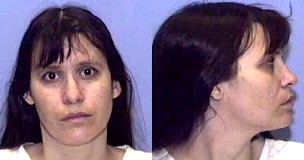 Andrea Yates
Homicide · USA · 2001
Andrea Pia Yates (born Andrea Pia Kennedy on July 2, 1964) was a former Houston…
5 victims
Andrea Yates
Homicide · USA · 2001
Andrea Pia Yates (born Andrea Pia Kennedy on July 2, 1964) was a former Houston…
5 victims
 Coleen Thompson
Homicide · USA · 2002
Coleen Thompson was a former intensive care nurse at Shady Grove Adventist Hosp…
5 victims
Coleen Thompson
Homicide · USA · 2002
Coleen Thompson was a former intensive care nurse at Shady Grove Adventist Hosp…
5 victims
 Christine Paolilla
Homicide · USA · 2003
Christine Marie Paolilla was an American woman born on Long Island, New York on…
4 victims
Christine Paolilla
Homicide · USA · 2003
Christine Marie Paolilla was an American woman born on Long Island, New York on…
4 victims
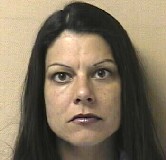 Melissa Marvin
Homicide · USA · 1999
Melissa Lynn Marvin was a 29-year-old waitress and amateur surfer at the time o…
4 victims
Melissa Marvin
Homicide · USA · 1999
Melissa Lynn Marvin was a 29-year-old waitress and amateur surfer at the time o…
4 victims
 Lashaun Harris
Homicide · USA · 2005
Oct. 19, 2005 — A jury trial later concerned the drownings of three young sons…
3 victims
Lashaun Harris
Homicide · USA · 2005
Oct. 19, 2005 — A jury trial later concerned the drownings of three young sons…
3 victims
 Anthony Bertolotti
Murderer · USA · 1983
Anthony Bertolotti was executed in Florida by electrocution on July 27, 1990. H…
1 victim
Anthony Bertolotti
Murderer · USA · 1983
Anthony Bertolotti was executed in Florida by electrocution on July 27, 1990. H…
1 victim
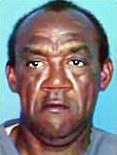 Jerry Frank Townsend
Serial killer? · USA · 1973
Jerry Frank Townsend was sentenced to seven concurrent life sentences in 1980.…
6 victims
Jerry Frank Townsend
Serial killer? · USA · 1973
Jerry Frank Townsend was sentenced to seven concurrent life sentences in 1980.…
6 victims
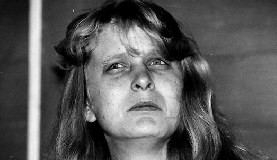 Gunn-Britt Ashfield
Murderer · Australia · 1993
Gunn-Britt Ashfield was the mother of six-year-old John Ashfield. In 2011 she w…
1 victim
Gunn-Britt Ashfield
Murderer · Australia · 1993
Gunn-Britt Ashfield was the mother of six-year-old John Ashfield. In 2011 she w…
1 victim
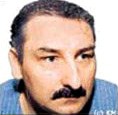 Thomas Rung
Serial killer · Germany · 1983
Thomas Rung (born 3 January 1961) was considered one of the most dangerous seri…
7 victims
Thomas Rung
Serial killer · Germany · 1983
Thomas Rung (born 3 January 1961) was considered one of the most dangerous seri…
7 victims
- Gender
- female
- Country
- USA
- Location
- Monmouth County , New Jersey, USA
- Date of birth
- July 10, 1978
- Age at first offence
- 19
- Characteristics
- infanticide
- Victim profile
- Her newborn son
- Method of murder
- Suffocation (wrapped the baby in several garbage sacks, and deposited the bundle in a trash can)
- Date(s) of murder
- June 6, 1997
- Years active
- 1997
- Date of arrest
- Same day
- Status
-
Released
Pled guilty to aggravated manslaughter; sentenced to 15 years in prison on October 29, 1998; released on parole on November 26, 2001
Case record: Melissa Drexler (“The Prom Mom”)
Background
Melissa Drexler was born in 1979 and was also known as “The Prom Mom.” She attended Lacey Township High School in New Jersey.
The offence
Melissa Drexler delivered a baby in a restroom stall at her high school prom. She then put the body in the trash before returning to the dance.
During the prom, she concealed her pregnancy from the baby’s father, her parents, and her new boyfriend, John T. Lewis, Jr. She was five foot seven inches tall and weighed 130 pounds. Her water broke on June 6, 1997, the day of her senior prom. She later suffered cramps on her way to the banquet hall.
According to her allocution, she retrieved the baby from the toilet bowl, cut the umbilical cord on the bathroom fixtures, wrapped the baby in several garbage sacks, and deposited the bundle in a trash can. She then went to the dance floor. Witnesses said she “appeared to be just as she always was” and “exhibited indications of somebody enjoying the prom.”
The baby was discovered by a janitor after reports of blood in the restroom. Emergency workers attempted to resuscitate the baby for two hours.
Melissa Drexler later named the baby Christopher.
Investigation
At an early stage, prosecutors said the investigation turned up “strong evidence against Ms. Drexler,” and they described autopsy evidence as inconclusive on whether the baby was dead or alive at the time of delivery.
On June 25, 1997, authorities said an autopsy determined the baby was choked and smothered “either with her hands or with the plastic bag.” The prosecutor said he was “certain the baby was alive after it was born,” and that when it ceased to be alive could not be determined.
Prosecutors said they had not found witnesses who saw the birth, heard screams, or saw who placed the bag containing the baby in the bathroom’s trash receptacle nine feet from the stall where the birth occurred.
Tests of the baby’s lungs for signs that it may have drowned were described as inconclusive. Prosecutors said prosecution experts and forensic pathologist Dr. Michael Baden differed on explanations for the findings. Dr. Baden argued it was possible the child was stillborn and the air found in the lungs was put there by emergency medical technicians during resuscitation efforts.
The prosecutor said the forensic examiner described “some marks on the child's neck which led us to believe that he might have been strangled and not asphyxiated or drowned,” and that the medical examiner was not sure if it was strangulation or asphyxiation.
At a news conference, the prosecutor said Dr. Peacock was satisfied the baby was alive and breathing after the birth because Dr. Peacock had found air in the baby’s lungs and intestines. The prosecutor said this was “a very significant finding, amongst others,” and said air in the intestines supported the state’s position.
Blood tests were said to reveal no trace of drugs or alcohol.
Arrest
On June 25, 1997, Melissa Drexler was charged. She made a five-minute appearance in State Superior Court and was released on a $50,000 property bond by Judge John Ricciardi. She said little as the judge explained her legal rights.
After her release, Melissa Drexler’s lawyer, Steven Secare, said his client was not guilty.
Trial
Melissa Drexler pled guilty to aggravated manslaughter.
Statement read in court by Melissa Drexler as she pleaded guilty to aggravated manslaughter:
“I knew I was pregnant. I concealed the pregnancy from everyone. On the morning of the prom my water broke. While I was in the car on the way to the prom, I began to have cramps. I went to the prom and I went into the bathroom and delivered the baby. The baby was born alive. I knowingly took the baby out the toilet and wrapped a series of garbage bags around the baby. I then placed the baby in another garbage bag, knotted it closed and threw it in the trash can. I was aware of what I was doing at the time when I placed the baby in the bag. And I was further aware that what I did would most certainly result in the death of the baby.”
During the June 25, 1997 court proceedings, prosecutors said a girlfriend who had heard sounds from the bathroom stall asked Melissa Drexler if she felt ill, and the prosecutor said she replied:
“I'll be done pretty soon. Go tell the boys we'll be right out.”
Sentencing
On October 29, 1998, Judge John A. Ricciardi sentenced Melissa Drexler to 15 years in prison, described as the maximum penalty. The prosecutor said aggravated manslaughter carries a 10- to 30-year sentence, and that under the plea agreement the prosecutor would seek a sentence of 15 years.
Appeals
No appeals were described in the provided material.
Outcome
Melissa Drexler was released on parole on November 26, 2001 after serving a little over three years.
Other details
Melissa Drexler was described as an only child. She was reported to have lightened her once-dark brown hair to a medium blond.
On June 6, 1997, prosecutors said she initially denied giving birth when teachers came up to her and others who had been in the women’s bathroom to ask about blood in the bathroom stall, and she replied she was having a heavy menstrual flow.
Prosecutors said she arrived at the prom between 7:30 and 7:45 P.M., went immediately to the women’s restroom, entered a stall and locked it while a friend remained outside.
Prosecutors said she delivered the baby into the toilet, retrieved him, and apparently cut the umbilical cord with the serrated edge of a paper towel dispenser that hung on the wall in the restroom stall.
Prosecutors said a friend was in the bathroom during some of the time Melissa Drexler was in the stall, heard sounds of scraping metal, and saw Melissa Drexler trying to wipe her foot across blood on the tile floor.
Prosecutors said exactly how the umbilical cord was cut was uncertain, but they suspected Melissa Drexler dislodged a metal container for sanitary napkins from a wall in the stall and severed the cord with the container’s serrated edge. The prosecutor said the cut was jagged.
Prosecutors said authorities suspected the scraping noises were caused by Melissa Drexler’s removing the napkin container.
Prosecutors said after Melissa Drexler and her friend left the bathroom, a matron cleaned the bloody stall, placed soiled towels in a plastic bag in the bathroom’s trash receptacle, and took the bag to an outside trash bin. The matron noticed the bag was heavy and called a maintenance worker. The maintenance worker looked inside and found the knotted bag containing the baby’s body. The prosecutor said if the matron had not been curious about the bag’s weight, the body might never have been found.
The prosecutor described the case as recalling another widely publicized New Jersey infanticide case involving Amy Grossberg and Brian Peterson, who pleaded guilty in Delaware court to manslaughter in the death of their infant thrown in a trash bin after being born on Nov. 12, 1996, in a Newark, Del., motel room.
Prosecutors in Monmouth County said Melissa Drexler was nicknamed “The Prom Mom” by the American media.
The prosecutor said there had been 12 other cases of killings of newborns in his 15 years as county prosecutor. He said all but one resulted in plea agreements and similar sentences. He said the exception went to trial in 1987, involving Patricia Giles, who was found guilty and sentenced to the maximum of 30 years.
The prosecutor described Melissa Drexler’s likely psychological condition, saying she isolated herself from her own emotions and denied it:
“There is no question, from a psychological point of view, that she was suffering from emotional stress, and one of the keys in showing her mental condition was how she isolated herself from her family and from her boyfriend,” and: “She just denied it and continued to deny it.”
The prosecutor also said he chose the plea agreement to avoid a trial, and referenced inconclusive autopsy evidence that could be contested by prosecution and defense experts.
The prosecutor added that had there been a trial, her lawyers had a good chance of winning acquittal on the ground of “extreme emotional disturbance.”
A video-production environment was described around the courthouse, with television trucks and photographers stationed at the entrances.

Spotted an error, or have more information about this case?