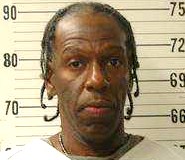
David Carl Duncan
Murderer Ervil LeBaron
Murderer · USA · 1972
Ervil Morrell LeBaron (1925 to August 16, 1981) was the leader of a polygamous…
35 victims
Ervil LeBaron
Murderer · USA · 1972
Ervil Morrell LeBaron (1925 to August 16, 1981) was the leader of a polygamous…
35 victims
 Brian Kevin Rosenfeld
Murderer · USA · 1985
Brian Kevin Rosenfeld Brian Kevin Rosenfeld was sentenced to three concurrent l…
23 victims
Brian Kevin Rosenfeld
Murderer · USA · 1985
Brian Kevin Rosenfeld Brian Kevin Rosenfeld was sentenced to three concurrent l…
23 victims
 Marvin Gray
Murderer · USA · 1975
Marvin Gray was convicted killer who claimed responsibility for 23 slayings and…
23 victims
Marvin Gray
Murderer · USA · 1975
Marvin Gray was convicted killer who claimed responsibility for 23 slayings and…
23 victims
 Yahweh ben Yahweh
Murderer · USA · 1980
Yahweh ben Yahweh was born and legally named Hulon Mitchell Jr. (October 27, 19…
23 victims
Yahweh ben Yahweh
Murderer · USA · 1980
Yahweh ben Yahweh was born and legally named Hulon Mitchell Jr. (October 27, 19…
23 victims
 Russell Ellwood
Murderer · USA · 1991
Russell Ellwood was a former taxi driver. Authorities suspected him of killing…
20 victims
Russell Ellwood
Murderer · USA · 1991
Russell Ellwood was a former taxi driver. Authorities suspected him of killing…
20 victims
 William Lee Neal
Serial killer · USA · 1998
William Lee Neal, also known as William "Cody" Neal, was sentenced to death and…
William Lee Neal
Serial killer · USA · 1998
William Lee Neal, also known as William "Cody" Neal, was sentenced to death and…
 Mark Essex
Spree killer · USA · 1973
Mark James Robert Essex was a Navy veteran who engaged in a shooting and arson…
9 victims
Mark Essex
Spree killer · USA · 1973
Mark James Robert Essex was a Navy veteran who engaged in a shooting and arson…
9 victims
 Christian Dornier
Spree killer · France · 1989
Christian Dornier Christian Dornier was found insane on November 10, 1989 and w…
14 victims
Christian Dornier
Spree killer · France · 1989
Christian Dornier Christian Dornier was found insane on November 10, 1989 and w…
14 victims
 Jeffrey MacDonald
Murderer · USA · 1970
Jeffrey Robert MacDonald (M.D.; born on October 12, 1943) was a former member o…
3 victims
Jeffrey MacDonald
Murderer · USA · 1970
Jeffrey Robert MacDonald (M.D.; born on October 12, 1943) was a former member o…
3 victims
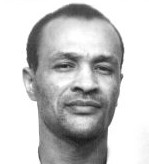 Herman Clark
Murderer · USA · 1981
Herman Robert Charles Clark Jr. was convicted in connection with a capital murd…
1 victim
Herman Clark
Murderer · USA · 1981
Herman Robert Charles Clark Jr. was convicted in connection with a capital murd…
1 victim
- Gender
- male
- Country
- USA
- Location
- Sumner County, Tennessee, USA
- Date of birth
- March 27, 1962
- Age at first offence
- 19
- Characteristics
- rape, robbery
- Victim profile
- Ruby Evelyn Burgess
- Method of murder
- Cutting her throat
- Date(s) of murder
- February 15, 1981
- Years active
- 1981
- Date of arrest
- —
- Status
-
Sentenced to death
Sentenced to death on April 1, 1983
Case details
Defendant: David Carl Duncan
Victim: Ruby Evelyn Burgess, cashier at the Short Stop Market in Gallatin, Tennessee
Timeline
- February 15, 1981 — Ruby Evelyn Burgess was found dead in an aisle near the cash register at the Short Stop Market after her relief reported to the market at approximately 5:40 a.m.; her throat had been cut and she was lying in a pool of blood, with her pants and undergarments pulled down around her lower right leg.
- February 15, 1981 (approximately 4:50 a.m.) — Linda Kelly, a local cab driver who had known the defendant three or four years, testified that she saw the defendant pumping gas into a dark green Buick Electra at the market.
- February 15, 1981 (approximately 5:30 a.m.) — Harold Pryor, an employee of the Nashville Tennessean, testified he saw a young black male coming from the direction of the market door and going toward a dark blue or black car parked at the store.
- February 15, 1981 (after the murder) — The defendant called the cab company and for the first time specifically requested that Linda Kelly drive him to work in nearby Hendersonville, Tennessee.
- August 27, 1982 — Two policemen asked the defendant to come to the police station in connection with another crime; he was not arrested until later that day when it was determined his fingerprints matched those on the fruit juice bottle.
- 1982 (weekend after August 27, 1982) — After being charged, the defendant was held in the Sumner County Jail over the weekend until Monday.
- Monday (after August 27, 1982) — The defendant was again advised of his rights, waived them, and gave another statement.
- September 9, 1985 — The Supreme Court of Tennessee issued its opinion in State of Tennessee v. David Carl Duncan.
- September 30, 1985 — Rehearing was denied.
- December 17, 1985 — The death sentence was to be carried out as provided by law unless stayed by appropriate authority.
Background
The defendant, David Carl Duncan, appealed his conviction of murder in the first degree and sentence of death, and two consecutive life sentences imposed on convictions for armed robbery and aggravated rape. He questioned the sufficiency of the evidence, rulings by the trial court on voir dire, the admission of evidence, objections to argument by the state in both the convicting and sentencing phases of the trial, and the court's instructions to the jury. He also insisted that the sentencing provision of the Tennessee Death Penalty Act, T.C.A. § 39-2-203, was unconstitutional.
The offence
The defendant was convicted of raping and killing Ruby Evelyn Burgess in the course of a robbery of the Short Stop Market in Gallatin, Tennessee. Ruby Evelyn Burgess worked the night shift cashier position with her assignment being from 10:00 p.m. to 6:00 a.m.
On the morning of February 15, 1981, her relief reported to the market at approximately 5:40 a.m. She found the “still-warm,” partially nude body of Ms. Burgess in the aisle near the cash register. Ms. Burgess's throat had been cut and she was lying in a pool of blood. Her pants and undergarments were pulled down around her lower right leg.
A trail of blood led from the cooler at the back of the store to her body, indicating that the assault took place in the cooler. Time of death was fixed by the examining physician at approximately 5:30 a.m.
According to the examining physician, Ms. Burgess's death resulted from three cuts to her neck of such force that they cut through her neck muscles, jugular vein, trachea, larynx and esophagus, and nicked the carotid artery. The immediate cause of death was an air embolus in the heart caused by the entry of air into the blood stream through the gaping wound in Ms. Burgess's neck.
A subsequent examination revealed mobile sperm in her vagina from a “type O secretor.” The defendant is a “type O secretor,” as are approximately thirty-five percent of the male population.
The cash register drawer was closed when Ms. Burgess's body was found, but comparison of the cash register tape with the contents of the register showed that $246.00 was missing. The last item shown on the cash register tape was a 35? grocery item. Prior items on the tape included a $3.00 worth of gas and a 25? grocery item sold. A bottle of Tropicana fruit punch, which sold for 35?, was sitting on the counter by the cash register. The bottle still had “frost” on it when the police arrived.
Investigation
Six fingerprints were lifted from the bottle. Four of the prints were later identified as being from defendant's left hand.
Linda Kelly, a local cab driver who had known the defendant three or four years, testified that she saw the defendant pumping gas into a dark green Buick Electra at the market at approximately 4:50 a.m. on February 15, 1981. She stated that the defendant was wearing a toboggan and a dark jacket and had his hair in plaits.
At approximately 5:30 a.m., Harold Pryor, an employee of the Nashville Tennessean, testified that he was putting newspapers in a rack outside the Short Stop Market when he saw a young black male, six foot one, approximately one hundred forty-five pounds, wearing a “tam” (or having short hair) and a dark “shawl,” come from the direction of the market door and go towards a dark blue or black car parked at the store. He stated that the description generally matched that of the defendant, but he did not identify the defendant as the man he had seen.
On the day after the murder, the defendant called the cab company and for the first time ever specifically requested that Linda Kelly drive him to work in nearby Hendersonville, Tennessee. When the defendant mentioned to Kelly that he had seen her someplace the night before, Kelly reminded him that they had seen one another at the Short Stop Market. The defendant said he had trouble remembering this because “he'd been gettin' out and gettin' high . . . that weekend.” When Kelly said, “it's bad about that woman, you know, gettin' killed,” the defendant's hands began to tremble and he changed the subject.
After the investigation zeroed in on the defendant, the defendant gave the police two statements to the effect that he had not been near the store at the time of the murder, that he seldom traded there, and that he did not know Ms. Burgess. He said he had never purchased any juice at the store and was allergic to fruit punch. He also stated that he knew of no way he could have touched the bottle the police found on the counter by the cash register, and from which his fingerprints had been lifted.
Arrest and interrogation
On August 27, 1982, two policemen asked the defendant to come to the police station in connection with another crime. The defendant was not arrested until later that day when it was determined his fingerprints matched those on the fruit juice bottle. Detective Lame testified that the defendant was read his rights and signed a statement voluntarily waiving them. Detective Lame testified that the defendant voluntarily agreed to submit to saliva and blood tests and gave several statements to the police.
After being charged, the defendant was held in the Sumner County Jail over the weekend until Monday, when he was again advised of his rights, waived them, and gave another statement.
Trial
The defendant did not testify. The defendant's proof consisted of friends and family testimony, including testimony from his girlfriend that he had spent the night of the killing at her house and had worked on her automobile the next day. She testified that he usually drove her orange and white automobile when he needed an automobile.
Family members testified that while they owned two dark green automobiles, a Buick and a Nova, the Nova was not “street-worthy” in February, 1981, and the Buick was not purchased until sometime in 1982. The defendant's brother who owned the Nova testified that he had not permitted defendant to drive the car on the night of the murder, nor had he allowed defendant to drive his 1977 dark blue Grand Prix.
From this evidence, the jury found the defendant guilty of first degree murder, aggravated rape, and armed robbery.
Life sentences were given on the rape and robbery convictions. In a separate hearing, the jury returned the sentence of death of the first degree murder conviction.
Sentencing
In imposing the sentence of death, the jury found from the evidence introduced in the convicting phase that the murder of Ruby Evelyn Burgess was especially heinous, atrocious, or cruel in that it involved torture or depravity of mind. The jury also found that the murder was committed while the defendant was engaged in committing rape and robbery. These findings were made under T.C.A. § 39-2-203(i)(5) and (7). No mitigating circumstances were found by the jury.
Appeals
The defendant appealed his conviction and death sentence. The appellate issues included sufficiency of the evidence, voir dire rulings, admission of evidence, objections to state argument in both phases of the trial, and jury instructions, along with the constitutionality of the sentencing provision of the Tennessee Death Penalty Act, T.C.A. § 39-2-203.
Sufficiency of evidence
The court held that a rational trier of fact could find from the evidence that the essential elements of the crimes were proven beyond a reasonable doubt, applying the standard from Jackson v. Virginia. The court stated that although the evidence was circumstantial, it pointed unerringly to the defendant, noting that he was placed at the scene near the time the crimes were committed and his fingerprints were on the “sweating” bottle of Tropicana juice found beside the cash register.
The court stated that evidence supported the jury's findings that the murder occurred in the course of the rape and robbery, and that the assailant cut Ms. Burgess's neck three times and left her to bleed to death. The court found no mitigating circumstances.
Evidence and objections
The appellate court reviewed challenges to testimony and evidence made by counsel for the defendant on appeal, including:
- Admission of black and white photographs of the scene of the crimes and the wound in Ms. Burgess’s neck.
- Admissibility of testimony of the examining physicians.
- Admission of evidence obtained through defendant's detention, arrest, and interrogation, including statements to officers, fingerprints, and blood and saliva samples.
- Testimony of the serologist.
The appellate court found no prejudicial error in the admission of these evidence matters.
The appellate court discussed the lack of timely objection at trial and noted waiver principles, while also stating that because the defendant was under sentence of death, the court had a duty to automatically review the sentence under T.C.A. § 39-2-205(a).
Statements, fingerprints, and biological samples
The court addressed the defendant's challenge raised on appeal for the first time on constitutional and statutory grounds to evidence obtained as a result of defendant's detention in August, 1982. It noted that, in the absence of a timely objection or motion, the record did not delineate fully the circumstances surrounding detention, arrest, and interrogation, stating there was nothing in the record to support the defendant's contentions that the evidence was the fruit of an illegal arrest, that the defendant did not knowingly and intelligently waive his Miranda rights, that his statements were coerced, and that his last statement was obtained before he was examined by a magistrate in violation of T.C.A. § 40-5-103.
Physicians’ qualifications and testimony
The appellate court addressed the defendant's contention that Dr. Norman Saliba and Dr. John Flynn testified as experts without being qualified forensic pathologists and that their testimony was speculative and invaded the province of the jury. It stated that neither doctor was a forensic pathologist. It said Dr. Saliba was a general surgeon, the Sumner County Medical Examiner, and an emergency room doctor at the Sumner County Hospital, and that he examined the body at the scene and determined the cause of death (a terminal air embolus caused by the severed jugular vein in the victim's neck). It said Dr. Flynn, also in emergency medicine at the county hospital, examined the body at the hospital and collected evidence such as vaginal swabs and fingernail scrapings.
The appellate court stated that because the defendant made no objection at trial to the doctors’ qualifications, it found Dr. Flynn's testimony not improper and found Dr. Saliba's testimony outside his medical expertise harmless in light of the evidence and instructions on expert opinion evidence. The court stated that the aggravated rape conviction was supported by evidence including “numerous spermatozoa in the vagina, the victim's torn clothing, bruises on her thighs, her body nude from the waist down.”
Photographs of the crime scene and victim
The appellate court addressed the defendant's contention that black-and-white photographs should not have been admitted. It stated that the photographs were introduced during Dr. Saliba's testimony and showed:
- the pool of blood in the cooler where the victim was apparently first attacked,
- the bloody trail from the cooler to the aisle where the victim died,
- the victim's body as found,
- and the fatal throat wound.
It noted that the defendant objected to them as prejudicial. It stated that the trial judge expressed disagreement with appellate courts’ position on admissibility of photographs and reluctantly admitted the pictures because “the appellate courts take the position there's no such thing as prejudice overcoming the probative value.” The appellate court concluded that the photographs of the store were not gruesome and supplemented and clarified oral testimony, and it found the photographs relevant to disputed issues, including sexual attack. It stated that the photograph of the throat wound taken after the body had been cleaned should have been excluded but did not affirmatively appear that error affected results of the trial.
Serologist testimony
The appellate court addressed the defendant's contention that serologist testimony that the defendant was one of thirty-five percent of male type O secretors was irrelevant and beyond the scope of expert opinion. It stated that the serologist testified without objection to the percentage of the population who are male type O secretors and that he was qualified and testified the defendant was a type O secretor. It said this resulted in the defendant falling into the suspect percentage and concluded it was not evidence of mathematical probabilities designed to bolster the credibility of tests, distinguishing the cases cited by the defendant.
Jury instructions and trial comments
The appellate court addressed the defendant's claim that the trial court erred in admonishments and comments to the jury on the second day of the trial. It listed the complained-of comments as:
- A statement about recording a television movie for the jurors;
- An explanation of why the jury must avoid media coverage of the case;
- An explanation of why the jurors are not allowed to directly question the witnesses.
The appellate court found no error, stating that the remarks were not coercive and did not invite prejudicial speculation.
The appellate court also addressed the defendant's claim regarding the trial court’s instructions in the sentencing phase, including that the instructions effectively caused the jury to disregard the sole mitigating factor of mercy or sympathy. It stated that the instruction complained of was given in answer to a juror's question about what a “life sentence” means, and the court instructed jurors not to speculate about whether a sentence would be carried out, to consider only the charge as given. It stated that later the court recalled the jury and instructed them to assume any sentence would be carried out and not to speculate about anything else. The appellate court found no error and no prejudice.
Defining aggravating circumstances after State v. Williams
The defendant argued that the trial court failed to specifically define the words “heinous,” “atrocious,” “cruel,” “torture,” and “depravity of mind” as used in T.C.A. § 39-202-3(i)(5). The appellate court stated that in State v. Williams the court undertook to define those terms for future cases, and that the present trial used the pre-Williams instruction without interpretation. It stated that the defendant made no objection, and it held that proof supported the aggravating circumstance as defined in Williams, citing other cases. It also found the second aggravating circumstance regarding rape and robbery correctly instructed and supported by proof, concluding there was no prejudicial error in failing to give the jury a detailed definition of the several terms.
Voir dire and juror exclusion
The defendant questioned the trial court’s granting of the state's challenge for cause of juror Margaret Culbreath. The appellate court explained the standard under Wainwright v. Witt and stated that the trial court could exclude jurors whose views would prevent or substantially impair performance of duties according to their instructions and oath.
The appellate court stated that Ms. Culbreath told the court she did not “believe” she could consider the death penalty as an alternative punishment unless she saw the crime committed. It stated that on further voir dire she said it was not just the death penalty she could not consider but that she did not “want to be put in a position to Judge another human being on the basis of what one says against what another person says.” It held that the excusal for cause without objection met Witt guidelines and was proper, citing a case about religious scruple against passing judgment.
Constitutional argument about jury trial and death penalty
The defendant argued that T.C.A. § 39-2-203 penalized a defendant who exercised the right to a jury trial in a capital case by exposing him to the possibility of a sentence of death, while a defendant who entered a plea of guilty ran no risk of death. He argued this was violative of Article I, §§ 6 and 9 of the Tennessee Constitution and the Fifth and Sixth Amendments to the U.S. Constitution. He relied on United States v. Jackson.
The appellate court distinguished the Tennessee procedure, stating it was not the situation in Jackson and explaining that in Tennessee a defendant could waive the right to a jury to determine either guilt, sentence, or both. It referenced T.C.A. § 39-2-204 and stated that references to “jury” in T.C.A. § 39-2-203 apply to a judge. It concluded that a trial judge could thus impose the death penalty and that the argument was not supported.
The appellate court stated that it also considered cited cases from other jurisdictions and noted that Tennessee's statute in this respect was closer to that of Missouri, citing State v. Bannister.
Missing witness instruction
The defendant claimed that because TBI agent Fortner did not testify at trial, he was entitled to the benefit of a “missing witness” instruction. The appellate court found no merit in the issue. It stated that Fortner was present as an onlooker when the defendant first signed a waiver of his Miranda rights and was interrogated, but did not have peculiar knowledge. It stated that Detective Lame, who testified, was as familiar with the matter and was available to both the state and the defendant.
It further stated that during instructing the jury, the trial court began to read the pattern “missing witness” instruction and then stopped and excused himself, saying, “I beg your pardon. That charge is not applicable.” It stated that this was not a comment on evidence contrary to Article VI, § 9 of the Tennessee Constitution and could not have prejudiced the defendant.
Outcome
The defendant's conviction of first degree murder and the sentence of death, and convictions of aggravated rape and armed robbery with consecutive life sentences, were affirmed. The appellate court held that no reversible error was committed in the trial, that the verdicts and sentences were sustained by the evidence, and that the sentence of death was in no way arbitrary or disproportionate.
The death sentence was to be carried out as provided by law on the seventeenth day of December, 1985, unless stayed by appropriate authority. Costs were adjudged against the defendant.
Aftermath
Justice Brock concurred in part and dissented in part. The appellate court indicated that Justice Brock dissented from the imposition of the death penalty for the reasons expressed in his dissent in State of Tennessee v. Dicks, 615 S.W.2d 126, 132 (Tenn. 1981).
Spotted an error, or have more information about this case?