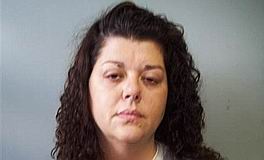
Tonya Ford
Murderer Miranda Barbour
Murderer · USA · 2013
Miranda Barbour, 19, defendant. · Elytte Barbour, 22, defendant and husband of…
100 victims
Miranda Barbour
Murderer · USA · 2013
Miranda Barbour, 19, defendant. · Elytte Barbour, 22, defendant and husband of…
100 victims
 Tiffany Hall
Murderer · USA · 2006
Tiffany Hall was 24 when she was charged in September 2006. She later entered a…
5 victims
Tiffany Hall
Murderer · USA · 2006
Tiffany Hall was 24 when she was charged in September 2006. She later entered a…
5 victims
 Banita Jacks
Murderer · USA · 2007
Banita Jacks was a Washington, DC resident convicted of murdering her four daug…
4 victims
Banita Jacks
Murderer · USA · 2007
Banita Jacks was a Washington, DC resident convicted of murdering her four daug…
4 victims
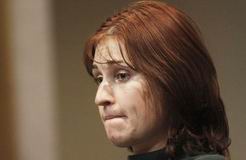 Holly Grigsby
Murderer · USA · 2011
Holly Grigsby was sentenced to life in prison without parole on July 15, 2014.…
4 victims
Holly Grigsby
Murderer · USA · 2011
Holly Grigsby was sentenced to life in prison without parole on July 15, 2014.…
4 victims
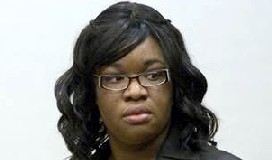 Jessica Tata
Murderer · USA · 2011
Jessica Tata was a Houston home day care owner who fled to Nigeria after a fire…
4 victims
Jessica Tata
Murderer · USA · 2011
Jessica Tata was a Houston home day care owner who fled to Nigeria after a fire…
4 victims
 Amanda Bennett
Murderer · USA · 2011
Amanda Bennett was an Indiana woman who shot her three children and set the fam…
3 victims
Amanda Bennett
Murderer · USA · 2011
Amanda Bennett was an Indiana woman who shot her three children and set the fam…
3 victims
 Linda Shimer
Murderer · USA · 2004
Linda Shimer was an Indianapolis woman convicted of arranging for Kenneth Kelly…
1 victim
Linda Shimer
Murderer · USA · 2004
Linda Shimer was an Indianapolis woman convicted of arranging for Kenneth Kelly…
1 victim
 Matthew Macon
Serial killer · USA · 2004
Matthew Emmanuel Macon was 27 when police said he was suspected of killing five…
6 victims
Matthew Macon
Serial killer · USA · 2004
Matthew Emmanuel Macon was 27 when police said he was suspected of killing five…
6 victims
 Miyoko Sumida
Serial killer · Japan · 2003
Miyoko Sumida was a Japanese serial killer who killed six people in a case invo…
6 victims
Miyoko Sumida
Serial killer · Japan · 2003
Miyoko Sumida was a Japanese serial killer who killed six people in a case invo…
6 victims
 David Jay Brown
Murderer · USA · 1988
Defendant: David Jay Brown · Victim: Eldon McGuire (also referred to as Eldon L…
1 victim
David Jay Brown
Murderer · USA · 1988
Defendant: David Jay Brown · Victim: Eldon McGuire (also referred to as Eldon L…
1 victim
 Charles Sanders
Murderer · USA · 1942
Charles Sanders was one of the defendants in a case involving Coy Collier Quall…
1 victim
Charles Sanders
Murderer · USA · 1942
Charles Sanders was one of the defendants in a case involving Coy Collier Quall…
1 victim
- Gender
- female
- Country
- USA
- Location
- Campbellsville, Taylor County, Kentucky, USA
- Date of birth
- 1983
- Age at first offence
- 26
- Characteristics
- parricide, domestic violence
- Victim profile
- Her husband, David M. Ford, 40 (Lebanon City police officer)
- Method of murder
- Shooting
- Date(s) of murder
- February 10, 2009
- Years active
- 2009
- Date of arrest
- October 20, 2010
- Status
-
Imprisoned
Sentenced to 20 years in prison on September 18, 2012
Case record: Tonya Ford
Background
Tonya Ford was a Taylor County woman convicted of killing her police officer husband. Police identified her husband as Lebanon Police officer David Ford.
David Ford was a Lebanon police force officer in neighboring Marion County for 3 1/2 years. A memorial was outside the Lebanon Police Department in honor of David Ford, where he was an officer there for three years.
Tonya Ford and David Ford were described as having a rocky marriage. Darrell Ford, David’s brother, said David had moved out three weeks prior and that David had been supposed to file the next week as the couple was getting a divorce. Tonya Ford helped raise David’s three sons and the couple had one child together.
The offence
Police said Tonya Ford shot and killed her husband, Lebanon Police officer David Ford, at their Graham Road home in Campbellsville, Taylor County.
Police said David Ford was shot and pronounced dead at the scene. Police and forensic testimony described David Ford’s death as a homicide, with a gunshot wound in the head.
A 911 call was made by Tonya Ford. When calling 911, Ford said her husband had been shot. Testimony indicated she also said she did not go close to his body after seeing him on the floor in a pool of blood.
Police said the shooting occurred on Feb. 10, 2009. Police stated Ford called the Campbellsville/Taylor County E-911 Center and said she had arrived at the home and found that her husband had been shot.
In opening statements and closing arguments, the prosecution and defense disputed the timeline and whether Ford was at the home at the time.
Investigation
Kentucky State Police investigated the case and interviewed 17 key witnesses.
Taylor County Coroner Terry Dabney said in 2009 that an autopsy confirmed Officer Ford’s death as a homicide. Dabney estimated Officer Ford’s time of death was 12:30 p.m.
Kentucky State Police Detective Israel Slinker investigated the case. The prosecution credited Detective Slinker for making sure it was a strong case.
Testimony addressed gunshot residue and timing:
- The prosecution argued Ford washed her hands after being asked not to in an attempt to get rid of any gun shot residue on them.
- A test for residue taken several hours after Ford found her husband was negative.
- Louisville Medical Examiner and Jefferson County Coroner Barbara Weakley-Jones testified that she would have to be fairly close to a body to know if someone had suffered a gunshot wound.
Phone and timing evidence was also presented:
- An AT&T representative, Jerome McNear, testified that Ford received a cell phone call at 10:59 a.m. from Officer Ford that connected with a cell phone tower sector near her Graham Road home.
- McNear testified there was also a call at 11:20 a.m. with a tower sector near her Graham Road home.
- Phone records were presented to show Ford could not have been in Campbellsville at the times she said she was.
Investigative testimony about where Ford was at the time included:
- Taylor County Sheriff’s Detective Brian Pickard testified that when on the scene of Officer Ford’s death, he spoke with Ford while sitting in his vehicle.
- Pickard said Ford agreed to take a gunshot residue test and agreed to not wash her hands until taking that test.
- After Ford used the restroom at the Gilberts’ home, Pickard said he noticed that she no longer had mud on her hands.
A law enforcement officer who worked with Officer Ford also testified:
- Brandon Blair testified he and Officer Ford were friends.
- Blair said Officer Ford told him he had received anonymous notes threatening and that it made him paranoid.
- Blair said Officer Ford also believed he was being followed.
- Blair said when information shared between only Blair, Ford and Officer Ford appeared in the notes, he began to believe that Ford had been writing the notes.
- Blair said one of Ford’s fingerprints was found on one of the notes near where Officer Ford’s body was found.
- Blair said he believed no one had a vendetta against Officer Ford and said Officer Ford was very well liked, even by those he had arrested.
Arrest and charging
On Oct. 19, 2010, a Taylor County grand jury convened in special session to hear from 17 witnesses and then issued an indictment charging Ford with murder.
Ford was arrested at 9:52 a.m. the following day at the Taylor County Courthouse.
Ford was released from the Taylor County Detention Center on Nov. 9, 2010, after family members posted a $30,000 cash bond. She remained free on bond thereafter.
Trial
Ford pleaded not guilty in November 2010.
Ford’s trial began Aug. 20, three and a half years after Officer Ford’s death. The date was Ford’s sixth trial date.
Opening statements
In his opening statement, made after the prosecution rested just after 1 p.m. on Wednesday, Danny Butler said the timeline of the events on Feb. 10, 2009, came not from evidence, but from Slinker’s imaginative mind.
Butler said he would produce witnesses that said Ford was at Sonic from 10:55 a.m. to about 11:10 a.m. and not at her home on Graham Road shooting her husband.
Butler said Officer Ford’s death was tragic and said:
“Tonya went through a terrible experience.”
Butler stated:
“There's absolutely zero proof that Tonya Ford had anything whatsoever to do with the killing of her husband.”
Evidence and witness testimony
Two neighbors testified that Ford visited their Graham Road home to use the restroom while law enforcement secured the crime scene at her home. The witnesses were Danny and Sondra Gilbert. The witnesses said Ford closed the door, which Ford denied.
Mike Viergutz, a KSP computer examiner, testified about the computer’s activity:
- He said the last activity on the Fords’ computer was at 11:16 a.m.
- He testified the computer was unplugged at about 6 p.m. and has had no activity since.
Austin Ford, Officer Ford’s son, testified about his relationship with his parents and extended family:
“They treat my mom like that, they're not my family.”
Defense witnesses and competing timeline evidence
Ashley Simpson, Ford’s half-sister, testified that she worked with Ford at Sonic and saw her on Feb. 10, 2009. Simpson said the conversation happened between 10:55 and 11:05 a.m. and she based those times on who was working that day and when some employees arrived for work at 11 a.m.
During cross-examination by Assistant Commonwealth’s Attorney Angela Call, Call asked Simpson if she believes cell phone records putting Ford in the area of her home at 11:20 a.m. are wrong. Simpson said she believed they were wrong.
Call asked Simpson if she remembered saying that if someone had been shot at the Ford home, either Ford shot Officer Ford or Officer Ford shot Ford. Simpson said she did not remember saying that.
Denisa Beckley, a manager at Sonic, testified that she saw Ford at Sonic at between 10:55 and 11:10 a.m. Beckley testified that her son was formerly married to Simpson and she said she was not sure why cell phone records would say Ford was not in Campbellsville during that time.
Several family members testified that Ford was a good mother. Two of Ford’s children testified that they had close relationships with her. Austin Ford testified he and his mother spend as much time together as possible, that he loves both his mother and father, and that he wanted nothing to do with his father’s family.
Brandon Blair’s testimony included the anonymous notes and the fingerprint on one of the notes near where the body was found.
Jury procedure and verdict
Jury deliberations began at 11:30 a.m. on Thursday. After not being able to reach a unanimous decision by 8 p.m., Taylor Circuit Court Judge Dan Kelly ordered that the jurors be sequestered in a local hotel with no television, phone or Internet access.
When instructing jurors, Kelly told them that they had to find Ford guilty if they believed she killed Lebanon Police Officer David Ford or helped someone who killed him.
The jury announced its decision at 11:08 on Friday morning after deliberating for nearly 12 hours.
Jurors found Ford guilty of first-degree murder. The jury recommended a sentence of 20 years with the possibility of parole after serving 17 years.
Closing statements and sentencing arguments
In his closing statement, Butler argued that the case against Ford was not based on evidence and said:
“Their whole case is based upon the very vivid imagination of Detective Slinker and upon cell phone towers. Not upon witnesses.”
Butler stated:
“Ask yourself what evidence did the Commonwealth put on that says that Tonya Ford killed her husband David Ford. Absolutely zero, zero evidence.”
Butler argued Ford’s timeline evidence and said:
“There's absolutely zero, zero evidence that places Tonya Ford in that residence. None.”
Butler argued:
“It was tragic David Ford's life was cut short at a young age.”
Butler said he believed Slinker completely disregarded testimony that placed Ford at Sonic around 11 a.m. that day because it did not fit Slinker’s timeline.
Butler stated:
“You want to send a person to the penitentiary for killing her husband based on a cell phone tower location? What does that have to do with anything? Does that put her in the house? No.”
Butler said Ford cooperated with police and was interviewed twice on the day her husband was killed. Butler also said Slinker did not interview the husband of the woman Officer Ford was dating but accepted timecard records to rule him out as a suspect. Butler said Slinker would not use timecard records to accept that Ford was at Sonic around 11 a.m.
Butler criticized Ford for not going to Officer Ford when she saw him and said:
“Ford was hysterical, as jurors heard on the 911 tape.”
Butler stated:
“I submit to you that there's not an Academy Award winning actor that could put that on. I think that tape tells it all.”
Butler said Ford’s mother, Linda Williams, told the prosecution a lie when she said Ford called and confessed to killing her husband, and Butler said Williams admitted that in court. Butler said:
“An innocent person was charged.”
Butler said:
“Two tragedies don't make a right.”
Assistant Commonwealth’s Attorney John Miller compared the case to a puzzle and told jurors:
“Base your decisions on evidence, not emotion.”
Miller stated:
“This case is an emotional case. I can't imagine what they've gone through.”
Miller said jurors heard from a co-worker of Ford’s who said he heard her say she would kill Officer Ford if she thought she could get away with it and feel no remorse. Miller argued:
“She lied about making a tax appointment for her and her husband, which Officer Ford came from Lebanon to Campbellsville for, and where she was at 11 a.m. the day of the murder.”
Miller asked:
“What wife would do that? That's not reasonable, guys.”
Miller stated:
“There is enough there to convict. And we submit that you do that.”
Miller also said:
“She may be a good mom. That doesn't mean she didn't kill her husband.”
Miller concluded:
“In honor of David Ford, do not be persuaded and cave.”
Sentencing
After the verdict, jurors deliberated about how many years they recommended Ford spend in prison. It took them five minutes to recommend 20 years.
Murder was described as a Class A felony punishable by 20 years to life in prison.
Judge Dan Kelly sentenced Ford on Tuesday, Sept. 18, 2012.
Judges did not have to render the sentence a jury recommended, though they typically did. Since murder was described as a violent crime, Ford was stated to serve 85 percent of her sentence before being eligible for parole.
The jury’s recommended 20 years meant Ford would be eligible to meet a parole board in 17 years. It was stated she would be 56 at that time.
A sentencing comment in the record described the 85-percent rule as capping at spending 20 years in prison, making Ford eligible for parole after spending 20 years behind bars even if sentenced to life.
Ford was 39 and was escorted by a security officer to the Taylor County Detention Center. Just minutes after being found guilty, Ford huddled with her family members as they cried together. Ford cried and shouts:
“Oh, my God.”
Ford’s attorney Danny Butler said he was bitterly disappointed with the verdict and would appeal Ford’s sentence. Butler said:
“I wish I knew. I had no idea.”
Appeals
Ford’s attorney, Danny Butler, said he would appeal Ford’s sentence.
Outcome
Ford was convicted of first-degree murder and sentenced to 20 years in prison on September 18, 2012.
Other details
Natitional attention and trial coverage
Tonya Ford’s murder trial received national attention, with a producer from a crime documentary television show filming her trial all last week.
A Jupiter Entertainment producer filmed the trial for a possible episode of the show “Snapped,” which airs on the Oxygen channel. The show documented stories of law-abiding women charged with committing murder.
Additional procedural details and related statements
- Jurors were sequestered in a local hotel with no television, phone or Internet access.
- Jury instructions required jurors to find Ford guilty if they believed she killed Officer David Ford or helped someone who killed him.
- After Ford was taken to the detention center, Assistant Commonwealth’s Attorney John Miller stated he believed jurors considered all the evidence closely without letting emotions overwhelm them.
Additional witnesses mentioned
- Taylor County Coroner Terry Dabney testified.
- Louisville Medical Examiner and Jefferson County Coroner Barbara Weakley-Jones testified.
- KSP computer examiner Mike Viergutz testified.
- AT&T representative Jerome McNear testified.
- A 911 call was mentioned in trial testimony as having been heard by jurors.
- Assistant Commonwealth’s Attorney Angela Call questioned Ashley Simpson during cross-examination.
- Danny Butler represented Ford.
Spotted an error, or have more information about this case?