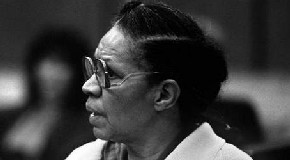
Priscilla Ford
Mass murderer LaFonda Fay Foster
Mass murderer · USA · 1986
LaFonda Fay Foster and Tina Hickey Powell were convicted by a Fayette County ju…
5 victims
LaFonda Fay Foster
Mass murderer · USA · 1986
LaFonda Fay Foster and Tina Hickey Powell were convicted by a Fayette County ju…
5 victims
 Julio Gonzalez
Mass murderer · USA · 1990
Julio Gonzalez was sentenced to 174 twenty-five-year sentences (a total of 4,35…
87 victims
Julio Gonzalez
Mass murderer · USA · 1990
Julio Gonzalez was sentenced to 174 twenty-five-year sentences (a total of 4,35…
87 victims
 David Burke
Mass murderer · USA · 1987
David Augustus Burke (May 18, 1952–December 7, 1987) was an employee of USAir,…
43 victims
David Burke
Mass murderer · USA · 1987
David Augustus Burke (May 18, 1952–December 7, 1987) was an employee of USAir,…
43 victims
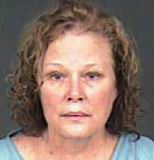 Mary Koontz
Murderer · USA · 2009
Mary Koontz was 60 years old at the time of the murder trial. She had been a fo…
1 victim
Mary Koontz
Murderer · USA · 2009
Mary Koontz was 60 years old at the time of the murder trial. She had been a fo…
1 victim
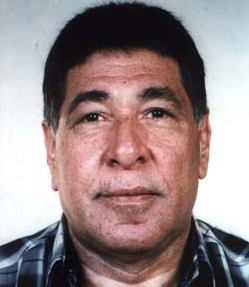 Gameel Al-Batouti
Mass murderer · USA · 1999
Gameel Al-Batouti (also rendered “Gamil ElBatouty” or “El Batouty” in U.S. offi…
216 victims
Gameel Al-Batouti
Mass murderer · USA · 1999
Gameel Al-Batouti (also rendered “Gamil ElBatouty” or “El Batouty” in U.S. offi…
216 victims
 Robert Martines Perez
Murderer · USA · 1994
Name: Robert Martines Perez · Other name used in proceedings: Robert Martinez P…
15 victims
Robert Martines Perez
Murderer · USA · 1994
Name: Robert Martines Perez · Other name used in proceedings: Robert Martinez P…
15 victims
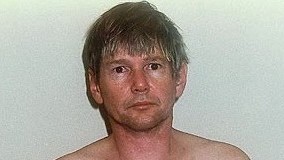 Peter Dupas
Serial killer · Australia · 1997
Peter Norris Dupas was an Australian serial killer known for violence against w…
6 victims
Peter Dupas
Serial killer · Australia · 1997
Peter Norris Dupas was an Australian serial killer known for violence against w…
6 victims
- Gender
- female
- Country
- USA
- Location
- Reno, Washoe County, Nevada, USA
- Date of birth
- February 10, 1929
- Age at first offence
- 51
- Characteristics
- rape?, drug addict, history of mental illness, mentally ill, serial rapist
- Victim profile
- 3 white females and 3 white males
- Method of murder
- D rove her car onto a crowded Reno sidewalk
- Date(s) of murder
- November 27, 1980
- Years active
- 1980
- Date of arrest
- Same day
- Status
-
Died in custody
Sentenced to death on April 29, 1982; died in prison on January 29, 2005
Case overview
Priscilla Ford was sentenced to death for killing six people and injuring 23 more when she drove her 1974 Lincoln Continental down a crowded Reno sidewalk on Thanksgiving Day, November 27, 1980. She died in prison on January 29, 2005.
Timeline
- November 27, 1980 — Priscilla Ford drove her mechanically sound 1974 Lincoln Continental onto a crowded sidewalk in downtown Reno, killing six and injuring 23.
- December (year not specified) — Ford was indicted on six counts of murder and 23 counts of attempted murder.
- January 1981 — A judge ordered that Ford receive mental health treatment so that she would be competent for trial.
- August 1981 — Ford pleaded not guilty by reason of insanity.
- October? (year not specified) — Ford was found incompetent to stand trial and sent to Lake’s Crossing for mental treatment (the record places this at “On Jan. 29, 1981” in one account and “After a period of treatment at Lake’s Crossing” in another).
- April 29, 1981 — Ford was ordered to submit to treatment, including drug therapy.
- August 4, 1981 — Ford was found competent for trial.
- November 12, 1981 — Trial commenced.
- March 20, 1982 — A jury convicted Ford on all counts: guilty of six counts of first degree murder and 23 counts of attempted murder.
- March 28, 1982 — The jury returned a death verdict in the penalty phase.
- April 8, 1986 — The Nevada Supreme Court opinion in Ford v. State was issued (717 P.2d 27 (1986)).
- April 29, 1982 — Ford was sentenced to death.
- January 29, 2005 — Ford died in prison.
- December 1983 — The Nevada Supreme Court declared her incompetent to waive her right of appellate review.
Background
Priscilla Joyce Ford was Black and was 51 years old at the time of the crimes. Her date of birth was given as February 10, 1929. She died at age 75 on January 29, 2005 after suffering from emphysema.
Ford was a Michigan native. She had an IQ of 140 and had worked as a schoolteacher. She moved to Reno from Maine about three weeks before the rampage.
Ford sought to reclaim her daughter, Wynter Scott. Ford told acquaintances she went to Reno to look for her missing daughter, Wynter Scott. Washoe County authorities placed the girl in a foster home in 1973 after Ford was arrested for trespassing.
Ford told acquaintances and others that she would be unable to stop herself unless she got her daughter back, and she was described as suffering from multiple mental illnesses and religious delusions. She later testified she was the incarnation of Jesus and incapable of sin. She also testified that she was “as happy as I could possibly be” on the day of the rampage, and she said, “I am in the state of mind that I am in heaven.”
Ford also told a doctor that the voice of Joan Kennedy, then the wife of Sen. Edward Kennedy, ordered her to kill, saying:
"Just run through a whole bunch of people and kill everybody"
A further statement attributed to that voice was:
"But another voice said she’s too much of a lady to do it."
Ford was described as a heavy smoker and was pronounced dead at 11:05 a.m. The official cause of her death was stated to be determined by the coroner; an autopsy would occur if warranted.
The offence
On November 27, 1980, Ford drove her 1974 Lincoln Continental onto a crowded sidewalk on Virginia Street in downtown Reno during Thanksgiving Day activity. The resulting carnage included six dead and 23 injured. The Nevada Supreme Court opinion described that the vehicle was “mechanically sound.”
In one account, five people were killed immediately and 24 were injured. In that account, fourteenth people were sent to Washoe Medical Center and the remaining 10 to St. Mary’s. In another account, the count was described as six dead and 23 injured.
The car’s route included crossing the Second Street crosswalk, continuing down the sidewalk in front of the bank, Harrah’s, Nevada Club and Harold’s Club, and then crossing back to the southbound lane and stopping behind traffic at the Fifth Street traffic light. The black Lincoln twisted street signs, crushed newspaper vending boxes, and knocked over a fire call box.
One woman was described as being on the hood of the car the length of a city block. The dead and injured littered the bloody sidewalk as rescue workers administered aid.
Ford did not resist when police removed her from the car. She was described as mad. She later stated to a jailer:
"did what she had to do"
and:
"just pigs, animals let out in a wild place."
Nearby casinos remained open.
After the incident, Ford referred to her victims as “beasts and pigs.”
Investigation and arrest
Ford was arrested at the scene.
John Oakes, the deputy district attorney on call that day, described arriving to find a “fucking war zone” with “bodies and shit everywhere.” He said:
"I thought they were kidding me; it’s Thanksgiving. I got downtown, and it was a fucking war zone. There were bodies and shit everywhere. It was carnage. People were crying, and ambulances were responding. It was a cluster-fuck."
He also said security was needed because many people wanted to kill her:
"An officer and I were directed to maintain security because a lot of people wanted to kill her."
The record also included statements attributed to Ford while at or near the time of the incident. An officer quoted Ford as saying:
"The more dead, the better"
and:
"Give the mortuaries the business. That's the American way. Did I get 50? How many did I get? I hope 75."
An officer also testified that Ford said:
"I deliberately planned to get as many as possible. A Lincoln Continental can do a lot of damage, can't it?"
and:
"How many people did I kill?"
Ford replied:
"Good."
The deputy district attorney described Ford’s calmness mixed with callousness:
"She looked at me point-blank and said, ‘How many people did I kill?’ I said, ‘Five or six.’ She said, ‘Good.’ She was very placid."
He also stated:
"We couldn’t figure out why at the time."
"What’s the first defense of anybody who creates this kind of carnage? ‘Only a crazy person would do something like that.’"
He said video setup allowed the viewing of her lucidity:
"So we could see on tape exactly how lucid she was. She knew who she was and where she was; that tape was worth its weight in gold."
Trial
Charges and pleas
Ford was charged with six counts of murder and 23 counts of attempted murder. Due to issues involved in changing the murder indictment, she was charged with six murder counts.
Ford pleaded not guilty by reason of insanity.
Competence and psychiatric treatment
Ford’s mental competence became a focused concern early. Psychiatric evaluations were conducted after a defense motion for examination. A district court initially found her not competent to stand trial, followed by treatment at Lake’s Crossing. The regimen included court-authorized, defense-resisted anti-psychotic drug therapy.
The district court ordered a sanity commission consisting of three psychiatrists, after which it concluded Ford was mentally competent to undergo trial.
Later, defense counsel again moved for a psychiatric examination of the defendant. The judge refused to hear the motion in chambers and defense counsel withdrew the motion. When Ford insisted on testifying against counsel’s advice, counsel asked the court to refuse her the right to testify or order a psychiatric examination. At sentencing, defense counsel sought evaluation again, and the trial court denied both motions.
A timeline account placed:
- January 29, 1981: Ford was found incompetent and sent to Lake’s Crossing.
- April 29, 1981: Ford was ordered to submit to treatment, including drug therapy.
- August 4, 1981: Ford was found competent for trial.
Guilt phase proceedings
After nearly a month of jury selection, trial began on November 12, 1981 and lasted more than four months. A jury of seven men and five women convicted Ford on March 20, 1982 on all counts.
The jury convicted her of six counts of first degree murder and 23 counts of attempted murder.
Testimony and insanity defense
Ford took the stand against her attorney’s advice. The trial court conducted a canvass when determining her understanding of the consequences.
Ford testified she was “the reincarnation of Jesus Christ” and said she was “capable of sin” in earlier statements; the record elsewhere describes her as “incarnation of Jesus and incapable of sin.” Ford testified:
"I am human"
and:
"And I am divine. I don’t like it any more than anyone else does. I don’t want to be divine."
Ford also testified:
"I am in the state of mind that I am in heaven,"
and:
"I am the spirit of Jesus Christ, the Holy Spirit and Adam reincarnate."
A question presented by the prosecutor was described as being asked six times. Ford replied “Yes” each time in a firm voice. The question, as recorded for one pairing, was:
"Were you as happy as you could be and in a heavenly state when you ran into (this person)?"
Ford stated she had shown remorse in private. When asked if she cared about the six dead victims, she said:
"How can I care? Is there anything I can do? Feeling good doesn't do any good for them."
The record stated Ford told the jury:
"I would like to be left alone to die in peace."
Penalty phase proceedings
After guilt, the penalty phase resulted in sentences of death on the six murder convictions and consecutive sentences of twenty years imprisonment on each of the 23 attempted murder convictions.
The jury specified two statutorily defined aggravating circumstances:
- The murder was committed by a person who knowingly created a great risk of death to more than one person by means of a weapon, device or course of action which would normally be hazardous to the lives of more than one person.
- The murder was committed upon one or more persons at random and without apparent motive.
The jury found that no mitigating circumstances were sufficient to outweigh the aggravating circumstances.
The Nevada Supreme Court later stated that it reviewed whether the death sentence was imposed under passion, prejudice, or an arbitrary factor, and concluded it was not excessive or disproportionate.
Sentencing
Ford was sentenced to death on April 29, 1982.
The Nevada Supreme Court opinion described that the jury fixed the penalty at death in the penalty phase after finding aggravating circumstances.
The Supreme Court also described that the jury imposed consecutive sentences of twenty years imprisonment on each of the 23 attempted murder convictions.
Appeals
Ford launched numerous appeals against her death sentence, and they failed. The Nevada Supreme Court issued a decision in Ford v. State, 717 P.2d 27 (1986), on April 8, 1986, affirming the conviction and sentences.
Nevada Supreme Court issues raised on appeal
Four issues were raised on appeal.
The Nevada Supreme Court addressed:
- Change of venue: the court concluded the trial court did not err, stating the pretrial publicity did not corrupt the trial atmosphere to the point of precluding a fair trial by an impartial jury.
- Challenges for cause: the court concluded there was no persuasive evidence of judicial brainwashing and no error in the district court’s rulings.
- Competency hearing: the court concluded there was no due process violation and no basis for a further hearing, concluding the district court did not abuse its discretion.
- Validating guilt under the M’Naghten rule: the court concluded the issue of insanity should have been decided by the jury and found no error in submitting the issue to the jury.
The Nevada Supreme Court concluded:
"Having concluded that Mrs. Ford was fairly tried, convicted and sentenced, we affirm in all respects the judgment of conviction and sentences imposed thereon."
Waiver of appeal
On May 19, 1982, Ford filed a declaration of waiver of appeal in the Nevada Supreme Court. The district court canvassed Ford to determine competence to waive. The district court found Ford knowingly and intelligently waived the right to appellate review. The Nevada Supreme Court rejected her waiver attempt and directed the district court to appoint a panel of three psychiatrists. The panel unanimously found Ford was not mentally competent to rationally elect to forego her right of appeal, and the appeal ensued.
The court’s opinion referenced that Ford was declared incompetent to waive her right of appellate review about 21 months after her trial concluded, and referenced December 1983 in the procedural discussion.
Costs and judicial observations in the Supreme Court opinion
The Nevada Supreme Court’s opinion included language questioning the “justice of the sentence,” and discussed trial costs.
The opinion stated:
"Notwithstanding our disposition of this appeal, we do not perceive this case to be among the brightest stars in the judicial firmament. The senseless nature of Mrs. Ford's conduct, coupled with her troubled and poignant history as wife and mother, lead us to conclude that the better course would have been a negotiated resolution assuring society of the defendant's permanent sequestration. Such a resolution would have been just considering the ambivalent nuances of her mental condition and the unrelenting obsession of a mother deprived of her child that haunted her life for many years prior to her unfocused act of vengeance."
The opinion also stated that by April 8, 1986, excluding district attorney’s fees, public defender’s fees, judicial salaries, judicial support staff salaries, and some commitment of facilities, Ford’s direct trial costs totaled $274,494.
The opinion stated proportionality review was required and addressed an amendment to Nevada law that abolished proportionality review requirements effective June 6, 1985, requiring the court to apply the law as it existed when the crime was committed.
Other details
Victim death and injury counts
The offence resulted in six deaths and 23 injuries in the court’s account. Another account described seven persons ultimately died due to impact and that the state did not amend the information so murder counts remained at six.
A separate narrative account described five killed immediately and 24 injured, and later states the jury convicted Ford of six murder counts and 23 attempted murder counts.
Vehicle and substance-related details
Ford’s blood-alcohol ratio was described as .162 in one narrative account.
Ford’s experimentation with marijuana began in 1971, which she considered “the tree of life.”
In one narrative account, Ford quit two jobs because she did not like black people, and Ford was described as black.
Family and prior conduct
Ford’s husband died after their separation in 1972, described as one day after she told her children:
"I hope God strikes him dead."
A narrative timeline stated Ford’s son returned from the Army and reported she was delusional and an alcoholic in 1972.
In 1973, Ford voluntarily committed herself to the Nevada Mental Health Institute in Reno, treated and released with a diagnosis of passive-aggressive personality with hysterical episodes.
In 1974, Ford was arrested for trespassing and sent for a mental health evaluation. Her daughter Wynter Scott, age 11, was taken away by social workers and placed in Wittenberg Hall.
In 1978, Ford was treated at a mental hospital in Blackfoot, Idaho.
In 1979, Ford was treated at a mental hospital in Buffalo, New York, where she was diagnosed with paranoid schizophrenia.
A narrative described Ford’s belief and conduct including religious delusions and other claims, including a fixation on Barbara Walters.
A 1979 statement attributed to Ford involved telling a U.S. attorney in Maine she would run down pedestrians if he did not help her get her daughter back.
A 1980 narrative stated she allegedly told an attorney that if she wasn’t helped, she would "drive across the state and kill every body she saw along the way."
Execution-related status
Ford was on death row in Ely, Nevada for years following sentencing. The narrative stated she missed more than five court-appointed dates with the executioner due to sanity hearings and death penalty appeals, and that many people doubted she would ever be put to death.

Spotted an error, or have more information about this case?