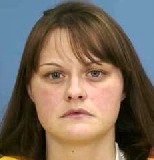
Kristi Fulgham
Murderer Miranda Barbour
Murderer · USA · 2013
Miranda Barbour, 19, defendant. · Elytte Barbour, 22, defendant and husband of…
100 victims
Miranda Barbour
Murderer · USA · 2013
Miranda Barbour, 19, defendant. · Elytte Barbour, 22, defendant and husband of…
100 victims
 Megan Huntsman
Murderer · USA · 1996
Megan Huntsman was 40 at sentencing. She was a mother of three children who wer…
6 victims
Megan Huntsman
Murderer · USA · 1996
Megan Huntsman was 40 at sentencing. She was a mother of three children who wer…
6 victims
 Angela Johnson
Murderer · USA · 1993
Angela Jane Johnson was convicted in federal court of aiding and abetting the m…
5 victims
Angela Johnson
Murderer · USA · 1993
Angela Jane Johnson was convicted in federal court of aiding and abetting the m…
5 victims
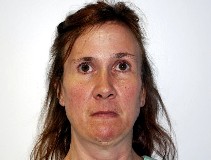 Michele Kalina
Murderer · USA · 1996
Michele Kalina pleaded guilty to murder for one of five infants she initially w…
5 victims
Michele Kalina
Murderer · USA · 1996
Michele Kalina pleaded guilty to murder for one of five infants she initially w…
5 victims
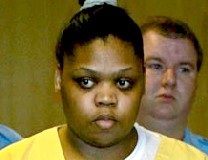 Tiffany Hall
Murderer · USA · 2006
Tiffany Hall was 24 when she was charged in September 2006. She later entered a…
5 victims
Tiffany Hall
Murderer · USA · 2006
Tiffany Hall was 24 when she was charged in September 2006. She later entered a…
5 victims
 Banita Jacks
Murderer · USA · 2007
Banita Jacks was a Washington, DC resident convicted of murdering her four daug…
4 victims
Banita Jacks
Murderer · USA · 2007
Banita Jacks was a Washington, DC resident convicted of murdering her four daug…
4 victims
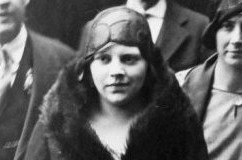 Irene Schroeder
Murderer · USA · 1929
Irene Schroeder (née Crawford) was an American criminal. · February 17, 1909 —…
1 victim
Irene Schroeder
Murderer · USA · 1929
Irene Schroeder (née Crawford) was an American criminal. · February 17, 1909 —…
1 victim
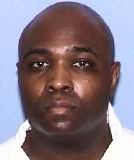 Timothy Wayne Adams
Murderer · 2002
Timothy Wayne Adams was a Black male who was executed by lethal injection in Te…
1 victim
Timothy Wayne Adams
Murderer · 2002
Timothy Wayne Adams was a Black male who was executed by lethal injection in Te…
1 victim
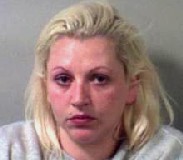 Janice Carter
Murderer · United Kingdom · 2011
Janice Carter was a Margate woman. She was 29 at the time of being jailed for a…
1 victim
Janice Carter
Murderer · United Kingdom · 2011
Janice Carter was a Margate woman. She was 29 at the time of being jailed for a…
1 victim
- Gender
- female
- Country
- USA
- Location
- Oktibbeha County, Mississippi, USA
- Date of birth
- August 27, 1976
- Age at first offence
- 27
- Characteristics
- parricide, robbery, attempt to collect insurance money
- Victim profile
- Joseph T. "Joey" Fulgham, 28 (her estranged husband)
- Method of murder
- Shooting ( .22-caliber rifle)
- Date(s) of murder
- May 10, 2003
- Years active
- 2003
- Date of arrest
- 2 days after
- Status
-
Life imprisonment
Resentenced to life in prison without the possibility of parole on November 22, 1010
Case record: Kristi Fulgham
Background
Kristi and Joey Fulgham married in 1991 and lived in the Starkville area. They had two children, Tyler and Darian Fulgham. Both children lived with them, along with Hayley, Fulgham’s daughter by another man.
Approximately a year and a half prior to Joey’s death, Fulgham and her children moved out of the marital home and began living with Fulgham’s boyfriend, Kyle Harvey. By May 2003, Fulgham had moved back in with Joey, and the two were working on their marriage.
Kyle Harvey met Kristi Fulgham in 2002, and she and her three children began living with him in Jackson in March 2002. Kyle testified that Fulgham later moved back into her home with Joey.
Fulgham and Kyle planned a trip to the Mississippi Gulf Coast for Mother’s Day weekend, May 9-11, 2003. Kyle stated that Fulgham had picked up her brother, Tyler Edmonds, on Friday night, and she had called Kyle at 6:30 a.m. on Saturday morning (May 10) and informed him that she was on her way to Jackson.
Kyle testified that Fulgham had told him that she was going to inherit $300,000 from her grandmother.
Fulgham informed David Noel, Joey’s stepfather, that she would pick up Tyler and Darian early the next morning because she was taking the children to the Coast. David testified that Fulgham called him between 4:30 a.m. and 5:00 a.m. Saturday morning and arrived after 5 a.m. to pick up the boys.
Carroll Morgan testified that Fulgham’s biological father was absent during her infancy and that he never had paid child support. Morgan also testified about their frequent moves, and that she was married and divorced several times, in addition to having various male friends with whom she and Fulgham had lived throughout Fulgham’s formative years. She also stated that two of her husbands had been abusive alcoholics.
Sarah Ferguson testified that Fulgham often came over to her house as a teenager because Fulgham’s stepfather was “scary and mean.” She also introduced various pictures of Fulgham’s children and testified that Fulgham was a good mother, and her children were important to her.
Mark Webb, a psychiatrist, testified that he had performed a psychiatric assessment of Fulgham at the Oktibbeha County Jail. He testified that Fulgham suffered from post-traumatic stress disorder and panic disorder with dependent personality traits. In arriving at these diagnoses, Webb testified that he had based his opinion on information from Fulgham, namely: (1) Fulgham was raped by her biological father when she was eleven years old; (2) one of her stepfathers was an alcoholic who had abused her mother; and (3) one of her mother’s boyfriends had neglected her.
At sentencing, the defense called Carol Morgan, Fulgham’s mother; Sarah Ferguson, Fulgham’s long-time friend; Mark Webb, a psychiatrist; and Adrienne Dorsey-Kidd, a licensed certified social worker.
The offence
Joey Fulgham was killed by a fatal gunshot wound to the head. The body was discovered on Sunday, May 11, 2003.
Under the State’s theory, Fulgham killed her husband for insurance proceeds and robbed him of his wallet (and its contents) and a computer’s central processing unit (CPU).
The jury found Fulgham guilty of killing her husband while engaged in the commission of a robbery. At the sentencing phase, the jury found unanimously beyond a reasonable doubt that Kristi Fulgham had intended that the killing of Joey Fulgham take place and had contemplated that lethal force would be employed.
The jury further found beyond a reasonable doubt the existence of two aggravators:
- the capital murder was committed for pecuniary gain; and
- the capital murder was committed during the commission of a robbery.
Lastly, the jury unanimously found that the mitigating evidence did not outweigh the aggravating evidence, and that Fulgham should suffer the penalty of death.
Joey’s body was described by witnesses as lying face down in bed when it was found.
Investigation
Robert Elmore, chief investigator for the Oktibbeha County Sheriff’s Department, received a call to process the homicide scene at the Fulgham home. He found Joey lying face down with a gunshot wound to the head. Robert searched the home for evidence but did not find any shell casings or Joey’s wallet. He also stated that the carpet in the living room was faintly outlined in the shape of a CPU.
Jason Pressley, who in 2003 worked for the Mississippi Crime Laboratory, conducted a latent-print examination on the light bulbs and found Kristi Fulgham’s print on one of them. Pressley testified that he would not expect to find a well-developed print on a light bulb that had been on for an extended period of time, evidencing that the light bulbs had been recently unscrewed.
Dr. Steven Hayne testified that he had performed an autopsy on Joey. He stated that an entrance gunshot wound was located at the back of Joey’s head, and that he had extracted a small-caliber lead bullet consistent with a .22 caliber projectile. Dr. Hayne stated that Joey had died from the gunshot wound.
Dr. Hayne testified that Joey’s death occurred approximately thirty-six to forty-eight hours prior to discovery of the body.
An investigation included testimony that two .22 caliber rifles had been in Tyler Edmonds’s house prior to Joey’s death, and that the older .22 was missing.
Randy Simpson testified that two .22 caliber weapons had been in Tyler Edmonds’s house prior to Joey’s death, but that the older .22 was currently missing. Simpson said the .22 was a single-shot, bolt-action, and that Tyler Edmonds was not strong enough to pull back the firing mechanism.
Chief State Pathologist Steven Hayne performed the autopsy on Joey Fulgham on May 12, 2003. Oktibbeha County Coroner Michael Hunt was present and assisted Hayne by providing him with details of the crime scene, including the state in which Joey Fulgham’s body was found situated in his bed. Hayne testified that Joey’s death had occurred approximately 36 to 48 hours before his body was discovered.
Hayne described rigor mortis, a foul odor caused by decomposition, discoloration of Joey’s skin and tissue around his face and chest, separation of his skin from the under tissue (dermis), the entrance wound of the bullet, the location where the bullet fragment had lodged just behind and to the left of his left eye, and the pool of blood that had since separated into serum and clotted blood cells under Joey Fulgham’s head.
Hayne testified that the bullet entered the back of Joey Fulgham’s head and moved slightly downward toward the left eye, traveling the full length of the cerebral hemisphere. He said the wound appeared to be consistent with that of a .22-caliber rifle shot at close range. After an internal examination of the skull, Hayne recovered a .22-caliber short round and said the shot could have been fired as close as 12 to 24 inches away. He used a styrofoam model of a human head to demonstrate the path of the bullet.
Hayne was handed a sealed envelope from Clark and asked to identify the contents, which he described as that bullet fragment. He held the bullet fragment up to show the judge and jury.
Hayne ruled the cause of death to be cranial cerebral trauma and the manner of death to be a homicide.
Arrest
Patricia Green, a jailer for the Sheriff’s Department in 2003, testified that on May 14, 2003, after both Tyler Edmonds and Kristi Fulgham had been arrested, she had a conversation with Fulgham at the jail. Green testified that Fulgham knocked on the window and asked if Green would give Tyler a letter that Fulgham had written to him. Green testified that Green said she could not, but that Fulgham said it was really important. Green testified that she took the note from Fulgham but never gave it to Tyler. Green testified that she took it and read the contents of the letter with a fellow deputy.
Benci, a part-time deputy in 2003, took Kristi Fulgham’s fingerprints the night of her arrest.
Trial
Guilt phase
A Union County jury convicted Kristi Leigh Fulgham of capital murder in the May 10, 2003, shooting death of her husband, Joseph T. “Joey” Fulgham.
The jury returned its verdict at 5:50 p.m. Thursday after less than 45 minutes of deliberations at the Oktibbeha County Courthouse Annex.
Prosecutors were Frank Clark and Patricia Faver. Defense counsel was James Lappan.
Eric Terrell of cellular phone service provider Sprint in Kansas City, Mo., testified that the phone records the prosecution admitted were accurate.
The prosecution presented call records from a cellular phone registered to Kyle Harvey. These phone records corroborated testimony that Kristi’s father, Danny Edmonds, testified that Kristi had called him a couple of times about a week before the murder from a number registered to Harvey.
Danny Edmonds testified that during those phone calls Kristi asked if he could “trust him with her life” and arranged for the two to meet at his home in Columbus. When they met, Kristi asked if she could borrow a gun because she “wanted Joey dead.”
The jury was instructed that to obtain a conviction for robbery, the State had to prove, beyond a reasonable doubt, that the defendant:
- feloniously took
- the personal property of another
- in his presence or from his person and
- against his will,
- by violence to his person or by putting such person in fear of some immediate injury to his person.
The jury found Fulgham guilty of capital murder. The jury’s verdict included a finding that Fulgham had killed Joey while engaged in the commission of a robbery.
The Supreme Court of Mississippi stated that it found merit in one assignment of error: the trial court committed reversible error by limiting mitigation evidence. Specifically, the court erred by refusing to allow social worker Adrienne Dorsey-Kidd to testify to her observations as mitigating evidence at the sentencing phase.
Testimony and exhibits
Shannon Fulgham testified that he worked with Joey at a car dealership, and they were paid every Friday around lunch time. He stated that on May 9, 2003, Joey cashed his paycheck for approximately $1,020 and placed the money in his wallet.
Shannon stated that he and Joey had planned to attend an air show on Saturday, May 10, 2003, but Joey did not answer Shannon’s phone calls around 11:00 a.m. or 11:30 a.m.
Shannon also testified that he stopped by Joey and Kristi Fulgham’s home around 12:00 p.m. or 12:30 p.m., and Joey had not answered the door.
When Shannon did not hear from his brother by Sunday afternoon, he cut the screen on Joey’s living room window and entered the home at approximately 5:30 p.m. He found Joey lying face down in bed and called 911.
Kyle Harvey met Kristi Fulgham in 2002, and Fulgham and three children began living with him in Jackson in March 2002.
Kyle stated that Fulgham planned to live with Joey until she found a new home, and that she would come to Jackson to look at homes for sale in the area.
Kyle testified that on their Coast trip Mother’s Day weekend, Fulgham had a large amount of cash on her person. He testified that Fulgham paid in cash for souvenirs, food, and their hotel room at the Beau Rivage Hotel. He testified that they spent Saturday night on the Coast and returned to Jackson at approximately 5 p.m. on Sunday.
David Noel testified that he had picked up Tyler and Darian between 4 p.m. and 4:30 p.m. on Friday, May 9, 2003. He testified that Fulgham, her three children, and Tyler Edmonds were home at the time. and 5:00 a.m. to pick up the boys.
Robert Elmore testified about security lights around the perimeter but that four light bulbs had been unscrewed, preventing them from automatically turning on. He testified that three of the four were working when screwed back in.
Lappan argued that it would not be unusual to find random fingerprints on any household appliance in or around someone’s home, and that Kristi Fulgham had been staying at Joey Fulgham’s home for several months at the time of the murder and investigation. Lappan told the jury the print could have made its way onto the light bulb if or when Kristi had replaced the bulb after a burnout.
Clark claimed it was highly unlikely that Kristi Fulgham would have had a chance to replace one of the bulbs herself. Clark testified that “Nothing I have heard has led me to believe that she was the kind of person who would expend the time or the effort it took to replace one of these security lights.” He testified that testimony suggested she would have waited for someone else like Joey or her brother Tyler to do it for her.
Clark testified that the prosecution’s theory suggested any prints left on the bulbs after being replaced would more than likely have evaporated after continuous use, but not if the fingerprint had been left when loosening the bulb.
Patricia Green testified about the jail conversation and the letter.
Green testified that she took the note from Fulgham and read it with a fellow deputy. The letter was admitted into evidence.
Excerpts from the letter read: “Tyler, I know you’re scared, but you can’t say what they’re telling you to say. It’s a trick. We have to make them understand this was an accident. We can both get out of this if we can make them understand it was an accident. You know we didn’t plan it, you know it was an accident. We didn’t mean to kill Joey. “If you tell them it was an accident, they can’t send me to the electric chair. They can’t punish me for an accident, don’t you see that? If you say what they want you to say, then you committed murder, you will go to jail, and so will I. Think, not only about your life, but mine as well. I’m all you have. Don’t listen to what your father. He doesn’t love you. I love you. “Listen to me. This will work out for the best. I love you so much. Everyone else will say I planned it because you were there. If you say what your mom told you, you will go to jail for 15 years, but that is a long time. You will be here a long time if you tell them it was intentional.”
After Green read the letter aloud, Shannon Fulgham’s wife, Kim, was next on the witness stand.
The prosecution admitted another letter discovered by Kim Fulgham when she and Cash were cleaning Joey’s apartment so that another family could rent it. Written by Kristi Fulgham, the letter was addressed to Harvey and written in November 2002.
Excerpts from the letter read: “Kyle, I guess you could tell I was annoyed. I am sick of being broke, and we are over $600 in the hole. I personally don’t like to struggle. I would do anything to ensure that I don’t ever have to struggle. I don’t have any money for Christmas and that pisses me off. you make no sense to me. You say you are sick and can’t work, but I deal with being sick, I deal with it all the time. If you were that sick, too sick to go to work, you should have gotten up early and gone to see the doctor...”
Both sides rested their case after Kim Fulgham’s testimony.
Closing arguments included quotations from Kristi Fulgham’s letter.
Clark opened closing arguments with a quote from Kristi Fulgham: I would do anything to ensure that I don’t ever have to struggle,” Clark said. “Those are Kristi Fulgham’s words, not mine. I told you yesterday that it was all about the money, and I think you can see that’s what I meant.”
Clark quoted: “To struggle may be an inconvenience, but it’s something we all have to do.”
Clark said: “Kristi Fulgham had to have someone to provide for her, to take care of her. She would run off to see other men, live with them and live it up, and then when she had spent all of their money, she would come back. She always came back to Joey.”
Clark told the jury: “Joey Fulgham’s life was worth $305,000 of life insurance, plus $1,000 cash.”
Defense attorney James Lappan stated during his closing arguments: “Mr. Clark mentioned repeatedly that this case is all about the money,” Lappan said. “Okay, let’s go with that. What money? The money in the wallet?”
Lappan also said: “And if someone was planning a murder, do they go around saying, “Hey, can I borrow your gun? Hey, can I borrow your gun?” That is the prosecution’s stance,” Lappan said.
Lead attorney Patricia Faver gave the final closing statement: “Greed. That’s what this case is all about,” Faver told the jury. “It wasn’t just about the insurance money, she didn’t have to steal the wallet and the $1,000, but she just couldn’t help herself. Her greed is why you are here. She couldn’t leave without the $1,000. She can sit there and cry all she wants, but the bottom line is she killed her husband in his own bed in his own house while he slept, and then she went and spent every dime of his money. “She spent all that money, and all along, her husband and the father of her kids was laying dead in a pool of his own blood. She may have killed him for the insurance money, but she killed him for the money in his wallet as well. And that is why she is guilty of capital murder.”
Sentencing phase
At sentencing, the jury deliberated for only 58 minutes and returned to the courtroom at 10:08 a.m.
Judge Lee J. Howard told the jurors their rights to either discuss the case publicly or not to discuss the case at all now that their service was completed and thanked them for their service.
Circuit Clerk Angie McGinnis read the sentence.
Howard addressed Kristi Fulgham directly: “It is the sentence of this court that you are to be executed for the crime committed by lethal injection.”
Howard addressed her attorneys, James Lappan and Stephanie Mallette: “You will have until Jan. 16, 2007, to file all post-trial and post-verdict motions in court.”
Judge Howard later explained the jury instructions after breach during a Bible incident.
Howard told the audience: “When I retired the jury to their hotel rooms for the evening, I asked them not to discuss this trial amongst themselves or anyone else until they resumed deliberations today,” Howard told the audience.
Howard said: “After that occurred, but before they left the building, one of the attorneys brought to the court’s attention that there was a Bible left in one of the jury rooms at one of the juror’s request. She (Assistant District Attorney Patricia Faver) told me they were going to tell Mr. Lappan and the defense team, which they did.”
Howard said: “Last night when the jury retired to the jury room, they were subsequently moved to another room, jury room number 2,” Howard said.
Howard said the bailiff Austin left his Bible in that room and left to retrieve it. Howard said the Bible was only in the room from about 15 minutes before Austin retrieved it.
Howard said defense attorney James Lappan immediately moved for a mistrial, and the motion would only include the penalty phase of the trial.
Howard denied Lappan’s motion for a mistrial and instructed the bailiff to bring the jury back into the courtroom. Howard told the jury: “I would ask you to disregard the situation from last night in reference to the Bible in the jury room, and use only the instructions you were given by the court, the testimony you heard and the evidence introduced during the trial to come to your conclusion on a verdict,” Howard told the jury.
Howard said: “I understand wanting to seek inspiration and instruction from other important documents and and publications, but by law in the State of Mississippi the jury is to base their verdict solely on the evidence testimony and specific instructions given to them by the judge, plus your own good common sense and reason — by law that is all you can consider. If any of you can’t come to a verdict by those three things, I need to know right now by raising your hands.”
No hands were raised.
At sentencing in the Supreme Court’s discussion, Mark Webb testified about post-traumatic stress disorder and panic disorder with dependent personality traits. Carol Morgan testified about her childhood and abuse history and that her husbands had been abusive alcoholics. Sarah Ferguson testified that Fulgham was a good mother and that the stepfather was “scary and mean.”
During sentencing, Fulgham called Adrienne Dorsey-Kidd, a licensed certified social worker. The State objected, and the trial court sustained an objection when asked whether Dorsey-Kidd reached conclusions or made observations. Fulgham made an offer of proof outside the jury’s presence.
In her proffer, Dorsey-Kidd testified to four observations:
- lack of parental bonding;
- substance abuse by Carol Morgan and at least two of Fulgham’s stepfathers;
- lack of a biological father’s input; and
- the love that Fulgham had for her children and vice versa after three years of incarceration.
The trial court ruled that Dorsey-Kidd’s testimony was not of such a high degree of expertise and skill that it was outside the knowledge of a lay person, and the jury could arrive at these conclusions based on evidence already admitted.
The Supreme Court later held it was reversible error to exclude Dorsey-Kidd’s observations after accepting her as an expert in the field of social work.
Appeals
The Supreme Court of Mississippi upheld Fulgham’s conviction of capital murder but reversed her death sentence and remanded for a new sentencing hearing.
In the Supreme Court decision dated October 28, 2010, the court stated: “So we affirm Fulgham’s conviction of capital murder and reverse her sentence of death and remand for a new sentencing hearing.”
The court held: “The trial court committed reversible error by limiting mitigation evidence. Specifically, the court erred by refusing to allow social worker Adrienne Dorsey-Kidd to testify to her observations as mitigating evidence at the sentencing phase of Fulgham’s trial.”
The Supreme Court’s decision also discussed other appellate issues, including whether unanimity instruction D-48 was required, evidence relevance, hearsay objections, and venue change.
Outcome
Fulgham was convicted of capital murder and sentenced to death on Dec. 9, 2006 for the death of Joey Fulgham.
The Mississippi Supreme Court upheld Fulgham’s conviction on Oct. 28, but ordered a new sentencing hearing, stating the court erred in 2006 by disallowing testimony of a social worker called during the sentencing phase of Fulgham’s trial.
After the Supreme Court overturned the death sentence, Fulgham was resentenced to life in prison without the possibility of parole by an Oktibbeha County Circuit Court judge. Pursuant to the wishes of the victim’s family, the state chose to pursue life without parole rather than the death penalty.
The state introduced an affidavit to the defendant agreeing to forfeit all rights to pursue post-conviction remedies in return for the state declining to pursue the death penalty.
Fulgham appeared before Judge Lee Howard for resentencing, and the resentencing occurred on November 22, 1010.
Spotted an error, or have more information about this case?