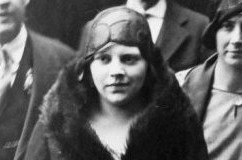
Irene Schroeder
Murderer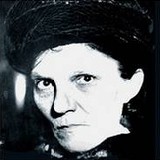 Martha Wise
Murderer · USA · 1924
Martha Wise (born 1885; died June 28, 1971), also known as “the Borgia of Ameri…
3 victims
Martha Wise
Murderer · USA · 1924
Martha Wise (born 1885; died June 28, 1971), also known as “the Borgia of Ameri…
3 victims
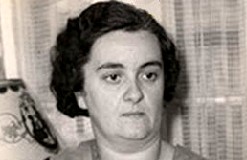 Mary Frances Creighton
Murderer · USA · 1923
Mary Frances Creighton (c. 1898 - July 16, 1936) was a housewife and was execut…
3 victims
Mary Frances Creighton
Murderer · USA · 1923
Mary Frances Creighton (c. 1898 - July 16, 1936) was a housewife and was execut…
3 victims
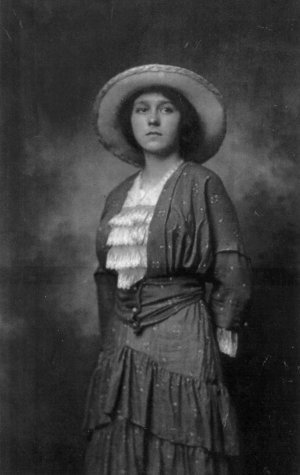 Inez Palmer
Murderer · USA · 1926
Inez Palmer — defendant; lived at the Stout farmhouse and pleaded guilty to a f…
2 victims
Inez Palmer
Murderer · USA · 1926
Inez Palmer — defendant; lived at the Stout farmhouse and pleaded guilty to a f…
2 victims
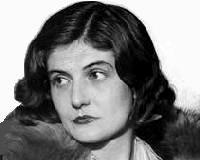 Winnie Ruth Judd
Murderer · USA · 1931
Winnie Ruth Judd (January 29, 1905 – October 23, 1998) was a Phoenix, Arizona m…
2 victims
Winnie Ruth Judd
Murderer · USA · 1931
Winnie Ruth Judd (January 29, 1905 – October 23, 1998) was a Phoenix, Arizona m…
2 victims
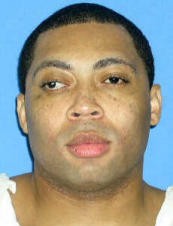 Daroyce Mosley
Mass murderer · USA · 1994
DaRoyce Lamont Mosley was convicted of capital murder for the death of Patricia…
4 victims
Daroyce Mosley
Mass murderer · USA · 1994
DaRoyce Lamont Mosley was convicted of capital murder for the death of Patricia…
4 victims
 Wade Frankum
Mass murderer · Australia · 1991
Wade Frankum Committed suicide by shooting himself the same day; in 1991 Wade F…
7 victims
Wade Frankum
Mass murderer · Australia · 1991
Wade Frankum Committed suicide by shooting himself the same day; in 1991 Wade F…
7 victims
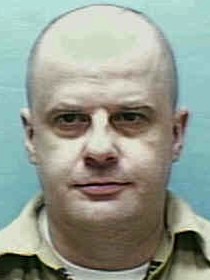 Scott Mink
Murderer · USA · 2000
Scott Andrew Mink (October 13, 1963 - July 20, 2004) lived with his elderly par…
2 victims
Scott Mink
Murderer · USA · 2000
Scott Andrew Mink (October 13, 1963 - July 20, 2004) lived with his elderly par…
2 victims
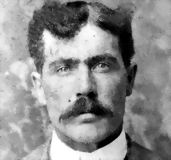 Wallace Wilkerson
Murderer · USA · 1877
Wallace Wilkerson (c. 1834 – May 16, 1879) was an American stockman. He was bor…
1 victim
Wallace Wilkerson
Murderer · USA · 1877
Wallace Wilkerson (c. 1834 – May 16, 1879) was an American stockman. He was bor…
1 victim
 Dwaine Little
Homicide - Murderer · USA · 1964
Name: Dwaine Little (Dwain Lee Little) · Birth year: 1948 · Little raped and ki…
5 victims
Dwaine Little
Homicide - Murderer · USA · 1964
Name: Dwaine Little (Dwain Lee Little) · Birth year: 1948 · Little raped and ki…
5 victims
- Gender
- female
- Country
- USA
- Location
- Butler, Butler County, Pennsylvania, USA
- Date of birth
- February 17, 1909
- Age at first offence
- 20
- Characteristics
- robbery, to avoid arrest
- Victim profile
- Cpl. Brady Paul, 25, of the Pennsylvania Highway Patrol
- Method of murder
- Shooting
- Date(s) of murder
- December 27, 1929
- Years active
- 1929
- Date of arrest
- 19 days after
- Status
-
Executed
Executed by electrocution in Pennsylvania on February 23, 1931
Case details
Irene Schroeder (née Crawford) was an American criminal.
Timeline
- February 17, 1909 — Irene Schroeder was born in Benwood, West Virginia.
- 27 December 1929 — Irene Schroeder, Walter Glenn Dague, and Tom Crawford were involved in a grocery store robbery in Butler, Pennsylvania.
- March 12 — Schroeder’s trial began.
- March 21 — Schroeder was found guilty of first-degree murder, punishable by death.
- March 24 — Dague’s trial began.
- March 31 — Dague received the same verdict.
- February 23, 1931 — Schroeder was electrocuted in Pennsylvania.
Background
Irene Schroeder was born in Benwood, West Virginia, in 1909. Her father, Joseph Crawford, had eight living children and seven dead, and she was the youngest. Her family was very poor, and she began working at a young age while staying in school through all but two weeks of the eighth grade. Her mother died when Schroeder was 8 years old, and she was sent to live with one married sister and then with Ruby Schroeder.
When she was 15, she married Ruby Schroeder’s husband’s brother, Homer Schroeder, who was significantly older than she. She lived with Homer for only a year and a half before leaving and taking their young son, Donnie, with her. She then returned to living with her sister and later with a brother. She worked as a waitress in a Wheeling-area restaurant.
Schroeder met Walter Glenn Dague in August 1927, when she said he almost hit her with his car as she crossed 16th Street in Wheeling. She said he stopped and took her to where she was rooming. A few days later, he came to see her again at the restaurant where she worked. She began an affair with him, and Dague left his wife, Teresa H. Dague, and their two children, Delmar and Maryls, for good on April 6, 1929.
Schroeder and Dague moved around frequently, working odd jobs for money. She said they sold washing machines in Buffalo, and that he pruned trees in Pittsburgh. She also said he sometimes sold cars. They began robbing gas stations and stores as they travelled.
Schroeder changed the spelling of her name to Schroeder to muddy the trail the police were following.
The offence
On 27 December 1929, Irene Schroeder, Walter Glenn Dague, and Irene’s older brother Tom Crawford were involved in a grocery store robbery in Butler, Pennsylvania.
In the robbery, Schroeder and Dague bound and gagged the store manager, Wish Angert, and an elderly customer, and emptied their pockets and cleaned out the cash register. Schroeder said it was not their first such heist. She said she and Dague had robbed gas stations and stores from Ohio to Tennessee in the preceding months. They were armed with handguns they had purchased in September in pawn shops on the North Side of Pittsburgh.
While escaping after the robbery, they were stopped by two police officers, Brady Paul and Ernest Moore, and a shoot-out ensued.
After the robbers sped away, George Book, a driver for Lawrence Bottling Works, helped Paul into his truck and hauled him to town.
Investigation
Police identification efforts involved a clerk in the Wheeling store who remembered Schroeder as a regular customer and provided a name. Investigators followed the clerk’s information to Schroeder’s family in the Wheeling area.
Investigators found Donnie at the home of Ray and Ruby Schroeder, Irene’s sister and brother-in-law, in Bellaire, Ohio. Donnie told them, “My mamma shot one cop and laid back of the car groaning,” and “Uncle Tom shot another one in the head. He shot right through the windshield.” The chief of the Bellaire police, Francis Moran, was associated with the account of Donnie’s statements.
Arrest and apprehension
After the shoot-out and robbery, Schroeder and her companions drove into New Castle, ditching their bullet-riddled Chevrolet for a Chrysler carjacked from a passing couple. They drove south on Route 18 into Beaver County.
Beryl Miller, owner of Miller’s Restaurant in Monaca, testified that Schroeder and Dague stopped at her Ninth Street business around 5 p.m. and ordered soup for Donnie and about a dozen sandwiches to go. Miller said she was in a hurry and hurried the child in his eating. Schroeder and Dague later denied stopping there.
They made their way back to Wheeling that night around 9 p.m., stashing the stolen Chrysler in a rented garage and driving off in a Pontiac coupe. They dropped Donnie off at the home of Schroeder’s father, Joseph Crawford, in Benwood, W.Va., and left Tom Crawford in downtown Wheeling. Both said it was the last time they ever saw Tom Crawford.
The nationwide chase involved shootouts and narrow escapes. Their trail ended in Arizona in a standoff in remote mountains of the Arizona desert. After the end of January 1930, Schroeder and Walter Glenn Dague were extradited back to Lawrence County to stand trial for the murder of Brady Paul.
Trial
Schroeder’s trial began on March 12. The prosecution presented 77 witnesses to build a case against her. On March 21, she was found guilty of first-degree murder, punishable by death.
Dague’s case began on March 24, and he received the same verdict on March 31.
During the trial and subsequent appeals, media attention focused on Schroeder’s young son, Donnie. His name and picture were splashed across many newspapers. Donnie and his grandfather often went to prison to visit Schroeder, including on her 22nd birthday, six days before her execution.
Schroeder testified about events including how she met Dague and their early period of working and living together.
Statements and quotations at trial
Ernest Moore testified about the stop and the shooting. When the last car was stopped, Moore said: “The last car we stopped was a Chevrolet coach.”
When asked by Schroeder’s defense attorney, Thomas W. Dickey, about training for pulling a gun, Moore replied:
“I never had any of it.”
“You never had any training?”
“Not in pulling a gun,” Moore said.
Sentencing
Schroeder was sentenced to death by electrocution. She was the first female to be executed in this way in Pennsylvania.
Dague was also sentenced to death by electrocution.
Appeals
The trial and subsequent appeals continued through to the state Supreme Court. No appeal outcomes were stated.
Outcome
On February 23, 1931, Schroeder was electrocuted in Pennsylvania at 7:05 a.m. She was given “first contact” at 7:01 a.m. Her execution certificate listed her occupation as “restaurant waitress.” Dague was pronounced dead at 7:14 a.m., and his certificate read “auto salesman.”
She wore:
- “a gray dress of imitation silk with white collars and cuffs, beige silk stockings and black satin slippers”
Her executioner remarked that she seemed particularly “composed and fearless”.
Schroeder’s parting words to her then-seven-year-old son Donnie were:
“I am going to die, my boy, but I am not afraid. Be a good boy and don't be afraid.”
Donnie was heard to remark:
“I'll bet my mom would make an awful nice angel.”
Aftermath
The telegram and family communications relating to Theodore S. Warnock were connected to Schroeder’s execution day.
Theodore S. Warnock and the telegram to the governor
Theodore S. Warnock was a 27-year-old auto mechanic from East Brook who was chosen to serve on the Lawrence County jury that sent Irene Schroeder to die. During prospective juror questioning by District Attorney John S. Powers, Warnock answered:
“Do you believe in the death penalty as a just mode of punishment?”
Powers asked.
“If the case warrants it, according to the law,” Warnock answered.
“Would it make any difference to you, Mr. Warnock, if the defendant was a woman?”
“No, sir,” Warnock replied.
One year later, on the day of her execution, Warnock sent a telegram to Gov. Gifford Pinchot asking him to spare her life. The telegram was missing from the Pennsylvania State Archives and not found in the Gifford Pinchot Papers collection of the Library of Congress, but the family had two pieces of proof.
The first piece of proof was a scribbled makeshift confidentiality agreement apparently required by Warnock, which read:
“I, Joseph Graham, herewith promise Theodore Warnock that there will be no press publicity attending my action in sending my telegram to Gov. Pinchot on behalf of Irene Schroder (sic).”
It was signed by a witness and dated Feb. 23, 1931.
The second piece of proof was a personal reply to Warnock from P.S. Stahlnecker, secretary to Pinchot, dated Feb. 27, 1931. The reply began:
“Dear Mr. Warnock,”
It stated:
“The governor directs me to thank you for your interest in the terrible and tragic matter of Irene Schroeder. He appreciates the kind expression which prompted your message, and regrets that he was not able to act as you suggested.”
It explained that in Pennsylvania, the governor had no legal authority to grant a commutation or pardon without the approval of the Board of Pardons. It closed with:
“Whether you or other people happen to believe in capital punishment or not, this is not an issue in this particular case, since that is the Law of Pennsylvania.”
Warnock seldom spoke about the case. Bill Warnock said Warnock believed they had gotten their just due, stating:
“I asked him about it once, and he said they did so many bad things from New Castle to Chandler, Ariz., that he felt they got their just due,” Warnock said.
When asked why try to save her, Warnock said:
“I really don't know,” Warnock said.
“The only thing I can think, from all indications I have, he loved his mother. ... And I think he was just the kind of guy who would have thought of her being a mother, and felt sympathy.”
Other details
Donnie Schroeder and later life
Donnie, Schroeder’s son, was four years old at the time of the incident and later lived with the effects of the case. He was reported to have said he had seen his mother shoot a policeman.
Don Shrader (also known as Don Schroeder) grew up shuffled among several relatives. He lived for a time with his father, Homer, who remarried. D.J. Everette said Don Shrader served as an Air Force gunner in Korea and was decorated. Everette said Don Shrader worked for NASA on several space missions after moving to Florida and studying engineering.
Sharon Carter said the family kept unlisted telephone numbers for years. Everette said Don Shrader’s family told her he had been killed in combat. She said the truth was learned when she requested Don Shrader’s military records. She said what she received did not match the account of someone killed in Germany in the 1940s.
Everette said she learned the legal spelling of the surname on Don Shrader’s birth certificate and on Irene and Homer’s marriage license was “Shrader.” She said Irene apparently adopted “Schroeder” for an unclear reason. Everette said she met her father and her two half-sisters shortly before his death in December 2009, and she was working on a book about her father’s experiences and family history. Everette said she hoped her research could clear Irene’s name or provide context for family choices.
Everette commented:
“What was done was a devastating thing for the family,” Everette said.
“His whole life, and then mine, was affected by Irene. But then you go back to where Irene started, being raised in that poverty and that environment. ... Not that I'm giving excuses, but I want people to know the real Irene.”
Brady Paul’s injuries and death
Brady Paul was shot three times: once in the left arm, once in the left leg, and once in the abdomen. The fatal shot was described as going through his liver and right kidney. He died at 12:55 p.m., about 15 to 20 minutes after arriving at Jameson Memorial Hospital.
Mollie Crowl, the owner of the Colonial Hotel, stayed with Paul in the operating room while he was dying. She testified that he was in terrible pain but was able to speak. Crowl recalled Paul saying:
“Tell the boys I did my duty, tell them I did the best I could,” Crowl recalled him saying.
Crowl also recalled Paul saying:
“Mollie, you will soon see mother, because I am dying. Kiss mother goodbye for me.”
Moore survived two gunshot wounds to the head: one that cut a groove across the tip of his nose and one that skimmed off his skull, knocking him unconscious. Moore testified that he had no memory of even firing his gun.
Tom Crawford
After the shoot-out, Tom Crawford was never arrested. Police believed he was killed in a shoot-out following a robbery in Texas.
Carjacking and route details
Schroeder and her companions ditched their Chevrolet for a Chrysler carjacked from a passing couple, and they drove south on Route 18 into Beaver County.


Spotted an error, or have more information about this case?