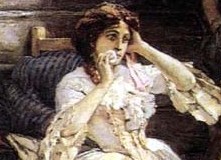
Mary Hamilton
Murderer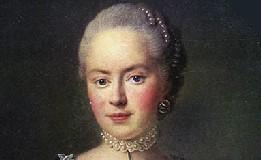 Darya Saltykova
Murderer · Russia · 1757
Darya Saltykova (b. 1730, d. 1801) was a Russian noblewoman from Moscow, common…
139 victims
Darya Saltykova
Murderer · Russia · 1757
Darya Saltykova (b. 1730, d. 1801) was a Russian noblewoman from Moscow, common…
139 victims
 Olesya Mostovschikova
Murderer · Russia · 2009
Olesya Mostovschikova was a 27-year-old woman who was arrested in Russia after…
1 victim
Olesya Mostovschikova
Murderer · Russia · 2009
Olesya Mostovschikova was a 27-year-old woman who was arrested in Russia after…
1 victim
 Alexander Solonik
Murderer · Russia · 1990
In February 1997, Greek newspapers published articles that claimed a Russian mo…
10 victims
Alexander Solonik
Murderer · Russia · 1990
In February 1997, Greek newspapers published articles that claimed a Russian mo…
10 victims
 Alexey Pichugin
Murderer · Russia · 1998
Alexei Vladimirovich Pichugin (Aleksey Pichugin) was born in the town of Orekho…
5 victims
Alexey Pichugin
Murderer · Russia · 1998
Alexei Vladimirovich Pichugin (Aleksey Pichugin) was born in the town of Orekho…
5 victims
 Cynthia Sommer
Justice miscarriage · USA · 2002
Cynthia Sommer was convicted of first-degree murder with the “special circumsta…
0 victims
Cynthia Sommer
Justice miscarriage · USA · 2002
Cynthia Sommer was convicted of first-degree murder with the “special circumsta…
0 victims
 Jeffrey Tokar
Murderer · USA · 1992
March 11, 1992 — Jeffrey Tokar picked up his girlfriend, Sandra Stickley, share…
1 victim
Jeffrey Tokar
Murderer · USA · 1992
March 11, 1992 — Jeffrey Tokar picked up his girlfriend, Sandra Stickley, share…
1 victim
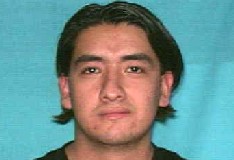 Erik Salvador Ayala
Murderer · USA · 2009
Erik Salvador Ayala opened fire indiscriminately outside an under-21 nightclub,…
2 victims
Erik Salvador Ayala
Murderer · USA · 2009
Erik Salvador Ayala opened fire indiscriminately outside an under-21 nightclub,…
2 victims
 Richard Rogers
Murderer · USA · 1992
Richard Rogers Jr. was convicted in November of murdering two men, Thomas Mulca…
2 victims
Richard Rogers
Murderer · USA · 1992
Richard Rogers Jr. was convicted in November of murdering two men, Thomas Mulca…
2 victims
 Yang Xinhai
Serial killer · China · 2000
Yang Xinhai (simplified Chinese: 杨新海; pinyin: Yáng Xīnhǎi; 17 July 1968–14 Febr…
67 victims
Yang Xinhai
Serial killer · China · 2000
Yang Xinhai (simplified Chinese: 杨新海; pinyin: Yáng Xīnhǎi; 17 July 1968–14 Febr…
67 victims
- Gender
- female
- Country
- Russia
- Location
- St. Petersburg, Russia
- Date of birth
- ???
- Characteristics
- infanticide
- Victim profile
- Her newborn infant
- Method of murder
- Drowning
- Date(s) of murder
- 1717
- Years active
- 1717
- Date of arrest
- —
- Status
-
Executed
Executed by decapitation on March 14, 1719
Case record: Mary Hamilton
Background
Mary Hamilton (also given as Maria Danilovna Gamentova) died on 14 March 1719. She was the lady in waiting of Empress Catherine I of Russia and a royal mistress of Tsar Peter the Great of Russia. She was pointed out as one of the possible inspirations for the song Mary Hamilton (ballad).
Mary Hamilton was a member of the Scottish family Hamilton, whose emigrated to Russia by Thomas Hamilton during the reign of Tsar Ivan the Terrible. She was described as likely the daughter of William Hamilton and the cousin of Evdokiya Grigorievna Hamilton.
She became lady in waiting to Empress Catherine in 1713. She aroused attention with her beauty and love life and became the lover of Tsar Peter. She also had a lover, Ivan Mikhailovich Orlov.
Mary Hamilton was accused of theft and slander of Empress Catherine.
The offence
Mary Hamilton had an abortion in 1715. The account described that she did this by taking a medicine for constipation.
She also gave a secret birth in 1717 and drowned the baby.
Hamilton was charged with abortion, murder of her infant, and theft of jewelry belonging to the Empress.
Investigation and arrest
In 1717, Orlov was interrogated about missing documents of Peter’s. He confessed his relationship with Hamilton and pointed her out for abortion.
Avdotya Chernysheva accused Hamilton of spreading the rumour that Catherine ate wax to keep her skin pale. When Catherine had Hamilton’s room searched, several stolen objects belonging to Catherine were found there.
Hamilton and Orlov were both arrested and imprisoned in the Fortress of Saint Petersburg.
Mary Hamilton confessed to theft and to killing her newborn infant, but refused to testify against Orlov despite torture.
Trial
In November 1718, Mary Hamilton was found guilty of abortion, murder of her infant, and theft of jewelry belonging to the Empress. She was sentenced to death.
Sentencing and mercy petitions
Both Empress Catherine and Tsarina Praskovia Saltykova asked Peter for mercy on her account, but there was no result.
Outcome
Mary Hamilton was executed dressed in white by decapitation on 14 March 1719. She was decapitated by sword instead of an axe, as Peter had promised her that the executioner would not be allowed to touch her.
After the execution, the Emperor took up the head, gave a lecture about its anatomy, kissed it, and then threw it away.
The head of Mary Hamilton was thereafter preserved at the Russian Academy of Science at least until the reign of Catherine the Great.
Other details
Mary Hamilton was described as having two lovers in the account: Tsar Peter and Ivan Mikhailovich Orlov, with Orlov betraying her with Peter’s other lover, Avdotya Chernysheva. After Orlov betrayed her, she tried to win him back by bestowing him with gifts stolen from Catherine.
The account stated that in 1718, Catherine and Peter asked about mercy for Hamilton.
The account included a detailed description of the day of the execution: the prisoner appeared on the scaffold in a white silk gown trimmed with black ribbons. Peter climbed the structure to stand beside her and spoke quietly into her ear. The condemned woman and most of the spectators assumed that this would be her last-minute reprieve.
Peter then gave her a kiss and said:
“I cannot violate the laws to save your life. Support your punishment with courage, and, in the hope that God may forgive you your sins, address your prayers to him with a heart full of faith and contrition.”
Miss Hamilton knelt and prayed. The Tsar turned away and the headsman struck. The account further stated that the bystanding tsar picked up the severed head and discoursed to the multitude on its anatomical features.
The account stated that the disembodied head was preserved in a jar until Catherine the Great ran across it and, after remarking that the woman’s youthful beauty had been preserved “this half-century,” had it decently buried.
The account added that Hamilton may have been conflated with the “four Marys,” Ladies-in-Waiting of Mary, Queen of Scots, and that this was described as a much-disputed hypothesis. It also stated that in some versions of the ballad, a person of the name Mary Hamilton became the lover of the king (“the highest Stuart,” in this case) and was put to death for killing her illegitimate child.
The account included the ballad lyrics:
O little did my mother ken,
The day she cradled me,
The lands I was to travel in,
Or the dog’s death I wad d’ee!


Spotted an error, or have more information about this case?