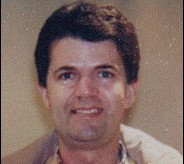
Richard Rogers
Murderer Brian Kevin Rosenfeld
Murderer · USA · 1985
Brian Kevin Rosenfeld Brian Kevin Rosenfeld was sentenced to three concurrent l…
23 victims
Brian Kevin Rosenfeld
Murderer · USA · 1985
Brian Kevin Rosenfeld Brian Kevin Rosenfeld was sentenced to three concurrent l…
23 victims
 Russell Ellwood
Murderer · USA · 1991
Russell Ellwood was a former taxi driver. Authorities suspected him of killing…
20 victims
Russell Ellwood
Murderer · USA · 1991
Russell Ellwood was a former taxi driver. Authorities suspected him of killing…
20 victims
 Robert Martines Perez
Murderer · USA · 1994
Name: Robert Martines Perez · Other name used in proceedings: Robert Martinez P…
15 victims
Robert Martines Perez
Murderer · USA · 1994
Name: Robert Martines Perez · Other name used in proceedings: Robert Martinez P…
15 victims
 Billy Frank Vickers
Murderer · USA · 1993
Billy Frank Vickers Vickers was executed by lethal injection in Texas on Januar…
14 victims
Billy Frank Vickers
Murderer · USA · 1993
Billy Frank Vickers Vickers was executed by lethal injection in Texas on Januar…
14 victims
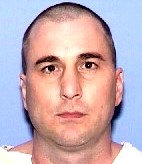 Stephen Barbee
Murderer · USA · 2005
Stephen Dale Barbee received a death sentence for the capital murder of Lisa Un…
2 victims
Stephen Barbee
Murderer · USA · 2005
Stephen Dale Barbee received a death sentence for the capital murder of Lisa Un…
2 victims
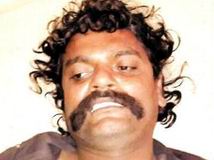 Jaishankar
Serial killer · India · 2006
Jaishankar was also known as M Shankar and M Sankar. He was also described as a…
21 victims
Jaishankar
Serial killer · India · 2006
Jaishankar was also known as M Shankar and M Sankar. He was also described as a…
21 victims
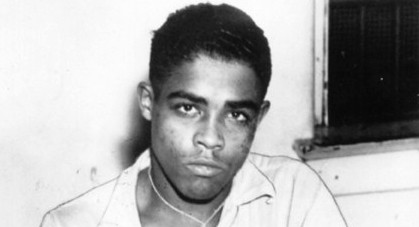 Rainey Bethea
Murderer · 1936
Name: Rainey Bethea · Birth: October 16, 1909 · Execution date: 14 August 1936…
1 victim
Rainey Bethea
Murderer · 1936
Name: Rainey Bethea · Birth: October 16, 1909 · Execution date: 14 August 1936…
1 victim
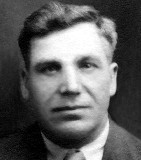 Jacob Bentz
Murderer · USA · 1931
Jacob Bentz was the second husband of Sophia Eberlein. Sophia Eberlein was beat…
1 victim
Jacob Bentz
Murderer · USA · 1931
Jacob Bentz was the second husband of Sophia Eberlein. Sophia Eberlein was beat…
1 victim
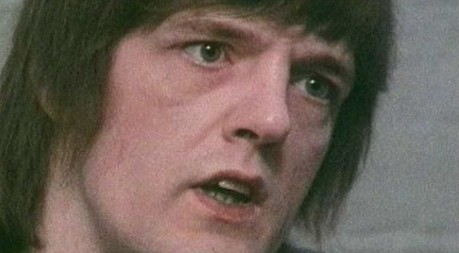 Robert Maudsley
Serial killer · United Kingdom · 1974
Robert Maudsley (born June 1953) was a British serial killer responsible for th…
4 victims
Robert Maudsley
Serial killer · United Kingdom · 1974
Robert Maudsley (born June 1953) was a British serial killer responsible for th…
4 victims
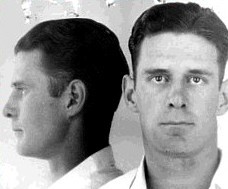 Roland Cochrane
Murderer · USA · 1935
Roland H. Cochrane was an inmate identified in the case as Inmate 009880. · Def…
1 victim
Roland Cochrane
Murderer · USA · 1935
Roland H. Cochrane was an inmate identified in the case as Inmate 009880. · Def…
1 victim
- Gender
- male
- Country
- USA
- Location
- New Jersey/Pennsylvania, USA
- Date of birth
- 1950
- Age at first offence
- 42
- Characteristics
- dismemberment, nurse, drugs
- Victim profile
- Thomas Mulcahy, 57 / Anthony Marrero, 44 (gay men)
- Method of murder
- St abbing with knife
- Date(s) of murder
- July 10, 1992 / May 10, 1993
- Years active
- 1992–1993
- Date of arrest
- May 30, 2001
- Status
-
Life imprisonment
Sentenced to life in prison in January 2006; conviction for murdering Thomas Mulcahy and Anthony Marrero resulted in 30 years-to-life sentences with all four sentences ordered to run consecutively, making Rogers eligible for parole after a minimum of 65 years; judge James N. Citta called Rogers “an evil human being,” expressed the hope that he die “in some hole in some prison without ever having freedom again,” and stated: “That’s the judgment of this court... We’re done. Take him out of here,”
Overview
Richard Rogers Jr. was convicted in November of murdering two men, Thomas Mulcahy and Anthony Marrero, whose bodies were found dismembered in plastic bags along New Jersey highways. He received effectively a life sentence, with sentences ordered to run consecutively.
Rogers was also linked by investigators to other dismemberment killings in New York and Pennsylvania, though he was not charged with those other killings as part of the Ocean County case.
People
- Richard W. Rogers Jr. — defendant; a former nurse at Mount Sinai Hospital in Manhattan; living in Staten Island; convicted of murdering Thomas Mulcahy and Anthony Marrero and of hindering his own apprehension.
- Thomas R. Mulcahy — victim; 57 (also described as 56 and 58 in different parts of the material); a computer sales representative/businessman from Sudbury, Mass.; described by prosecutors as bisexual.
- Anthony E. Marrero — victim; 44; identified as a prostitute and described as a gay prostitute who worked near the Port Authority Bus Terminal; murdered in 1993.
- Peter S. Anderson — another victim discussed as a suspect case in Pennsylvania; 54; described as an investment broker from Philadelphia.
- Michael Sakara — another victim discussed as a suspect case in New York; 55 (also described as 56 in one passage); described as a typesetter from Philadelphia/Manhattan.
- Matthew John Pierro — another victim discussed in Florida; 21 (also described as 25); his murder was discussed as an issue for admissibility.
- James N. Citta — judge of the New Jersey Superior Court presiding over the Ocean County case.
- William J. Heisler — Ocean County prosecutor; chief trial attorney in the Ocean County Prosecutor’s Office; executive assistant prosecutor in the Ocean County Prosecutor’s Office; presented the case at trial.
- Hillary Bryce — prosecution team member who presented evidence at trial.
- David Ruhnke — defense lawyer for Rogers.
- Carl Locke — director of client services for the New York Gay & Lesbian Anti-Violence Project; commented on whether links to more murders would be uncovered.
- Thomas F. Kelaher — Ocean County Prosecutor referenced as giving statements about indictments and charging.
- E. David Millard — Ocean County Prosecutor referenced as giving statements about charges.
- Lt. Matthew Kuehn — New Jersey State Police lieutenant.
- Margaret Mulcahy — widow of Thomas Mulcahy; called Lt. Matthew Kuehn for an update.
- Lisa Hall — bartender at the Five Oaks, a gay bar in Greenwich Village; told police that Sakara had been drinking with a man introduced as Mark or John, a nurse from St. Vincent’s hospital.
- Rick Unterburg — house piano player at the Townhouse bar since 1989; testified or was cited regarding Rogers’s presence at the bar.
- Abraham Levy — Townhouse cocktail waiter in the early 90’s; said “Every week there seemed to be another body.”
- Clarence Patton — executive director of the gay victims group; welcomed the sentence.
Timeline
- July 10, 1992 — Thomas Mulcahy’s remains were found at a state Department of Transportation maintenance yard at routes 70 and 206 in Woodland Township, Burlington County, and in trash barrels at the Stafford Forge Rest Area on the Garden State Parkway in Stafford, Ocean County.
- July 8, 1992 — Thomas Mulcahy was last seen alive at the Market Street Bar near the former site of the World Trade Center in lower Manhattan.
- July 5, 1991 — The mutilated body of Peter S. Anderson was found wrapped in green plastic garbage bags along the Pennsylvania Turnpike.
- May 10, 1993 — Anthony Marrero’s dismembered body was found in plastic bags on a dirt road in the Whiting section of Manchester Township.
- May 4 or 5, 1993 — Anthony Marrero was last seen near the Port Authority Bus Terminal in Manhattan.
- May 28, 2001 — Richard Rogers was arrested at Mount Sinai Hospital; investigators searched his home at 62 Bridge Court on Staten Island.
- Early 1993 — The Townhouse bar was identified as one of Rogers’s favorite haunts during the early 1990’s; details from slayings spread among gay men.
- July 31, 1993 — The head and two arms of Michael Sakara were found off Route 9W in Haverstraw, N.Y.
- August 8, 1993 — Sakara’s legs and torso were found about eight miles farther north on Route 9W.
- May 5, 1991 — Peter S. Anderson’s remains were found wrapped in green plastic garbage bags along the Pennsylvania Turnpike.
- 1973 — Rogers was arrested as a suspect in the death of his housemate Frederick Spencer; Rogers was acquitted of manslaughter in Penobscot County Superior Court.
- November 10, 2005 — A jury convicted Rogers of murdering Thomas Mulcahy and Anthony Marrero.
- January 27, 2006 — Judge James N. Citta sentenced Rogers to 30-years-to-life for murder with another two-and-a-half year minimum for hindering apprehension in the Mulcahy slaying; the same penalty was given for the Marrero killing.
- February 2, 2006 — Reported that Rogers was sentenced to what was effectively a life sentence with a minimum of 65 years before parole eligibility.
- March 2000 to 2001 — A task force re-opened the case and used new technology to identify fingerprints; fingerprints were matched using the Toronto Police Department technique; packets were sent out and a latent hit was later obtained; Maine advised of a match early in 2001.
The offence
Thomas Mulcahy (1992)
- Thomas Mulcahy was 57 and was described by prosecutors as bisexual.
- Prosecutors said Mulcahy was visiting Manhattan on business in July 1992.
- Mulcahy was last seen alive on July 8, 1992, at the Market Street Bar near the former site of the World Trade Center in lower Manhattan.
- Mulcahy’s dismembered remains were found in two New Jersey locations on July 10, 1992: at a state Department of Transportation maintenance yard at routes 70 and 206 in Woodland Township, Burlington County, and in trash barrels at the Stafford Forge Rest Area on the Garden State Parkway in Stafford, Ocean County.
- The material said Mulcahy’s head, torso and arms were left in Woodland, while the rest of his body was dumped into trash cans at the Stafford Forge rest area.
- The material stated prosecutors said Mulcahy died from three stab wounds to the chest and abdomen.
- Prosecutors said Mulcahy’s body was dismembered, placed in plastic garbage bags, and dumped along Route 72 in Woodland Township, Burlington County, and at a Garden State Parkway rest area in Stafford Township.
Anthony Marrero (1993)
- Anthony Marrero was 44 and was identified as a prostitute.
- Prosecutors said Marrero was last seen on May 4 or 5, 1993, near the Port Authority Bus Terminal in Manhattan.
- Marrero’s dismembered body was found on May 10, 1993, on a dirt road in the Whiting section of Manchester Township; the material also described Crow Hill Road in Manchester Township as the location.
- Prosecutors said Marrero’s body was dismembered with a knife and handsaw and that his remains were placed in plastic bags.
- The material stated prosecutors said Marrero was stabbed six times in the back.
Method and pattern discussed in trial
- Rogers’s killings were described as involving meticulous dismemberment and disposal of body parts in plastic bags.
- The material stated the victims were stabbed repeatedly.
- The material stated the victims were drunk to the point of incapacitation when they were stabbed.
- The material stated the bodies showed no sign of forced sex.
- The nickname “last call killer” was used in the material to describe Rogers.
- The material stated prosecutors also sought to show a pattern using evidence from other states.
Investigation
Discovery of body parts and early clues
- One account described 14 years before being found: one bag held the head, another held the torso and severed arms, and legs were found in a third. Ten months later, more bags surfaced.
- Police in Manchester Township, about 55 miles east of Philadelphia, found six bags near a dirt road, filled with the body parts of another man.
Fingerprints and matching
- The material stated that faint fingerprints were recovered from the plastic bags.
- The case stayed cold until about 1999, when Margaret Mulcahy called Lt. Matthew Kuehn of the New Jersey State Police for an update.
- The material stated Lt. Kuehn sent the bags that had held the bodies of Mulcahy and Marrero to the Toronto Police Department, where officers used a technique to lift fingerprints from evidence.
- The material stated that officers “start re-running the bags” and “raise 33 prints mainly from the bag with Mulcahy’s personal effects and the saw,” and that a latent hit showed the Mulcahy and Marrero prints were from the same guy.
- The material stated Lt. Kuehn sent out 51 packets in 2000 with the prints and an explanation of the case to authorities in every state and Puerto Rico, asking for database checks.
- The material stated that in early 2001 nearly a decade after Mulcahy’s body was found, a call came from Maine saying “we got him.”
- The material stated old records indicated that in 1973, when Rogers was a graduate student at the University of Maine in Orono, he had killed his housemate with a hammer and was acquitted.
- The material stated the fingerprints tied both victims together and to Rogers.
Grocery and hardware chain links discussed
- The material stated that three or four prints were on the plastic holding Marrero’s body and on another bag, a small plastic grocery sack labeled “Acme’s President's Choice.”
- The material stated investigators looked around and found that the bags were in nine Acme stores, including one in Tuckerton, N.J., about three miles from where Mulcahy was found, and also that there was another Acme in Wrightstown and an Acme on Staten Island.
- The material stated a saw found in a bag with Mulcahy’s wallet included a sticker from Pergament, a hardware chain with a location on Staten Island across the street from an Acme.
Task force and cold file resubmission
- The material described that a multiagency task force was created due to similarities with other unsolved cases involving mutilated bodies found near highways in New Jersey, New York and Pennsylvania.
- The material stated that authorities resubmitted prints to the nationwide Automated Fingerprint Identification System in April 2001.
- It also stated that a “cold file” law enforcement team resubmitted fingerprints to a nationwide fingerprint database of criminal suspects.
- The material stated Rogers was identified after prints were resubmitted and that Maine was not part of the system when the prints were first submitted a decade earlier.
Arrest and evidence found at arrest
Arrest
- The material stated Rogers was arrested at Mount Sinai Hospital on May 28, 2001.
- It stated he was held in the Ocean County Jail awaiting trial.
Search of home
- The material stated investigators searched Rogers’s home at 62 Bridge Court on Staten Island.
- The material stated investigators found a bottle of Versed, a sedative that can be used as a date-rape drug.
- The material stated investigators found rug fibers consistent with those found with Mulcahy’s body.
- The material stated investigators found “several photographs of unknown men on which stab wounds had been drawn,” according to court documents.
Drug-related context mentioned
- The material stated Rogers was suspected of using sedatives consistent with the presence of Versed found during the search.
Trial
Charges and indictment
- The material stated Rogers was indicted by an Ocean County grand jury on two counts of murder and two counts of hindering apprehension.
- The material stated he was charged with killing Thomas Mulcahy and Anthony Marrero.
- It also stated he was charged with the murders of Mulcahy and Marrero that took place in 1992 and 1993.
Evidence and jury consideration
- At trial in Toms River, N.J., Judge James Citta allowed evidence from murders in two other states to show what prosecutors considered a pattern.
- The material stated the jury deliberated for four hours and returned a guilty verdict.
- Judge Citta instructed the jury could infer that because bodies were found in New Jersey, the murders occurred in New Jersey.
Opening statements and defense theory
- Defense counsel David Ruhnke told the jury police arrested the wrong man and suggested that the defense would show fingerprints proved Rogers did nothing more than carry bags containing mutilated body parts.
- Ruhnke told the jury:
"Start thinking to yourself, maybe there's more than one person, or maybe Mr. Rogers just carried the bags,"
- Ruhnke also said:
"They promised to prove to you beyond a reasonable doubt the man who sits here . . . is the killer. Maybe they don't have the right guy."
- The material stated Assistant Prosecutor William Heisler disputed Ruhnke’s theory and told jurors the true killer sat before them in court.
Statements about motive and trial evidence
- Heisler stated:
"The big unanswered question in this case is why,"
- Heisler said:
"For whatever reason, he was targeting gay men in New York. All we know is they were drunk when they went missing."
- Heisler also said the motive remained uncertain and:
"Maybe something happened during sex or foreplay,"
- The material stated Heisler also noted that bodies showed no sign of forced sex.
Witness and identification testimony discussed
- In testimony summarized in the material, Lt. Matthew Kuehn said there was no evidence that Mulcahy or Marrero were killed on Staten Island.
- The material stated that bartender Lisa Hall placed Rogers with Sakara at the Five Oaks piano bar in the West Village early on July 30, 1993.
- The material stated Hall testified that the man she recognized as Rogers came in the bar and sat next to Sakara, who introduced his new friend as Mark or John and said he was a nurse at St. Vincent’s Hospital.
- Kuehn described reviewing employment photos of male nurses and said he selected Rogers and Hall identified the man as the same man with Sakara.
- The material stated forensics experts matched fingerprints found on bags containing body parts of Mulcahy, Marrero and Anderson with Rogers.
Defense arguments about fingerprint error
- The material stated defense attorney David Ruhnke rebutted fingerprint validity and pointed to known fingerprint errors, including the FBI’s misidentification of Brandon Mayfield in the 2004 Madrid bombing case.
Characterizations and courtroom-related statements
- The material described Rogers as wringing his hands, bouncing his legs and grimacing as lead investigator testified near the end of trial.
Sentencing
Sentence structure and consecutive terms
- On January 27, 2006, Judge James N. Citta sentenced Rogers to 30-years-to-life for murder in the Mulcahy slaying with another two-and-a-half-year minimum for hindering apprehension.
- The same penalty was given for the Marrero killing.
- The judge required that Rogers serve all four sentences consecutively.
- Rogers was 55 at the time referenced for reporting.
- The material stated Rogers would have to serve a minimum of 65 years before eligible for parole.
Judge’s remarks at sentencing
- The material stated Citta called Rogers “an evil human being.”
- Citta expressed the hope that Rogers die “in some hole in some prison without ever having freedom again.”
- The material reproduced Citta’s concluding statement:
"That’s the judgment of this court... We’re done. Take him out of here,"
Prosecutorial posture and penalty
- Prosecutors did not seek the death penalty.
Appeals and post-trial stance
Plans to appeal
- The material stated David Ruhnke planned to appeal after sentencing.
- The material stated Ruhnke had argued that prosecutors charged the wrong person.
- The material stated Ruhnke argued the state had not proved the murders occurred in New Jersey, and Judge Citta ruled the jury could infer that because bodies were found in New Jersey.
Statements about appeal issues
- The material stated defense raised that investigators never determined where Mulcahy and Marrero killings took place and that this would be an issue for Rogers’ appeal.
- The material stated defense also said evidence from Sakara and Anderson killings would be an issue on appeal and described the concern that the jury might convict on that basis rather than on Mulcahy and Marrero evidence.
- Ruhnke was quoted:
"I think that’s exactly the message that the evidence sent and that the jury received,"
- Ruhnke also said:
"I think that was an enormously prejudicial decision by the judge and whether he was legally correct in making it is going to one of the primary appellate issues."
- Heisler was quoted:
"We expect that in every case where there is a conviction," "It’s routine."
Outcome
Rogers was convicted of murdering Thomas Mulcahy and Anthony Marrero and of hindering his own apprehension in connection with those murders. He was sentenced to effectively a life term in January 2006, with consecutive terms requiring a minimum of 65 years before parole eligibility.
Other details
Rogers’s employment and associations
- The material stated Rogers worked as a registered nurse at Mount Sinai Medical Center for more than 20 years and later was described as a pediatric nurse at Mount Sinai Hospital.
- The material stated Rogers was arrested while working at Mount Sinai Hospital in Manhattan.
- It described the Townhouse Bar on East 58th Street between Second and Third Avenues as one of Rogers’s favorite haunts during the early 1990s.
- Rick Unterburg said:
"He was dull,"
- Unterburg also said:
"Just bland."
- Unterburg said:
"The only reason I remember him is because he hung out at the piano."
- Unterburg said Rogers had nearly forgettable characteristics and described his preference for warm sweaters and cold Scotch.
- Unterburg said Rogers stopped going to the Townhouse around the same time Mr. Mulcahy’s body was found in New Jersey, echoing his testimony at Rogers’s trial.
- Abraham Levy said:
"It was horrible."
- Levy also said:
"Every week there seemed to be another body."
Rogers’s other suspected killing discussions
- The material described that Rogers was suspected of at least two other murders and that prosecutors said they did not have enough evidence.
- The material also described possible links:
- Michael Sakara, whose head and arms were found July 31, 1993, and legs and torso found a week later.
- Peter S. Anderson, whose remains were found in 1991 along the Pennsylvania Turnpike.
- The material stated Rogers was considered a prime suspect in additional cases.
- It stated Sakara’s dismemberment matched Marrero and Mulcahy in a way that Anderson’s did not in terms of specific fingerprints; it also stated police never found forced sex evidence.
Evidence about whereabouts and work attendance
- Lt. Matthew Kuehn testified regarding Rogers’s work attendance at Mount Sinai and said Rogers was off work on and immediately following the day Mulcahy was last seen and was off on May 5 and 6, 1993.
- The material stated Kuehn testified that in other cases Rogers was implicated in but not charged, Rogers also had time off on relevant days.
Extradition and charging context discussed in the material
- The material stated the Manhattan district attorney’s office said nurse Richard Rogers, accused of murdering two men found dismembered on New Jersey highways, was fighting extradition from New York.
- The material stated Rogers was also under investigation for dismemberment deaths of men last seen in Manhattan gay bars in the early 1990s, and that the murders attributed to “The Last Call Killer” remained unsolved.
Additional Maine homicide background included in the material
- The material stated that in 1973 Rogers was arrested in Maine as a suspect in a homicide involving Frederick Spencer.
- It stated Spencer’s body was found a few days after his death by two bicyclists riding along a deserted road near Old Town.
- The material stated Rogers claimed self-defense and said he caught Spencer in his apartment and Spencer came at him with a hammer, and that Rogers managed to get the hammer away and beat Spencer until he died.
- The material stated Rogers was acquitted of manslaughter in Penobscot County Superior Court six months later.
- The material stated Rogers was arrested on Staten Island on August 19, 1988, and accused of drugging, binding and injuring a Manhattan man who visited his apartment a month earlier.
Release, closure, and reactions
- The New York City gay and Lesbian Anti-Violence Project welcomed the sentence.
- Clarence Patton said:
"This is kind of a completion of a long struggle for two of the victim’s families,"
- Patton also said:
"We don’t want to pile on, but what we would like to see is some of these additional cases get adjudicated so those families can get some measure of closure."
Sentencing eligibility and time served credited
- Judge Citta told Rogers he would receive credit for time he had already served in the Ocean County Jail awaiting trial since his arrest May 28, 2001, and would also be given commutation credits and credit for good behavior, meaning Rogers could be considered for parole as soon as 10 or 11 years from then, as described in the material.
Numbers and biographical details appearing in the material
- The material stated Rogers was raised as the oldest of five children.
- It stated Rogers was 51 at one point and 55 at other points in the material, including when described as facing trial and sentencing.
- It stated the jury selection began after Citta’s advisement and that the jury deliberations were expected to begin the following day after closing arguments.

Spotted an error, or have more information about this case?