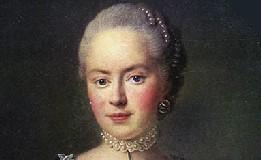
Darya Saltykova
Murderer Mary Hamilton
Murderer · Russia · 1717
Mary Hamilton (also given as Maria Danilovna Gamentova) died on 14 March 1719.…
1 victim
Mary Hamilton
Murderer · Russia · 1717
Mary Hamilton (also given as Maria Danilovna Gamentova) died on 14 March 1719.…
1 victim
 Olesya Mostovschikova
Murderer · Russia · 2009
Olesya Mostovschikova was a 27-year-old woman who was arrested in Russia after…
1 victim
Olesya Mostovschikova
Murderer · Russia · 2009
Olesya Mostovschikova was a 27-year-old woman who was arrested in Russia after…
1 victim
 Alexander Solonik
Murderer · Russia · 1990
In February 1997, Greek newspapers published articles that claimed a Russian mo…
10 victims
Alexander Solonik
Murderer · Russia · 1990
In February 1997, Greek newspapers published articles that claimed a Russian mo…
10 victims
 Alexey Pichugin
Murderer · Russia · 1998
Alexei Vladimirovich Pichugin (Aleksey Pichugin) was born in the town of Orekho…
5 victims
Alexey Pichugin
Murderer · Russia · 1998
Alexei Vladimirovich Pichugin (Aleksey Pichugin) was born in the town of Orekho…
5 victims
 Stephen Grant
Murderer · USA · 2007
February 14, 2007 — Stephen Grant contacted the Macomb County sheriff's departm…
1 victim
Stephen Grant
Murderer · USA · 2007
February 14, 2007 — Stephen Grant contacted the Macomb County sheriff's departm…
1 victim
 Edward Brian Capetillo
Homicide · USA
Edward Brian Capetillo was a Latino male who was 17 years of age at the time of…
1995 victims
Edward Brian Capetillo
Homicide · USA
Edward Brian Capetillo was a Latino male who was 17 years of age at the time of…
1995 victims
 Matthew Hardman
Homicide · United Kingdom · 2001
1998 — Matthew Hardman moved to Llanfairpwll, Anglesey, when he was 13; his fat…
1 victim
Matthew Hardman
Homicide · United Kingdom · 2001
1998 — Matthew Hardman moved to Llanfairpwll, Anglesey, when he was 13; his fat…
1 victim
 Elmer Brunner
Murderer · USA · 1957
Elmer David Brunner died on 3 April 1959. He was executed by electrocution on 3…
1 victim
Elmer Brunner
Murderer · USA · 1957
Elmer David Brunner died on 3 April 1959. He was executed by electrocution on 3…
1 victim
 John Albert Burks
Murderer · USA · 1982
Defendant: John Albert Burks John Albert Burks was executed by lethal injection…
2 victims
John Albert Burks
Murderer · USA · 1982
Defendant: John Albert Burks John Albert Burks was executed by lethal injection…
2 victims
- Gender
- female
- Country
- Russia
- Location
- Moscow, Russia
- Date of birth
- November 3, 1730
- Age at first offence
- 27
- Characteristics
- torture, mutilation, sadist
- Victim profile
- Her serfs, mostly women and girls (only three of her victims were men)
- Method of murder
- B eating and torturing to death
- Date(s) of murder
- 1757 - 1764
- Years active
- 1757–1764
- Date of arrest
- May 17, 1764
- Status
-
Died in custody
Sentenced to life imprisonment on October 2, 1768; died on December 27, 1801
Case overview
Darya Saltykova (b. 1730, d. 1801) was a Russian noblewoman from Moscow, commonly known as Saltychikha. She was accused of torturing and murdering at least 100 of her serfs, and the proceedings and related accounts described killings of 138, with 38 female serfs found guilty of being killed by beating and torturing them to death. She was sentenced to life imprisonment on October 2, 1768, and she died on December 27, 1801.
Background
Darya Nikolayevna Saltykova (Russian: Дарья Николаевна Салтыкова; née Ivanova) was described as a Russian serial killer and noble. She married young into the Saltykov family. She was widowed by the age of 26, after which she inherited a substantial estate.
The estate and household were described as including her two young sons and a substantial number of serfs, and later also “over 600 serfs” on her inherited property. She lived on an estate near Moscow called Troitskoe, also described as “Troizkoje,” near the city of Podolsk south of Moscow. She had property in Moscow and was described as a countess who became the richest widow in Moscow. She was also described as being pious and donating to churches and monasteries.
Early complaints to authorities about deaths at the Saltykova estate were described as being ignored for a long time, or resulting in punishment for complainants. The early complaints were described as being ignored or leading to complainants being punished because Saltykova was well connected with powerful members of the royal court.
Other individuals mentioned
Peasant serfs Sakhvely Martynov and Ermolay Ilyin were described as fleeing from the estate to St. Petersburg in the summer of 1762 and later bringing a petition before Empress Catherine II. Ermolay Ilyin was described as having lost three of his wives, beaten to death on orders of Saltychikha.
Nikolay Tyutchev was described as an individual with whom Saltykova had an affair that raised her spirits. The account described that Tyutchev had a love affair with a young girl and that he and his wife escaped to his relatives’ estate in Moscow and soon fled from the region. Darya Saltykova was described as nearly killing her unfaithful lover in blind fury, but the opportunity was lost. The narrative also described Saltychikha wanting to kill the individuals he loved as a form of revenge, but the opportunity was lost.
Stepan Volkov was named as an investigator connected to allowing action to proceed. The names Davidovs, Musin-Pushkins, and Tolstoy were mentioned as family members who were described as well connected with Saltykova.
The offence
Saltykova was described as torturing and killing serfs at her estate. The number of deaths was described in multiple ways: the investigating official counted as many as 138 suspicious deaths, with the vast majority attributed to Saltykova; she was found guilty of killing 38 female serfs by beating and torturing them to death. Another account described that, “over the period of six to seven years,” she murdered 139 people, mainly women, and included young girls of 10–12. The proceedings described killing only 38 women as proven, described as about 100 fewer than in reality.
Accounts described most victims as female, including women and girls, with three victims described as men. Torture methods and conduct were described in multiple ways, including:
- beating with logs and rolling pins
- beating, whipping, and torturing young girls and women to death
- tortures described as breaking bones, throwing victims naked into the frost, and pouring boiling water on bodies
- lashing in free air at frost temperatures
- pulling ears out with glowing pliers
- burning hair
- starving or leaving victims to thirst
- pouring cooking water over the head or the face
- described “continuous footsteps into the belly” for pregnant women
- disposing of corpses after the torture
Saltykova was also described as being suspected of cannibalism.
Investigation
Relatives of murdered women were eventually able to bring a petition before Empress Catherine II, which led to an investigation. Catherine ordered the College of Justice to begin an investigation regarding torture and murder and decided to try Saltykova publicly.
Catherine’s Collegium of Justice questioned many witnesses and examined the records of the Saltykova estate. The investigating official counted as many as 138 suspicious deaths, with the vast majority attributed to Saltykova. Many surviving victims and witnesses were described as being afraid to give evidence.
The investigation lasted while Saltykova was held, described as six years, until 1768. The account named Stepan Volkov as the investigator who allowed an action to proceed.
The process was described as taking several years, with details gradually abandoned because many potential witnesses did not want to state around their life.
The proceedings also described exposing corrupt police officers who suppressed earlier complaints; their titles were denied and they were expropriated and sent in banishing.
Arrest
Saltychikha was arrested in 1762. The petitioning episode was described in the summer of 1762, when peasant serfs Sakhvely Martynov and Ermolay Ilyin fled from the estate to St. Petersburg.
Trial
Catherine decided to try Saltykova publicly “in order to further her lawfulness initiative.” The investigating official found her guilty of having killed 38 female serfs by beating and torturing them to death. Catherine was described as being unsure how to punish her because the death penalty had been abolished in Russia in 1754, and the new Empress needed the support of the nobility.
A civil execution ceremony on Red Square in Moscow was described as being conducted on 2 October 1768 before the life imprisonment sentence.
Sentencing
On 2 October 1768, Saltykova was chained on a platform in Moscow for one hour, preceded by a civil execution ceremony on Red Square in Moscow. A sign was placed around her neck with the text: “This woman has tortured and murdered.”
Many people came to look at her during the hour she was displayed.
Afterward, she was sentenced to life imprisonment and was placed in imprisonment for life in the basement of Ivanovsky Convent in Moscow. Another account described the sentence as requiring incarceration in a monastery dungeon in chains and darkness, with a windowless wooden room built for her, and described that a nun would bring food and a candle.
The imperial verdict included the prescription:
“From this reclusion take her out in such a place during church services where she would be able to hear one, without entering the church proper.”
Saltykova’s sentence was described as in lieu of capital punishment, and the death sentence was described as being waived in favor of life imprisonment.
Imprisonment and confinement
Saltykova was described as being under 24-hour guard. After meals the candle would be taken away. The confinement lasted 33 years until her death.
The account described her conduct after being placed in a fully dark penitentiary cell, including that she turned her back on the world for 11 years. After 11 years, in 1779, she was transferred to another monastery building containing a window with shutters. Her contemporaries recorded her conduct there, including spitting at curious spectators, reviling them, and shoving a stick at them through the window.
The confinement narrative included that she was not admitted mad or ill, was unrepentant, and did not confess. It also stated that even the priest whose mission was to make her confess failed to make her talk, and she was “absolutely sure she would escape punishment.”
The imprisonment narrative also included that she received a nun as attendant and “even times a child,” with the account stating that whether it was actually a relationship or it was raped was not well-known.
Outcome
Saltykova died in her cell on November 27, 1801, at the age of 71 after 33 years of incarceration. Somе documents provided 1800 as her year of death.
A separate statement in the provided case fields listed her as dying on December 27, 1801.
Burial
She was buried next to her relatives in the Donskoy Monastery necropolis.
Appeals
No appeal information was provided.
Aftermath
A note was included that she remained a subject in literature. It named Boris Akunin’s book “cemetery stories” as a freely invented Gruselgeschichte that turned around Saltykova’s atrocities and received a multiplicity of authentic facts.
Timeline
- Summer of 1762 — Peasant serfs Sakhvely Martynov and Ermolay Ilyin fled from the estate to St. Petersburg and later brought a petition before Empress Catherine II.
- 1762 — Saltychikha was arrested.
- 2 October 1768 — A sentence of life imprisonment was handed down to Saltykova; she was chained on a platform on Red Square in Moscow for one hour with a sign reading: “This woman has tortured and murdered.”
- 1779 — After 11 years, Saltykova was transferred to one of the monastery buildings with a room containing a window with shutters.
- November 27, 1801 — Saltykova died in her cell at the age of 71.
- December 27, 1801 — Saltykova died (as stated in the case status fields).

Spotted an error, or have more information about this case?