
Jordan Brown
Homicide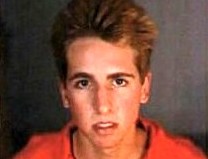 David Attias
Homicide · USA · 2001
David Attias was described as an 18-year-old student at the University of Calif…
4 victims
David Attias
Homicide · USA · 2001
David Attias was described as an 18-year-old student at the University of Calif…
4 victims
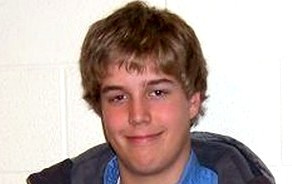 Nicholas Browning
Homicide · USA · 2008
Nicholas W. Browning — 15-year-old boy charged as an adult with four counts of…
4 victims
Nicholas Browning
Homicide · USA · 2008
Nicholas W. Browning — 15-year-old boy charged as an adult with four counts of…
4 victims
 Alec Kreider
Homicide · USA · 2007
Alec Devon Kreider (born February 4, 1991) was a Lancaster County, Pennsylvania…
3 victims
Alec Kreider
Homicide · USA · 2007
Alec Devon Kreider (born February 4, 1991) was a Lancaster County, Pennsylvania…
3 victims
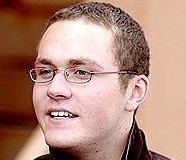 Cody Posey
Homicide · USA · 2004
Cody Posey was a New Mexico teenager who was born October 9, 1989. In 1992, whe…
3 victims
Cody Posey
Homicide · USA · 2004
Cody Posey was a New Mexico teenager who was born October 9, 1989. In 1992, whe…
3 victims
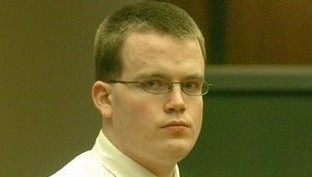 Jason Rose
Homicide · USA · 2005
Jason Allen Rose was 21 at the time of sentencing and was convicted of setting…
3 victims
Jason Rose
Homicide · USA · 2005
Jason Allen Rose was 21 at the time of sentencing and was convicted of setting…
3 victims
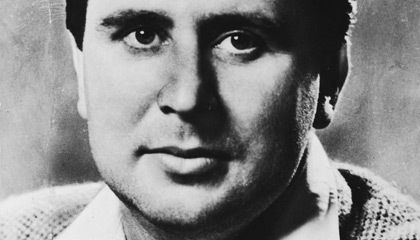 Brian Donald Hume
Murderer · United Kingdom/Switzerland · 1949
Brian Donald Hume partnered in illegal activities with Stanley Setty. Hume had…
2 victims
Brian Donald Hume
Murderer · United Kingdom/Switzerland · 1949
Brian Donald Hume partnered in illegal activities with Stanley Setty. Hume had…
2 victims
 Michael Passaro
Murderer · USA · 1998
Michael Passaro pled guilty to murder and arson and was sentenced to death for…
1 victim
Michael Passaro
Murderer · USA · 1998
Michael Passaro pled guilty to murder and arson and was sentenced to death for…
1 victim
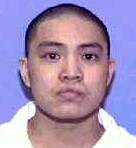 Son Vu Khay Tran
Homicide · USA · 1997
Tran was sentenced to death on January 4, 2001. His sentence was commuted to li…
4 victims
Son Vu Khay Tran
Homicide · USA · 1997
Tran was sentenced to death on January 4, 2001. His sentence was commuted to li…
4 victims
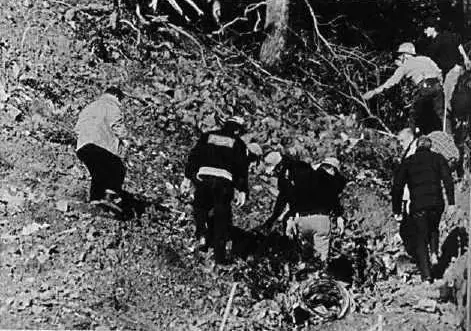 David Burke
Mass murderer · USA · 1987
David Augustus Burke (May 18, 1952–December 7, 1987) was an employee of USAir,…
43 victims
David Burke
Mass murderer · USA · 1987
David Augustus Burke (May 18, 1952–December 7, 1987) was an employee of USAir,…
43 victims
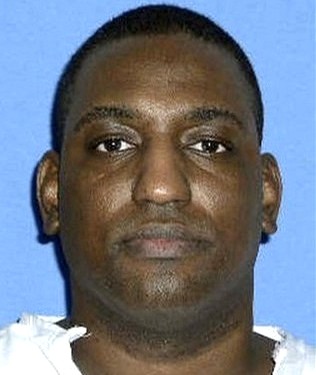 Allen Winslow Bridgers
Murderer · 1997
Allen Winslow Bridgers (also listed as Allen W. Bridgers and Allen Winslow Brid…
1 victim
Allen Winslow Bridgers
Murderer · 1997
Allen Winslow Bridgers (also listed as Allen W. Bridgers and Allen Winslow Brid…
1 victim
- Gender
- male
- Country
- USA
- Location
- Lawrence County, Pennsylvania, USA
- Date of birth
- 1997
- Age at first offence
- 12
- Characteristics
- juvenile (11), jealousy
- Victim profile
- Kenzie Marie Houk, 26, (his father's girlfriend eight months pregnant) and her unborn baby, named Christopher Allen Houk-Brown
- Method of murder
- Shooting with a youth-model 20-gauge shotgun
- Date(s) of murder
- February 20, 2009
- Years active
- 2009
- Date of arrest
- Next day
- Status
-
Found responsible for first degree murder on April 13, 2012; Brown can be held in a juvenile rehabilitative treatment facility only until August 2018, when he turns 21
Case information
Jordan Brown (Jordan Anthony Brown, born August 12, 1997) was found responsible for first degree murder on April 13, 2012. Brown was adjudicated delinquent in the deaths of 26-year-old Kenzie Marie Houk and her unborn son. Under Pennsylvania law, an adjudicated juvenile offender could not be held in custody past his 21st birthday; Brown could be held in a juvenile rehabilitative treatment facility only until August 2018, when he turned 21.
The offence
Kenzie Marie Houk, 26, was shot in the back of the head while she was sleeping in bed in Wampum, Pennsylvania. Her unborn infant son also died as a result of the attack. Both Houk and her unborn infant son died from the attack.
The prosecution asserted that Houk was killed by a youth-model 20-gauge shotgun, described as a Christmas gift to Jordan from his father. Pennsylvania State Police found a spent shotgun shell near the path Jordan Brown walked with Houk’s older daughter to get to their school bus.
Investigators said Houk died from a wound to the back of her head, while the baby died from a lack of oxygen. A 4-year-old daughter alerted nearby tree cutters roughly 45 minutes after Jordan Brown and Houk’s 7-year-old daughter got on a school bus.
Multiple accounts described jealousy as the motive theory:
- Prosecutors believed Brown was jealous of Houk and having trouble adjusting to their blended family when she and her two daughters moved in.
- Lawrence County District Attorney John Bongivengo said the working theory in the case was that the boy was jealous of his father’s fiancée and her daughters.
- Houk’s family previously told the Associated Press that the boy was jealous of Houk and had threatened to harm her and her daughters.
Background
At the time of the killings, Houk and Brown rented a farmhouse together in western Pennsylvania with Houk’s two daughters, ages 7 and 4, and Brown. The shooting occurred after Houk’s fiancé left for work, with only Jordan Brown and Houk’s two daughters also in the house.
Brown was described by family and community sources as a typical 11-year-old who liked video games, football, and dirt bikes, and adored his father.
Transfer and charging as an adult
Jordan Brown was initially charged as an adult in the fatal shooting of his father’s fiancée, Kenzie Marie Houk, in Pennsylvania. The county District Attorney’s Office initially filed the charges in adult court because Pennsylvania homicide cases required that process regardless of a defendant’s age. The Pennsylvania Attorney General’s Office subsequently took over prosecution.
Investigation
Pennsylvania State Police found the spent shotgun shell near the path Brown walked with Houk’s older daughter to get to their school bus.
Early accounts described that investigators found Houk’s body after her 4-year-old daughter told tree cutters on the property she thought her mother was dead. Police were called and learned that Chris Brown left for work around 7 a.m. and that Kenzie Houk was shot around 8 a.m.
Police interviewed Jordan Brown and Houk’s older daughter, Jenessa, earlier in the day Friday. Investigators said Jordan Brown offered conflicting descriptions of a black truck he reported seeing on the property, which led police to reinterview Jenessa. She told police that Jordan Brown had a shotgun covered in a blanket Friday morning and that she heard a “big boom” prior to the pair leaving for school. Investigators arrested Jordan Brown based on information provided by the girl.
A search warrant filed Friday stated that police found the gun outside the boy’s bedroom, along with a blue blanket with a hole the size of a quarter and burn marks.
The girl also told investigators that she saw Jordan Brown toss something on the snow next to their driveway. A spent shotgun shell was found in the yard.
Arrest and custody
After the shooting, Brown and Houk’s 7-year-old daughter eventually caught the bus to school, and the little girl did not see her mother’s murder.
Since he was arrested early Saturday, Brown was held in isolation in the Lawrence County Jail because of his age, in a cell that usually was reserved for inmates on suicide watch or those with disciplinary or other issues requiring more close attention from guards. He was monitored every 15 minutes.
Many, including the jail warden, believed Brown belonged in a facility better equipped to deal with his needs. Discussions were initiated to move Brown, and a bail hearing was scheduled for March 2.
Brown’s attorney Dennis Elisco said he would try to have the case moved to juvenile court, and the district attorney said it was difficult to say whether he would contest Elisco’s request.
Trial
Juvenile adjudication hearing and closure
On April 13, 2012, after three days of testimony and legal argument, Lawrence County family court Judge John Hodge issued his ruling that Brown was responsible for first degree murder in the death of 26-year-old Kenzie Houk and for homicide in the death of her unborn male child.
Hodge adjudicated Jordan Brown, then described as 15-year-old, to be delinquent, which was described as the juvenile court equivalent of a guilty verdict.
The trial was held about 45 miles northwest of Pittsburgh. Hodge closed the trial to the media and all but close family members because of the boy’s age during the killings.
Hodge was expected to announce Brown’s disposition, described as the equivalent of a juvenile sentence, at a later date.
Media access and newspapers’ appeal
Lawrence County family court Judge John Hodge ruled that Brown’s juvenile hearing would not be open to the public or to the news media.
The Pennsylvania Superior Court rejected an appeal by three area newspapers—Pittsburgh Post-Gazette, Pittsburgh Tribune-Review, and New Castle News—to overturn Hodge’s ruling and open the hearing to the public.
After those newspapers decided not to pursue their appeal further, Hodge was directed by another panel of the Superior Court to move swiftly to hold an adjudication hearing. Hodge ruled that Brown would not be released pending that hearing.
Sentencing and disposition
Hodge issued a delinquency ruling on April 13, 2012.
County probation officials were to devise a treatment plan for the boy, and Brown was described as remaining in a juvenile lockup with his status reviewed every six months.
Under Pennsylvania law, an adjudicated juvenile offender could not be held in custody past his 21st birthday, and custody would end at age 21 no matter what because he was convicted in juvenile court.
Appeals
Superior Court vacatur
On May 8, 2013, Superior Court vacated the juvenile court’s finding of delinquency, citing “palpable abuse of discretion.” The ruling stated that the juvenile court committed a palpable abuse of discretion in rendering a ruling plainly contrary to the evidence.
The ruling objected to the assumption made by the juvenile court that no one else but Jordan could have shot Houk.
Fifth Amendment and transfer to juvenile court
Judge Dominick Motto of the Lawrence County, Pennsylvania, Common Pleas Court initially denied transfer to juvenile court.
After Pennsylvania’s Superior Court ruled that Judge Motto violated Brown’s Fifth Amendment, he reversed his earlier decision and ruled that Brown should be tried as a juvenile.
Outcome
Superior Court vacated the juvenile court’s disposition of delinquency on May 8, 2013, after initially vacating the finding of delinquency and determining the juvenile court committed a palpable abuse of discretion.
Other details
People
- Jordan Brown (Jordan Anthony Brown, born August 12, 1997)
- Kenzie Marie Houk, 26 (victim)
- Christopher Brown (father)
- John Hodge (Lawrence County family court judge)
- Dominick Motto (Lawrence County, Pennsylvania, Common Pleas Court judge)
- Anthony Krastek (Deputy Attorney General)
- Stephen Colafella (boy’s lawyer)
- Dennis Elisco (Brown’s attorney)
- Charles Marker (retired Westmoreland County judge with nearly 30 years of experience in juvenile court; not involved in the case)
- Jack Houk (Kenzie Houk’s father)
- Russell Noga (Lawrence County Coroner)
- Russell Noga (credited with commenting that the fetus died within minutes due to a lack of oxygen)
- Myron Sainovich (Beaver County Solicitor)
- Bob Rose (Allencrest director)
- David Gettings (president of the Lawrence County Prison Board)
- Jason Kraner (Houk’s brother-in-law)
- Jenessa (Houk’s 7-year-old daughter)
- Adalynne (described as 4-year-old)
- Jenessa (Houk’s 7-year-old daughter referenced in multiple accounts)
- Amnesty International (human-rights organization opposing the effort to try Jordan as an adult)
- Dr. Lawson Bernstein (clinical and forensic psychiatrist)
- Dr. Paul Friday (head of clinical psychology at UPMC Shadyside)
- Dr. Anthony Mannarino (director of the Center for Traumatic Stress in Children at Allegheny General Hospital)
- Jack Houk (Kenzie Houk’s father)
Victims and related details
Kenzie Houk was described as pregnant at the time of the shooting, and her unborn son was described as planned to be named Christopher. The unborn baby was described as a male child.
Quotes (verbatim)
Anthony Krastek said: “It’s sad that it’s coming so late,” referring to the fact that Brown had been in a juvenile facility about 80 miles from his home for most of the three years since he was charged.
Anthony Krastek said: “We offered this same result two years ago and it was stubbornly refused.”
Anthony Krastek said: “I read in the newspaper the other day that his father said he was the biggest victim in this whole thing.”
Anthony Krastek said: “That’s the mindset we’ve been dealing with. Finally the child’s best interest can be attended to right now.”
Stephen Colafella said: “It’s too early to say if he’d appeal the judge’s ruling on the first-degree murder and criminal homicide charges.”
Stephen Colafella said: “Christopher Brown, the boy’s father, wouldn’t be commenting but was ‘extremely disappointed’ by the verdict.”
Stephen Colafella said: “He now has to wrestle with two issues: One is the impact of the verdict and his belief in his son’s innocence,”
Stephen Colafella said: “And, at the same time, he must shift his focus to the treatment aspect of the verdict.”
Charles Marker said: “''They do that because it could be the youngster’s turned around his life, and you want to address that if it happens,''”
Jack Houk said: “We’re not ‘happy’ happy, but we’re pleased,”
Jack Houk said: “Hodge told both families ‘there’s no winners here’ and urged them both to accept his verdict and move on accordingly.”
Jack Houk said: “I hope he gets the treatment he needs in the time period that he’s got, short as it is,”
David Gettings said: “It’s not up to us,”
David Gettings said: “It’s up to a judge. He is charged with a capital crime, and it’s our duty to the public.”
David Gettings said: “Frankly, I’m disheartened that we’re even discussing this,”
David Gettings said: “This is not good, not for the boy and not for society. “This is an ugly, ugly situation.”
John Bongivengo said: “I have not made a decision yet,”
John Bongivengo said: “It’s something I’m definitely struggling with. Whatever decision I make, I’m probably going to be uncomfortable with it. I’ve got to make a decision that I can live with.”
Bongivengo said: “It was just him and his dad all of his life, and then he’s living with this woman and her daughters and there’s a new baby on the way,”
Bongivengo said: “It’s a potential theory right now.”
Bongivengo said: “It’s tough to say whether he will contest Elisco’s request.”
Bongivengo said: “You have to listen to everybody. If an 11-year-old is a monster now, then he’ll be a monster when he’s 21 and free,”
Bongivengo said: “That’s a real concern, and it has to be taken into consideration. “There is no right answer here. No winner. It’s a tough balance."
Dr. Paul Friday said: “Normal people know when crazy ideas are crazy,”
Dr. Paul Friday said: “Does he understand the difference between good and bad? Yes, probably. But the chances of an 11-year-old understanding consequences in the same way he would when he is 21 is nonexistent.”
Dr. Lawson Bernstein said: “An 11-year-old brain is not as mature,”
Dr. Berstein said: “The frontal lobes don’t work as well, which is seed of the brain involving planning and the ability to realize outcome, including adverse outcome.”
Dennis Elisco said: “Our jail, like any jail, is not equipped for children that young,”
Dennis Elisco said: “But he’s a typical 11-year-old kid and he’s devastated.”
John Bongivengo said: “She puts him in the house, puts the gun in his hands, hears the bang,”
Dr. Berstein asked: “Do they understand that if you pull the trigger of gun and a bullet is discharged and it strikes somebody else that they will be harmed? Yes, I think most kids would generally understand that. Do they understand the enormity of the decision they are making? Then by definition, no. They don’t understand it in a cause and effect way that adults would.”
Jack Houk said: “Maybe he was just jealous of my daughter and the baby and thought he would be overpowered.”
Jason Kraner said: “He actually told my son that he wanted to do that to her,”
Jason Kraner said: “There was an issue with jealousy.”
Judge Pirro said: “The facts are simple.”
Judge Pirro said: “An 11-year-old received a shotgun as a gift for Christmas from his dad.”
Judge Pirro said: “He was a good shot, and won a turkey shoot less than two weeks before the shooting, beating out several adults.”
Judge Pirro said: “The victim was his father’s girlfriend who was pregnant with his father’s child.”
Judge Pirro said: “The boy and his father were living in the same home with the victim and her two daughters, just seven and four years old.”
Judge Pirro said: “The issue of children being prosecuted as adults has always been controversial.”
Judge Pirro said: “Our belief that children should be treated differently stems from a society trying to protect those who are young and capable of reform.”
Judge Pirro said: “On the other hand, there are those who believe the punishment should fit the crime, not the criminal.”
Judge Pirro said: “The United States Supreme Court has held that the purpose of juvenile courts is to seek rehabilitation, supervision or provide counseling.”
Judge Pirro said: “Treatment of juveniles is usually more lenient than for adults.”
Judge Pirro said: “The purpose is to protect youth and guide them to more productive lives, while still holding them accountable to some degree for their actions.”
Judge Pirro said: “Juvenile court proceedings are generally private and held in rooms separate from adult courtrooms.”
Judge Pirro said: “If the offender is found delinquent, a probation officer prepares a more detailed report recommending a sentence.”
Judge Pirro said: “The harshest treatment is a sentence in a locked juvenile facility.”
Judge Pirro said: “Historically, the fact that children were treated differently often caused a deprivation of their rights.”
Judge Pirro said: “The United States Supreme Court in 1967 dealt with this issue in a landmark case (In re Gault).”
Judge Pirro said: “There, a 15-year-old was arrested for making dirty remarks over the telephone.”
Judge Pirro said: “He was arrested and kept in custody.”
Judge Pirro said: “His parents were not advised that he was in police custody nor were they advised of the charges against him.”
Judge Pirro said: “He was held in a detention facility for a week.”
Judge Pirro said: “No record of the proceeding was kept; and the witness to whom he made the call didn’t even appear in court.”
Judge Pirro said: “He was sentenced to spend the next six years in a state school until he was 21 years old.”
Judge Pirro said: “Once a decision is made to prosecute a juvenile as an adult, the case is transferred to an adult court.”
Judge Pirro said: “Such a transfer can have serious sentencing consequences - the juvenile can be sentenced to life or even death (if over 18 years old at the time of sentencing).”
Judge Pirro said: “In the case at hand, the District Attorney in Lawrence County, Pennsylvania has made the decision to prosecute this 11-year-old as an adult.”
Judge Pirro said: “He bases this on the theory that the crime was ‘premeditated,’ in that the boy first came downstairs with a weapon and was seen by the victim’s seven-year-old daughter.”
Judge Pirro said: “He reversed course, went back to his room, and put a blanket over the gun.”
Judge Pirro said: “He then returned to the first floor bedroom where his victim was sleeping and shot her in the back of the head.”
Dr. Anthony Mannarino said: “We all have that thought of wanting to kill someone once in awhile, but as adults we think it through and we don’t act on it,”
Dr. Anthony Mannarino said: “An 11-year-old is more likely to follow through on an emotional thought.”
Dr. Anthony Mannarino said: “And to give them access to a gun is really a mistake.”
Dr. Anthony Mannarino said: “That’s one of the tragedies in this situation. If the kid did not have a gun, this doesn’t happen.”
The victim’s 7-year-old daughter said: she heard a “big boom” prior to Jordan Brown and she leaving for school.
Dennis Elisco said: “I don’t think he knows what’s going on,”
Dennis Elisco said: “I walked out of there thinking he was innocent. I believe Jordan did not do this.”
Dr. Paul Friday said: “To this point, we have not seen a need to isolate him.”

Spotted an error, or have more information about this case?