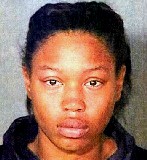
Amber Hill
Homicide Andrea Yates
Homicide · USA · 2001
Andrea Pia Yates (born Andrea Pia Kennedy on July 2, 1964) was a former Houston…
5 victims
Andrea Yates
Homicide · USA · 2001
Andrea Pia Yates (born Andrea Pia Kennedy on July 2, 1964) was a former Houston…
5 victims
 Coleen Thompson
Homicide · USA · 2002
Coleen Thompson was a former intensive care nurse at Shady Grove Adventist Hosp…
5 victims
Coleen Thompson
Homicide · USA · 2002
Coleen Thompson was a former intensive care nurse at Shady Grove Adventist Hosp…
5 victims
 Christine Paolilla
Homicide · USA · 2003
Christine Marie Paolilla was an American woman born on Long Island, New York on…
4 victims
Christine Paolilla
Homicide · USA · 2003
Christine Marie Paolilla was an American woman born on Long Island, New York on…
4 victims
 Melissa Marvin
Homicide · USA · 1999
Melissa Lynn Marvin was a 29-year-old waitress and amateur surfer at the time o…
4 victims
Melissa Marvin
Homicide · USA · 1999
Melissa Lynn Marvin was a 29-year-old waitress and amateur surfer at the time o…
4 victims
 Erin Caffey
Homicide · USA · 2008
Erin Caffey (juvenile daughter of Terry Caffey and Penny Caffey; charged in con…
3 victims
Erin Caffey
Homicide · USA · 2008
Erin Caffey (juvenile daughter of Terry Caffey and Penny Caffey; charged in con…
3 victims
 Lashaun Harris
Homicide · USA · 2005
Oct. 19, 2005 — A jury trial later concerned the drownings of three young sons…
3 victims
Lashaun Harris
Homicide · USA · 2005
Oct. 19, 2005 — A jury trial later concerned the drownings of three young sons…
3 victims
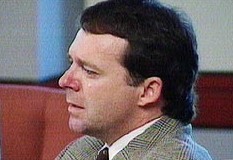 Royle Kipp
Murderer · USA · 2000
Royle Kipp joined the Collier County Sheriff's Office in 1981 when he was just…
2 victims
Royle Kipp
Murderer · USA · 2000
Royle Kipp joined the Collier County Sheriff's Office in 1981 when he was just…
2 victims
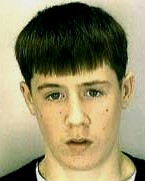 Kipland Kinkel
Homicide · USA · 1998
Name: Kipland Kinkel Kipland Kinkel killed his parents at home and then opened…
4 victims
Kipland Kinkel
Homicide · USA · 1998
Name: Kipland Kinkel Kipland Kinkel killed his parents at home and then opened…
4 victims
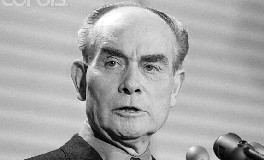 William Anthony Boyle
Murderer · USA · 1969
William Anthony "Tony" Boyle (December 1, 1904 - May 31, 1985) was president of…
3 victims
William Anthony Boyle
Murderer · USA · 1969
William Anthony "Tony" Boyle (December 1, 1904 - May 31, 1985) was president of…
3 victims
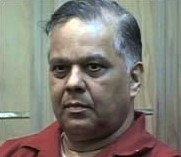 Krishna Maharaj
Murderer · USA · 1986
Krishna Maharaj (born January 26, 1939) was a Trinidad and Tobago-born British…
2 victims
Krishna Maharaj
Murderer · USA · 1986
Krishna Maharaj (born January 26, 1939) was a Trinidad and Tobago-born British…
2 victims
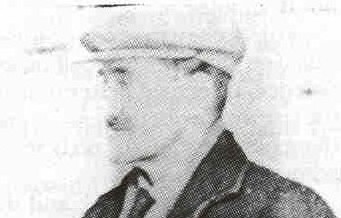 Frederick Nodder
Murderer · United Kingdom · 1937
Frederick Nodder lived at 9 Neill Road, Sheffield in 1934, in the Hunters Bar d…
1 victim
Frederick Nodder
Murderer · United Kingdom · 1937
Frederick Nodder lived at 9 Neill Road, Sheffield in 1934, in the Hunters Bar d…
1 victim
- Gender
- female
- Country
- USA
- Location
- Cleveland , Cuyahoga County, Ohio, USA
- Date of birth
- 1985
- Age at first offence
- 22
- Characteristics
- mentally ill
- Victim profile
- Janelle Cintron, 4, and Cecess Hill, 2 (her daughters)
- Method of murder
- Drowning ( submerging their heads in a bathtub until they stopped thrashing)
- Date(s) of murder
- October 1, 2007
- Years active
- 2007
- Date of arrest
- Same day
- Status
-
Acquitted / overturned
Found not guilty by reason of insanity on January 24, 2009; ordered to a mental health hospital for an undetermined period of time
Case record: Amber Hill
Background
Amber Hill was a 23-year-old Cleveland woman who drowned her two young daughters in the bathtub of her Cleveland apartment.
Hill suffered with bouts of depression, hallucinations and suicidal thoughts for four years before she drowned her two daughters in a bathtub in her Cleveland apartment. A psychologist hired by the defense and a court psychiatrist testified that Hill was so deeply depressed the day she killed her children that she did not understand that what she was doing was wrong.
Hill also told the court psychiatrist, during a more recent psychiatric evaluation, that she did not believe she was still mentally ill and would like to eventually wean herself from the medicine that had stabilized her condition. The court agreed with the doctor’s opinion that Hill did not have a realistic view of her mental illness and would be at high risk for discontinuing her medication.
The offence
Hill drowned her two daughters in a bathtub.
- Janelle Cintron, 4
- Cecess Hill, 2
Hill held Janelle’s head underwater until the girl kicked and thrashed until her body went limp. Hill held Cecess down in the tub; the toddler looked up through the water at her mom, but struggled less.
Hill told a psychologist that she killed her two girls as a way to get help for her deepening depression without killing herself, saying:
"I thought this was how I could get help"
"And I needed to know that people loved me. I felt like part of my brain was gone."
A psychologist testified that Hill saw the children as an extension of herself and wanted to put them “all out of their misery.”
A court psychiatrist testified that Hill’s severe depression spurred psychotic symptoms, including auditory hallucinations. Hill struggled with delusions and believed that because she was suffering, her daughters were suffering too.
Hill told the court psychiatrist that, after she returned to her apartment after calling Cintron from a pay phone to tell him what she had done, she stopped at the mailbox to pick up her mail, and saw a check and thought about cashing it later that day. The court psychiatrist said:
"She didn't know that what she was doing was wrong."
Hill shut the shower curtain after drowning her children. Fabian testified Hill explained that she did not want to see her girls exposed and closed the curtain to keep them safe. Fabian said:
"There is a theme of misery and of benevolence -- of saving them from her own psychotic and depressed demons that she was struggling with"
"She thought she had to save her children from her own death or suicide."
Prosecutors pointed out that Hill shut the shower curtain after drowning her children, indicating she did not want to see them and was disgusted by her actions.
Hill made no attempt to conceal evidence or flee after the killings. Instead, she called her boyfriend, Jaime Cintron, and he came home and found Hill sitting on the couch staring blankly ahead in an unresponsive daze.
Hill told police that as she filled the tub with water, she heard voices in her head for months, including:
- her mother asking her what she was going to do with her life
- her boyfriend, Jaime Cintron, calling her name
- another voice she described as demonic encouraging her to kill herself
On the day of the killings, Hill said the voices told her to “do it!” and she complied.
Hill also directed Cintron to the bathroom after calling him, and Cintron yanked back the shower curtain and found his daughters naked and submerged in the bathtub. Cintron pulled the girls from the water and screamed, “Why? Why?”
Investigation
Detective Joselito Sandoval, one of the first officers to speak to Hill after the slayings, testified that Hill told him she had been hearing voices in her head for months.
Paramedics described arriving at a chaotic scene with a crush of crying and frantic neighbors and family. Janelle was found lying across a bed upstairs, with skin pruned from the water and blue, and Cecess was found sprawled on the floor with her father sobbing over her lifeless body. Rescuers suctioned fluid and performed CPR, but water continued gurgling from the children’s mouths, noses, throats and ears.
The cause of death was listed as drowning. Cuyahoga County’s coroner, Dr. Frank Miller, said his staff was considering whether to add strangulation as a factor in the 4-year-old’s death, and Miller said:
"There were marks around the neck and bleeding in the small blood vessels in the eyelids,"
"So there is some suggestion the 4-year-old was strangled, at least partially if not completely."
Authorities had not offered a motive for the killings, and they said Hill had no history of neglecting the girls.
Other relevant relationships and background details
Hill and Jaime Cintron had a volatile relationship. Authorities described Hill’s turbulent relationship with Cintron as involving domestic violence issues.
Cleveland Municipal Court records showed Cintron was convicted of domestic violence against Hill in 2004 and in 2006, he pleaded no contest and was found guilty of domestic violence.
In the latest case, a Cleveland Municipal Court record said that Cintron picked up a hammer during an argument with Hill and broke the TV with it, grabbed her by the neck and shoved her.
In 2004 and 2006, Cintron pleaded no contest and was found guilty of domestic violence against Hill, according to court records.
Hill was described by witnesses as once being a wonderful and protective mother. Witnesses testified that Hill was proud of her children, kept them neat and clean, and taught them to be well-mannered. Witnesses also testified that Hill’s personality started to change when depression got the best of her, and she became withdrawn and stopped attending classes at Remington College, convinced classmates were talking about her behind her back.
Hill told friends and family she sometimes cut herself and had contemplated suicide. Witnesses said she began to neglect her daughters.
A week before the girls died, Hill failed to pick up her daughters from daycare. Jaime Cintron told the court that Hill was despondent over the death of a cousin. Cintron said Hill straggled home later that night and went straight to bed without explanation.
Hill’s mother, Carolyn Hutchins, testified and sobbed Wednesday as she told a panel of three Cuyahoga County Common Pleas Court judges about Hill’s rapid descent into depression. Hutchins described the day she found her grandchildren dead and said:
"I came in and Amber was standing in the middle of the room like a zombie,"
"She was looking right through me. There was no soul. No nothing."
Hutchins also said:
"Amber was bathing them, getting them ready to get dressed"
and: "That's why the kids were in the tub"
Hutchins said on the morning of their deaths, Amber Hill spoke with her mother on the phone about whether Hill needed to be hospitalized and that her mother agreed to come over and take her, if necessary.
Arrest
Hill was held in city jail on suicide watch and appeared at the hearing in black paper overalls issued to inmates considered a danger to themselves.
Trial
Hill pleaded not guilty by reason of insanity.
- Hill waived her right to a jury trial.
- The case was heard by a panel of three judges because Hill could have faced the death penalty if convicted.
Assistant County Prosecutor Mark Mahoney testified that the state decided to prosecute Hill despite the court psychiatrist’s diagnosis because it was an important case to the community and deserved the criminal justice system’s full attention. Mahoney said:
"We knew it would be a challenging case,"
"to have the court set aside the opinion of the court's doctor."
and: "But we thought it best to go through the process because of the profound loss to the community of two children of tender age."
"Could there be a more important case?"
Mahoney said:
"sanity is always assumed,"
and that the burden was upon the defense to prove the defendant insane.
In closing arguments, prosecutors asked the judges to set aside the expert testimonies of a psychologist hired by the defense and a court-appointed psychiatrist. Both testified that Hill suffered from severe depression that eventually escalated to a psychotic break from reality when she drowned her children.
During the trial, psychologist John Fabian said Hill saw the children as an extension of herself and wanted to put them all out of their misery.
A court psychiatrist, Dr. Sherif Soliman, told the judges that Hill’s severe depression spurred psychotic symptoms, including auditory hallucinations. Soliman testified that Hill wanted her children to feel the peace she could not and did not expect to be punished for her actions. Soliman said:
An attorney for Hill, Fernando Mack, argued that their client suffered from such profound mental illness when she drowned the girls that she did not understand her actions were wrong. Hill’s attorneys called the verdict courageous.
Hill’s attorney Fernando Mack said in court:
"She started hearing voices when she put her kids in the tub,"
"By doing what she did, she thought she was doing this to herself."
During the trial, Assistant County Prosecutor Ronni Ducoff said in opening statements that Hill called the girls’ father at work the day they died and told him their children were at peace. Ducoff said that Hill called Cintron and that he rushed home and found Hill sitting silently on the sofa, staring blankly ahead.
After the trial ended, Hill began a more recent prepared statement to the court and sobbed through the rest of it.
Sentencing / disposition hearing after verdict
On January 24, 2009, Cuyahoga County Common Pleas Judge John Sutula ordered Hill committed to Northcoast Behavioral Healthcare System after a court psychiatrist determined that Hill could pose a risk to herself and others as the gravity of her actions became clearer with the help of medication.
Sutula ordered that Hill would not be allowed to leave her room without authorization and would be chaperoned to and from treatment.
Assistant County Prosecutor Mark Mahoney said Hill would be potentially set free or downgraded to a lower-security facility with recommendations from her doctors, but that a judge must approve any change in her institutionalization.
When given an opportunity to address the court, Hill began by saying she felt “truly blessed to be found not guilty by reason of insanity.” Sutula interrupted to clarify that the law required that finding, and Sutula said:
"God didn't intervene on that,"
he told Hill before allowing her to continue.
"God didn't intervene on behalf of your children."
Hill sobbed through her prepared statement in which she apologized to her family and the father of her daughters, Jaime Cintron. She said she recaptured her faith in God during her 16 month incarceration and vowed to take her medication vigilantly for the rest of her life.
Sutula discounted her promises and explained that he had seen too many cases where people believed themselves to be “cured” of mental illness and stopped taking their medication, only to relapse. Sutula told Hill:
"If I were in your situation, I would swear to almighty God to take that medication every day of my life,"
and: "So you are never in the situation where you feel so horrible that you don't know how to control yourself and take an action that is repugnant to society."
"My primary concern here is the safety of society."
"I'm not going to jeopardize that in any way."
A hearing was to be held in the next 10 days to determine whether Hill would be set free or remanded to a mental health facility. Prosecutors said the state would push for long-term institutionalization in a secure facility, arguing that Hill posed a threat to herself and others.
Appeals
No appeal proceedings were described.
Outcome
A 3-judge panel found Hill not guilty by reason of insanity of killing:
- Janelle Cintron, 4
- Cecess Hill, 2
The panel deliberated for four hours before rendering the verdict. Sutula said the verdict was based on “uncontroverted evidence” that Hill suffered from such profound mental illness when she killed her daughters on Oct. 1, 2007, that she did not understand her actions were wrong.
Sutula said:
"Justice is not always punishment,"
and: "These killings shocked the conscience of every person including this panel."
"But the law demands that in order to be convicted of a crime, the defendant know its wrongfulness."
Hill did not deny killing the girls and waived her right to a jury trial. The panel found her not guilty of aggravated murder by reason of insanity.
Aftermath
After the judges announced their decision, Hill’s mother, Carolyn Hutchins, sobbed and trembled as she thanked God for the verdict and clung to other weeping relatives. Another witness described calling for greater awareness of mental illness in the community.
Hill’s attorneys Fernando Mack and Myron Watson said they expected Hill would develop greater insight into the events that led her to kill her daughters as her mental state stabilized on powerful anti-psychotic drugs. Watson said:
"She cared for those children deeply,"
and: "The real Amber Hill wouldn't have done this but for her severe mental illness."
A judge recommended that Hill receive medical and psychological treatment, and Hill had already been held in city jail on suicide watch.
Timeline
- Oct. 1, 2007 — Hill drowned her two daughters, Janelle Cintron (4) and Cecess Hill (2), in a bathtub of her Cleveland apartment
- Jan. 18, 2009 — Hill pleaded not guilty by reason of insanity and waived her right to a jury trial; a three-judge panel (John D. Sutula, Nancy A. Fuerst and Jose A. Villanueva) was set to decide Amber C. Hill’s future
- Jan. 22, 2009 — A three-judge panel heard testimony from a psychologist hired by the defense and a court psychiatrist; Hill was charged with aggravated murder and could face the death penalty if convicted
- Jan. 24, 2009 — A 3-judge panel found Hill not guilty by reason of insanity; Judge John Sutula ordered Hill committed to Northcoast Behavioral Healthcare System for an undetermined period
- Jan. 25, 2009 — Hill’s institutionalization was discussed, and a hearing was to be held to determine whether she would be set free or remanded to a mental health facility
- February 2, 2009 — Judge John Sutula’s commitment order was described as indefinite in a high-security psychiatric clinic; Hill would be chaperoned and not allowed to leave her room without authorization

Spotted an error, or have more information about this case?