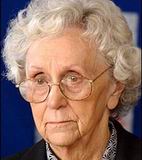
Audrey Hingston
Homicide Lorraine Thorpe
Homicide · United Kingdom · 2009
Lorraine Thorpe was 15 at the time of the killings and was later 16. Desmond Th…
2 victims
Lorraine Thorpe
Homicide · United Kingdom · 2009
Lorraine Thorpe was 15 at the time of the killings and was later 16. Desmond Th…
2 victims
 Kemi Adeyoola
Homicide · United Kingdom · 2005
Kemi Adeyoola was convicted of murdering 84-year-old Anne Mendel. Adeyoola had…
1 victim
Kemi Adeyoola
Homicide · United Kingdom · 2005
Kemi Adeyoola was convicted of murdering 84-year-old Anne Mendel. Adeyoola had…
1 victim
 Mick Philpott
Homicide · United Kingdom · 2012
Michael “Mick” Philpott was an Englishman who had gained notoriety as a crimina…
6 victims
Mick Philpott
Homicide · United Kingdom · 2012
Michael “Mick” Philpott was an Englishman who had gained notoriety as a crimina…
6 victims
 Dyson Allen
Homicide · United Kingdom · 2012
Dyson Allen was convicted for starting a fire in a wardrobe in the children’s b…
4 victims
Dyson Allen
Homicide · United Kingdom · 2012
Dyson Allen was convicted for starting a fire in a wardrobe in the children’s b…
4 victims
 Peter Bryan
Homicide · United Kingdom · 1993
Peter Bryan was a schizophrenic cannibal who was sentenced to closed psychiatri…
3 victims
Peter Bryan
Homicide · United Kingdom · 1993
Peter Bryan was a schizophrenic cannibal who was sentenced to closed psychiatri…
3 victims
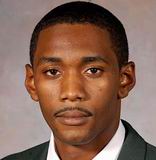 Carlton Dotson
Murderer · USA · 2003
Summer of 2003 — Carlton Dotson and Patrick Dennehy indicated they were concern…
1 victim
Carlton Dotson
Murderer · USA · 2003
Summer of 2003 — Carlton Dotson and Patrick Dennehy indicated they were concern…
1 victim
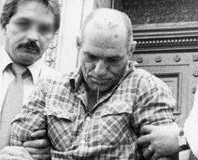 Andre Rand
Murderer · USA · 1972
Andre Rand was born Andre Rashan in 1943. He later used the name “Rand” and emp…
4 victims
Andre Rand
Murderer · USA · 1972
Andre Rand was born Andre Rashan in 1943. He later used the name “Rand” and emp…
4 victims
 John Freeman
Homicide · USA · 2008
Defendant: John Freeman (also referred to as John R. Freeman Jr. and John Rober…
1 victim
John Freeman
Homicide · USA · 2008
Defendant: John Freeman (also referred to as John R. Freeman Jr. and John Rober…
1 victim
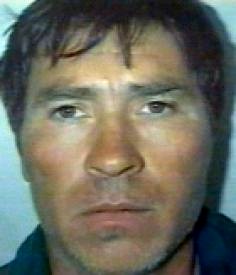 Julio Perez Silva
Serial killer · Chile · 1998
Julio Pérez Silva was sentenced to life imprisonment. He was transferred to jai…
14 victims
Julio Perez Silva
Serial killer · Chile · 1998
Julio Pérez Silva was sentenced to life imprisonment. He was transferred to jai…
14 victims
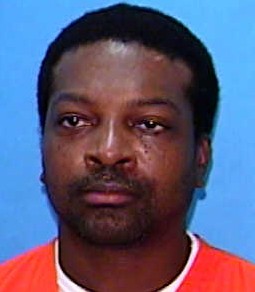 Lancelot Armstrong
Murderer · USA · 1990
Lancelot Armstrong was the defendant in Florida Supreme Court Lancelot Armstron…
1 victim
Lancelot Armstrong
Murderer · USA · 1990
Lancelot Armstrong was the defendant in Florida Supreme Court Lancelot Armstron…
1 victim
- Gender
- female
- Country
- United Kingdom
- Location
- Plympton, Devon, England, United Kingdom
- Date of birth
- 1923
- Age at first offence
- 80
- Characteristics
- parricide
- Victim profile
- Eric Hingston, 83 (her husband)
- Method of murder
- Stabbing with knife
- Date(s) of murder
- August 29, 2003
- Years active
- 2003
- Date of arrest
- October 7, 2003
- Status
-
Released
Released from prison on October 5, 2004 after being sentenced to two years in jail on March 12, 2004 for manslaughter on grounds of diminished responsibility; pleaded guilty to manslaughter
Case details
Audrey Hingston stabbed her husband Eric Hingston to death at their flat.
Background
Eric Hingston was a retired butcher. He had heart problems and asthma. By 1999, his health deteriorated significantly and he was awaiting an operation for prostate problems. The couple had married in 1985, a second marriage for both. They lived above the butcher’s shop run by their son, James Hingston. James Hingston’s mother was Audrey Hingston.
Audrey Hingston was frustrated at her husband’s deteriorating health and was depressed by his condition affecting their way of life. Her defence said the pressure of looking after her husband had “taken a toll” and that she had become depressed.
Eric Hingston was also described as a former Special Operations pilot who flew agents behind enemy lines during World War II, and as being a member of Winston Churchill’s Special Operations Executive who repeatedly risked his life by flying agents behind enemy lines in a Lysander light aircraft.
The offence
In the early hours of August 2003, Eric Hingston went to bed. Audrey Hingston slept on the sofa. In the early hours, she took a seven-inch knife from the kitchen and stabbed her husband as he lay in bed.
Martin Meeke QC described the prosecution account of the killing, including that Hingston drove the blade down “for its full length,” causing his lung to collapse. A man delivering vegetables said he had heard a “moaning, groaning noise” which was Eric Hingston “breathing his last,” according to the prosecutor.
After stabbing her husband, Hingston called an ambulance. The prosecution described that after the killing she spent two hours ransacking the flat, staging the burglary, and then claimed her husband had committed suicide and that she had faked the burglary to cover it up.
Statements by Audrey Hingston
Audrey Hingston told the ambulance: “We have been attacked and my husband is on the floor. Please come quickly, I think he is dead.”
At a news conference, she said: “Two men came into my home and ruined my life. My husband Eric did not deserve this. As a frail man, any resistance he put up could easily have been overcome by these two young men.”
A televised appeal was also made to trace the burglars she claimed had stabbed her husband after he got out of bed to confront them. She told a news conference a month after the killing: As a frail man, any resistance he put up could easily have been overcome by these men.”
After being confronted with the reality of events and after being charged with murder, Hingston confessed to her son in custody. She told him: “OK, I killed him. I'd had enough. I could not take any more of his illness and having to care for him.”
After her arrest, she attempted suicide with painkillers on September 11, saying in a note: “Please catch the terrible people who ruined my life. I cannot live without Eric.”
Investigation
Police initially thought the killing had been connected to a burglary based on Hingston’s claims. Detective Inspector Neil Treaby said after the case: “It was the most difficult case I have ever handled. “Initially we thought it was a burlgary, but after forensic evidence we had to turn the investigation round and start again.”
Police told the court they wasted £160,000 investigating the false claims. The court was also told that the police hunt for the “illusory burglars” cost £160,000, involved 481 hours of house inquiries and 800 statements. Police visited schools to reassure pupils.
Arrest
After the killing and the initial public appeals, Hingston was arrested and charged. The men she named as burglars were arrested but were freed because they had alibis.
Trial
At Plymouth Crown Court, Hingston denied murder but pleaded guilty to manslaughter on grounds of diminished responsibility. Her plea of not guilty of murder but guilty of manslaughter on the grounds of diminished responsibility was accepted by Plymouth Crown Court.
Arguments and the judge’s remarks
Mrs Justice Hallett told Hingston it was a “sad day” that a woman of her age and background was in the dock having confessed to killing her husband and covering her tracks in a “calculated and convincing way”. She said:
“Having covered your tracks, you sustained your account for some considerable time and considerable detail,” she said.
“What she had done after killing her husband caused enormous distress to a lot of people and had wasted a lot of police time.”
“It was ‘wicked’ of her to give to the police descriptions of two men she knew as the alleged burglars.”
“She accepted Hingston was ill and under considerable pressure - ‘the kind of pressure none of us would wish to bear’.”
“Unfortunately, no one realised when you sought help for your illness the extent of it.”
“I am satisfied this killing of your husband must be marked by a prison sentence, I feel I have no alternative,” she said.
The court heard that Hingston initially blamed the killing on two burglars she claimed had broken into their flat, then claimed her husband had committed suicide, and that she faked the burglary to cover it up.
Henry Grunwold QC, the defence counsel, said the pressure of looking after her husband had “taken a toll” and she had become depressed.
Sentencing
Hingston was sentenced to two years in jail.
In March, Conservative MP Gary Streeter asked the Attorney General to review Audrey Hingston’s sentence for the manslaughter of her husband Eric Hingston. Streeter told the BBC his opinion that the sentence was “unduly lenient”. The Attorney General refused to refer the case to the Court of Appeal.
A spokeswoman for Attorney General Lord Goldsmith said: “I can confirm the Attorney General has made the decision not to refer the case. “He did consider it very carefully. It is a difficult case but he had to look at all the guidelines and his decision was that the Court of Appeal would not increase the sentence and, for that reason, the decision was made not to refer it.”
Appeals
Outcome
Audrey Hingston was released from prison on October 5, 2004 after serving a year in custody.
Aftermath
James Hingston, the victim’s son, said the news of her release was painful. He said: “It’s upsetting. We thought the sentence should have been longer because it would give us more time to get over it. We've just got to get on with our lives now. “I don't want to ever see her again. I just want her to stay away from us.”
Sally Hingston, the victim’s daughter in law, said: “I feel anger, disappointment and betrayal. “If someone kills someone they should pay the price. “We believe she should have got at least five years.” She added: “If she was a younger person I am sure she would have got a longer sentence. “We have got to accept it, but it has destroyed my faith in the justice system.”
Sue Thomson said: “It's disgusting and a farce. Anyone can fake depression and go out and do what she's done. “If she can do that kind of thing totally unprovoked what's she going to do when she's provoked?”
Timeline
- August 2003 — Audrey Hingston stabbed her husband Eric Hingston to death at their flat in Plympton.
- September 4 (year not specified) — Hingston gave a news conference appealing for help in finding the pair she said “came into my home and ruined my life.”
- September 11 (year not specified) — Hingston attempted suicide with painkillers and left a note asking for the terrible people who ruined her life to be caught.
- March 12, 2004 — Hingston was sentenced to two years in jail.
- March 12, 2004 — At Plymouth Crown Court, Hingston denied murder but pleaded guilty to manslaughter on grounds of diminished responsibility.
- April 8, 2004 — The Attorney General refused to refer the case to the Court of Appeal after an attempt by Conservative MP Gary Streeter to increase the sentence.
- October 5, 2004 — Hingston was released from prison.
Other details
Eric Hingston was found dead at the couple’s flat in Plympton, Devon. He was found by Audrey Hingston in the bedroom of their flat, after he had been confronted by two men she said fled through the window. Police believed the intruders entered and escaped through the bedroom window above a flat roof. Audrey Hingston had been sleeping in a separate room and was woken by noises; she was confronted by the burglars when she went into the bedroom.
Eric Hingston was taken to hospital but pronounced dead. A search for the murder weapon was continuing.
Det Chief Insp Tony Carney said after the case: “It is a tragedy that this should happen to elderly people enjoying their retirement. It ranks among the worst crimes I have seen in 29 years’ service.”

Spotted an error, or have more information about this case?