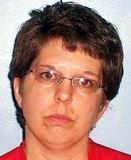
Lacey Hirst-Pavek
Murderer Miranda Barbour
Murderer · USA · 2013
Miranda Barbour, 19, defendant. · Elytte Barbour, 22, defendant and husband of…
100 victims
Miranda Barbour
Murderer · USA · 2013
Miranda Barbour, 19, defendant. · Elytte Barbour, 22, defendant and husband of…
100 victims
 Tiffany Hall
Murderer · USA · 2006
Tiffany Hall was 24 when she was charged in September 2006. She later entered a…
5 victims
Tiffany Hall
Murderer · USA · 2006
Tiffany Hall was 24 when she was charged in September 2006. She later entered a…
5 victims
 Banita Jacks
Murderer · USA · 2007
Banita Jacks was a Washington, DC resident convicted of murdering her four daug…
4 victims
Banita Jacks
Murderer · USA · 2007
Banita Jacks was a Washington, DC resident convicted of murdering her four daug…
4 victims
 Holly Grigsby
Murderer · USA · 2011
Holly Grigsby was sentenced to life in prison without parole on July 15, 2014.…
4 victims
Holly Grigsby
Murderer · USA · 2011
Holly Grigsby was sentenced to life in prison without parole on July 15, 2014.…
4 victims
 Jessica Tata
Murderer · USA · 2011
Jessica Tata was a Houston home day care owner who fled to Nigeria after a fire…
4 victims
Jessica Tata
Murderer · USA · 2011
Jessica Tata was a Houston home day care owner who fled to Nigeria after a fire…
4 victims
 Amanda Bennett
Murderer · USA · 2011
Amanda Bennett was an Indiana woman who shot her three children and set the fam…
3 victims
Amanda Bennett
Murderer · USA · 2011
Amanda Bennett was an Indiana woman who shot her three children and set the fam…
3 victims
 Robert Kenneth Stewart
Mass murderer · USA · 2009
Robert Kenneth Wayne Stewart carried out a mass murder at the Pinelake Health a…
8 victims
Robert Kenneth Stewart
Mass murderer · USA · 2009
Robert Kenneth Wayne Stewart carried out a mass murder at the Pinelake Health a…
8 victims
 Gregory Madej
Murderer · USA · 1981
Gregory Madej was sentenced to death in 1982. On January 10, 2003, the Governor…
1 victim
Gregory Madej
Murderer · USA · 1981
Gregory Madej was sentenced to death in 1982. On January 10, 2003, the Governor…
1 victim
 Menzies Hallett
Murderer · New Zealand · 1979
Name: Menzies Hallett Age: 72 Year of sentencing status: Sentenced to life in p…
1 victim
Menzies Hallett
Murderer · New Zealand · 1979
Name: Menzies Hallett Age: 72 Year of sentencing status: Sentenced to life in p…
1 victim
 Bruce Mendenhall
Murderer · USA · 2007
Bruce Mendenhall grew up in Crawford County, Illinois. He was married and has t…
4 victims
Bruce Mendenhall
Murderer · USA · 2007
Bruce Mendenhall grew up in Crawford County, Illinois. He was married and has t…
4 victims
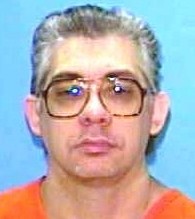 George Michael Hodges
Murderer · USA · 1987
George Michael Hodges was sentenced to death on August 10, 1989. · 01/08/87 — A…
1 victim
George Michael Hodges
Murderer · USA · 1987
George Michael Hodges was sentenced to death on August 10, 1989. · 01/08/87 — A…
1 victim
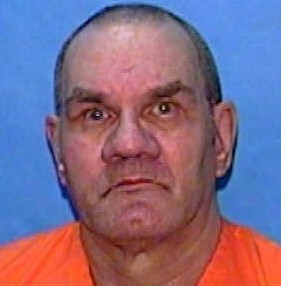 Paul Alfred Brown
Murderer · 1986
Paul Alfred Brown was convicted and sentenced to death for the murder of Paulin…
1 victim
Paul Alfred Brown
Murderer · 1986
Paul Alfred Brown was convicted and sentenced to death for the murder of Paulin…
1 victim
- Gender
- female
- Country
- USA
- Location
- Tonasket, Okanogan County, Washington, USA
- Date of birth
- 1976
- Age at first offence
- 33
- Characteristics
- murder-for-hire
- Victim profile
- Michelle Lee Kitterman, 25 (her husband's pregnant mistress)
- Method of murder
- Stabbing with knife (39 times)
- Date(s) of murder
- March 1, 2009
- Years active
- 2009
- Date of arrest
- April 1, 2009
- Status
-
Life imprisonment
Sentenced to life in prison without parole on November 23, 2010
Case information
Lacey Hirst-Pavek was convicted in 2010 of murder-for-hire in the killing of Michelle Kitterman.
Background
Michelle Kitterman was 25. The killing involved Michelle Kitterman’s pregnancy with her unborn child. At trial, Kitterman was described as having an affair with Hirst-Pavek’s husband, Daniel Pavek, and was pregnant with his child.
Hirst-Pavek was married to Daniel Pavek. The case included the death of Kitterman and also the death of Kitterman’s unborn child, for which Hirst-Pavek received a manslaughter conviction based on the death of the fetus.
Kitterman’s family members described the impact of the killing in court during the sentencing proceedings, and included Malinda Kitterman, Tracy Kitterman, and Nathan, who was described as Michelle’s son.
Jim Huffman, a victim advocate from Families and Friends of Violent Crime Victims, spoke at sentencing.
The offence
Michelle Kitterman was beaten and stabbed to death. The killing was carried out by Spokane drug dealer Tansy Mathis and two subordinates that Hirst-Pavek hired to kill Kitterman.
Kitterman had been 11 weeks pregnant at the time of the killing. The manslaughter charge against Hirst-Pavek was applied to the death of the fetus.
Hirst-Pavek was found guilty as an accomplice to the murder after evidence showed she contacted “Tonasket” Tansy Fae-Arven Mathis and rented her a vehicle to fetch someone from Spokane to beat up Kitterman. Hirst-Pavek allegedly made statements that she wanted Kitterman “taken care of.”
The body was found on remote Stalder Road west of Crumbacher and also described as being found in a driveway in the Pine Creek area south of Tonasket. Kitterman suffered 39 stab wounds.
During the killing, Brent “Hollywood” L. Phillips and David E. Richards were involved. Brent Phillips admitted in a plea agreement that he landed the fatal blow to Kitterman and testified against Mathis and David E. Richards. Mathis and Phillips took Kitterman to the remote road and killed her. Richards supplied the murder weapon.
Investigation
The Okanogan County Sheriff’s Department determined that Hirst-Pavek made contact with Mathis and, over several meetings in Okanogan County and Spokane, came to an agreement for Mathis to “take care of” Kitterman for $500.
The State relied on phone records between Hirst-Pavek and convicted murderer Tansy Mathis from Feb. 25 through March 3.
Defense counsel called Dr. John Butt, a forensic pathologist from Vancouver, B.C., who testified about information he read in two books regarding quickening. The testimony was also described as relating to the term “unborn quick child,” which was applied at trial to Kitterman’s baby.
Trial
The trial began on Nov. 1 with jury selection. Although it was expected to last three weeks, the jury was given the case at 4 p.m. on Nov. 15 after closing statements by the prosecution and the defense.
Hirst-Pavek’s defense presented one witness, Dr. John Butt. The State rested on Nov. 12 after finishing presentation of evidence, including examination of phone records between Hirst-Pavek and Mathis from Feb. 25 through March 3.
Hirst-Pavek was found guilty on Nov. 16 of aggravated first-degree murder and first-degree manslaughter.
The jury returned a guilty verdict just before 2 p.m. on Tuesday, Nov. 16 after beginning deliberations at 9 a.m. At 2:15 p.m., Judge John Hotchkiss announced the jury’s guilty verdict for Hirst-Pavek’s charges of first degree premeditated murder and first degree manslaughter of an unborn quick child.
The jury’s guilty verdict included aggravated circumstances of an accomplice using a deadly weapon and knowing the victim was pregnant before the crime was committed.
Before sentencing, Hotchkiss pooled the jury after Defense Attorney Ron Hammett asked for it. All 12 jurors stated the verdict was their personal verdict, the verdict of the entire jury and the jury’s verdict for all counts and special circumstances.
Melinda Kitterman said:
“We’re so relieved right now I can’t even express it,” Melinda Kitterman said. “It’s nice to know she’s going to pay for her crimes.”
Hirst-Pavek appealed her conviction the day after she was sentenced.
Sentencing
On Nov. 23, 2010, Hirst-Pavek was sentenced in Okanogan Superior Court to life in prison without the possibility of parole.
Hirst-Pavek was ordered to serve 126 months in prison for manslaughter of Kitterman’s unborn child. The maximum sentence she faced was described as life in prison without the possibility of parole.
A restitution order required Hirst-Pavek to pay $13,992.50 jointly and severally with the other convicted murderers in the case: Tansy Mathis, David Richards, and Brent Phillips. She also was ordered to pay $860.50 in court fees.
Douglas County Superior Court Judge John Hotchkiss presided over sentencing proceedings described as taking place in Okanogan Superior Court. Hirst-Pavek did not give a statement when offered the opportunity.
Victim impact statements
Malinda Kitterman, Michelle’s older sister, spoke:
“To completely express the impact of this on my family is overwhelming and quite frankly impossible,” Malinda Kitterman, Michelle's older sister said. "I will be mourning the loss of my sister for the rest of my life. Nathan, Michelle's son, will never know how amazing and caring his mother was. Because of the viciousness of the defendant's actions, I will mourn the loss of myself. I was born on March 1, 1978 and my sister was beaten and stabbed to death on March 1, 2009. I will never forgive the defendant for taking my sister from my family and me."
Tracy Kitterman, Michelle’s mother, also addressed the court:
“Today, I am joyous there is justice, but I also have a bleeding in my heart,” she said.
“For the families: Lacey, your daughter will grow up without you. I do not hate the Hirst family and I pray I can forgive you someday.”
Tracy Kitterman spoke about Michelle’s premature birth on May 12, 1983, and described Michelle’s activities as a child, including involvement in plays, talent shows, band, and outdoor activities including riding her dirt bike. Tracy Kitterman also described that Michelle smoked methamphetamine the night of her death and later had contact with people who did not care about her.
Tracy Kitterman said:
“I am angry, full of hate, frightened and constantly confused,” the victim's mom said. "I have a huge hole in my life and I'm not sure how to start anew. I can't breathe and it feels like something heavy is on my chest when I have a panic attack. I have nightmares and they do not stop when I am awake. I am depressed 99 percent of the time. I only wish Lacey had been able to inform me this was disturbing her and her marriage because I would have done everything I could have to help."
She compared the end of Hirst-Pavek’s trial to losing her daughter for the third time and said:
“I have to learn how to live again,” she said. "Like a baby, I have to relearn how to do the simplest things. I realize life is too short. We tend to take the simplest things for granted and I want to live the rest of my years in the best way possible."
Jim Huffman, victim advocate, spoke before Judge Hotchkiss gave the sentence:
“It would be easy to make the assumption that this family is vindictive,” he said. "But it would be equally wrong. Far overriding the anger they are feeling is the emotional pain they are feeling."
Huffman also said:
“When the trials began, I explained to the Kitterman family three things about them," Huffman said. "Number one was that they likely wouldn't have any sense of justice because they can never get Michelle back. Number two was they will likely never have closure because we don't forget about our loved one and we don't want anyone else to forget about them either. Finally, I told them they likely will never find out why this all happened because only Lacey and her associates know the complete story. One major thing that happens today is this process comes to an end and will give the family an opportunity to proceed with their grieving."
Attorney statements
After Hotchkiss handed down the life sentence, Hirst-Pavek’s attorney, Ron Hammett, requested a restitution hearing. Hammett spoke directly to Hirst-Pavek:
"I don't know what to say," he said. "I don't really understand any of this. As harsh as the sentence you've received, it is nothing to the sentence you've brought down on your family and the Kitterman family."
Judge John Hotchkiss also made remarks during sentencing, stating:
"I don't understand any of this," Douglas County Superior Court Judge John Hotchkiss said.
Hotchkiss also said:
"Hotchkiss said Hirst-Pavek's sentence was harsh, but not as harsh as what Kitterman and Hirst-Pavek's families were going through."
Appeals
Her appeal claimed prosecutorial misconduct and a breach of privacy in collecting evidence used against her at trial.
She argued that Okanogan County Prosecutor Karl Sloan misstated the law during closing argument when he told the jury it wasn’t necessary to prove intent to convict her of murder.
The Washington Court of Appeals ruled that because Hirst-Pavek was tried as an accomplice to murder, proof of intent wasn’t needed for conviction, stating that “solely that she knew her actions would facilitate the crime of murder.”
Her appeal also argued that records of her employment and car rental records were unlawfully seized without warrant. The appellate court found there was no expectation of privacy for either type of record and noted that witnesses testified to Hirst-Pavek’s work hours and her rental of a car used by the killers to drive Kitterman to the murder site.
The appeal further argued she should not have been convicted of manslaughter in part because the term “unborn quick child,” applied at trial, is unconstitutionally vague. The appeals court said she did not provide any legal citations for her argument.
Hirst-Pavek’s murder appeal was turned down by the appellate court.
Other sentencing-related outcomes for co-defendants
The murder carried out by Mathis and two subordinates resulted in separate convictions and sentences for the other defendants.
Tansy Mathis and David E. Richards were convicted of first- and second-degree murder, while Brent Phillips pleaded guilty to first-degree murder and testified against the other three defendants.
During sentencing described in connection with other defendants:
- Mathis received a life sentence without the possibility of parole for aggravated murder in the first degree.
- Mathis received 78 to 102 months plus an additional 24-month enhancement for first-degree manslaughter of an unborn child.
- Mathis received 51 to 68 months plus an additional 24-month enhancement for kidnapping in the first degree.
- Mathis received one year for tampering with physical evidence.
- Richards received a mid-range sentence of 215 months plus an additional 24-month enhancement for possession of a deadly weapon for second degree murder.
- Richards received a mid-range sentence of 111 to 147 months plus an additional 24-month enhancement for manslaughter of an unborn child.
- Phillips’ sentencing was described as 26 years after being sentenced in a separate courtroom, with his sentence described as matching what the state requested in a plea agreement.
- Phillips pleaded guilty to premeditated murder in the first degree, manslaughter of a quick child in the first degree, kidnapping in the first degree, and tampering with physical evidence; sentencing was continued by counsel and not yet scheduled at one point.
In Phillips’ sentencing, his attorney Alan White said:
“If I could do it over again it would not have happened. I'm sorry.”
Alan White also said:
“She is in heaven and he was not going to that place,” White said.
White said Phillips stepped forward to take responsibility and said there was an incentive for a reduced sentence by doing so. White also said Phillips worked in construction and landscaping before moving with a girlfriend to Spokane, became involved with methamphetamine in late 2008, came to the Okanogan County to beat up a drug snitch, and that the murder bothered him ever since.
Other details
Hirst-Pavek was 36 at the time she was turned down on appeal.
Judge T.W. “Chip” Small made remarks during sentencing of Mathis and Richards, saying the Huffman case was the only other one he had heard that was more horrific than Kitterman’s murder.
After Hirst-Pavek was sentenced, there were remarks described as relating to plea agreements and anticipated appeals by Phillips and Hirst-Pavek within 30 days.
Spotted an error, or have more information about this case?