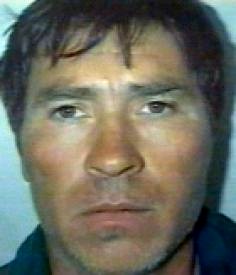
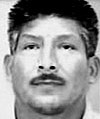
Julio Perez Silva
Serial killer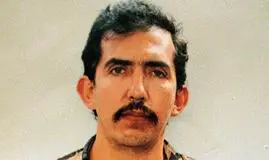 Luis Alfredo Garavito
Serial killer · Colombia/Ecuador · 1992
Luis Alfredo Garavito Cubillos, also known as "La Bestia" ("The Beast") or "Tri…
192 victims
Luis Alfredo Garavito
Serial killer · Colombia/Ecuador · 1992
Luis Alfredo Garavito Cubillos, also known as "La Bestia" ("The Beast") or "Tri…
192 victims
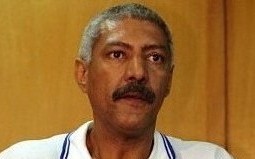 Edson Isidoro Guimaraes
Serial killer · Brazil · 1999
Edson Isidoro Guimarães was a Brazilian nursing assistant and nurse’s aide at S…
131 victims
Edson Isidoro Guimaraes
Serial killer · Brazil · 1999
Edson Isidoro Guimarães was a Brazilian nursing assistant and nurse’s aide at S…
131 victims
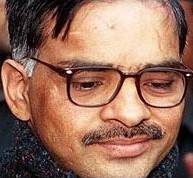 Javed Iqbal
Serial killer · Pakistan · 1998
Javed Iqbal (born 1956 in Lahore, Punjab, Pakistan; died October 8, 2001, in La…
100 victims
Javed Iqbal
Serial killer · Pakistan · 1998
Javed Iqbal (born 1956 in Lahore, Punjab, Pakistan; died October 8, 2001, in La…
100 victims
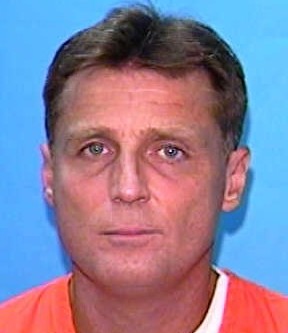 Glen Edward Rogers
Serial killer · USA · 1993
Glen Edward Rogers was a spree killer whose cross-country rampage in 1994-95 le…
70 victims
Glen Edward Rogers
Serial killer · USA · 1993
Glen Edward Rogers was a spree killer whose cross-country rampage in 1994-95 le…
70 victims
 Yang Xinhai
Serial killer · China · 2000
Yang Xinhai (simplified Chinese: 杨新海; pinyin: Yáng Xīnhǎi; 17 July 1968–14 Febr…
67 victims
Yang Xinhai
Serial killer · China · 2000
Yang Xinhai (simplified Chinese: 杨新海; pinyin: Yáng Xīnhǎi; 17 July 1968–14 Febr…
67 victims
 Yang Xinhai
Serial killer · China · 2000
Yang Xinhai (simplified Chinese: 杨新海; pinyin: Yáng Xīnhǎi; 17 July 1968–14 Febr…
67 victims
Yang Xinhai
Serial killer · China · 2000
Yang Xinhai (simplified Chinese: 杨新海; pinyin: Yáng Xīnhǎi; 17 July 1968–14 Febr…
67 victims
 Michelle Kehoe
Murderer · USA · 2008
Michelle Kehoe was convicted in Iowa of first-degree murder, attempted murder,…
1 victim
Michelle Kehoe
Murderer · USA · 2008
Michelle Kehoe was convicted in Iowa of first-degree murder, attempted murder,…
1 victim
 Leisa Jones
Mass murderer · USA · 2010
Leisa Jones died in a fire that she set intentionally in a second-floor apartme…
4 victims
Leisa Jones
Mass murderer · USA · 2010
Leisa Jones died in a fire that she set intentionally in a second-floor apartme…
4 victims
 Ruth Ellis
Murderer · United Kingdom · 1955
Ruth Ellis (9 October 1926 – 13 July 1955), née Neilson, was the last woman to…
1 victim
Ruth Ellis
Murderer · United Kingdom · 1955
Ruth Ellis (9 October 1926 – 13 July 1955), née Neilson, was the last woman to…
1 victim
 Sheila Graham-Trott
Murderer · USA · 2010
Sheila Graham-Trott was convicted and sentenced to life in prison for first-deg…
1 victim
Sheila Graham-Trott
Murderer · USA · 2010
Sheila Graham-Trott was convicted and sentenced to life in prison for first-deg…
1 victim
- Gender
- male
- Country
- Chile
- Location
- Alto Hospicio, Chile
- Date of birth
- July 15, 1963
- Age at first offence
- 35
- Characteristics
- serial rapist
- Victim profile
- Graciela Saravia (17), Sara Gómez (18), Ornella Linares (14), Daysi Castro (16), Ivon Carrillo (15), Macarena Sánchez (14), Angélica Alcayata (24), Laura Zola (15), Catherine Arce (16), Patricia Palma (17), Macarena Montecinos (15), Viviana Garay (16), Angélica Palape (45) and Gisella Melgarejo (36)
- Method of murder
- Beating with rocks and other objects
- Date(s) of murder
- 1998 - 2001
- Years active
- 1998–2001
- Date of arrest
- October 4, 2001
- Status
-
Died in custody
Sentenced to life imprisonment on February 26, 2004; transferred to jail Colina I on January 12, 2011; after an attempted suicide on January 19, 2005, he was hospitalized for cerebral hypoxia and therapies were intensified
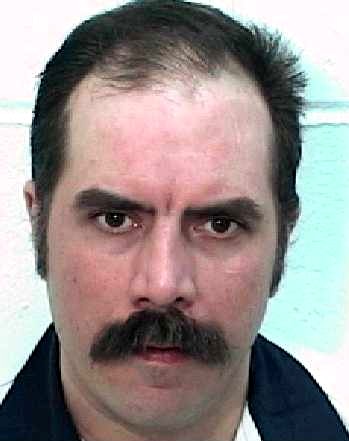
Case record: Julio Perez Silva
Julio Pérez Silva was sentenced to life imprisonment. He was transferred to jail Colina I, located in Santiago, on January 12, 2011. On January 19, 2005, he almost died after an attempted suicide in prison; he was hospitalized for cerebral hypoxia (lack of air), and his therapies were intensified with increased security, including cameras in his cell to prevent a second suicide attempt.
Background
Julio Pérez Silva played soccer in a way that helped him win the tshirt number "4" in the Iquique's Senior Team. He was described as quiet and, in some circumstances, as kind and supportive. He was said to have no addictions and that women liked him.
In 1997, he lived in La Pampa, where no one remembered a sign that could have woken up mistrust. His neighbor, Alicia Morena, confirmed that he was “very loving with his couple, Nancy Duero,” a municipal employee. Alicia described the period when her son got sick with hepatitis in April: her statement said:
"In April, my son got sick with hepatitis and the neighbor (Julio) gave him lunch while I was working. And when our TV got damaged, the kid went to watch television to his house."
Alicia Morena said he was always very quiet. She said he sometimes kneaded bread and shared some with people he knew. She said he liked talking about his three dogs: “el Nacho” a black dog that still walks around the neighborhood “la Duquesa” and the “Son”, named by him as such because he loved him.
Julio Pérez Silva was raised in Puchuncaví Alto Hospicio. He was seven when his father whipped his head against a wall for entering his room without asking. The boy was left there unconscious. His mother, Elsa Silva, was described as paralyzed by fear and unable to protect him. The narrative said that Elsa Silva used to get the worst part when alcohol produced violence outbursts in her husband, and that when his steps were heard in Puchuncaví's streets, everybody ran to hide in the tchochkes at the garden, returning only when they heard the man snoring.
He was described as the fifth out of six brothers and too small to face the alcoholic father. His father, also called Julio Pérez, worked for ENAMI in Ventanas for many years, but constant absences due to drunkenness led to his dismissal. The narrative said his father had to search for work at the sown fields as a day laborer, and that he died of cancer.
The narrative said that he grew up in Puchuncaví (Quinta Región), studied until eighth grade, and left a wife there plus two children. It also mentioned rumors about flasher behaviors and rape attempts that were never reported.
After arriving in Alto Hospicio, he worked as a construction worker and bought a metallic grey Nissan. He subsequently worked in a salt processor, and he was remembered as a quiet man. Later, he changed the Nissan for a white Toyota Corolla, which became part of the confiscated vehicles. The narrative said witnesses affirmed he talked about his wish of buying a van that could be useful to transport himself during his irons and weldings sporadic works. It said he was unemployed and that since mid August his only earnings depended on his fake taxi car.
Besides his dogs, the narrative said his only pastime was soccer, where he always played as a right defender. He first played in the “El Esfuerzo” club and later in the Senior Team of Iquique. He was even nominated to represent the city in a championship during 1999. His ex teammate said:
"He didn't speak much, but was good at kicking."
Another ex teammate from “El Esfuerzo,” Alexis Moreira, said:
"One day he appeared with his hair dyed and we all made jokes about it."
Two sellers from a close fair remembered he was always wearing jeans and white tight tshirts, and that his hair was neatly combed and impeccable. One seller said:
"We joked about his good looking but he was indifferent."
In other occasions, the narrative said they saw him in his car parked in a corner for hours, hidden, or driving to La Pampa while listening to ranchera music. The narrative said none of his teammates suspected his hair changes were to hide his appearance.
The offence
From September 1998 until October 2001, Pérez Silva murdered multiple victims who were missing and later found.
First confirmed killing mentioned in the narrative
In September 16, 1998, he picked Graciela Saravia, 17 years old, at Iquique's coastal. In his confession, he said he offered her money for sex. The narrative said everything was fine until she tried to rob him; he was described as infuriated and he hit her until she was dead. The corpse was left abandoned at the beach.
Subsequent disappearances and murders described
The narrative said that on November 24, 1999, Macarena Sánchez, 14 years old, walked out her house off to School Liceo Eleuterio Ramírez; she was in eighth grade at that time. It said a person in a white car, probably a clandestine taxi, proposed that she be driven to school for a few coins. It said she was afraid of getting late to school and accepted, and that she was never seen alive again.
The narrative said the same happened to Laura Zola Henríquez, 15 years old, in March 23, 2000; Catherine Arce Rivera, 16, in April 5; later to Patricia Palma, 17, in May 22; in June 2 it happened to Macarena Montecinos, 15; and finally on June 20, to Viviana Garay Moe, 16 years old.
Attacks acquainted later were also listed in the narrative:
- Sara Gómez Cuevas, in February 21, 2000
- Angélica Lay Alcayata, in February 24, 2000
- Ornella Linares Cepeda, in April, 1999
- Angélica Palape Castro, in August 23, 2001
- Daysi Castro Mamani, in May, 2001
- Gisella Melgarejo Navarro, in February, 2000
- Ivon Carillo Lefno, in August, 1999
Investigation
The narrative said the parents of the girls reported the disappearances in the Alto Hospicio police station, but that months went by without help with clues about their possible whereabouts.
The narrative said that in September 2000 Carabineros considered an initial hypothesis that the girls had escaped due to a bad relationship between parents and daughters, mainly motivated by possible domestic violence added to extreme poverty in Alto Hospicio. It said the hypothesis was dropped, and that parents denied mistreatment and proved it by searching for their daughters tirelessly during two years.
A second hypothesis described by the narrative involved a possible case of white slaves in neighboring countries such as Perú and Bolivia. The narrative said that the possibility of a prostitution ring abducting underage teenagers led Chilean police and some families to investigate many brothels near the area, but they got nowhere.
The narrative said a direct intervention was solicited to the President Ricardo Lagos to speed inquiries up. After the request, it said Lagos assigned a Special Police Commission to exclusively take charge of the search for the missing girls. It said authorities refused to call a prosecutor that could investigate because they still considered it more like a social problem than a police matter.
The narrative said it was surprising that investigators did not think it could be a serial homicide case or premeditated kidnappings. It said all missing teenagers were between 14 and 17 years old, that all the girls went to the same school, that they had long dark hair, and that they disappeared in a period of seven months. It said these signs pointed to someone picking victims depending on concrete characteristics.
In September 2001, the narrative said Carabineros wrote a report saying the disappearances could be linked with an assassination case, quoting:
"A criminal event it is possibly related to a psychopathic modus operandi, which acquires more vigor as the underage girls are yet not found and we have not received signs of any of them. It must be considered the participation of one or more persons and that the disappearances may belong to a series of assassinations."
The narrative said the report was confirmed two weeks later.
Arrest
The narrative said that on Thursday 9, October, Bárbara Núñez Barrios, 13 years old, went to the Alto Hospicio's substation with symptoms of being brutally hit. She reported that a man in a white car had picked her up from her home to be driven to school, but that in the middle of the road he turned away and drove her to the outskirts of town, threatening her with a knife. The narrative said she then said he raped her, hit her until he thought she was dead, and later threw her into a fifty metres mine shaft, approximately 20 km away from Iquique. It said she laid there unconscious for about five hours until she made her way out and reached the town by her own resources.
Based on the description she provided of his aggressor, Julio Pérez Silva, 38 years old, was arrested. The narrative said he was the owner of a cross country white Toyota. It said he did not have penal records.
The narrative said that after he was arrested, neighbors defended him, saying they never observed strange behavior, while other neighbors said that they knew about his flasher actions and that he might have raped two students years earlier in Puchuncaví, but that this was never proven. It said the accused was “immutable” when arrested.
The narrative said that in the substation he kept police officers who interrogated him, playing a psychological game that showed coldness and security in his actions described as common in a psychopath. It said he denied the charges in a first instance.
It said the OS7 (Police Drug Department) decided to break his resistance with a technique of sleep’s systematic interruptions, waking him every thirty minutes so that he would reach stress and talk. It said next day, after the insistence and agents’ hard method of questioning, his position changed and turned defiant. It said that during the day he assumed the violation and homicide attempt of the 13 year old.
It said Carabineros continued interrogation during the next two days until he revealed where the other dead bodies of the rest of the girls he had kidnapped remained.
The narrative quoted him during the recounts about the murder of the girls:
"A la flacuchenta la dejé por allá"
"esa otra está en el pique"
The narrative also said he never cried, never mentioned having regrets, never said he was sorry, and when asked why he had done it he said he did not know. It included a policeman’s statement:
"If nobody suspected about him, it's because he broke all parameters of criminal prototype."
The narrative said that a total of seven bodies were found, corresponding to the missing girls, and that besides the corpse of Angelica Lay Alcayata, a 24 year old mother that was missing from her home since February 24, 2000, were found.
Trial
The narrative said the DNA test was conclusive, and that his voice was recognized by Maritza Díaz.
It said Maritza Díaz, 16 years old, in April 2001, had been raped by Julio Pérez Silva but had escaped. It said she did not get to see his face, but that biological tests taken after the violation were saved and registered. It said the DNA matched with Bárbara Núñez sample.
It also said he confessed the murders, indicated the places where the bodies were, and never alleged dementia.
Sentencing
The narrative said he was incriminated for 14 first degree murders, 2 violations and a frustrated attempt of assassination.
It said that in February 26, 2004, he was found guilty and sentenced to 40 years in prison that he would have to accomplish in Arica's high security jail. It said the defense appealed, but the Court did not agree and he was finally sentenced to life imprisonment.
The narrative added that life imprisonment was equal to 40 uninterrupted years with no benefits, described as the maximum according to Chilean Law.
Appeals
The narrative said the defense appealed but the Court did not agree, and that he was finally sentenced to life imprisonment.
Outcome
The legal outcome was life imprisonment following the guilt finding on February 26, 2004.
Aftermath
Suicide attempt and hospitalisation
In January 19, 2005, the narrative said Julio Pérez Silva almost died. It said he hanged himself with a shoelace coiled to his neck and used a toothbrush to tighten the knot. It said policemen reaction saved him after noticing what had happened fifteen minutes later, when he was hiding his face with a sheet, resting in his bunk. It said he was hospitalized for cerebral hypoxia (lack of air).
The narrative said from that day on, his therapies were intensified and his security increased. It said he had cameras in his cell to prevent a second suicide attempt.
Transfer to Colina I
In January 12, 2011, the narrative said he was transferred to jail Colina I in Santiago, where he was currently serving his sentence.
Victims summary (as listed in the narrative)
Between September 1998 and October 2001, the narrative listed the victims as:
- Graciela Saravia (17)
- Sara Gómez (18)
- Ornella Linares (14)
- Daysi Castro (16)
- Ivon Carrillo (15)
- Macarena Sánchez (14)
- Angélica Alcayata (24)
- Laura Zola (15)
- Catherine Arce (16)
- Patricia Palma (17)
- Macarena Montecinos (15)
- Viviana Garay (16)
- Angélica Palape (45)
- Gisella Melgarejo (36)
Spotted an error, or have more information about this case?