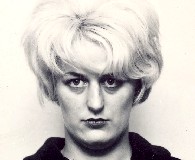
Myra Hindley
Serial killer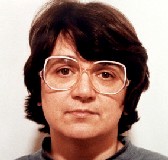 Rosemary West
Serial killer · United Kingdom · 1971
Rosemary Pauline “Rose” West (née Letts) Rosemary Letts was born in Barnstaple,…
10 victims
Rosemary West
Serial killer · United Kingdom · 1971
Rosemary Pauline “Rose” West (née Letts) Rosemary Letts was born in Barnstaple,…
10 victims
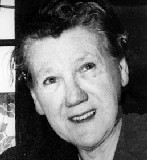 Mary Elizabeth Wilson
Serial killer · United Kingdom · 1955
Mary Elizabeth Wilson (c. 1893 - 1963), also known as the Merry widow of Windy…
4 victims
Mary Elizabeth Wilson
Serial killer · United Kingdom · 1955
Mary Elizabeth Wilson (c. 1893 - 1963), also known as the Merry widow of Windy…
4 victims
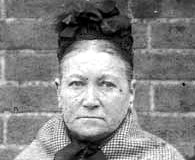 Amelia Dyer
Serial killer · United Kingdom · 1880
Amelia Dyer was convicted for the murder of Doris Marmon. She was known as a “b…
100 victims
Amelia Dyer
Serial killer · United Kingdom · 1880
Amelia Dyer was convicted for the murder of Doris Marmon. She was known as a “b…
100 victims
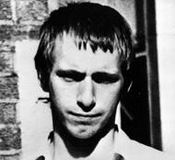 Bruce Lee
Serial killer · United Kingdom · 1973
Bruce Lee was born Peter George Dinsdale in 1960. He later changed his name to…
26 victims
Bruce Lee
Serial killer · United Kingdom · 1973
Bruce Lee was born Peter George Dinsdale in 1960. He later changed his name to…
26 victims
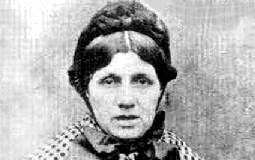 Mary Ann Cotton
Serial killer · United Kingdom · 1857
Mary Ann Cotton was executed by hanging in Durham prison on March 24, 1873. Mar…
21 victims
Mary Ann Cotton
Serial killer · United Kingdom · 1857
Mary Ann Cotton was executed by hanging in Durham prison on March 24, 1873. Mar…
21 victims
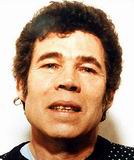 Frederick West
Serial killer · United Kingdom · 1967
Frederick West (29 September 1941 – 1 January 1995) was an English serial kille…
13 victims
Frederick West
Serial killer · United Kingdom · 1967
Frederick West (29 September 1941 – 1 January 1995) was an English serial kille…
13 victims
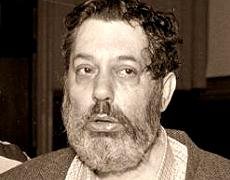 Joseph Kallinger
Murderer · USA · 1974
Joseph Kallinger was an American serial killer who murdered three people and to…
3 victims
Joseph Kallinger
Murderer · USA · 1974
Joseph Kallinger was an American serial killer who murdered three people and to…
3 victims
 Larry Eugene Hutcherson
Murderer · USA · 1992
Defendant: Larry Eugene Hutcherson (age 37) Victim: Irma Thelma Gray (age 89) ·…
1 victim
Larry Eugene Hutcherson
Murderer · USA · 1992
Defendant: Larry Eugene Hutcherson (age 37) Victim: Irma Thelma Gray (age 89) ·…
1 victim
 Matthew Hoffman
Murderer · USA · 2010
Matthew Hoffman was an unemployed tree trimmer and had an obsession with trees…
3 victims
Matthew Hoffman
Murderer · USA · 2010
Matthew Hoffman was an unemployed tree trimmer and had an obsession with trees…
3 victims
 Kermit Gosnell
Murderer · USA · 2006
Kermit Barron Gosnell was an American physician from Philadelphia. He ran an ab…
4 victims
Kermit Gosnell
Murderer · USA · 2006
Kermit Barron Gosnell was an American physician from Philadelphia. He ran an ab…
4 victims
 Timothy Tyrone Foster
Murderer · USA · 1986
Timothy Tyrone Foster was 29 when he was sentenced to death in Floyd County in…
1 victim
Timothy Tyrone Foster
Murderer · USA · 1986
Timothy Tyrone Foster was 29 when he was sentenced to death in Floyd County in…
1 victim
- Gender
- female
- Country
- United Kingdom
- Location
- Greater Manchester, England, United Kingdom
- Date of birth
- July 23, 1942
- Age at first offence
- 21
- Characteristics
- rape, child killer, serial rapist, torture
- Victim profile
- Pauline Reade, 16 / John Kilbride, 12 / Keith Bennett, 12 / Lesley Ann Downey, 10 / Edward Evans, 17
- Method of murder
- Cutting the throat / Strangulation with a piece of string
- Date(s) of murder
- July 1963 - October 1965
- Years active
- 1963–1965
- Date of arrest
- October 11, 1965
- Status
-
Died in custody
Sentenced to two concurrent life sentences on May 6, 1966; died in prison on November 16, 2002
Overview
Myra Hindley was an English serial killer who, in partnership with Ian Brady, committed the rapes and murders of five small children. Hindley’s 17-year-old brother-in-law tipped her off to the police. Hindley pleaded not guilty to all of the murders. She was found guilty of three murders and was jailed for life. She remained imprisoned and died in prison in 2002.
Timeline
- July 23, 1942 — Myra Hindley was born in Manchester, England.
- 12 July 1963 — Pauline Reade disappeared.
- 23 November 1963 — John Kilbride disappeared.
- 16 June 1964 — Keith Bennett vanished.
- 26 December 1964 — Lesley Ann Downey disappeared from a local fairground.
- 6 October 1965 — Ian Brady met 17-year-old apprentice engineer Edward Evans at Manchester Central railway station and invited him to his home at 16 Wardle Brook Avenue in Hattersley.
- 7 October 1965 — David Smith made an emergency services call to police station in nearby Hyde at 6:07 am.
- 7 October 1965 — Brady was arrested immediately.
- 11 October — Hindley was charged as an accessory to the murder of Edward Evans and remanded at Risley.
- 15 October 1965 — Police found what they were looking for: the left-luggage ticket in the back of Hindley’s prayer book.
- 16 October 1965 — Police found an arm bone sticking out of the peat and discovered the body of Lesley Ann Downey.
- (Five days later after 16 October 1965) — Detectives found the badly decomposed body of John Kilbride while Brady and Hindley were already being held for the murder of Evans.
- (That same day) — Brady and Hindley appeared at Hyde Magistrate’s Court charged with Lesley Ann Downey’s murder.
- 2 December — Brady and Hindley were further charged with murders including Brady charged with the murder of John Kilbride, and Hindley charged with the murder of Edward Evans.
- 6 December — At the committal hearing, Brady was charged with the murders of Edward Evans, John Kilbride, and Lesley Ann Downey; Hindley was charged with the murders of Edward Evans and Lesley Ann Downey and with harbouring Brady in the knowledge that he had killed John Kilbride.
- 19 April 1966 — Trial began over 14 days before Mr Justice Fenton Atkinson.
- 6 May — Jury found Brady guilty of all three murders and Hindley guilty of the murders of Downey and Evans.
- May 6, 1966 — Sentenced to two concurrent life sentences.
- 1985 — Investigation reopened following Brady’s reported confession to murders including Pauline Reade and Keith Bennett; Greater Manchester Police resumed searching Saddleworth Moor.
- November 1986 — Winnie Johnson wrote a letter to Hindley begging for information about Keith Bennett.
- 16 December 1986 — Hindley made the first of two visits to assist the police search of Saddleworth Moor.
- 10 February 1987 — Hindley made a formal confession to police admitting involvement in all five murders.
- 1 July 1987 — After more than 100 days of searching, police found a body lying in a shallow grave about 100 yards from where Lesley Ann Downey had been found; Brady made a formal confession to Topping.
- 3 July 1987 — Brady was taken to the moor but the search was called off at 3:00 pm.
- 24 August 1987 — Police called off their search of Saddleworth Moor despite not having found Keith Bennett’s body.
- 1 December — Brady was taken to the moor for a second time but was unable to locate the burial site.
- 15 November 2002 — Hindley died in prison.
Background
Myra Hindley was born on July 23, 1942 in Manchester, England, and grew up with her grandmother.
After the drowning death of a close male friend when she was 15, Hindley left school and converted to Roman Catholicism.
In 1961, she met Ian Brady, a stock clerk who was recently released from prison. She fell in love with him and soon gave herself over to his control.
Hindley and Brady committed the murders of five children between July 1963 and October 1965, in and around what is now Greater Manchester, England. The victims were five children aged between 10 and 17: Pauline Reade, John Kilbride, Keith Bennett, Lesley Ann Downey, and Edward Evans. At least four of whom were sexually assaulted.
The murders were named because two of the victims were discovered in graves dug on Saddleworth Moor; a third grave was discovered on the moor in 1987, over 20 years after Brady and Hindley’s trial in 1966. The body of a fourth victim, Keith Bennett, was suspected to be buried there but remained undiscovered despite repeated searches. The police had initially been aware of only three killings: Edward Evans, Lesley Ann Downey, and John Kilbride.
The full extent of Brady and Hindley’s killing spree did not come to light until their confessions in 1985, as both had maintained their innocence until then.
The offence
Hindley and Ian Brady carried out a killing partnership involving the rapes and murders of five small children.
Pauline Reade
Pauline Reade was first victim and disappeared on 12 July 1963 while on her way to a dance in Crumpsall on 12 July 1963. Later narrative described Brady and Hindley’s method: Brady told Hindley that he wanted “commit his perfect murder,” and instructed her to drive her van while he followed on a motorcycle, signalling her to stop when he spotted a likely victim. Hindley recognised Pauline Reade, a friend of her younger sister Maureen, and introduced Brady to Reade as her boyfriend. The killing involved Brady taking Reade onto the moor and returning alone after about 30 minutes; Reade was described as having her throat cut. Hindley noticed details including: “Pauline's coat was undone and her clothes were in disarray ... She had guessed from the time he had taken that Brady had sexually assaulted her.”
John Kilbride
John Kilbride disappeared on 23 November 1963. The narrative described Hindley approaching John Kilbride at a market in Ashton-under-Lyne and asking him to help her carry boxes. Brady was sitting in the back of a Ford Anglia car that Hindley had hired. They went to the moor where Brady took the child while Hindley waited in the car. The account described Brady sexually assaulting Kilbride and attempting to slit his throat with a six-inch serrated blade before fatally strangling him with a piece of string, possibly a shoelace.
Keith Bennett
Keith Bennett vanished on his way to his grandmother’s house in Longsight during the early evening of 16 June 1964, four days after his birthday. Hindley lured him into her Mini pick-up with Brady sitting in the back. The narrative described that Hindley drove to a lay-by on Saddleworth Moor and Brady went off with Bennett. Hindley kept watch, and after about 30 minutes Brady reappeared alone carrying a spade he had hidden there earlier. It was described that Brady told Hindley he had sexually assaulted the boy and strangled him with a piece of string.
Keith Bennett’s body remained undiscovered as of the later described point in the material.
Lesley Ann Downey
Lesley Ann Downey disappeared from a local fairground on Boxing Day 1964 (26 December 1964).
The narrative described Hindley and Brady approaching Downey when it became apparent she was on her own, deliberately dropping shopping near her, asking for help carrying packages, and then taking her home. It described that Downey was undressed, gagged, and forced to pose for photographs, before being raped and fatally strangled with a piece of string.
The account stated Hindley maintained that she went to draw a bath and found Downey dead when she returned.
Brady and Hindley then drove with Downey’s body to Saddleworth Moor where she was described as being buried naked with her clothes at her feet.
Edward Evans
On 6 October 1965 Brady met 17-year-old Edward Evans at Manchester Central railway station and invited him to his home at 16 Wardle Brook Avenue in Hattersley. The narrative described Brady beating Evans to death with an axe.
Hindley’s brother-in-law, David Smith, gave a statement to police describing events in the house, including: “[Brady] opened the door and he said in a very loud voice for him [...] "Do you want those miniatures?" I nodded my head to say yes and he led me into the kitchen [...] and he gave me three miniature bottles of spirits and said: "Do you want the rest?" When I first walked into the house, the door to the living room [...] was closed. [...] Ian went into the living room and I waited in the kitchen. I waited about a minute or two then suddenly I heard a hell of a scream; it sounded like a woman, really high-pitched. Then the screams carried on, one after another really loud. Then I heard Myra shout, "Dave, help him," very loud. When I ran in I just stood inside the living room and I saw a young lad. He was lying with his head and shoulders on the couch and his legs were on the floor. He was facing upwards. Ian was standing over him, facing him, with his legs on either side of the young lad's legs. The lad was still screaming. [...] Ian had a hatchet in his hand [...] he was holding it above his head and he hit the lad on the left side of his head with the hatchet. I heard the blow, it was a terrible hard blow, it sounded horrible.”
Investigation
After police found the left-luggage ticket in the back of Hindley’s prayer book, police found evidence inside one of the cases including nine pornographic photographs of a young girl, naked and with a scarf tied across her mouth, and a 13-minute tape recording of her screaming and pleading for help. Ann Downey later listened to the tape after police had discovered the body of her missing 10-year-old daughter and confirmed it was a recording of her daughter’s voice.
Police also found an old exercise book with the name “John Kilbride” scribbled in it, and a large collection of photographs many of which seemed to have been taken on Saddleworth Moor.
A search drafted 150 officers to search the moor, looking for locations that matched the photographs. The search was initially concentrated along the A628 road near Woodhead, then widened after a close neighbour, 11-year-old Pat Hodges, pointed out favourite sites along the A635 road.
In November 1986, Winnie Johnson wrote a letter to Hindley begging to know what had happened to Keith Bennett. Hindley refused to admit involvement when police visited her but agreed to help by looking at photographs and maps to identify spots she had visited with Brady.
Topping made a visit to Brady on 3 July 1985, finding Brady “scornful of any suggestion that he had confessed to more murders”.
Police believed that further graves might be found, using photographs taken by Brady and Hindley to help identify possible burial sites.
The material reported that in February 1987 Hindley made a formal confession to police admitting her involvement in all five murders; the tape recording of her statement was over 17 hours long.
A later narrative described that police found a body on 1 July 1987 lying in a shallow grave 3 feet below the surface, about 100 yards from where Lesley Ann Downey had been found, and Brady made a formal confession to Topping when informed.
Arrest
David Smith made an emergency services call at 6:07 am on 7 October 1965.
Early on the morning of 7 October, Superintendent Bob Talbot of Cheshire Police arrived at the back door of 16 Wardle Brook Avenue. Talbot identified himself and told Hindley he wanted to speak to her boyfriend. Hindley led him into the living room where Brady was writing a note to his employer explaining that he would not be able to get into work because of his ankle injury.
Talbot said he was investigating “an act of violence involving guns” reported to have taken place the previous evening. Hindley denied any violence and allowed police to look around. When the police came to the upstairs room where Evans’ body was stored, they found the door locked and asked Brady for the key. Hindley claimed the key was at work; after being offered a drive to retrieve it, Brady told her to hand the key over. When they returned to the living room, the police told Brady they had discovered a trussed up body and that Brady was being arrested on suspicion of murder.
As Brady dressed, he said “Eddie and I had a row and the situation got out of hand.”
Hindley was not arrested with Brady but demanded to go with him to the police station accompanied by her dog Puppet, and the police agreed. Hindley was questioned about Evans’ death and claimed it had been an accident; since there was no evidence that she was involved in Evans’ murder she was allowed to go home on condition that she return the next day for further questioning.
Hindley was at liberty for four days following Brady’s arrest. During that time she asked to be dismissed from her employer and found papers belonging to Brady in an envelope which she claimed she did not open and then burned in an ashtray.
On 11 October 1965, Hindley was charged as an accessory to the murder of Edward Evans and remanded at Risley.
Trial
The trial began on 19 April 1966 in front of Mr Justice Fenton Atkinson. The trial lasted 14 days. The courtroom used security screens due to public interest.
Hindley and Brady were each charged with three murders, those of Evans, Downey, and Kilbride. It was considered that there was sufficient evidence to implicate Hindley in Kilbride’s death. The prosecution was led by Attorney General Frederick Elwyn Jones. Brady was defended by Emlyn Hooson. Hindley was defended by Godfrey Heilpern.
David Smith was the chief prosecution witness. During the trial it was revealed that Smith entered into an agreement with a newspaper that he refused to name even under intense questioning, guaranteeing him £1,000 for syndication rights to his story if Brady and Hindley were convicted. The judge described this as a “gross interference with the course of justice”. Smith finally admitted the newspaper was the News of the World, which had paid for a holiday in France for him and his wife, paid him £20 per week, and accommodated him in a five-star hotel for the trial.
Brady and Hindley pleaded not guilty to the charges. Both were called to give evidence; Brady for over eight hours and Hindley for six.
Brady admitted hitting Evans with an axe but did not admit to killing him, arguing that the pathologist in his report had stated that Evans’ death was “accelerated by strangulation”. Under cross-examination, Brady said: “I hit Evans with the axe. If he died from axe blows, I killed him.”
Hindley denied any knowledge that the photographs of Saddleworth Moor found by police had been taken near the graves of victims. The tape recording of Lesley Ann Downey, on which voices of Brady and Hindley were audible, was played in open court.
Hindley admitted her attitude towards Downey was “brusque and cruel”, but claimed it was because she was afraid someone might hear Downey screaming. Hindley claimed that when Downey was being undressed she was “downstairs”; when pornographic photographs were taken she was “looking out the window”; and when the child was being strangled she “was running a bath”.
On 6 May, after deliberations for a little over two hours, the jury found Brady guilty of all three murders and found Hindley guilty of the murders of Downey and Evans.
In his closing remarks, Mr Justice Atkinson described the murders as a “truly horrible case” and condemned the accused as “two sadistic killers of the utmost depravity”.
He recommended that both Brady and Hindley spend “a very long time” in prison before being considered for parole, and stated Brady was “wicked beyond belief” and that he saw no reasonable possibility of reform. He stated it was not necessarily true of Hindley, “once she is removed from [Brady's] influence”.
The trial judge also described Brady and Hindley as having “stuck rigidly to their strategy of lying” during the trial. Hindley was later described as “a quiet, controlled, impassive witness who lied remorselessly”.
Sentencing
The Murder (Abolition of Death Penalty) Act had come into force during the time Brady and Hindley were held in prison, abolishing the death penalty for murder. The judge passed life imprisonment.
Brady was sentenced to three concurrent life sentences and Hindley was given two concurrent life sentences, plus a concurrent seven-year term for harbouring Brady in the knowledge that he had murdered John Kilbride.
Brady was taken to Durham Prison and Hindley was sent to Holloway Prison.
Appeals
Immediately following the trial, Hindley lodged an unsuccessful appeal against her conviction.
Later material described that David Smith’s murder-related legal outcomes included that he was acquitted of the murder of his father, suffering from incurable cancer, in 1972; he pleaded guilty to manslaughter and was sentenced to two days detention. It also stated that Smith was exonerated of any participation in the Moors murders by Hindley’s confession in 1987.
The materials also described that in 1997 Hindley was allowed to challenge a former Home Secretary’s decision in a judicial review by the High Court. Her challenge was unsuccessful.
Outcome
Hindley remained imprisoned for her life sentence. Her subsequent applications for parole were denied.
In 1987, Hindley made a formal confession to police, admitting involvement in all five murders. The body of a third victim, Pauline Reade, had been located on 1 July 1987. Keith Bennett’s body remained undiscovered.
Aftermath
Hindley severed all contact with Brady in 1970.
Her ongoing attempts to secure release were described as being denied. The material reported that she became the centre of media attention again in 1987 when her full confession was publicly released.
Hindley died of bronchial pneumonia caused by heart disease on November 16, 2002 at age 60. The material also stated that her death occurred after she had previously been diagnosed with angina and hospitalised after suffering a brain aneurysm in 1999.
Her cremation was reportedly refused by local undertakers.
After Hindley died, cameras were described as crowded outside, and none of her relatives were among those attending a short service at Cambridge crematorium, described as due to being anonymously living under assumed names. Four months later, her ashes were scattered by a former lover in Stalybridge Country Park, less than 10 miles from Saddleworth Moor.
Other details
Hindley had written to her mother about the death of her dog Puppet, saying: “I feel as though my heart's been torn to pieces. I don't think anything could hurt me more than this has. The only consolation is that some moron might have got hold of Puppet and hurt him.”
The material reported Hindley had received a letter from Winnie Johnson and that the Home Secretary Douglas Hurd agreed with Topping that it would be worth the risk to allow Hindley to visit the moors.
The material also included a letter sent by Brady in which he wrote to Home Secretary Jack Straw, including the passage: “First accept the determinant. Myra Hindley and I once loved each other.”
The materials also included a quote attributed to Hindley via a solicitor in a 2008 television documentary series on female serial killers on ITV3: “I ought to have been hanged. I deserved it. My crime was worse than Brady's because I enticed the children and they would never have entered the car without my role ... I have always regarded myself as worse than Brady.”
Further material stated that in 1990, Home Secretary David Waddington imposed a whole life tariff on Hindley after she confessed to having a greater involvement than previously admitted.
The material described that Hindley and Brady’s confessions prompted the police to reopen searches for burial sites, and it also described that Operation Maida was launched in 2003, using modern equipment including a US satellite to look for evidence of soil movement.
The material described that on 16 August of a later unspecified year in the narrative, a 49-year-old woman was arrested on suspicion of preventing the burial of a body without lawful excuse, and that investigations were ongoing.

Spotted an error, or have more information about this case?