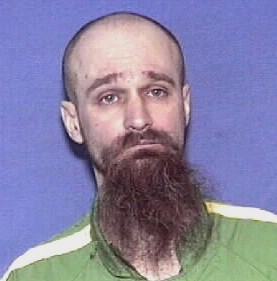
Edward Tenney
Serial killer Glen Edward Rogers
Serial killer · USA · 1993
Glen Edward Rogers was a spree killer whose cross-country rampage in 1994-95 le…
70 victims
Glen Edward Rogers
Serial killer · USA · 1993
Glen Edward Rogers was a spree killer whose cross-country rampage in 1994-95 le…
70 victims
 Efren Saldivar
Serial killer · USA · 1989
Efren Saldivar (born 30 September 1969) was an American serial killer who murde…
50 victims
Efren Saldivar
Serial killer · USA · 1989
Efren Saldivar (born 30 September 1969) was an American serial killer who murde…
50 victims
 Gary Ridgway
Serial killer · USA · 1982
Gary Leon Ridgway Ridgway was born 18-February-1949 in Salt Lake City, UT. He w…
49 victims
Gary Ridgway
Serial killer · USA · 1982
Gary Leon Ridgway Ridgway was born 18-February-1949 in Salt Lake City, UT. He w…
49 victims
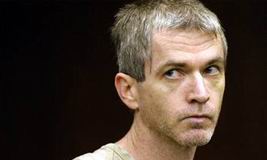 Charles Cullen
Serial killer · USA · 1984
Charles Cullen (born February 22, 1960) was a former nurse and the most prolifi…
45 victims
Charles Cullen
Serial killer · USA · 1984
Charles Cullen (born February 22, 1960) was a former nurse and the most prolifi…
45 victims
 Charles Ng
Serial killer · USA · 1983
Charles Chi-Tat Ng (Chinese: 吳志達/吴志达; born December 24, 1960) was a Chinese-Ame…
25 victims
Charles Ng
Serial killer · USA · 1983
Charles Chi-Tat Ng (Chinese: 吳志達/吴志达; born December 24, 1960) was a Chinese-Ame…
25 victims
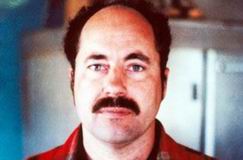 Leonard Lake
Serial killer · USA · 1983
Leonard Lake (October 29, 1945 – June 6, 1985) was an American serial killer. H…
25 victims
Leonard Lake
Serial killer · USA · 1983
Leonard Lake (October 29, 1945 – June 6, 1985) was an American serial killer. H…
25 victims
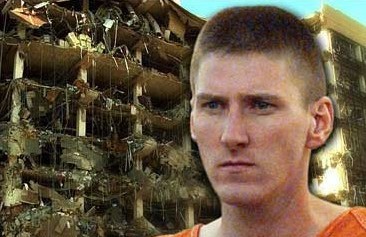 Timothy McVeigh
Mass murderer · USA · 1995
Timothy James McVeigh (April 23, 1968 – June 11, 2001) was a United States Army…
168 victims
Timothy McVeigh
Mass murderer · USA · 1995
Timothy James McVeigh (April 23, 1968 – June 11, 2001) was a United States Army…
168 victims
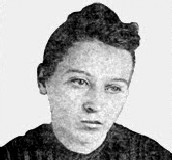 Mary Farmer
Murderer · USA · 1908
Mary Farmer was convicted of murdering Sarah Brennan and was executed by electr…
1 victim
Mary Farmer
Murderer · USA · 1908
Mary Farmer was convicted of murdering Sarah Brennan and was executed by electr…
1 victim
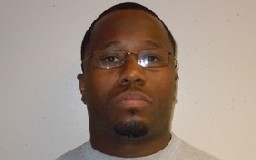 Detrick Cole
Murderer · USA · 2000
Name: Detrick Cole Victim: Santeife Thomas Status: Sentenced to death; convicti…
1 victim
Detrick Cole
Murderer · USA · 2000
Name: Detrick Cole Victim: Santeife Thomas Status: Sentenced to death; convicti…
1 victim
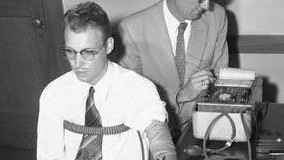 Burton Abbott
Murderer · USA · 1955
28 April 1955 — Stephanie Bryan, a 14-year-old girl, did not come home from sch…
1 victim
Burton Abbott
Murderer · USA · 1955
28 April 1955 — Stephanie Bryan, a 14-year-old girl, did not come home from sch…
1 victim
- Gender
- male
- Country
- USA
- Location
- Aurora, Illinois, USA
- Date of birth
- J uly 30, 1959
- Age at first offence
- 33
- Characteristics
- robbery
- Victim profile
- Jerry Weber, 24 / Mary Jill Oberweis, 56 / Virginia Johannessen, 76
- Method of murder
- Shooting ( .22 caliber handgun)
- Date(s) of murder
- 1992 - 1993
- Years active
- 1992–1993
- Date of arrest
- —
- Status
-
Life imprisonment
Sentenced to death in 1998; commuted to life in prison; conviction reversed and remanded for a new trial by opinion filed April 18, 2002
Case identification
Edward Tenney
Status and procedural posture
Edward Tenney was sentenced to death. That sentence had been stayed pending direct review. A court subsequently reversed his conviction and remanded the cause for a new trial consistent with the opinion.
People
- Edward Tenney (defendant)
- Virginia Johannessen (victim), 74 years old
- Francis Reines (victim’s brother)
- Regina (Reines’s telephone conversation partner regarding the victim)
- Barbara Johannessen-Bailey (victim’s daughter)
- Karen Johannessen (victim’s daughter)
- Officer Thomas Blincoe (Kane County sheriff’s department)
- Captain Michael Anderson (Kane County sheriff’s department)
- Evidence technician Kevin Hogle (Kane County sheriff’s department)
- Lieutenant Peter Burgert (Kane County sheriff’s department)
- Officer and ambulance crew (directed Officer Blincoe to the victim)
- Dr. Shaku Teas (performed autopsy on the victim)
- Donald Lippert (defendant’s alleged accomplice; testified for the State)
- Leslie Lippert (Donald’s father; defendant’s uncle; testified for the State)
- Michael Lippert (Leslie’s son; Donald’s brother; testified for the State)
- Christopher Nelson (name used on false identification; referenced as defendant sometimes used that name)
- Lionel Lane (charged, tried, and convicted in 1995 for the victim’s murder; Lane’s conviction was vacated on the State’s motion when defendant was charged)
- Lorie Mohle (Lane’s ex-girlfriend; unavailable; her prior sworn testimony was read in edited form)
- Lester Salter (witnesses described him as coming with Lane; also referred to as involved in the defense theory)
- Corey Jenkins (referenced in defense theory and Mohle testimony context)
- Michael Turner (witnesses referenced him; defendant’s theory implicated him)
- Robert Cannon (Lieutenant Burgert’s successors involved in meetings; referenced with Captains Anderson and Cannon)
- Captains Anderson and Robert Cannon (referenced in May 1995 meetings)
- Lieutenant or detective involved with Burgert’s questioning (including reference to Mohle and another detective)
- Robert Foley (store employee)
- Peter Popp and Mary (victim’s neighbor and his sister)
- Lionel Lane, Lester Salter, Corey Jenkins, and Michael Turner (asserted by the defense as “true murderers”)
Timeline
- January 2, 1993 — Virginia Johannessen was killed during a residential burglary of her home in Aurora, Illinois.
- January 3, 1993 — A store employee saw Virginia Johannessen’s stolen car at the Eagle Food Store at 4 a.m.
- January 5, 1993 — Francis Reines unlocked the back door and checked on the victim after failing to contact her.
- January 5, 1993 (approximately 10:30 a.m.) — Reines arrived at the victim’s house at approximately 10:30 a.m., disarmed the electronic burglar alarm, and saw the victim injured in the living room; he telephoned 911.
- January 5, 1993 (10:51 a.m.) — Officer Thomas Blincoe was dispatched to assist an ambulance in a possible death investigation.
- January 5, 1993 (11:28 a.m.) — Evidence technician Kevin Hogle arrived and photographed the exterior and interior of the victim’s house.
- January 5, 1993 (approximately 2:30 p.m.) — Captain Michael Anderson found the victim’s car, a 1984 blue Oldsmobile Delta 88, in the parking lot of an Eagle Food Store.
- April 17, 1992 — Jerry Weber was robbed of $6, shot and killed on the side of the road after having a flat tire; Tenney later received a sixty year sentence for the murder.
- October 1, 1993 — Mary Jill Oberweis was beaten and shot to death during a home invasion; Tenney and his accomplice Donald Lippert were tried and sentenced in relation to this murder.
- May 8, 1995 — Leslie Lippert went to the Kane County sheriff’s department and met with Captains Anderson and Cannon.
- May 9, 1995 — Leslie Lippert returned to the sheriff’s office; Leslie, Cannon, and Anderson went to the State’s Attorney’s office.
- May 2, 1995 — Donald Lippert spoke with Captain Anderson.
- August 1994 — Lieutenant Peter Burgert first questioned Michael Lippert.
- April or May 1993 — Salter, Jenkins, and Turner came over and spoke with Lane (as recounted in Mohle’s testimony context).
- April 18, 2002 — Opinion filed.
- 1993 (spring) — The Lippert household moved out of their Austin Avenue home and used a storage facility in St. Charles.
- 1994 (late May) — Oscar Dorrise was in the Kane County jail in the same cellblock as Lionel Lane.
- 1994 (October) — Dorrise was released from jail on bond and received a visit from Lieutenant Burgert.
Background
Edward Tenney had previous convictions for burglary and armed robbery. He had previous convictions for burglary and armed robbery and received the death penalty on the Johannessen murder conviction, with an additional life sentence in that murder.
Tenney also received an extended prison term of natural life on the Oberweis murder conviction.
Prior murders and related sentencing described in the status narrative
- Tenney was sentenced to death and also received an additional life sentence for the murder of Virginia Johannessen.
- Tenney received a sixty year sentence for the murder of Jerry Weber, 24, in DuPage County. Jerry Weber had a flat tire and was robbed of $6, shot and killed on the side of the road on April 17, 1992.
- Tenney received a life sentence for the murder of 56 year old Mary Jill Oberweis in Aurora. Tenney and his accomplice Donald Lippert beat and shot to death Mary during a home invasion on October 1, 1993. Lippert received a 60 year sentence.
The offence
Johannessen murder (January 2, 1993)
In January 1993, Virginia Johannessen lived at 1301 Felton Road in Aurora and lived alone at that address, where she had resided for approximately 40 years. She was 74 years old.
Reines had a telephone conversation with their sister Regina on January 5, 1993, and, because Reines had not been able to contact the victim, he drove to check on her.
Reines arrived at approximately 10:30 a.m., unlocked the back door with his key, and disarmed the electronic burglar alarm. The alarm system included motion detectors. The victim was able to disarm the motion detector in the basement without deactivating the entire system.
Reines saw the victim sitting in a chair in a corner of the living room. She appeared injured, with her head tilted back looking up. He immediately telephoned 911.
Officer Blincoe observed that the victim had large bloodstain on the right side of her head. He did not find any type of weapon near the victim.
A broken basement window was found; the window frame was ripped out and lying on the ground. A two-day-old newspaper was in the mailbox. The victim’s garage was empty and the victim’s car was reported stolen.
After the murder, evidence technicians and investigators photographed and collected evidence from inside and outside the home. A table next to the victim included a check filled out and dated January 2, 1993. A chest in the bedroom appeared pried open.
The victim was killed during a burglary of her home by ex-con Tenney. The victim was beaten with a hammer and then shot in the head and the chest. Her home was ransacked and her car was stolen. She was found three days later by her brother.
Weapon and injuries described at trial
Dr. Shaku Teas performed an autopsy on the victim. Dr. Teas determined the victim had been dead between 24 and 72 hours. The cause of death was a gunshot wound to the back of the head.
Dr. Teas removed two fragments of a small-caliber bullet. The victim also had a crescent-shaped wound to the forehead. Dr. Teas stated it was unlikely that the forehead wound was an attempted exit wound; it was consistent with being struck with a hammer, including the hammer recovered from the victim’s car. Dr. Teas could not identify that particular hammer as the cause of the forehead wound.
Laboratory testing revealed that the two fragments removed were from a .22-caliber bullet, but the fragments were in poor condition such that it was impossible to connect them to a specific gun.
The defense and trial evidence included stipulations and testimony about whether the forehead wound was a partial exit wound, including that Dr. Teas formed this opinion prior to being told that a hammer might have caused the forehead wound.
Defense theory
The defense argued that the true murderers were Lionel Lane, Lester Salter, Corey Jenkins, and Michael Turner.
The defense theory was that the prosecution did not prove Edward Tenney guilty beyond a reasonable doubt. It argued that the evidence presented established Lane’s conviction was vacated after Tenney was charged, and presented trial evidence implicating the named individuals.
Investigation
Evidence technician Kevin Hogle photographed the exterior and interior of the victim’s house and recovered prints inside the house. Fingerprints were not found on the broken glass of the basement window or the area surrounding the window. Subsequent laboratory testing did not reveal any fingerprints on the window frame.
On the basement floor below the broken window, Hogle saw only dust and did not remember seeing mud, grass, or any other outside material. Hogle believed the point of entry was the broken basement window.
Captain Michael Anderson found the victim’s car, a 1984 blue Oldsmobile Delta 88, in the parking lot of an Eagle Food Store approximately one mile from the victim’s home at approximately 2:30 p.m. on the relevant day. A store employee saw the car on January 3, 1993, at 4 a.m. and it was towed to the sheriff’s department.
An evidence technician found in the car a “hatchet/hammer” (hereafter hammer), and it did not have fingerprints.
Lieutenant Peter Burgert’s investigation included questioning Michael Lippert in August 1994 and later meetings in May 1995, including arrangements involving Captains Anderson and Robert Cannon.
In May 1995, Leslie Lippert met with Captains Anderson and Cannon and provided items stored at a storage facility, leading to the recovery and identification by the victim’s daughters.
Arrest and custody
No separate arrest event was stated in the provided material for the Johannessen murder. The proceedings included competency considerations for Donald Lippert’s testimony and the separate trial for Johannessen following a conviction for the Oberweis murder.
Trial
Charges and indictment
Edward Tenney was indicted on six counts of first degree murder.
- Three counts charged him with the January 2, 1993 murder of Johannessen.
- Three counts charged him with the October 1, 1993 murder of Mary Oberweis.
A jury determined defendant was fit to stand trial for the two murders. Defendant was tried separately for each murder.
Prior to trial for the Johannessen murder, defendant was convicted of the Oberweis murder.
Regarding the Johannessen murder, defendant was tried on one count of knowing murder and one count of felony murder based on residential burglary.
The State entered a nolle prosequi on the remaining count.
Venue and jury trial structure
A jury trial in the circuit court of Kane County resulted in conviction for the first degree murder of Virginia Johannessen. At a separate sentencing hearing, the same jury found defendant eligible for the death penalty and found no mitigating circumstances sufficient to preclude imposition of that sentence.
Witness testimony and evidentiary issues
Donald Lippert testimony for the State
Donald Lippert testified for the State with an understanding that in exchange for truthful testimony he would receive a prison term totaling 80 years for crimes committed in Kane and DuPage Counties, with possibility that the trial court might sentence him as guilty but mentally ill. A competency hearing was held outside the presence of the jury; the court found Donald competent to testify.
Donald testified that Leslie Lippert was his father and that Edward Tenney was his cousin.
Donald testified that he “vaguely” remembered events of January 1993 and that he remembered living at 759 Austin Avenue in Aurora with his father, defendant, and brother Michael.
Donald testified about committing a burglary at a small white house on Felton Street. When shown photographs of the victim’s house, Donald testified it could have been the house he burglarized.
Donald testified that on the night in question, he and “Chris Nelson,” whom Donald knew as defendant, walked to the small white house to burglarize it. Donald believed defendant had chosen the house. Donald testified defendant was armed with a .22-caliber handgun.
Donald testified that defendant broke a window and pulled the window frame out. Donald entered by crawling through the window. Donald testified he was intoxicated from alcohol and drugs and crawled out because he was frightened by the dark and noise of a washing machine. Donald testified he told defendant he was not reentering the house and told defendant to do it.
Donald testified defendant instructed him to go to the front of the house and stand guard. Donald believed no one was at home. Donald testified he looked in the window and saw defendant approach an old lady facing a table; defendant was pointing a gun at the back of her head. Donald testified he heard a gunshot, ran back to the broken window, entered the basement, and went into the living room.
Donald testified the woman had been shot in the back of the head, her chin resting on her chest. Donald testified defendant picked up a hammer, tilted the woman’s head back, and hit her on the forehead. Donald testified defendant told Donald to look for “jewelry, money, anything valuable.” Donald testified he took jewelry from the bedroom and put it into a pillowcase.
Donald testified that after they looked through the house, they exited through the broken window. They went to the victim’s garage and found her car. Donald testified defendant gave Donald a car key and they entered the car. Donald testified they drove to the Eagle Food Store and parked in the lot, walked to the Lippert home, and hid stolen property in the yard. Donald testified they moved items later that night or the next day.
On cross-examination, Donald acknowledged that on the night in question he was diabetic and taking insulin in addition to alcohol and drugs. He did not remember many details regarding the broken window and basement interior. Donald testified he remembered the window was small and difficult to pass through and that he had to climb over a “[b]unch of garbage” near the window.
Donald did not know what became of the hammer. Donald testified he identified pieces of victim property he stole. He testified the hammer found in the victim’s car resembled the hammer with which defendant hit the victim. Donald also stated that he had seen the hammer around his house after the crime.
Donald acknowledged at trial that the woman was the victim and that he never received permission from anyone to enter the victim’s house.
Michael Lippert testimony for the State
Michael Lippert also testified for the State.
Michael testified he and defendant had a conversation in January 1993. Defendant had seen “an old lady living in this white house off of Sheffer Road.” A few days later, Michael and Donald went to the victim’s house. Donald entered through the basement window and let defendant in through the back door.
Michael testified defendant then “shot her in the back of the head with a .22 caliber handgun.”
Michael testified defendant told him: “They [defendant and Donald] took jewelry, any valuable old stuff, and they took the car, her car, to the Eagle's parking lot, parked it there and brought all the stuff back to the house. That was it.”
When Lieutenant Peter Burgert first questioned Michael in August 1994, Michael denied knowledge of defendant’s involvement. He testified he did so because defendant had threatened his life.
Michael testified that in May 1995 he went to Captains Anderson and Robert Cannon and related defendant’s inculpatory remarks, stating: “it was on my chest for too many years and I wanted to get it off my chest.” Michael also testified he felt sympathy for the victim’s family.
Michael testified he was a former member of a street gang and that at the time of defendant’s inculpatory remarks he smoked marijuana “a lot” and took cocaine occasionally. Michael testified he was not under the influence of any drug during his conversation with defendant.
Autopsy testimony
Dr. Shaku Teas’s autopsy findings are detailed above in “The offence.”
Leslie Lippert testimony about stored items and false identification
Leslie Lippert lived at 759 Austin Avenue in Aurora in January 1993, and his house was 630 feet from where the victim’s car was found.
Leslie lived with sons Michael and Donald, and with defendant, who was Leslie’s nephew. In the spring of 1993, the household moved out of their Austin Avenue home.
Leslie testified that prior to moving, he rented space at a storage facility in St. Charles. Leslie testified that Michael, Donald, and defendant each put their own items in boxes and other containers. Leslie testified that each labeled boxes with his name, but some boxes lacked identification marks and most containers were not sealed.
Leslie testified he loaded items onto his pickup truck, drove to the storage facility, and placed items in two storage lockers. Leslie testified only he had access to stored items.
On May 8, 1995, Leslie went to the Kane County sheriff’s department, met Captains Anderson and Cannon, and feared being charged with possession of stolen property. Officers arranged a meeting with the State’s Attorney.
On May 9, 1995, Leslie returned to the sheriff’s office; Leslie, Cannon, and Anderson went to the State’s Attorney’s office, where Leslie obtained assurances he would be held harmless for stolen items that may have been in storage.
Leslie then took officers to the West Chicago house where he lived with his son Michael and others, and gave officers a box containing items he received from defendant at the prior Aurora home. Leslie testified the items included several forms of false identification with the name Christopher Nelson, and that defendant sometimes used that name.
Leslie testified he then took officers to the storage facility with additional officers in another car and a pickup truck. He unlocked the padlocks to the two lockers, which were filled with boxes and other items. Leslie testified the boxes were not sealed; either open at the top or flaps tucked in.
Leslie testified that when the officers selected a container, Leslie looked at contents and identified their owner. Only one box was labeled with “Ed.” Leslie testified that box contained various items, including a sealed envelope containing three photographs of defendant’s girlfriend. Leslie testified that a dresser found at storage drawers were shut but not locked and that defendant used it.
Leslie testified the search and inventory were photographed and videotaped.
Stipulated evidence on fingerprints and hairs
Seventeen latent fingerprints suitable for comparison were obtained from the victim’s home and car, and hairs were recovered from the victim’s car. None matched defendant or Donald, or Lionel Lane, Lester Salter, Corey Jenkins, or Michael Turner. The last four individuals were later discussed in the defense theory.
Items identified by the victim’s daughters
In May 1995, Barbara Johannessen-Bailey and Karen Johannessen identified items belonging to the victim from the box labeled “Ed” and from the dresser and other boxes found in storage.
From the box labeled “Ed,” they identified a radio, a wind-up clock, maps inscribed by the victim, a pair of binoculars, and a folding travel alarm clock.
From the dresser found in storage, they identified a case containing a class ring and a can of pepper spray or mace.
From another box found in storage, they identified boxes containing jewelry, and various pieces of jewelry that were the victim’s property.
Defense evidence and witnesses
Defense theory and witnesses
The defense presented witnesses to support the theory that Lionel Lane, Lester Salter, Corey Jenkins, and Michael Turner were the true murderers.
Oscar Dorrise testimony (inmate testimony)
Oscar Dorrise was an inmate at East Moline Correctional Center. In late May 1994, he was in the Kane County jail in the same cellblock as Lionel Lane, whom he did not previously know.
Dorrise testified that Lane told him he had shot an “older lady” in the head in a house in Aurora. Dorrise testified that in October 1994 he was released from jail on bond, received a visit from Lieutenant Burgert, and then related Lane’s confession to Burgert.
Dorrise testified that at the time of this conversation charges were pending against him, he believed Burgert could “help” him with pending charges, and Burgert did not intervene.
Dorrise testified he received nothing in return for his testimony at Lane’s trial.
On cross-examination, the State adduced that Dorrise had four prior felony convictions: two robbery convictions and convictions of burglary and unlawful use of weapons.
At Lane’s trial, Dorrise had testified Lane confessed in July 1994 when Dorrise and Lane were not in the same cellblock.
The State adduced that Lieutenant Burgert gave Dorrise $50 and informed him of a reward for information leading to the arrest of the victim’s killer, and that Burgert did not offer or give Dorrise a reward for his testimony at Lane’s trial.
Burgert ceased being involved in the case in January 1995.
Lorie Mohle prior testimony and excluded portion
Lorie Mohle was unavailable for defendant’s trial. The court ruled her prior sworn in-court testimony for the State at Lane’s trial was admissible.
The trial court ruled portions of Mohle’s prior testimony would not be admitted, including a conversation between Mohle and Lane that exculpated defendant.
The jury at defendant’s trial heard additional edited testimony of Mohle.
Mohle lived with her children and Lane at 1665 Felton Road context, and knew Lane’s friends Lester Salter, Corey Jenkins, and Michael Turner.
In the afternoon of January 2, 1993, Salter, Turner, Mohle, and another went to a store to steal athletic shoes. Turner drove a brown, four-door, mid-size car. After they accomplished their objective, Mohle placed the shoes in the trunk of Turner’s car, where she saw a holster and the butt of a gun.
Later that evening, Mohle asked Turner to take her to the Eagle Food Store. Turner drove Mohle and her children, Lane, Salter, and Jenkins to the store. Mohle went into the store while others remained in the car. Mohle returned to the car and placed grocery bags by her feet.
On the way home Turner pulled over on Felton Road. Lane, Salter, and Jenkins exited the car saying they would return shortly. Mohle did not see where they went. Mohle, her children, and Turner waited in the car with engine off and windows rolled up.
Mohle heard a gunshot; she grabbed her children and groceries and walked home. Lane eventually returned home acting “jittery.” Mohle did not ask him what had happened. She did not hear of the victim’s murder for approximately one or two months.
In April or May 1993, Salter, Jenkins, and Turner came over and spoke with Lane. After they left, Mohle asked Lane what was happening, and Lane instructed Mohle not to ask any questions.
Mohle testified that in 1993 she was undergoing drug treatment, and that no one had made any promises to her to obtain her testimony.
The record also included the excluded conversation, which was read verbatim as follows (but not admitted into the jury):
Q. And after he got back in the house, did you ask him a question?
A. Yes, I asked him what the hell is going on here.
Q. And what did he tell you?
A. He said that him and Salter and Corey had went into the lady's, Johannessen's house, Mrs. Johannessen's house.
Q. Did he tell you what happened in there?
A. He said they were ransacking the house trying to look for jewelry, money, something that they could sell to get money. The lady kept screaming and screaming and Salter kept telling her to be quiet, be quiet.
Q. Did he tell you what Salter did?
A. He said that he shot her.
Q. He meaning?
A. Salter.
Q. Did he tell you where he shot her?
A. No.
Q. Did he tell you where on the body she was shot?
Q. Did he tell you if they took anything?
A. No, he did not tell me if they took anything.
Q. Did he tell you how they got in?
A. No. Q. Did he tell you who went in?
A. Him, Lionel Lane; Lester Salter and Corey Jenkins.
Q. Did he say who remained out?
Q. Now, did you know what day he's talking about?
A. I put two and two together, yes.
Defense cross-theory stipulations and evidence presented at Lane trial
The defense presented stipulated evidence referenced in the opinion including Dr. Teas testimony at Lane’s trial about the forehead wound as a partial exit wound prior to being told that a hammer might have caused the forehead wound.
Barbara told a police detective on January 9, 1993 that the hammer found in the victim’s car belonged to the victim and that she kept it under the driver’s seat and it had been there for some time.
Robert Foley, store employee, saw a black hatchback-type vehicle on the premises when the Eagle Food Store closed at 11 p.m. on January 2, 1993. He testified it was the only vehicle there except for employees’ cars, and that he left the store at 12:05 a.m. on January 3 and observed the same car and no others.
Peter Popp, the victim’s neighbor, and his sister Mary were at home sitting on an enclosed porch on the night of January 2, 1993, and saw a dark-colored, large vehicle turn onto Felton Road and into the victim’s driveway, and they assumed it was the victim returning home.
Verdict
At the close of the evidence in defendant’s trial, the jury returned a general verdict of guilty of first degree murder.
Sentencing
Death penalty eligibility and sentencing findings
During the eligibility phase of the death sentencing hearing, the jury heard, inter alia, a stipulation that defendant was convicted of the Oberweis murder as a result of being legally accountable for the conduct of Donald, who performed the acts that caused Oberweis’ death.
In the eligibility phase, the jury found beyond a reasonable doubt the presence of three statutory aggravating factors:
- defendant was convicted of murdering two or more persons (see 720 ILCS 5/9-1(b)(3) (West 1992));
- the murder was committed in the course of a felony, namely, residential burglary (see 720 ILCS 5/9-1(b)(6) (West 1992));
- the victim was murdered in a cold, calculated, and premeditated manner pursuant to a preconceived plan, scheme, or design to take a human life by unlawful means (see 720 ILCS 5/9-1(b)(11) (West 1992)).
In the second stage of the death sentencing hearing, following presentation of evidence in aggravation and mitigation, the jury found there were no mitigating circumstances sufficient to preclude imposition of the death penalty.
The trial court accordingly sentenced defendant to death on the Johannessen murder conviction.
The opinion notes that the court subsequently sentenced defendant to an extended prison term of natural life on the Oberweis murder conviction.
Appeals
Sufficiency of the evidence issue
The appeal challenged the sufficiency of the evidence to prove guilt beyond a reasonable doubt. The appellate discussion concluded the evidence was sufficient to sustain the conviction.
Lionel Lane’s excluded hearsay statement
Edward Tenney contended the trial court erred by excluding an out-of-court statement of Lionel Lane.
The appellate opinion discussed that the trial court had excluded portions of Mohle’s prior testimony on hearsay grounds, including the conversation between Mohle and Lane in which Lane made inculpatory remarks that exculpated defendant.
The appellate opinion held the trial court abused its discretion in holding Lane’s hearsay statement not admissible and stated that the exclusion denied defendant a fair trial.
The appellate opinion reversed defendant’s conviction and remanded for a new trial consistent with the opinion. It also stated there was no double jeopardy impediment to a new trial and that it made no finding as to defendant’s guilt binding on retrial.
Special concurrences
- Justice Thomas took no part in the consideration or decision of the case.
- Chief Justice Harrison specially concurred, agreeing with the result reached by the majority and writing separately. Harrison would have held Tenney entitled to a new trial because he was tried, convicted, and sentenced under a death penalty law that Harrison believed violated the eighth and fourteenth amendments to the United States Constitution and article I, section 2, of the Illinois Constitution. Harrison stated the procedures for capital cases were indispensable for achieving an accurate determination of innocence or guilt and were applicable to all capital cases pending on direct appeal.
- Justice Kilbride also specially concurred, agreeing with the majority’s judgment and rationale for a new trial, and further agreeing with Harrison that convictions and sentence should be set aside because the trial proceedings were not conducted in accordance with new supreme court rules governing capital cases, and that those rules must be applied retroactively to all capital cases pending on direct appeal.
Outcome
The appellate court reversed the judgment of the circuit court of Kane County and remanded the cause for a new trial consistent with the opinion. The opinion also stated it made no finding as to defendant’s guilt binding on retrial.
Other details
Statutory references included in the opinion
- 720 ILCS 5/9-1(a) (West 1992) and related subsections for knowing murder and felony murder based on residential burglary.
- 720 ILCS 5/5-2(c), 9-1(a)(3) (West 1992) referenced in the discussion of accountability.
- 720 ILCS 5/9-1(b)(3), (b)(6), and (b)(11) (West 1992) referenced as statutory aggravating factors.
Court citations and quoted material
The opinion included multiple citations and quotations in legal discussion, and it reproduced certain testimony excerpts and included a brief statement about defendant’s conviction and sentencing.
Evidence about fingerprints and hairs
The evidence included seventeen latent fingerprints suitable for comparison from the victim’s home and car and hairs recovered from the victim’s car, none of which matched defendant or Donald or any of Lionel Lane, Lester Salter, Corey Jenkins, or Michael Turner.
Evidence about prior burglaries
Reines testified that the victim’s house had been burglarized twice prior to her murder; he did not believe anyone was present during those prior burglaries, and he did not remember whether anyone had been apprehended for them.
Notable trial logistics
Defendant was tried separately for the Johannessen murder and for the Oberweis murder, and a jury determined defendant was fit to stand trial for the two murders.
Stated procedural and evidentiary disputes
The trial court excluded portions of Mohle’s prior testimony including the Lane conversation on hearsay grounds, and the appellate opinion found that exclusion denied a fair trial.
Trial record note
The opinion stated “We note that the court subsequently sentenced defendant to an extended prison term of natural life on the Oberweis murder conviction.”

Spotted an error, or have more information about this case?