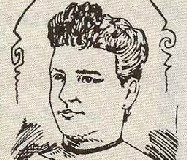
Alice Mitchell
Murderer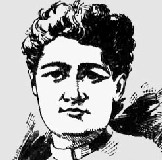 Sarah Whiteling
Murderer · USA · 1888
Sarah Jane Whiteling was a 41 year old white woman from Philadelphia, Pennsylva…
3 victims
Sarah Whiteling
Murderer · USA · 1888
Sarah Jane Whiteling was a 41 year old white woman from Philadelphia, Pennsylva…
3 victims
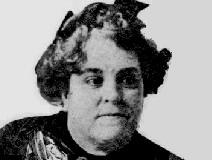 Cordelia Botkin
Murderer · USA · 1898
Cordelia Botkin was a stocky woman of 44 who left her own husband and started a…
2 victims
Cordelia Botkin
Murderer · USA · 1898
Cordelia Botkin was a stocky woman of 44 who left her own husband and started a…
2 victims
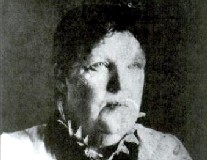 Elizabeth Potts
Murderer · USA · 1888
Elizabeth Potts (née Atherton) was convicted of murder in 1889 and was hanged t…
1 victim
Elizabeth Potts
Murderer · USA · 1888
Elizabeth Potts (née Atherton) was convicted of murder in 1889 and was hanged t…
1 victim
 Lulu Prince Kennedy
Murderer · USA · 1901
Lulu Prince Kennedy was 23 years old and lived in Kansas City, Missouri. She li…
1 victim
Lulu Prince Kennedy
Murderer · USA · 1901
Lulu Prince Kennedy was 23 years old and lived in Kansas City, Missouri. She li…
1 victim
 Maria Barbella
Murderer · USA · 1895
Maria Barbella was a seamstress in Manhattan's Little Italy. She lived with her…
1 victim
Maria Barbella
Murderer · USA · 1895
Maria Barbella was a seamstress in Manhattan's Little Italy. She lived with her…
1 victim
 Martha Place
Murderer · USA · 1899
Martha Place was born in New Jersey. Her brother said she was struck in the hea…
1 victim
Martha Place
Murderer · USA · 1899
Martha Place was born in New Jersey. Her brother said she was struck in the hea…
1 victim
 Thomas Silverstein
Murderer · USA · 1983
Thomas Silverstein (1952–) was a convicted American murderer. He was described…
3 victims
Thomas Silverstein
Murderer · USA · 1983
Thomas Silverstein (1952–) was a convicted American murderer. He was described…
3 victims
 Colin Howell
Murderer · United Kingdom · 1991
Colin Howell (born 14 March 1959) was a Northern Irish convicted double murdere…
2 victims
Colin Howell
Murderer · United Kingdom · 1991
Colin Howell (born 14 March 1959) was a Northern Irish convicted double murdere…
2 victims
 Dennis Roark
Mass murderer · USA · 1989
Dennis Roark Roark returned to the home after a night of drinking at 5:00 a.m.…
4 victims
Dennis Roark
Mass murderer · USA · 1989
Dennis Roark Roark returned to the home after a night of drinking at 5:00 a.m.…
4 victims
 Scott Watson
Murderer · New Zealand · 1998
Scott Watson (born 28 June 1971) was a New Zealander who was convicted in May 1…
2 victims
Scott Watson
Murderer · New Zealand · 1998
Scott Watson (born 28 June 1971) was a New Zealander who was convicted in May 1…
2 victims
 Adrienne Hickson
Murderer · USA · 2005
Adrienne Emily Hickson was a 24-year-old law student and had been a student at…
1 victim
Adrienne Hickson
Murderer · USA · 2005
Adrienne Emily Hickson was a 24-year-old law student and had been a student at…
1 victim
 Lee Doon
Murderer · United Kingdom · 1922
Sing Lee was 33-years-old. He owned a chain of laundries and lived over the pre…
1 victim
Lee Doon
Murderer · United Kingdom · 1922
Sing Lee was 33-years-old. He owned a chain of laundries and lived over the pre…
1 victim
- Gender
- female
- Country
- USA
- Location
- Memphis, Tennessee, USA
- Date of birth
- 1872
- Age at first offence
- 20
- Characteristics
- history of mental illness, mentally ill, motive unknown, domestic violence, rape
- Victim profile
- Freda Ward, 17 (her lover)
- Method of murder
- Cutting her throat
- Date(s) of murder
- January 25, 1892
- Years active
- 1892
- Date of arrest
- Same day
- Status
-
Found insane by means of a jury inquisition on July 30, 1892 and placed in a psychiatric hospital until her death in 1898
Case details
Alice Mitchell was tried for murder and entered a plea of “present insanity,” meaning that a hearing would be held to determine whether she was mentally fit to stand trial. The anticipated courtroom crowd was described as over a thousand people of all races and nationalities, about half of them women. Judge Julius DuBose delayed the opening so that construction could be done to enlarge the courtroom until it had a seating capacity to rival Memphis’s largest theatres.
A “ballroom order” was issued: “Ladies to the right, gents to the left.”
Timeline
- July 18, 1892 — Lillie Johnson’s habeas corpus hearing was held first, to determine whether there was enough evidence to try her for murder.
- July 30, 1892 — A jury inquisition found Alice Mitchell insane.
- 1898 — Alice Mitchell died in the institution, reported as due to tuberculosis.
Background
Alice Mitchell’s trial received unprecedented media coverage and drew discussion of lesbianism into public light. The public also had trouble accepting Alice’s sexual inversion as the driving force behind the murder. It was stated that in 1892 the terms “lesbian” and “homosexual” were not commonly used in America, and that the medical term for Alice’s condition was “sexual inversion,” described as a condition where a person inappropriately took on the characteristics of the opposite sex.
While much was said about the “unnatural love” of Alice Mitchell for Freda Ward, there was never a suggestion that their relationship was sexual. Alice never wavered from her assertion that she killed Freda for love. Two other stories were told as a motive for the murder:
- Alice, Lillie, and the Ward sisters were “fast” girls, always flirting with men. It was said that Freda was prettier than Alice and had more luck with men, and that Alice was jealous of Freda’s beauty and was only trying to disfigure, not murder her.
- It was said that a mysterious man was involved, that he followed Alice’s buggy and disappeared after the murder, and that the murder resulted from a rivalry for the love of this man. It was also stated that the folk song “Alice Mitchel and Freddy Ward” expressed this view.
The offence
The case included vivid descriptions of the murder scene. In the habeas corpus hearing, the “unnatural love” of Alice for Freda, the attempted elopement, Lillie’s intimacy with Alice and with the Ward sisters, and the vivid descriptions of the murder scene were discussed. The defense argued that Lillie had no idea of Alice’s intention that day and in no way assisted her.
During testimony, Alice described her love for Freda and their intended elopement, and she then described her plan to kill Freda:
“I wanted to cut her because I knew I could not have her, and I did not want anyone else to have her… My intention was to cut Freda’s throat and then my own, but Jo’s interference made me cut Freda again.”
Investigation and arrest
Salient evidence came out in the habeas corpus hearing held first for Lillie Johnson. The engagement ring, inscribed “From A. to F,” was entered as evidence, and the story of the elopement was retold.
Trial
Habeas corpus hearing for Lillie Johnson
The habeas corpus hearing was held first to determine whether there was enough evidence to try Lillie Johnson for murder. It was stated that this hearing would not determine anyone’s ultimate fate and was far less important than the pending murder trial of Alice Mitchell, but it was described as the most significant trial held in Memphis to date.
Judge Julius DuBose ruled that:
“The proof is evident that the defendant aided and abetted in the commission of the crime, a crime the most atrocious and malignant ever perpetrated by a woman.”
Lillie Johnson was released on $10,000 bail.
Charges against Lillie Johnson were later dropped.
Trial of Alice Mitchell for murder
Alice Mitchell pled not guilty to murder but entered a plea of “present insanity,” so that before she could be tried for murder a hearing would be held to determine if she were mentally fit to stand trial.
To show a genetic predisposition to madness, Alice’s father testified that her mother had borne seven children and had suffered from “puerperal insanity” after the birth of her first child. He testified that after the birth she had to be committed to a lunatic asylum for several months, and that after the death of the child she became increasingly unstable.
Other defense testimony stressed Alice’s boyish behavior growing up as an indication of her insanity. Frank Mitchell, Alice’s brother, testified that Alice had once tried to commit suicide by taking laudanum over Freda’s infidelities.
The prosecution argued that although Alice’s behavior was strange, it was not insane. The prosecution argued that Alice’s tomboyish behavior was part of normal growing up.
The defense brought in a number of psychologists who unanimously thought Alice insane, probably incurably so. Her predisposition to insanity was described as having been triggered by an “exciting cause” — the emotional disturbance of love and jealousy. It was stated that Alice’s belief that she could marry Freda was a manifestation of her insanity. Throughout the trial, Alice was described as docile and unconcerned, which some observers took as further evidence of her insanity. On the witness stand she remained calm and indifferent while telling of her love for Freda, their intended elopement, and her plan to kill Freda.
The trial lasted ten days. The jury returned the verdict of insanity.
Sentencing
Alice Mitchell was committed to the Tennessee State Insane Asylum at Bolivar, Tennessee.
Outcome
A jury inquisition found Alice Mitchell insane on July 30, 1892, and she was placed in a psychiatric hospital until her death in 1898.
The verdict for Lillie Johnson was stated as “Sufficeint evidence to try for murder.” The verdict for Alice Mitchell was stated as “Present insanity - not competent to stand trial.”
Aftermath
It was stated that officials at the Tennessee State Insane Asylum could have, at any time, declared Alice Mitchell competent to stand trial, but she never left the institution. In 1898 she reportedly died of tuberculosis. However, one of her attorneys later stated in an interview that she committed suicide by jumping into a water tower.


Spotted an error, or have more information about this case?