
Michelle Knotek
Murderer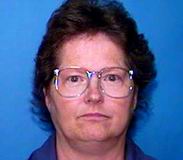 Bobbie Sue Terrell
Murderer · USA · 1984
Bobbie Sue Dudley Terrell was a Pinellas County nurse and worked as the night s…
12 victims
Bobbie Sue Terrell
Murderer · USA · 1984
Bobbie Sue Dudley Terrell was a Pinellas County nurse and worked as the night s…
12 victims
 Megan Huntsman
Murderer · USA · 1996
Megan Huntsman was 40 at sentencing. She was a mother of three children who wer…
6 victims
Megan Huntsman
Murderer · USA · 1996
Megan Huntsman was 40 at sentencing. She was a mother of three children who wer…
6 victims
 Angela Johnson
Murderer · USA · 1993
Angela Jane Johnson was convicted in federal court of aiding and abetting the m…
5 victims
Angela Johnson
Murderer · USA · 1993
Angela Jane Johnson was convicted in federal court of aiding and abetting the m…
5 victims
 Catherine May Wood
Murderer · USA · 1987
Catherine May Wood was an American caregiver who worked at the Alpine Manor Nur…
5 victims
Catherine May Wood
Murderer · USA · 1987
Catherine May Wood was an American caregiver who worked at the Alpine Manor Nur…
5 victims
 Michele Kalina
Murderer · USA · 1996
Michele Kalina pleaded guilty to murder for one of five infants she initially w…
5 victims
Michele Kalina
Murderer · USA · 1996
Michele Kalina pleaded guilty to murder for one of five infants she initially w…
5 victims
 Amy Bishop
Murderer · USA · 1986
Amy Bishop — biology professor and perpetrator · James Anderson — Bishop’s husb…
4 victims
Amy Bishop
Murderer · USA · 1986
Amy Bishop — biology professor and perpetrator · James Anderson — Bishop’s husb…
4 victims
 Sean Derrick O'Brien
Murderer · USA · 1993
Name: Sean Derrick O'Brien Sean Derrick O'Brien was executed by lethal injectio…
2 victims
Sean Derrick O'Brien
Murderer · USA · 1993
Name: Sean Derrick O'Brien Sean Derrick O'Brien was executed by lethal injectio…
2 victims
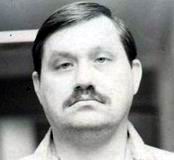 Donald Edward Beaty
Murderer · USA · 1984
Donald Edward Beaty was a maintenance man and resident maintenance manager at t…
1 victim
Donald Edward Beaty
Murderer · USA · 1984
Donald Edward Beaty was a maintenance man and resident maintenance manager at t…
1 victim
 Robert Brown
Murderer? · 1977
Robert Brown was convicted of the murder of Annie Walsh in 1977 and was sentenc…
1 victim
Robert Brown
Murderer? · 1977
Robert Brown was convicted of the murder of Annie Walsh in 1977 and was sentenc…
1 victim
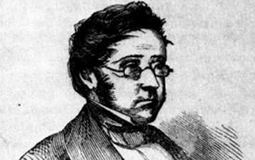 John White Webster
Murderer · USA · 1849
John White Webster (May 20, 1793–August 30, 1850) was born in Boston, Massachus…
1 victim
John White Webster
Murderer · USA · 1849
John White Webster (May 20, 1793–August 30, 1850) was born in Boston, Massachus…
1 victim
 Kimberly Cunningham
Murderer · USA · 2003
Kimberly Cunningham — defendant and killer of Coy Hundley. · Coy Hundley — alle…
1 victim
Kimberly Cunningham
Murderer · USA · 2003
Kimberly Cunningham — defendant and killer of Coy Hundley. · Coy Hundley — alle…
1 victim
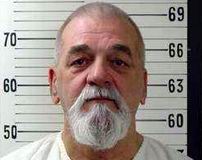 Leonard J. Young
Murderer · USA · 1999
Leonard J. Young met a woman during the 1990 Christmas holidays. The two became…
2 victims
Leonard J. Young
Murderer · USA · 1999
Leonard J. Young met a woman during the 1990 Christmas holidays. The two became…
2 victims
- Gender
- female
- Country
- USA
- Location
- Raymond, Pacific County, Washington, USA
- Date of birth
- 1954
- Age at first offence
- 40
- Characteristics
- abuse, torture
- Victim profile
- Kathy Loreno, 36, and Ronald Woodworth, 57 (boarders in Knotek's home)
- Method of murder
- Prolonged abuse
- Date(s) of murder
- 1994 / 2003
- Years active
- 1994–2003
- Date of arrest
- August 8, 2003
- Status
-
Imprisoned
Sentenced to 22 years in prison on August 18, 2004
Case information
Michelle Knotek was a woman from Raymond, Washington. She was convicted in 2004 of second-degree murder and manslaughter in the torture and deaths of Kathy Loreno and Ronald Woodworth, who were both boarders in Knotek’s home.
STATUS and sentence
On August 18, 2004, Michelle Knotek was sentenced to 22 years in prison. She served her sentence at the Washington Corrections Center for Women in Gig Harbor.
Background
Knotek lived with her husband, David Knotek, in their home in Raymond. Their husband, David Knotek, was also convicted of the murder of his 19-year-old nephew Shane Watson, who lived with the Knoteks.
The crimes made national headlines due to allegations of abuse and torture.
Kathy Loreno
Kathy Loreno was a hairdresser working in South Bend, Washington, when she met Michelle Knotek and the two became friends. In 1991, after an argument between Loreno and her family, Loreno moved out of their home and into the home of Michelle and David Knotek. During her stay at the Knoteks’ home, it was alleged that Loreno suffered physical abuse.
In 1994, Loreno was reported missing by family members. When interviewed by authorities, the Knoteks stated that Loreno had run away with a truck driver and moved to Hawaii. Michelle Knotek maintained that she and Loreno were in regular contact. A private investigator hired by Loreno’s brother concluded that Loreno had probably been murdered by Michelle Knotek. David Knotek claimed that Loreno died by asphyxiating on her own vomit, but he did not take her to a hospital or report her death to police because of the physical injuries to Loreno’s body.
Loreno’s family placed a small item in the Willapa Harbor Herald in May, with a picture of her, asking the public for clues.
Shane Watson
Shane Watson, born in 1975 in Tacoma, was Michelle Knotek’s nephew. Watson moved in with the Knoteks around 1993. Shortly after Loreno’s disappearance in 1994, Watson seemingly vanished too.
The Knoteks initially claimed that Watson had run away to Alaska to work on a fishing vessel. David Knotek later claimed that he had shot Watson with a .22 caliber rifle.
Investigators alleged that David Knotek killed Watson because Michelle was enraged that Watson took pictures documenting the abuse of Loreno. David Knotek also stated that he burned the bodies of Shane Watson and Kathy Loreno and scattered their ashes at the beach.
Ronald Woodworth
Ronald Woodworth was a local man who went to live with the Knoteks around 2001. Like Kathy Loreno, Woodworth was also subject to severe physical abuse.
Witnesses described seeing Woodworth being forced to do chores outside wearing only his underwear, and to jump from the second story roof onto gravel, wearing nothing on his feet causing broken bones and severe lacerations. They also claimed that Michelle Knotek would burn Woodworth’s injured feet with boiling water and pure bleach.
Woodworth went missing in 2003. David Knotek later admitted to burying Woodworth’s body on their property after Michelle told him that Woodworth had committed suicide.
An autopsy performed by the King County medical examiner proved that Woodworth’s death was murder.
The offence
Michelle Knotek was convicted in 2004 of second-degree murder and manslaughter in the torture and deaths of Kathy Loreno and Ronald Woodworth.
Count I: Kathy Loreno (second-degree murder)
In 1991, Michelle Knotek invited Kathy Loreno to live with her family in South Bend, Pacific County. Loreno accepted the offer to help care for Knotek’s two teenage daughters and a third daughter expected to be born soon.
Initially, the Knotek family treated Loreno well. Soon, Knotek and her husband began abusing Loreno physically and mentally and continued this abuse through 1991. The abuse included:
- hitting and slapping Loreno, including numerous blows to the head
- dragging her across the ground
- pulling her hair
- poisoning her
- forcing her to submit to bizarre “treatments,” such as bleach and salt to clean her wounds, and ingesting salt and prescription medications
- forcing her to live and to work outdoors in harsh weather conditions while minimally clothed or naked until she became hypothermic
- starving her
- as punishment, forcing her to immerse herself in cold water or mud
As a result of this abuse, Loreno lost 100 pounds, her hair and teeth fell out, and she declined physically and mentally. Near the end of her life, Loreno could not walk or talk, one side of her face drooped, her vision had declined significantly, and she was covered in vomit.
Eventually, Loreno died as a result of this prolonged abuse. Acting on Knotek’s decision, David and Shane Watson burned and buried Loreno’s body in the Knoteks’ backyard.
Knotek concocted a story about Loreno having run away with her boyfriend, repeatedly quizzed her children about the story, and generated letters to Loreno’s family purporting to be from Loreno so her family would believe she was still alive.
Count II: Ronald Woodworth (manslaughter)
In October 2001, Knotek invited Ron Woodworth to live in the Knotek home. Knotek’s youngest daughter witnessed Knotek and her husband inflict physical and emotional abuse on Woodworth, described as virtually identical to the acts of abuse they had committed against Loreno ten years earlier.
Like Loreno, Woodworth declined physically and mentally, and eventually died as a result of the abuse sometime between the end of 2001 and August 2003. David buried Woodworth’s body in the backyard of the Knotek residence.
Investigation
In August 2003, the Knoteks were arrested after the police received information about Knotek’s abuse of Woodworth from the Knotek’s two older daughters and a statement from the youngest daughter.
Human remains believed to be those of Woodworth were discovered buried at the couple’s home, behind their red farmhouse.
Investigators searched the Knoteks’ residence on Monohon Landing Road and also searched the former home of James “Mac” McClintock, who died in February 2002 of a “blunt force” injury while under the care of Michelle Knotek. Knotek told medics that McClintock had fallen. The cause of that injury remained “undetermined,” according to his death certificate. During the searches, investigators found items belonging to victims. At McClintock’s former home, items that appeared to be stained with blood, a pair of bloody slippers, and “possible decomposition evidence” were found.
Investigators sought blood, hair, and fingernail samples from Michelle and David Knotek to help determine whether they poisoned two people who died at their home. Prosecutors said correspondence attributed to the victims had been found and investigators believed it may have been forged. Investigators also sought handwriting samples.
Authorities said they believed that some or all of the victims were chronically abused, and that there was reasonable cause to suspect that the victims may have been administered some type of poisonous compounds or medications that caused the victims to be in a seriously compromised, weakened state of health.
Relationship to McClintock’s death
James “Mac” McClintock was an 81-year-old local man who hired Michelle Knotek as a caregiver. After McClintock died in February 2002, investigators later took renewed interest in his death after human remains were discovered behind the Knoteks’ red farmhouse.
McClintock’s death certificate indicated he died after a “blunt impact to the head,” and that the circumstances of his death were undetermined. His will left his home and $8,800 in cash to Knotek, and his death certificate and will were described in coverage as indicating he left his beloved black Labrador, Sissy, in Knotek’s care and that Knotek would inherit the house once Sissy died.
Arrest
Michelle Knotek and David Knotek were arrested in August 2003. The Knoteks were held on bail.
In August 2003, they were described as remaining in Pacific County Jail for investigation of manslaughter following their arrests.
Trial and plea proceedings
Charges
The State charged Michelle Knotek with two counts of second-degree murder: Count I for the 1991 death of Kathy Loreno, and Count II for the 2003 death of Ronald Woodworth.
Her crimes against Loreno were described as including particularly egregious forms of mental and emotional abuse.
Motion to sever counts
The trial court denied Knotek’s motion to sever counts because the State planned to use David as a witness against Knotek.
Alford plea
On June 18, 2004, Knotek appeared in Pacific County Superior Court to plead guilty to second-degree murder and first-degree manslaughter.
The State agreed to reduce Count II from second-degree murder to first-degree manslaughter, and to recommend sentences at the low end of the standard range for both counts.
The parties stipulated that facts contained in an August 11, 2003 probable cause affidavit, the bill of particulars, and the State’s brief in opposition to Knotek’s motion to sever were sufficient to find Knotek guilty beyond a reasonable doubt on the two charges.
Knotek entered Alford pleas. The trial court conducted a thorough inquiry to determine that Knotek was entering the plea knowingly, intelligently, and voluntarily. The court asked whether Knotek was entering her plea voluntarily five different times, and she answered in the affirmative each time.
Knotek told the court that:
- she had completed 14 years of school and could read and write “very well”
- she discussed “everything set forth in the Plea Agreement” with counsel over the course of a “few hours,” and they had “talk[ed] about it throughout the last few weeks” (Report of Proceedings (June 18, 2004) at 6-7)
- she understood the standard sentencing range for second degree murder was 123 to 164 months, with a maximum term of life in prison
- she knew the standard sentencing range for first degree manslaughter was 78 to 102 months, with a maximum term of life in prison
- because these were serious violent offenses, the sentences for each count would run consecutively, meaning she would first serve one sentence and then serve the other after completing the first one
- she understood the State would recommend sentences of 123 months on Count I and 78 months on Count II, for a total of 201 months
- she understood the court need not follow the State’s sentencing recommendation
- she understood the possibility of an “exceptional sentence” on each count, meaning sentences above the standard range
- she understood the plea bargain called for her to serve 24 months of community custody
- she was entering an Alford plea, which she understood was a plea of guilty
- she understood the financial penalties that could result from her plea, including restitution
The trial court also made sure Knotek had gone over her statement of defendant on plea of guilty with counsel and understood its provisions, explained the rights she was waiving, and explained that the crimes would constitute “one strike” for future charging and sentencing purposes, which Knotek confirmed she understood.
After being asked how she would plead on each charge, Knotek replied “Guilty” (Report of Proceedings (June 18, 2004)).
Based on the stipulation and her Alford pleas, the trial court found Knotek guilty of Count I, second degree murder, and Count II, first degree manslaughter.
Sentencing
At Knotek’s August 19, 2004 sentencing, the parties and trial court addressed Blakely v. Washington. The State acknowledged that due to Blakely, “the Court's hands are bound by the standard range,” and that during “quite a few conversations,” defense counsel, the trial court, and Knotek explained how Blakely would affect her sentence.
Knotek’s counsel acknowledged that Knotek’s decision reflected the threat of an exceptional sentence recommendation, and that the threat was “not as strong in light of the current Blakely decision as it was at the time the plea was entered.” (Appendix C to Respondent’s Brief, Supplemental Sentencing Memorandum at 6.)
The trial court reminded Knotek that but for Blakely, it would have imposed a sentence above the standard range:
“I also know, finally, that [Knotek] should be very thankful to the U.S. Supreme Court and the 5-4 decision in Blakely v. Washington because this would not be the sentence that I would hand down but for that decision.” (Report of Proceedings (Aug. 19, 2004) at 34.)
The trial court sentenced Knotek to the top end of the standard range on each conviction—164 months on Count I and 102 months on Count II—to run consecutively, for a total of 266 months confinement.
Appeals and post-judgment motions
Motion to withdraw guilty plea
Eight months later, in April 2005, Knotek moved pro se to withdraw her Alford plea. She alleged that she had not been correctly informed, generally did not understand the consequences of her plea when she entered it, and had been denied effective assistance of counsel. The trial court denied the motion.
Appeal to the Washington Court of Appeals
Knotek appealed the trial court’s denial of her motion to withdraw her guilty plea and the judgment and sentence.
In her appeal, Knotek argued she did not enter into her Alford plea knowingly, intelligently, and voluntarily because she was misinformed about:
- the maximum sentences that could be imposed
- the term of community placement
In her Statement of Additional Grounds, Knotek further contended that:
- her attorney coerced her into entering into the plea agreement
- her attorney provided ineffective assistance
- she was not competent at the time she entered her guilty plea
- the crimes she pleaded guilty to “didn't fit” the facts of this case
- the trial court committed judicial misconduct
The appellate court held that the record showed Knotek entered her guilty plea knowingly, intelligently, and voluntarily, and affirmed.
The appellate court also addressed and rejected Knotek’s claims regarding effective assistance of counsel and judicial conduct. It ultimately affirmed and upheld the denial of her motion to withdraw her Alford plea.
Outcome
The appellate court affirmed Knotek’s convictions and sentence and upheld the trial court’s denial of her motion to withdraw her Alford plea.
Other details
Court proceedings and related reporting
During the proceedings leading up to her plea, the press coverage described Knotek’s age as 50 and described that she entered a so-called Alford plea in June 2004.
A later court discussion included an agreement that would have sent Knotek to prison for nearly 17 years, while the judge sentenced her to more than the agreement.
Daughters and family contact
It was described that the Knoteks had three daughters, and that the daughters communicated with David but not with their mother because they believed any contact with her would endanger them and their families.
Other related convictions and sentences (David Knotek)
David Knotek was sentenced to a 15-year prison sentence for second-degree murder in the death of Shane Watson. He was described as eligible for parole in 2019.


Spotted an error, or have more information about this case?