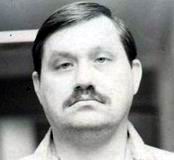
Donald Edward Beaty
Murderer Brian Kevin Rosenfeld
Murderer · USA · 1985
Brian Kevin Rosenfeld Brian Kevin Rosenfeld was sentenced to three concurrent l…
23 victims
Brian Kevin Rosenfeld
Murderer · USA · 1985
Brian Kevin Rosenfeld Brian Kevin Rosenfeld was sentenced to three concurrent l…
23 victims
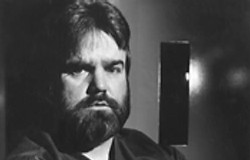 Marvin Gray
Murderer · USA · 1975
Marvin Gray was convicted killer who claimed responsibility for 23 slayings and…
23 victims
Marvin Gray
Murderer · USA · 1975
Marvin Gray was convicted killer who claimed responsibility for 23 slayings and…
23 victims
 Yahweh ben Yahweh
Murderer · USA · 1980
Yahweh ben Yahweh was born and legally named Hulon Mitchell Jr. (October 27, 19…
23 victims
Yahweh ben Yahweh
Murderer · USA · 1980
Yahweh ben Yahweh was born and legally named Hulon Mitchell Jr. (October 27, 19…
23 victims
 Russell Ellwood
Murderer · USA · 1991
Russell Ellwood was a former taxi driver. Authorities suspected him of killing…
20 victims
Russell Ellwood
Murderer · USA · 1991
Russell Ellwood was a former taxi driver. Authorities suspected him of killing…
20 victims
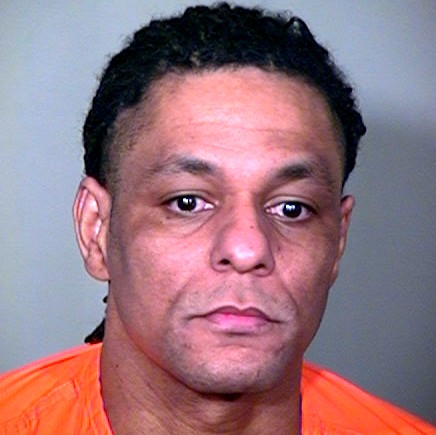 Alvie Kiles
Murderer · USA · 1989
Alvie Kiles lived in Yuma with his girlfriend, Valerie Gunnell, and her two dau…
3 victims
Alvie Kiles
Murderer · USA · 1989
Alvie Kiles lived in Yuma with his girlfriend, Valerie Gunnell, and her two dau…
3 victims
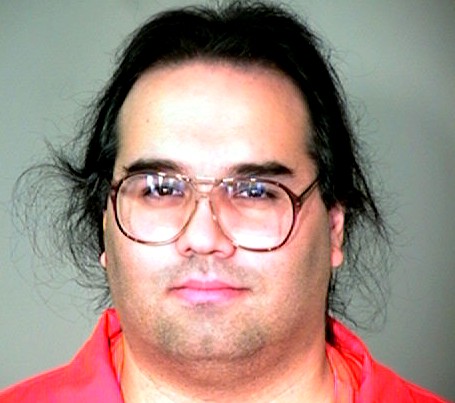 Sean Bernard Running-Eagle
Murderer · USA · 1987
Sean Bernard Running-Eagle was an American Indian man. Around 6:00 a.m. on Dece…
2 victims
Sean Bernard Running-Eagle
Murderer · USA · 1987
Sean Bernard Running-Eagle was an American Indian man. Around 6:00 a.m. on Dece…
2 victims
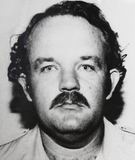 David Gore
Serial killer · USA · 1981
David Alan Gore (also known as DAVID A GORE, DAVID ALAN GORE, DAVID ALLAN GORE)…
6 victims
David Gore
Serial killer · USA · 1981
David Alan Gore (also known as DAVID A GORE, DAVID ALAN GORE, DAVID ALLAN GORE)…
6 victims
 Jake Fahri
Murderer · United Kingdom · 2008
Jake Fahri was convicted in March 2009 of the murder of Jimmy Mizen. Jimmy Mize…
1 victim
Jake Fahri
Murderer · United Kingdom · 2008
Jake Fahri was convicted in March 2009 of the murder of Jimmy Mizen. Jimmy Mize…
1 victim
 Craig Zebroski
Murderer · USA · 1996
Craig Zebroski was a White male born on 09/06/1977. He was sentenced to death o…
1 victim
Craig Zebroski
Murderer · USA · 1996
Craig Zebroski was a White male born on 09/06/1977. He was sentenced to death o…
1 victim
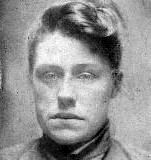 Frances Knorr
Murderer · Australia · 1891
Frances Lydia Alice Knorr (also known as Minnie Thwaites) was born in 1868 in L…
2 victims
Frances Knorr
Murderer · Australia · 1891
Frances Lydia Alice Knorr (also known as Minnie Thwaites) was born in 1868 in L…
2 victims
- Gender
- male
- Country
- USA
- Location
- Maricopa County, Arizona, USA
- Date of birth
- February 7, 1955
- Age at first offence
- 29
- Characteristics
- rape, torture
- Victim profile
- Christy Ann Fornoff, 13 (news carrier)
- Method of murder
- Suffocation
- Date(s) of murder
- May 9, 1984
- Years active
- 1984
- Date of arrest
- 12 days after
- Status
-
Executed
Sentenced to death on July 20, 1985; executed by lethal injection in Arizona on May 25, 2011
Case details
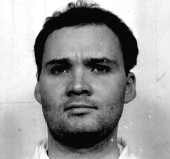
Donald Edward Beaty was a maintenance man and resident maintenance manager at the Rock Point Apartments in Tempe, Arizona.
Background
On May 9, 1984, 13-year-old Christy Ann Fornoff disappeared while collecting money on her newspaper-delivery route at a Tempe apartment complex. Her mother accompanied her and waited outside the apartment complex while the victim went inside.
Beaty was described as a maintenance person for the complex. During Fornoff’s disappearance, Beaty participated in the search for her, and he was seen standing over Fornoff’s body.
The offence
Fornoff’s body was later found wrapped in a sheet next to a garbage bin or behind a dumpster at the apartment complex.
Evidence described in court proceedings and later habeas review indicated that Fornoff was asphyxiated by smothering. The evidence also indicated that she was sexually assaulted, either contemporaneously with or shortly after her death. A medical examiner opined that she died within two hours of her disappearance.
During trial testimony, a prison psychiatrist stated that Beaty told him that he did not intend to kill the girl, but that he put his hand over her mouth to muffle her screams and she suffocated on her own vomit.
The record also included findings and discussion that the murder was committed in an especially cruel, heinous, or depraved manner, and that Beaty was sentenced to death for first-degree murder and to a consecutive term for sexual assault.
Investigation
Police searched the apartment complex after Fornoff disappeared. Fornoff’s collection book was discovered by a fence near the complex, but Fornoff was not found at that time.
Two days after Fornoff disappeared, a tenant encountered Beaty while throwing out his trash. Beaty told the tenant that he had found a body behind the dumpster and that he had called the police. The tenant observed the body for a few minutes and then returned to his apartment. Police later arrived and determined that the body was Fornoff’s. Beaty’s account was described as not adding up, including that he had not called police as he said.
Physical evidence described during the proceedings linked Beaty to the crime. Fornoff’s vomit was described as found in Beaty’s closet, and hairs matching hairs found on the body were also described as found in Beaty’s closet. Fibers found on the body were described as matching Beaty’s carpet and a blanket in his bedroom. Ferret hair was found on the body; the tenant who lived in Beaty’s apartment a few months prior to the murder owned a ferret. Police records showed Beaty had called the police at 5:52 a.m., while the tenant said he returned to his apartment at 5:50 a.m.
Police also described inconsistencies relating to Beaty’s alibi. Beaty told police that he was with George Lorenz at the time Fornoff disappeared, and that Teresa Harder saw them together. Lorenz denied being with Beaty that night, and Harder similarly denied seeing them together.
Arrest
Beaty was arrested on May 22, 1984, and charged with murder and sexual assault.
Pretrial events and psychiatric counseling
After his arrest, Beaty was incarcerated at the Maricopa County Jail (“the main jail”). He initially was classified as a “high-risk” inmate because he appeared depressed and distraught over his arrest and his family’s reaction to his arrest. Dr. George O’Connor, a staff psychiatrist, performed an intake evaluation and concluded that Beaty was not suffering from a serious psychological condition. O’Connor also learned that Beaty had a painful foot condition.
In late August 1984, Beaty was transferred to the Durango Psychiatric Unit (“Durango”) on O’Connor’s recommendation. The transfer was described as serving three purposes: providing space to rehabilitate an injured foot, providing safety by isolating Beaty from the general jail population, and addressing agitation and depression, including a hunger strike and complaints about harassment.
At Durango, a coed therapy group was formed as an experiment to improve relationships between male and female inmates. Beaty was asked to participate. The group was led by Dr. O’Connor and by Lily Epler, an intern and graduate student at the University of Arizona. At the first meeting of the group, on Thursday, November 15, 1984, Beaty and other inmates signed a document entitled “Interpersonal Relationships Group Contract” (“IPG contract”).
The contract included provisions stating that “all group communication is confidential and therefore group business cannot be discussed outside of group. Only in this way can I feel free to express my feelings.”
After a group session ended, Beaty approached Dr. O’Connor and stated that he did not mean to kill the victim and that he had motioned as if to show that he muffled her screams by putting his hand over her face. Dr. O’Connor later testified that he understood the message as indicating that Beaty “had done it.” Dr. O’Connor testified that he did not immediately disclose the statements and the case proceeded to trial.
During a trial discussion of testimony, it was also stated that some group members occasionally harassed Beaty regarding the nature of his crime and called him “cold blooded.” After a session, Beaty complained to O’Connor that the group had unfairly labeled him a “terrible thing” and that he did not mean to kill the victim; he explained that he accidentally suffocated her by putting his hand over her mouth to muffle her screams.
After Beaty attended meetings, there was a dispute over the reasons for a transfer; it was undisputed that Beaty was returned to the main jail on Thursday, November 29, 1984. The district court suggestion described that the transfer was likely in preparation for his first trial, and it explicitly concluded that Beaty was not transferred “as a punishment for quitting the coed group.”
Trial
Beaty’s first trial began 29 January 1985 and ended on 18 March 1985 with a mistrial after the jury deadlocked ten to two in favor of guilt.
Beaty’s second trial began on 8 May 1985. It ended on 20 June 1985.
During the second trial, the state presented much of the same evidence as in the first trial and added testimony from Dr. George O’Connor after O’Connor was ordered to testify following an evidentiary hearing regarding the compelled testimony. A detention officer reported that O’Connor disclosed Beaty’s confession while waiting to testify in an unrelated case.
Verdict
The jury unanimously found Beaty guilty of one count of first-degree murder and one count of sexual assault.
Sentencing
The judge conducted a sentencing hearing without a jury. The judge imposed the death penalty for first-degree murder after finding one aggravating circumstance and no mitigating circumstances.
The judge also sentenced Beaty to a consecutive twenty-eight-year term for sexual assault. The court ordered the sexual assault sentence to be served consecutively to the death sentence.
The judge found as an aggravating circumstance that the murder was committed in an especially cruel, heinous, or depraved manner, and found no mitigating circumstances sufficiently substantial to outweigh the aggravating circumstance.
Appeals
Arizona Supreme Court / Direct appeal
In State v. Beaty, 158 Ariz. 232, 762 P.2d 519 (Ariz. 1988), Beaty appealed convictions and sought review of the denial of a petition for postconviction relief alleging ineffective assistance of counsel.
The Arizona Supreme Court held that: statements made by Beaty to a psychiatrist employed by the county jail were admissible; aggravating circumstances warranted imposition of death; the death penalty statute was not unconstitutional; and defense counsel was not ineffective. The court affirmed.
The direct appeal record included that Beaty was convicted in the Superior Court, Maricopa County, No. CR–140790, Rufus C. Coulter, J., of first-degree murder and sexual assault committed while on probation or parole for prior felony conviction. The Supreme Court cited A.R.S. § 13–1105(A)(1) and A.R.S. § 13–1406.
The direct appeal included issues addressed such as admissibility of Dr. O’Connor’s testimony, including a physician-patient privilege argument, involuntariness, Miranda issues, denial of a motion in limine regarding PGM test results, propriety of the death penalty, victim impact evidence at sentencing, consecutive sentencing, special verdict findings and aggravating factors beyond a reasonable doubt, and proportionality review. The Supreme Court reviewed fundamental error and found none.
Verbatim quotations (direct appeal)
“[I]n the jail, most of the male inmates tend to become extremely lax in their attitudes, especially their behavior when they are around female staff members, personnel and other female inmates that they may meet going back and forth to Court. They can get quite vulgar and profane. It was our hope to experiment and see if we brought them into a closer proximity, closer contact, that they could then start to have a feeling that, indeed, that that was not simply a sex object over there but a human being, and become more respectful. What we were hoping to show was that the consequence to that type of group activity, there [would] be a great assemblance of respect and dignity in our unit, and we were hoping to extrapolate that to the entire jail.”
“I wasn't treating Mr. Beaty in particular at that particular time. It was a group activity for all ten of the people.”
“I understand that all group communication is confidential and therefore group business cannot be discussed outside of group. Only in this way can I feel free to express my feelings.”
Spotted an error, or have more information about this case?