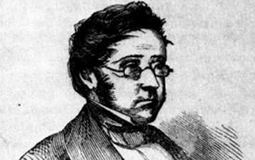
John White Webster
Murderer John Doyle Lee
Murderer · USA · 1857
Name: John Doyle Lee Lifespan: September 12, 1812 - March 23, 1877 Legal outcom…
120 victims
John Doyle Lee
Murderer · USA · 1857
Name: John Doyle Lee Lifespan: September 12, 1812 - March 23, 1877 Legal outcom…
120 victims
 Edward Rulloff
Murderer · USA · 1845
Edward Rulloff was executed by hanging on May 18, 1871. His execution followed…
3 victims
Edward Rulloff
Murderer · USA · 1845
Edward Rulloff was executed by hanging on May 18, 1871. His execution followed…
3 victims
 Isaac Wood
Murderer · USA · 1855
Isaac L. Wood was a Livingston Republican mentioned in July 1858 execution cove…
2 victims
Isaac Wood
Murderer · USA · 1855
Isaac L. Wood was a Livingston Republican mentioned in July 1858 execution cove…
2 victims
 Thomas Simpson
Murderer · USA · 1840
Thomas Simpson was fatally shot at a wilderness camp in the U.S. territory of M…
2 victims
Thomas Simpson
Murderer · USA · 1840
Thomas Simpson was fatally shot at a wilderness camp in the U.S. territory of M…
2 victims
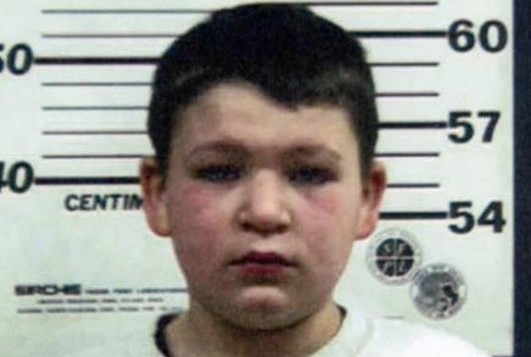 Jordan Brown
Homicide · USA · 2009
Jordan Brown (Jordan Anthony Brown, born August 12, 1997) was found responsible…
1 victim
Jordan Brown
Homicide · USA · 2009
Jordan Brown (Jordan Anthony Brown, born August 12, 1997) was found responsible…
1 victim
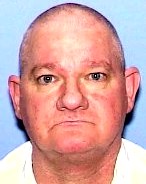 Billy Jack Crutsinger
Murderer · USA · 2003
Billy Jack Crutsinger was a white male. He was born on 10/05/1954 and was recei…
2 victims
Billy Jack Crutsinger
Murderer · USA · 2003
Billy Jack Crutsinger was a white male. He was born on 10/05/1954 and was recei…
2 victims
 Scott Louis Panetti
Murderer · USA · 1992
Scott Louis Panetti was a white male aged 45. He had a long history of serious…
2 victims
Scott Louis Panetti
Murderer · USA · 1992
Scott Louis Panetti was a white male aged 45. He had a long history of serious…
2 victims
 Bobby James Moore
Murderer · USA · 1980
Defendant: Bobby James Moore Victim: Jim McCarble The federal habeas corpus rel…
1 victim
Bobby James Moore
Murderer · USA · 1980
Defendant: Bobby James Moore Victim: Jim McCarble The federal habeas corpus rel…
1 victim
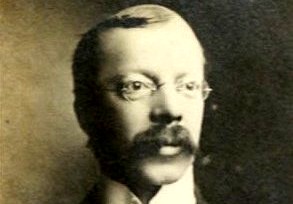 Dr. Hawley Harvey Crippen
Murderer · United Kingdom · 1910
Hawley Harvey Crippen (11 September 1862 – 23 November 1910), usually known as…
1 victim
Dr. Hawley Harvey Crippen
Murderer · United Kingdom · 1910
Hawley Harvey Crippen (11 September 1862 – 23 November 1910), usually known as…
1 victim
- Gender
- male
- Country
- USA
- Location
- Harvard, Massachusetts, USA
- Date of birth
- May 20, 1793
- Age at first offence
- 56
- Characteristics
- dismemberment
- Victim profile
- Dr. George Parkman, 59
- Method of murder
- Beating with a stick of wood
- Date(s) of murder
- November 23, 1849
- Years active
- 1849
- Date of arrest
- —
- Status
-
Executed
Executed by hanging on August 30, 1850
Case overview
John White Webster (May 20, 1793–August 30, 1850) was born in Boston, Massachusetts. He was a professor of chemistry and geology at Harvard Medical College. In 1849–1850, he was involved in the Parkman–Webster murder case.
Background
Webster was from a well-connected family. His grandfather had earned a fortune as a merchant. His mother Hannah (White) Webster was a Leverett. His wife’s sister married into the Prescotts. He was friends with the Shaws. His Unitarian pastor was the Reverend Francis Parkman Sr. (brother of George).
Webster’s father Redford Webster, an apothecary, offered him only a small allowance. Webster later claimed that he never understood money. He graduated from Harvard College in 1811 and Harvard Medical College in 1815.
In 1814 he was among the founders of the Linnaean Society of New England. He was appointed cabinet-keeper of the society’s growing collection of specimens in Joy’s Buildings in Boston. Around 1815 he went to London for further study. At Guy’s Hospital he was a surgeon’s pupil, a physician’s pupil, and a surgeon’s dresser. He then went to São Miguel Island in the Azores (1817–18). There he practiced medicine, published his first book, and met Harriet Fredrica Hickling, the daughter of the American vice-consul on the island. Webster married Harriet on May 16, 1818. She gave him four daughters.
After returning to Boston, Webster entered private medical practice, but lack of success prompted him to change careers. In 1824 he was appointed a lecturer of chemistry, mineralogy, and geology at Harvard Medical College. Three years later he was promoted to the Erving professorship. In Boston he lived on Common Street.
He wrote A Description of the Island of St. Michael (1821). He was associate editor of the Boston Journal of Philosophy and the Arts (1824–26). He compiled A Manual of Chemistry (1826). He brought out editions of Andrew Fyfe’s Elements of Chemistry (1827) and Justus von Liebig’s Animal Chemistry or Organic Chemistry (1841).
The offence
The Parkman–Webster murder case involved the disappearance, death, and dismemberment of Dr. George Parkman. Webster was indicted for murder. The coroner’s inquest jury decided that the body parts were those of Parkman, that he had been killed and dismembered at the medical college, and that Webster was accountable.
Investigation
Parkman–Webster murder case context The Parkman–Webster murder case was a public crime, investigation, and trial that affected Boston, Massachusetts in 1849–1850, described as being shaken by the crime’s gruesome nature and the high social station of the victim and murderer.
Main participants
Dr. George Parkman (February 19, 1790–November 23, 1849)
- He was a Boston Brahmin.
- Oliver Wendell Holmes, Sr. said that Parkman “he abstained while others indulged, he walked while others rode, he worked while others slept.”
- Fanny Longfellow, wife of Henry Wadsworth Longfellow, called him “the lean doctor... the good-natured Don-Quixote.”
- The account described his appearance and habits: tall, lean, a protruding chin, wearing a top hat, and collecting rents on foot.
- He was worth some half a million dollars in 1849.
John Webster (as described in the trial account)
- The account described Webster as a short, stocky man with dark hair and glasses.
- He taught at Harvard Medical College, published chemistry books, lectured to students, and saw his annual pay rise from $800 to $1200, with additional lecture ticket sales at the Massachusetts Medical College.
- Some reports criticized his teaching ability, including the Boston Daily Bee’s characterization that he was “tolerated rather than respected, and has only retained his position on account of its comparative insignificance. As a lecturer he was dull and common-place and while the students took tickets to his lectures, they did not generally attend them.”
- The Yarmouth Register said “his reputation in his profession is respectable but not brilliant”, and that “With a mild, kind and unassuming disposition, with eminently social feelings and manners of uncommon affability, he probably had not any enemy,” while noting poor “management of pecuniary affairs.”
- Webster’s great problem was debt.
- Longfellow’s wife’s anecdote described Webster lowering the lights, fitting a noose around his own neck, and lolling his head forward, tongue protruding, over a bowl of blazing chemicals, as a ghastly imitation of a man being hanged.
Ephraim Littlefield
- Ephraim Littlefield was the janitor of Harvard Medical College built in 1846 and had also been janitor of the previous medical college since 1842.
- He and his wife Caroline lived in the basement next to Professor John Webster’s laboratory.
- Littlefield obtained cadavers for dissection for a price of about twenty-five dollars a body, selling them to students and professors.
- As janitor he cleaned rooms and laboratories, started fires, set up specimens for lectures, and did other tasks requested.
- The account described him as hostile toward Brahmins, feeling his job threatened by Irish immigrants, and “secretly loathed Webster.”
- After Webster’s trial, he collected a $3000 reward for providing information about Parkman’s disappearance and retired comfortably.
Pre-disappearance debt and confrontation The account described the debt relationship between Parkman and Webster:
- In 1842 Webster borrowed $400 from Parkman.
- In 1847, with little of this repaid, Webster gave Parkman a note for $2432 representing the unpaid balance and a further loan, secured by a mortgage of Webster’s personal property including a cabinet of minerals.
- In 1848 Webster borrowed $1200 from Robert G. Shaw and gave as collateral the minerals already standing as collateral for a Parkman loan, enraging Parkman and causing Parkman to seek Webster for confrontation.
Parkman’s actions leading up to disappearance
- On November 22, 1849, Parkman went to Cambridge to look for Webster and asked Mr. Pettee, the Harvard cashier, to give him money from the sale of Webster’s lecture tickets to repay Webster’s debt.
- On November 23, Parkman was collecting debts as usual. An unnamed woman later recalled fleeing from him when he demanded the dollar he had seen in her hand as she tried to pay for food.
- Parkman placed a grocery order for the approaching holiday and had it sent to his house. He offered Thanksgiving greetings to several people.
- Parkman left lettuce with one man, expecting to return soon and to have lunch with his wife at 2:00 pm, as he had done each day of their 33-year marriage.
- That day, Webster visited Parkman’s home, suggesting they meet at the Medical College that afternoon at 1:30 pm.
- At 1:45 pm, the last confirmed sighting of Parkman had him entering the college on North Grove Street wearing a dark frock coat, dark trousers, a purple satin vest, and a stovepipe hat.
Findings at the medical college after disappearance Later that afternoon:
- Littlefield found Webster’s rooms locked from the inside and heard water running.
- Webster was home by 6:00 pm and attended a party at the house of friends, the Treadwells, showing no outward signs of distress.
On November 24:
- The Parkman family made anxious inquiries and contacted the police.
- Littlefield saw Webster with a bundle; Webster told him to make a fire.
On November 25:
- Webster appeared outside Harvard Medical College where he met Parkman’s nephew James Henry Blake and police officer Trenholm.
- They asked if he had seen Parkman.
- Webster visited George’s brother, the Reverend Francis Parkman, and informed him and his family in a stiff, formal manner that he had met the missing man after obtaining $483.64 to pay a debt installment, and that the latter promised to go right away to have the payment recorded by the city clerk to clear the debt.
- Webster then left without inquiring about the search.
On November 26:
- The family had a $3000 reward settled on for finding Parkman alive.
- Twenty-eight thousand copies of the wanted notice were printed up, posted, and distributed.
- Later, $1000 was offered for his body.
On November 27:
- Webster worked at the college in the evening.
- Officer Derastus Clapp and other police officers from Francis Tukey’s newly formed professional police force made their first search of Webster’s rooms, returning once or twice with emphasis on laboratories and dissecting vaults but finding nothing indicating Parkman had been there.
On November 28:
- Webster was at the college early; Littlefield watched him from under the door, seeing as far as his knees.
- The account described Webster moving between furnace and fuel closet, making eight separate trips.
- His furnace burned so hard that the wall on the other side was hot to the touch.
- After Webster was gone, Littlefield entered through a window after all doors had been bolted.
- Littlefield found kindling barrels nearly empty and “wet spots that tasted like acid in odd places.”
On November 29 (Thanksgiving):
- Littlefield borrowed a hatchet, drill, crowbar, and mortar chisel, while his wife stood guard.
- He began chiseling away a wall under Webster’s private lab privy.
- He went down a tunnel into a vault where the wall had felt hot and hacked at it where the privy emptied into a pit that the police had not searched.
- He went through two layers of brick in just over an hour and stopped to go to a dance, leaving remaining layers for the next day.
On November 30:
- Littlefield resumed chiseling until he punched a hole into the wall, then felt a strong draft that made his lantern go out.
- He maneuvered it, ignored foul fumes, and let his eyes adjust.
- He saw on top of a dirt mound the shape of a human pelvis.
- He also saw a dismembered thigh and the lower part of a leg.
- He trembled violently, then stumbled out through the tunnel into the building.
- He yelled for his wife and told her what he had seen.
- On his hands there was blood mixed with dirt.
- He ran to Dr. Bigelow, who found Marshal Tukey.
- The account cautioned that the bones were not necessarily Parkman’s at first, noting that the vault where remains from human dissections were tossed was in that lab.
- Marshal Tukey had Littlefield go through the dissection room and inventory specimens to ensure none was missing.
- Several men then went into the tunnel and decided on the man with the longest arms to hand out remains one by one.
- They handed out the pelvis, the right thigh, and the lower left leg, placed on a board to await the arrival of coroner Jabez Pratt.
Arrest and initial reactions By the time Tukey arrived, word had spread. Marshal Tukey dispatched Officer Clapp and two other constables to take Webster from his home in Cambridge.
- They initially did not tell Webster he was under arrest.
- They took him to jail on a charge of murder.
- Webster initially denied knowledge of the crime.
- When told what Littlefield had found, Webster exclaimed: “That villain! I am a ruined man”, blaming the janitor and mentioning only the two of them had access to the privy.
- The account described him sitting in his cell, trembling and sweating.
- Webster put into his mouth what he later admitted to be strychnine, but it only made him ill.
Searches, coroner’s jury, and forensic findings On December 1:
- A coroner’s jury was assembled to judge disposition of the case.
- Before they were let in, the coroner and marshal’s men examined a sink recently gouged in several places, strange acid stains on the floor and steps, and the contents of a furnace (from which they extracted a button, some coins, and bone fragments including a jaw bone with teeth).
- They dumped out a chest with a foul odor, finding an armless, headless, hairy and partly burned torso.
- The account says they found a saw nearby just as they determined the head had been sawn off.
- They found a thigh stuffed inside the torso, and the heart and other organs were missing.
- Mrs. Parkman identified the body as her husband’s from markings near the penis and on the lower back.
- Parkman’s brother-in-law said he had seen the extreme hairiness of Parkman’s body and confirmed the body was his.
Subsequent searches and tests:
- Subsequent searches turned up bloody clothing belonging to Webster and the right kidney.
- Testing on stains showed them to be copper nitrate, a substance effective for removing blood.
- Dr. Jeffries Wyman arrived to identify bone fragments.
- Because the scene was at a medical college, the account says they laid out the parts, tested them, and wrote thorough descriptions.
- The account described conjecture that a hole underneath the left breast might have been the stab that killed the victim, but it “did not resemble a wound and there was no blood.”
- By the end of the day, they estimated the man’s height to have been 5'10", an exact match to George Parkman.
Public response and contemporaneous statements In the week between murder and finding bones:
- The city was abuzz with speculation fueled by its 120 periodicals.
- At first, Irish immigrants were blamed.
- Some thought Parkman had simply left the city; others thought he had been beaten for money he carried.
- Unsigned letters mailed from Boston proposed scenarios.
- Marshal Tukey dragged the Charles River and Boston Harbor for a body and sent men to neighboring towns.
- Search parties formed and went out day and night.
- Police searched Parkman’s rented and vacant buildings and even abandoned buildings he did not own.
- After Webster’s arrest, there was reluctance among the Brahmin to believe a member had done the deed.
Quotes about reactions:
- Longfellow’s wife wrote: “Boston is at this moment in sad suspense about the fate of poor Dr. Parkman... You will see by the papers what dark horror overshadows us like an eclipse. Of course we cannot believe Dr. Webster guilty, bad as the evidence looks.... Many suspect the janitor, who is known to be a bad man and to have wished for the reward offered for Dr. Parkman's body. He could make things appear against the doctor, having bodies under his control. I trust our minds will be soon relieved, but, meanwhile, they are soiled by new details continually. I went to see poor Mrs. Webster on Saturday, the day after her husband's arrest, but of course was not admitted. What a terrible blight upon her life and that of the girls! The mere suspicion, for I cannot believe anything can be proved.”
- On December 1, Harvard librarian John Langdon Sibley wrote in his journal: “The standing of Dr. Webster, his uniform tenor of conduct since the disappearance of Dr. Parkman, his artlessness & unfamiliarity with crime of any kind have been such that the excitement, the melancholy, the aghastness of every body are indescribable. The professors poh! at the mere suspicion he is guilty... People cannot eat; they feel sick.”
- On December 6, thousands lined the streets for Parkman’s funeral, and some 5,000 toured the crime scene.
Arrest
Webster was arrested and taken from his home in Cambridge. Marshal Tukey dispatched Officer Clapp and two other constables to take Webster from his home. The account describes them as not initially telling Webster he was under arrest and taking him to jail on a charge of murder. Webster initially denied knowledge of the crime and then exlaimed “That villain! I am a ruined man”.
Trial
Trial indictment and counsel
- On January 26, 1850, Webster was indicted for murder.
- Leading lawyers Daniel Webster and Rufus Choate declined to serve as John Webster’s counsel.
- While awaiting trial, Webster wrote out a detailed 194-page defense.
- The prosecution faced the problem of a severely deteriorated corpse that could plausibly have come from a dissection.
Inquest and indictment
- The inquest jury decided in an 84-page decision that the body parts were indeed those of Parkman, that he had been killed and dismembered at the medical college, and that Webster was accountable.
- Later, using these findings, the grand jury returned a True Bill and indicted him.
- The grand jury’s report believed Webster assaulted Parkman with a knife and also beat and struck him until he was dead.
Defense attorneys and trial counsel Webster chose two attorneys:
- Edward Dexter Sohier (Harvard graduate), who handled Webster’s civil matters mostly financial in the past, though inexperienced in criminal law and provided a defense described as second-rate.
- Pliny T. Merrick (Harvard graduate), more experienced in criminal law, held a secondary position during the trial.
Trial proceedings and court composition The trial began on March 19, 1850.
- Chief Justice Lemuel Shaw of the Massachusetts Supreme Judicial Court presided.
- Associate Justices Samuel Wilde, Charles A. Dewey, and Theron Metcalf were present, with one described as incompetent and another nearly senile.
- The trial ran for twelve days: March 19–23, March 25–30, and April 1.
- The account says 60,000 people witnessed at least part of the trial, with tickets distributed to waiting crowds and spectators rotated through.
- Journalists came from as far as London, Paris, and Berlin.
The courtroom arrangement
- Webster sat in the prisoner's dock on the left, surrounded by an iron railing.
- The judge sat across from the dock.
- The jury sat to his right.
- On the first day Webster carried gloves and pleaded not guilty.
Jury members named in the account The account lists jurors and their descriptions:
- Robert J. Byram, Locksmith (foreman not indicated)
- foreman Thomas Barrett, Printer
- John Borrowscale, Slater
- James Crosby, Clerk
- John E. Davenport, Painter
- Albert Day, Merchant
- Joseph Eustis, Merchant
- Daniel T. Fuller of North Chelsea, Wheelwright
- Benjamin H. Greene, Bookseller
- Arnold Hayward, Carpenter
- Frederick A. Henderson, Furnisher
- Stephen A. Stackpole, Clerk
Prosecution Leading lawyers included:
- Massachusetts Attorney General John Clifford (later Governor), mainly opening and closing statements.
- George Bemis, Esq., prosecutor, later wrote a Report of the trial that came to be received as the official version.
Opening, scene visit, and witness testimony
- Clifford made a three-hour opening statement on the first day.
- Bemis then cross-examined witnesses; some conceded they would not have recognized the body as belonging to Parkman.
- The next day, the jury visited the crime scene, entering the privy pit.
- Back in the courtroom, the coroner described Webster as “mad” after his arrest (possibly due to the strychnine); Webster’s lawyers made no objection.
- Dr. Woodbridge Strong testified about what was needed to burn a corpse and the odor it would produce.
- Anatomy professor Dr. Frederick S. Ainsworth pointed out that his department’s dissection specimens differed from the body in question.
- Dr. Jeffries Wyman described which bones had been found.
- The defense created doubt that the body was Parkman’s and questioned whether the wound on the body had killed him due to little blood near it.
Oliver Wendell Holmes, Sr. On the third day:
- Oliver Wendell Holmes, Sr., dean of Harvard Medical College and held a post endowed by Parkman, testified.
- He testified that he believed the body had been dismembered by someone knowledgeable in dissection and anatomy.
- He testified that a wound between the ribs would not necessarily cause a large amount of blood loss.
- He testified the corpse’s build was “not dissimilar” to George Parkman.
- Dr. Wyman again described the bones and showed how they fit together.
Dentist identification and a fire alarm
- Dr. Nathan Keep, Parkman’s dentist, testified that the jawbone with false teeth found in the furnace belonged to Parkman, recognizing it as the work he had done in the fall of 1846.
- He showed the jury how the jawbone fit exactly into a plaster impression he had made of Parkman’s jaw.
- A fire alarm rang from the building where Clifford had his belongings, so the court recessed while he retrieved them.
- When court resumed, Dr. Keep “burst into tears” while showing how loose teeth from the furnace fit into his plates.
- He showed through an inscription that the mold had been made specifically for Parkman.
Ephraim Littlefield and Caroline Littlefield testimony
- Ephraim Littlefield took the stand as chief witness.
- He told how Parkman demanded payment on November 19.
- Webster asked about using a light inside the dissecting room vault (Littlefield said no).
- Littlefield described Webster began locking his rooms, then about a turkey, and about heat on walls that led him to dig into the privy.
- The defense accused Littlefield of being after the reward, which he denied, while Webster had indicated they did not accuse him of the murder.
- The account says Littlefield made a good impression described as confident, honest, and unflappable.
- Caroline Littlefield testified.
Debt discussion and three unsigned letters After a Sunday recess, on Monday:
- The court heard about Webster’s debt problem and doubt was cast on his story that he had managed to repay Parkman.
- A police officer described finding the torso in a tea chest, displayed with blood stains.
- The officer also said it was possible to fit other parts into the privy hole but not the torso.
- Other witnesses testified about Webster’s unusual behavior after Parkman’s disappearance.
- Three unsigned letters meant to throw police off track were shown.
- A man familiar with Webster’s hand testified to his belief that Webster had written the letters.
- A witness confirmed Parkman was on the steps of the college early on Friday afternoon before the prosecution rested.
Defense case
- The defense refuted the prosecution’s case over two days.
- Sohier gave a long speech including a complaint that Webster could not defend himself because under Massachusetts capital murder rules capital defendants could make only one unsworn speech to the jury right at the end.
- Sohier explained differences between murder and manslaughter, leaving impression he believed homicide occurred.
- He asserted the prosecution failed to show beyond reasonable doubt that Webster was the killer, or even how Parkman had died.
- Sohier hoped to dent the case cumulatively by bringing 23 character witnesses and seven others who claimed to have seen Parkman after his supposed time of disappearance.
- The jury ignored the defense witnesses’ testimony under the judge’s instructions.
Sighting dispute and Bliss comparison The state argued those defense witnesses’ sightings were of a Springfield man named George Bliss, suggested to have been in Boston on the day in question.
- The account references researchers re-examining the case from Webster’s perspective in 2007–2008 and locating an image of Bliss for comparative forensic analysis with the distinctive, odd-looking Parkman.
Expert testimony during defense
- Sohier called medical experts including some who had testified for the prosecution.
- Experts conceded it was difficult to identify the body or how the man had died.
- Dr. William T.G. Morton testified that if the jawbone found in the furnace were placed among a dozen others he could produce, “I should not be led to pick it out from any peculiarity.”
- Morton placed false teeth of his own into Dr. Keep’s mold, which fit smoothly.
- Sohier called the prosecution’s case “indirect, presumptive, and circumstantial.”
- The defense rested and rebuttal started.
Dentists, physician, and final defense speech
- Three dentists stated an artist would recognize his own handiwork.
- A physician estimated the condition of the remains to match the time for Parkman’s disappearance.
- The defense gave a six-hour speech on four key points that the prosecution had to prove: that the body was Parkman’s, that a homicide had occurred, that Webster perpetrated it, and that he acted with malice aforethought.
- Defense contended that because Parkman had been seen leaving the college on Friday afternoon, the prosecution’s case was in tatters.
- They also contended that even if the body was definitely Parkman’s, anyone could have killed him and disposed of his body in the place where it was found, weakening the prosecution’s case.
Prosecution closing argument
- Clifford made his own closing argument lasting more than a day.
- He repeated what he saw as facts and emphasized strong medical testimony.
- He said that beyond a reasonable doubt, Parkman was dead and found cut up inside the lab.
- He reminded the jury of Webster’s financial situation and actions prior to Parkman’s disappearance.
Webster’s statement and judge’s charge
- Webster took the stand against attorneys’ advice.
- The account says he criticized his attorneys and presented his own version of the evidence in a fifteen-minute speech.
- He called on the author of anonymous letters to reveal himself; none did so.
Judge Shaw’s ruling and jury deliberation The account describes Shaw’s statement as precedent-setting with bias described in the account:
- Shaw said the jury only needed to find beyond a reasonable doubt that the corpus delicti was Parkman’s, while the standard in murder cases at the time was proof “to an absolute certainty” that the dead body was that of the victim.
- Just before 8 pm on March 30, Shaw charged the jury to produce a verdict on Webster’s guilt or innocence.
Verdict and sentencing
- The jury began deliberations with a prayer and then reviewed evidence.
- They voted unanimously that the remains were Parkman’s, that Webster had killed him, and that he did so deliberately.
- The jury returned at 10:45 pm.
- The foreman replied “Guilty!”
- The account quotes Bemis’s description of Webster’s reaction:
- “The prisoner, who upon the sentence of the jury had turned deadly pale, but who had stood up with a firm bearing to receive the verdict of the jury, immediately upon its announcement, grasped the rail in front of him, and slowly sank down into his seat. Dropping his head, he rubbed his eyes beneath his spectacles with a trembling and convulsed motion as if to wipe away tears, and remained in that position a few moments.”
On April 1, Judge Shaw directed:
“that you, John W. Webster, be removed from this place, and detained in close custody in the prison of this county; and thence taken...to the place of execution, and there be hung by the neck until you are dead. And may God, of His infinite goodness, have mercy on your soul!”
Appeals
On May 4, Webster’s lawyers submitted a petition for a writ of error against Judge Shaw and his instructions to the jury. A hearing was held before Shaw and his four associates on June 12, and the writ was denied. Webster appealed to Governor George N. Briggs for a pardon, asserting his entire innocence.
Governor and commutation statements in the account The account describes Governor Briggs as a lay preacher who did not wish to be seen bowing to Brahmin pressure. It includes a quote attributed to The Fall River Weekly News: “If any delays, misgivings or symptoms of mercy are manifested, the gibbeted body of Washington Goode will be paraded before the mind's eye of his Excellency. If he relents in this case, though the entire population of the State petition for a remission of sentence, Governor Briggs will forfeit all claim to public respect as a high minded, honorable and impartial chief magistrate. He can do one of two things and retain his character as a man and a public servant: resign his office, or let the law take its course.”
The account says Briggs signed the death warrant.
Outcome
Webster was convicted and sentenced to be hanged. He was executed by hanging on August 30, 1850.
Sentencing and execution
A death warrant was signed by Governor George N. Briggs after commutation was denied. The account describes renewed calls for commutation but that Governor and Council remained unmoved.
The account describes Webster’s confession during June as a desperate bid to save his neck, with details including:
- He admitted to killing Parkman in self-defense when Parkman became aggressive over the debt.
- Webster said it was unpremeditated rage, an act of passion and provocation, not malicious murder.
- Webster said Parkman “was speaking and gesticulating in the most violent and menacing manner” about the mineral cabinet being put up to cover another loan.
- In his fury, Webster said he “seized whatever thing was handiest - it was a stick of wood - and dealt him an instantaneous blow with all the force that passion could give it. It was on the side of his head, and there was nothing to break the force of the blow. He fell instantly upon the pavement. There was no second blow. He did not move.”
- Webster also admitted to authoring an anonymous letter.
Execution setting and burial The account says:
- Webster was taken to Boston’s Leverett Street Jail on August 30, 1850.
- He was publicly hanged.
- He died within four minutes.
- He was buried in Copp’s Hill Burying Ground.
Aftermath
Parkman’s widow and a fund for Webster’s family After the hanging, Parkman’s widow was the first contributor to a fund created for Webster’s impoverished widow and daughters.
Contested accounts after execution The account includes an article referenced as from November 23, 1884 Boston Globe that discussed a possibility Webster was placed in a harness and never hanged. It also retells a story about a sailor seeing Dr. Webster in Fayal (Faial), Azores long after his death sentence. Other witnesses described Webster’s body being moved from the gallows site, going to a neighbor’s house, and security precautions due to concern his body would be stolen. The article also asserted Webster’s body was placed in Copp’s Hill Burying Ground in his father’s tomb.
Legacy and later debate The case proved enduring, described as the first in the United States where dental evidence and scientific testimony were accepted in a murder trial. Debate continued for years about facets of the case.
The account’s narrative of controversy includes:
- Reference to Dickens visiting Boston in 1867 and among his first requests was to see the room where Dr. Parkman had been murdered.
- A claim that the trial was controversial and that “the Parkman murder case stands as a classic example of how a jury can reach a sound verdict despite an unfair trial.”
- Criticisms attributed in the account include:
- Sohier lacked experience in criminal law.
- Neither attorney exposed facts pointed out in Webster’s notes that Littlefield may have perjured himself in key areas.
- They did not cross-examine Littlefield about his corpse-stealing activity.
- They failed to emphasize that the janitor lived near the lab, giving him opportunity to plant the body parts and collect the reward.
- The narrative says their inconsistent reference to manslaughter and their admission Webster could not account for the $483.64 signaled incompetence.
- Attorney General Clifford ignored evidence implicating Littlefield and let Bemis do most of the prosecuting.
- Judge Shaw showed bias against Webster and labored to rework his charge before publication.
- The report was described as a whitewash to counter negative publicity.
The Janitor’s Story section within the record provides additional detail about the janitor’s testimony and questions raised around it. It includes quoted conversations attributed to Littlefield:
- Parkman asked, “Dr. Webster, are you ready for me tonight?”
- Webster answered, “No, I am not ready tonight, Doctor.”
It also includes reported statements attributed to Littlefield:
- Webster held his head down and appeared confused and “a good deal agitated,” and Littlefield said, “Usually, when Dr. Webster talks with me, he holds his head up and looks me in the face. At this time, he held his head down, and appeared to be confused, and a good deal agitated. I never saw him so, before; that is, look as he did: My attention was attracted to it. I saw his face, and I thought that he looked pale.”
- Littlefield’s testimony described hearing Parkman coming “walking very fast.”
- Merrick’s quotation included: “I regret Gentlemen, that my duty compels me to allude to the testimony of [Mr. Littlefield]....”
“I regret Gentlemen, that my duty compels me to allude to the testimony of [Mr. Littlefield]. I regret that I am obliged to do so, because I am confident whatever is said about this has a tendency to point a suspicion toward him as the perpetrator of this crime. Now, Gentlemen of the Jury, you must not misunderstand me. I will not take upon myself the fearful responsibility, in defending one man, to charge another with the same crime. Far be it from me to say that I will charge Ephraim Littlefield with this crime! Far be it, whatever may be the tendency of my comments, if the effect should be to fix it upon him -- far be it from my intention to connect him with this crime! But, Gentlemen of the Jury, it is my duty to examine, and it is your duty to weigh, the testimony of this witness; and if there be anything which tends to affect the testimony of that witness, you must give it weight, whatever the consequences may be.”
The record also includes a quote attributed to Merrick about speculation raised by defense counsel: “Did not Littlefield too well foreknow the information which he should soon have to communicate? Why else did he rid himself of the presence of all spectators? Why else would he have it that no human eye but his own should look into the vault, until he had first seen these remains there in safe deposit? Were not all things yet ready there for the inspection of others? These are fearful questions, of pregnant suggestion, of momentous import. I leave the answer to your own reflections.”
The record includes a description of Merrick noting Littlefield’s labor break to “join in the amusements of the festival of the season; and, after actually dancing eighteen out of the twenty cotillons that occupied the night, returned to sleep quietly in his bed, in an apartment beneath which, he professes to have believed, were lying the bones of a murdered human being. . . .”
In addition, the record references a press clipping about an exhibition where Littlefield appeared as a hired lecturer to explain details of the affair, describing commentary and local remarks about demand for dissecting subjects.
Other details
Parkman’s funeral occurred on December 6, with thousands lining streets and some 5,000 touring the crime scene. On December 6, the record also mentions the standing of Dr. Webster and public reaction described as not eating and feeling sick.
Reactions to the verdict included:
- An Evening Bulletin statement on April 2: “Scarcely one man in ten thousand can be found who does not agree with us in the opinion that the evidence for the defence was sufficient to create a doubt of the unhappy man's guilt”.
- A later Massachusetts Ploughman claim: “We have scarcely met a man of intelligence, since the evidence has all come out, who did not profess to believe in Webster's guilt.”
The record also describes a petition for writ of error, hearing, denial, and a later gubernatorial decision not to grant a pardon. It includes mention of Washington Goode’s execution occurring the year before the Webster pardon appeal, based on circumstantial evidence.
Bibliographic notes included in the record list:
- George Bemis, Report of the Case of John W. Webster (Boston: C.C. Little and J. Brown, 1850)
- James W. Stone, Report of the Trial of Prof. John W. Webster (Boston: Phillips, Sampson & Co., 1850)
- Modern works named in the record include George Dilnot, Robert Sullivan, and Helen Thomson.
- Additional scholarly and biographical works were also listed in the record.
Spotted an error, or have more information about this case?