
Virginia Krall
Murderer Miranda Barbour
Murderer · USA · 2013
Miranda Barbour, 19, defendant. · Elytte Barbour, 22, defendant and husband of…
100 victims
Miranda Barbour
Murderer · USA · 2013
Miranda Barbour, 19, defendant. · Elytte Barbour, 22, defendant and husband of…
100 victims
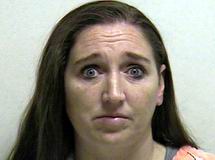 Megan Huntsman
Murderer · USA · 1996
Megan Huntsman was 40 at sentencing. She was a mother of three children who wer…
6 victims
Megan Huntsman
Murderer · USA · 1996
Megan Huntsman was 40 at sentencing. She was a mother of three children who wer…
6 victims
 Michele Kalina
Murderer · USA · 1996
Michele Kalina pleaded guilty to murder for one of five infants she initially w…
5 victims
Michele Kalina
Murderer · USA · 1996
Michele Kalina pleaded guilty to murder for one of five infants she initially w…
5 victims
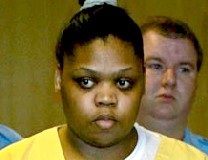 Tiffany Hall
Murderer · USA · 2006
Tiffany Hall was 24 when she was charged in September 2006. She later entered a…
5 victims
Tiffany Hall
Murderer · USA · 2006
Tiffany Hall was 24 when she was charged in September 2006. She later entered a…
5 victims
 Banita Jacks
Murderer · USA · 2007
Banita Jacks was a Washington, DC resident convicted of murdering her four daug…
4 victims
Banita Jacks
Murderer · USA · 2007
Banita Jacks was a Washington, DC resident convicted of murdering her four daug…
4 victims
 Holly Grigsby
Murderer · USA · 2011
Holly Grigsby was sentenced to life in prison without parole on July 15, 2014.…
4 victims
Holly Grigsby
Murderer · USA · 2011
Holly Grigsby was sentenced to life in prison without parole on July 15, 2014.…
4 victims
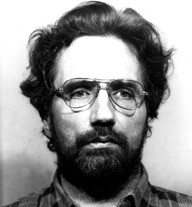 Gary Heidnik
Murderer · USA · 1986
Gary Heidnik was executed by lethal injection in Pennsylvania on July 6, 1999.…
2 victims
Gary Heidnik
Murderer · USA · 1986
Gary Heidnik was executed by lethal injection in Pennsylvania on July 6, 1999.…
2 victims
 Evan Miller
Homicide · USA · 2003
Evan Miller was sentenced to spend the rest of his life in prison. He was sente…
1 victim
Evan Miller
Homicide · USA · 2003
Evan Miller was sentenced to spend the rest of his life in prison. He was sente…
1 victim
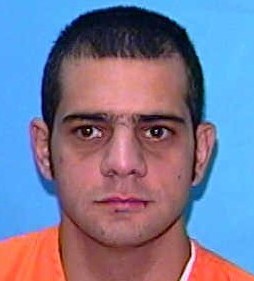 Anthony Farina
Murderer · USA · 1992
Anthony Farina (born 11/20/73) was tried in the Seventh Judicial Circuit, Volus…
1 victim
Anthony Farina
Murderer · USA · 1992
Anthony Farina (born 11/20/73) was tried in the Seventh Judicial Circuit, Volus…
1 victim
 Danny Dean Thomas
Murderer · USA · 1981
Danny Dean Thomas was a Texas death row inmate. He died in prison on August 29,…
1 victim
Danny Dean Thomas
Murderer · USA · 1981
Danny Dean Thomas was a Texas death row inmate. He died in prison on August 29,…
1 victim
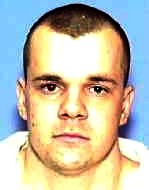 Jeffery Lee Wood
Murderer? · USA · 1996
Jeffery Lee Wood (TDCJ Number 999256) was born on 08/19/73 and was 24 when he w…
1 victim
Jeffery Lee Wood
Murderer? · USA · 1996
Jeffery Lee Wood (TDCJ Number 999256) was born on 08/19/73 and was 24 when he w…
1 victim
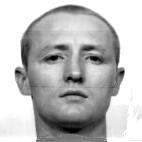 John Christopher Sawyers
Murderer · USA · 1983
John Christopher Sawyers was convicted by a jury of capital murder and sentence…
1 victim
John Christopher Sawyers
Murderer · USA · 1983
John Christopher Sawyers was convicted by a jury of capital murder and sentence…
1 victim
- Gender
- female
- Country
- USA
- Location
- Lakewood, Los Angeles County, California, USA
- Date of birth
- 1984
- Age at first offence
- 22
- Characteristics
- —
- Victim profile
- Yolanda Ester Meraz, 37
- Method of murder
- Stabbing with knife
- Date(s) of murder
- June 16, 2006
- Years active
- 2006
- Date of arrest
- Same day
- Status
-
Life imprisonment
Sentenced to 36 years and four months to life in prison on January 13, 2011
Case record
Names and case caption
Virginia Ann Krall was the defendant and appellant.
The case was titled: The People, Plaintiff and Respondent, v. Virginia Ann Krall, Defendant and Appellant.
Case identifiers: B231290 (Los Angeles County Super. Ct. No. VA095907).
Court: In the Court of Appeal of the State of California, Second Appellate District, Division Two.
Judges and counsel listed in the case caption: Robert J. Higa, Judge. Eric R. Larson, under appointment by the Court of Appeal, for Defendant and Appellant. Kamala D. Harris, Attorney General, Dane R. Gillette, Chief Assistant Attorney General, Lance E. Winters, Assistant Attorney General, Steven E. Mercer and J. Michael Lehmann, Deputy Attorneys General, for Plaintiff and Respondent.
Timeline
- June 15, 2006 — Virginia Krall was romantically involved with Justin Schmalz and lived with him at the Lakewood home of his mother, Kelly Schmalz.
- Approximately 9:30 p.m., June 15, 2006 — When Kelly Schmalz returned from work, Krall was acting normally.
- Approximately 11:30 p.m., June 15, 2006 — Kelly Schmalz went to bed.
- Approximately 1:30 a.m., June 16, 2006 — Megan Bufford came home and got ready for bed; she saw Krall enter the room with a knife in her hand.
- June 16, 2006 — Krall killed Yolanda Meraz and stabbed other relatives during a pre-dawn attack at the family home in the 4300 block of Quigley Avenue.
- August 14, 2009 — A jury found Virginia Ann Krall guilty of second-degree murder and attempted murder; deliberations resumed for the sanity phase.
- August 27, 2009 — A jury would resume deliberations in the sanity phase of the trial.
- January 13, 2011 — Judge Robert J. Higa imposed a sentence of 36 years and four months to life in prison.
- September 5, 2012 — A state appeals court panel upheld the conviction.
- 2011 — A second jury later determined that Krall was sane at the time of her crimes.
Background
Virginia Krall was romantically involved with Justin Schmalz and lived with him at the Lakewood home of his mother, Kelly Schmalz (Schmalz). The Schmalz family lived three or four houses away from the Meraz family, who were the victims in the case.
Megan Bufford lived with her mother, Yolanda Meraz, her aunt, Samantha Meraz, and her grandmother, Jeanie Meraz. Bufford and Yolanda shared a bedroom.
The offence
On June 16, 2006, Krall entered the Meraz home and attacked multiple members of the family with a knife, resulting in Yolanda Meraz’s death and serious injuries to three other relatives.
Victims and injuries
Yolanda Meraz (37)
- Yolanda died as a result of the attack.
- She suffered 30 stab wounds, including defensive wounds to her hands.
Megan Bufford (then 18, and 23 at sentencing)
- Bufford saw Krall open the door and enter the room with a knife in her hand; Krall held the knife with her arms raised above her head.
- Krall ran toward Bufford, jumped onto the bed, and stabbed her two times.
- Bufford ran out of the room, yelled for help, and told everyone to get out of the house; she ran outside and hid behind a car.
- Investigators reported that Krall’s attack caused Bufford to suffer a collapsed lung and a stab wound to her arm.
- Bufford spent 10 days in the hospital.
- At sentencing, Bufford told the judge, “Virginia Krall murdered my mother, in doing so she murdered a part of me,” and added, “If it was up to her I would not be here today,” as she cried. She also said, “She only stopped stabbing me because my mom woke up.”
- Bufford stated she suffered constant nightmares about people breaking into her home and trying to kill her and her mother, and she said:
“I miss the days when I would wake up and think, 'Thank God it's just a nightmare,'”
and “(Now) it's my reality.”
Samantha Meraz (niece at time of attack; treated for 16 stab wounds; and aunt in the trial narrative)
- Samantha was asleep on the couch when she heard Bufford scream for Jeanie to get out of the house.
- Samantha ran after Bufford initially but returned to the house when she heard Jeanie and her mother screaming.
- Samantha saw Krall repeatedly stabbing Jeanie while Jeanie was on the ground.
- Krall chased Samantha; the prosecutor narrative described that Krall stabbed Samantha in the back and in the neck, then grabbed her by the shirt, brought her to the ground, and repeatedly stabbed her in the arm and chest; Krall walked away; then when Samantha got up, Krall turned around, took Samantha to the ground again, and tried to stab Samantha in the head.
- Samantha recognized the knife as one kept in a block of knives in the kitchen.
- The case narrative stated that Samantha was treated for 16 stab wounds and suffered nerve damage to her arm.
- Evidence described that the knife went into the grass and Samantha was able to grab it.
Jeanie Meraz (57 at time of sentencing narrative; injured during the attack)
- Jeanie was awakened by screaming and heard Samantha say that Bufford wanted them to call 911.
- Jeanie began to call and asked what she should tell the 911 operator.
- Krall came out of Bufford’s room and attacked Jeanie.
- Krall repeatedly stabbed Jeanie on her left side; she stabbed the top of Jeanie’s head as well as her ear, cheek, jaw line, hand, wrist, and chest.
- When Jeanie slipped and fell, Krall kept stabbing her in the back, then suddenly stopped.
- Jeanie also suffered a stab wound to her tongue.
- She suffered 16 stab wounds.
- She had permanent nerve damage on two fingers of her left hand and was unable to use them.
Manner of entry and attack sequence
The attack involved Krall entering through a window at the Meraz home. Authorities identified that Krall climbed through a side window at about 3 a.m. and stabbed and slashed the victims.
The prosecution evidence described the following sequence beginning at approximately 1:30 a.m.:
- Bufford saw Krall enter the room with a knife in her hand.
- Krall stabbed Bufford two times, then stabbed Yolanda repeatedly as Yolanda fell on the floor.
- Bufford saw Yolanda being stabbed approximately 10 times, ran out, and hid outside behind a car.
- Jeanie was awakened, called 911, and asked what to tell the operator.
- Krall came out of Bufford’s room and attacked Jeanie with repeated stabbings across the left side and head area, including a stab to the tongue.
- Samantha was asleep, later saw Krall repeatedly stabbing Jeanie as Jeanie was on the ground, and Krall chased her; Krall stabbed Samantha in the back and neck, repeatedly stabbed her arm and chest, and attempted to stab her in the head.
Wounds, hospital outcomes, and coroner testimony
- The coroner’s testimony in the appellate narrative reported that the murder victim was stabbed 30 times.
- The prosecution evidence stated:
- Bufford suffered a collapsed lung and a stab wound to her arm and spent 10 days in the hospital.
- Samantha was treated for 16 stab wounds and suffered nerve damage to her arm.
- Jeanie suffered 16 stab wounds, permanent nerve damage on two fingers of her left hand, and was unable to use them, and also had a stab wound to her tongue.
Investigation and immediate events
Calls and observations
Jennifer De La O, a neighbor, was awakened by a woman screaming for help. De La O looked out her window and saw Bufford running northbound and called 911. De La O saw Krall walking southbound from the direction Bufford had gone while De La O was connected to the 911 operator.
De La O stepped outside to describe the scene and saw Krall holding a knife and straddling someone. De La O recognized the person on the ground as Samantha. De La O saw Krall raise the knife and plunge it downward. De La O then saw Krall get up and walk toward a woman who was calling and motioning to her. Deputies arrived shortly thereafter.
Police custody and statements attributed during apprehension
Kelly Schmalz (Schmalz) had also been awakened by screaming. Schmalz heard a woman saying, “Oh, God. Oh God. Help me.” Schmalz looked out from her balcony and saw what appeared to be a scuffle. When the struggle stopped, she saw one of the two people coming toward her and recognized it as Krall. Krall had “wild hair,” a torn tank top, and blood on her shirt and hands.
Schmalz saw Krall screaming:
“Oh, my God. Oh, my God. What have I done? Kill me now. Kill me now.”
Schmalz told Krall to “shut up.” The evidence stated that Krall seemed to calm down a little. Schmalz brought Krall back to her home and told her to sit on a bench outside while Schmalz called the police. When police arrived, Schmalz told Krall to get up and she did so. The police drew their guns and ordered Krall to the ground; she complied. The case narrative stated Krall appeared calm as she was booked and processed, answered questions appropriately, and was cooperative.
Arrest
Authorities identified Krall as the assailant. The narrative described that Krall was arrested and remained in custody in lieu of $2.7-million bail. She was scheduled to be arraigned on one count of murder and three counts of attempted murder.
Trial
Charges and allegations found by the jury
A jury convicted Krall of:
- One count of second degree murder (Pen. Code, § 187, subd. (a)) (count 1)
- Three counts of attempted murder (§§ 187, subd. (a), 664) (counts 2-4)
- One count of first degree residential burglary with a nonaccomplice present (§ 459) (count 5)
The jury found that defendant personally inflicted great bodily injury (§ 12022.7, subd. (a)) and personally used a deadly and dangerous weapon, a knife (§ 12022, subd. (b)(1)).
Sanity phase and mistrial in the first sanity trial
At Krall’s first sanity trial, the jury was unable to reach a verdict, and the trial court declared a mistrial.
At a retrial, the jury found Krall legally sane at the time of her crimes.
Prosecution arguments and defense arguments on mental state
The prosecutor argued the killing and attempted killings were calculated attacks and relied on the facts including that Krall waited until the “dark of night” to sneak through an open window, looked in the victims’ kitchen and found “the biggest knife they got,” and that Krall then turned off the lights to give herself an edge over her victims.
The defense attorney argued there was no doubt his client killed Yolanda Meraz and attacked the other women, but that her mental state—hampered by what he called a combination of mental illness and psychosis and the use of drugs—made it impossible to find Krall guilty of first-degree murder because she was insane.
Sentencing
Sentence imposed on January 13, 2011
On January 13, 2011, Norwalk Superior Court Judge Robert J. Higa handed down the maximum allowed: 36 years and four months to life in prison.
A separate appellate narrative listed the total sentence as 21 years four months plus 15 years to life in prison, including enhancements and a stayed term.
Sentencing structure as described
The appellate record described the following sentencing components:
- Total term: 21 years four months plus 15 years to life in prison.
- In count 1 (murder), the trial court imposed 15 years to life plus one year pursuant to section 12022, subdivision (b)(1).
- In count 2, the trial court imposed a consecutive upper term of nine years, plus an additional three years pursuant to section 12022.7, subdivision (a), and an additional one year pursuant to section 12022, subdivision (b)(1), for a total of 13 years.
- In each of counts 3 and 4, consecutive terms of one-third the midterm of 84 months for 28 months were imposed.
- In each of counts 3 and 4, additional terms were imposed: one-third of one year (four months) pursuant to section 12022, subdivision (b)(1), and one-third of the midterm of three years (one year) pursuant to section 12022.7, subdivision (a), for total terms of three years eight months in each of those counts.
- In count 5, the trial court imposed and stayed, pursuant to section 654, an upper term of six years.
Victim impact statements and letters
Four of Meraz’s relatives addressed the court and one read letters from other survivors.
Megan Bufford urged the judge to keep her mother’s killer in prison for life and said:
“I never want to see the day when she is released,”
She also said she only survived because “my mom woke up,” and she described the change to her life after the attack.
Yolanda Meraz’s cousin, Angela Max, recalled cleaning dried blood off Jeanie Meraz as Jeanie sat with blackened eyes in her hospital bed.
Yolanda Meraz’s sister-in-law, Susan Cordova, said Samantha Meraz is constantly questioned about scars on her neck from having her throat slit.
At sentencing, a letter read by Cordova included that what was most frightening for Samantha was the knowledge that there was no reason for the attack.
Defense requests and apologies at sentencing
Krall’s father, Bill Krall, stepmother, Renee Ramirez, and her lawyer asked the court to show mercy and place Krall somewhere she could get help. They apologized to Meraz’s family.
Renee Ramirez said:
“I'm sorry,”
and further stated: “Words and expressions could never ever ... come close to (addressing) the pain and suffering you've endured.”
The narrative stated Ramirez explained she had not apologized earlier because they did not want to further upset the family by approaching them.
Bill Krall said:
“My daughter's a good person - she did an evil deed,”
and told the court that he took his god-fearing family to church every Sunday and they regularly read the Bible. He stated something happened to his daughter to stray “from the right path,” and said: “She needs to pay the price for her actions, but ... I'm confident she's going to make good for herself,”
The narrative also stated Krall said “thank you” after her father finished, and she had a brief exchange with the judge on court formalities.
Consecutive vs concurrent terms
The appellate narrative stated that Higa ruled all terms be served consecutively rather than concurrently, even though the years given for the counts of second-degree murder and attempted murder are dictated by state law.
Parole eligibility statements after sentencing
Deputy District Attorney Ana Lopez explained after sentencing that Krall could qualify for parole in about 33 years, but that a parole board would conduct a review before deciding if Krall was fit for release. The narrative also stated notification is given to victims before parole reviews.
Appeals
September 5, 2012 appellate decision
On September 5, 2012, a state appeals court panel upheld Krall’s conviction.
The panel was a three-justice panel from California’s Second Appellate District Court of Appeal. The panel rejected an appeal filed on behalf of Virginia Ann Krall and affirmed the judgment.
The disposition section stated: “The judgment is affirmed.”
Issues raised on appeal and legal reasoning included in the appellate narrative
I. Imposition of deadly weapon and great bodily injury enhancements
In her opening brief, Krall contended enhancements imposed in counts 2 through 4 for knife use under section 12022, subdivision (b)(1) should have been stayed under section 654 because the enhancements were based on the same act and same intent and objective as great bodily injury under section 12022.7.
In her reply brief, she conceded that People v. Ahmed (2011) 53 Cal.4th 156 (Ahmed) ended the issue, as Ahmed rejected a similar claim based on section 1170.1 rather than section 654.
The appellate narrative quoted:
“[w]e can fairly discern a legislative intent to permit imposition of one weapon enhancement and one great-bodily-injury enhancement. Because section 1170.1 provides the answer to the question of this case, we do not consider section 654.”
(Ahmed, at p. 168.)
II. Knife-use finding in count 5 and forfeiture
Krall argued that, because there was no knife-use allegation under section 12022, subdivision (b)(1) in count 5, the jury’s true finding on the enhancement in that count must be stricken.
The appellate narrative stated that the claim was forfeited and that Krall was not deprived of adequate notice.
The appellate narrative included discussion of:
- Section 1170.1, subdivision (e) and fair notice principles
- People v. Valladoli (1996) 13 Cal.4th 590 and People v. Haskin (1992) 4 Cal.App.4th 1434
- People v. Mancebo (2002) 27 Cal.4th 735 and People v. Riva (2003) 112 Cal.App.4th 981
- Discussion of how verdict forms and jury instructions included the allegation in count 5 and that the jury found the allegation true
- Additional cited cases (People v. Botello (2010) 183 Cal.App.4th 1014 and People v. Arias (2010) 182 Cal.App.4th 1009) in the appellate discussion
- The appellate narrative concluded that the failure to allege the firearm-use enhancement in count 5 was forfeited and that the sentence under that enhancement was proper
Disposition on appeal
The appellate disposition stated: “The judgment is affirmed.”
Other details
Details of the 2006 pre-dawn attack narrative as described in the case record
The appellate narrative and additional narrative portions described that Krall crept through an open window at about 3 a.m. on June 16, 2006, and stabbed Yolanda Meraz to death as she lay sleeping in her bed.
The narrative stated Krall found a 12-inch butcher knife in a drawer in the victims’ kitchen. It also stated she waited inside the home at least 20 minutes before striking.
Jurors found the attacks resulted in great bodily injury and that Krall personally used a weapon in the incident.
Background about moving into the neighborhood and motive statements
The narrative described that the motive was still unclear, and it also described a defense argument that mental illness and drug use affected Krall’s mental state.
Persons named in sentencing narrative
People named during the sentencing narrative included: Megan Bufford, Angela Max, Susan Cordova, Samantha Meraz, Jeanie Meraz, Yolanda Meraz, Bill Krall, Renee Ramirez, and attorney Scott Heron.
Court formalities and attendance descriptions
The narrative described that around 30 people, friends and family of the victims, attended the sentencing, and it also stated that Krall’s father, Bill Krall, and stepmother, Renee Ramirez, were present.
Verbatim quotes included in the appellate and sentencing narrative
Schmalz’s statements to the judge narrative included:
“Oh, God. Oh God. Help me.”
Schmalz’s reported statement attributed to Krall included:
Schmalz’s instruction to Krall was:
“shut up.”
Bill Krall’s statement included:
Bill Krall’s further statement included:
Megan Bufford’s statements included:
“Virginia Krall murdered my mother, in doing so she murdered a part of me,”
“If it was up to her I would not be here today,”
“She only stopped stabbing me because my mom woke up.”
Megan Bufford’s nightmares statement included:
“I miss the days

Spotted an error, or have more information about this case?