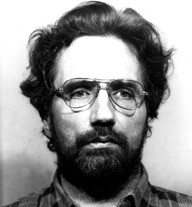
Gary Heidnik
Murderer Brian Kevin Rosenfeld
Murderer · USA · 1985
Brian Kevin Rosenfeld Brian Kevin Rosenfeld was sentenced to three concurrent l…
23 victims
Brian Kevin Rosenfeld
Murderer · USA · 1985
Brian Kevin Rosenfeld Brian Kevin Rosenfeld was sentenced to three concurrent l…
23 victims
 Yahweh ben Yahweh
Murderer · USA · 1980
Yahweh ben Yahweh was born and legally named Hulon Mitchell Jr. (October 27, 19…
23 victims
Yahweh ben Yahweh
Murderer · USA · 1980
Yahweh ben Yahweh was born and legally named Hulon Mitchell Jr. (October 27, 19…
23 victims
 Russell Ellwood
Murderer · USA · 1991
Russell Ellwood was a former taxi driver. Authorities suspected him of killing…
20 victims
Russell Ellwood
Murderer · USA · 1991
Russell Ellwood was a former taxi driver. Authorities suspected him of killing…
20 victims
 Domingo Salazar
Mass murderer · Philippines · 1956
Domingo Salazar was resentenced to reclusion perpetua on June 30, 1959, after h…
16 victims
Domingo Salazar
Mass murderer · Philippines · 1956
Domingo Salazar was resentenced to reclusion perpetua on June 30, 1959, after h…
16 victims
 T.J. Jones
Homicide · USA · 1994
T.J. Jones was a juvenile at the time of the offences and was executed by letha…
1 victim
T.J. Jones
Homicide · USA · 1994
T.J. Jones was a juvenile at the time of the offences and was executed by letha…
1 victim
 Edwin Snelgrove
Murderer · USA · 1983
Edwin “Ned” Snelgrove was born Edwin Fales Snelgrove, Jr. on August 9, 1960. He…
2 victims
Edwin Snelgrove
Murderer · USA · 1983
Edwin “Ned” Snelgrove was born Edwin Fales Snelgrove, Jr. on August 9, 1960. He…
2 victims
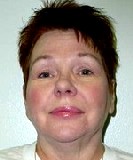 Virginia Caudill
Murderer · USA · 1998
Virginia S. Caudill (DOB 9-10-60) was sentenced to death on March 24, 2000 in F…
1 victim
Virginia Caudill
Murderer · USA · 1998
Virginia S. Caudill (DOB 9-10-60) was sentenced to death on March 24, 2000 in F…
1 victim
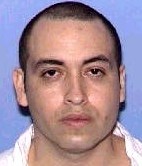 Humberto Garza
Mass murderer · USA · 2003
Name: Humberto Garza · Also known as: “Gallo” · TDCJ number: 999495 · Date of b…
6 victims
Humberto Garza
Mass murderer · USA · 2003
Name: Humberto Garza · Also known as: “Gallo” · TDCJ number: 999495 · Date of b…
6 victims
- Gender
- male
- Country
- USA
- Location
- Philadelphia County, Pennsylvania, USA
- Date of birth
- November 22, 1943
- Age at first offence
- 43
- Characteristics
- cannibalism, kidnapping, torture, serial rapist
- Victim profile
- Deborah Dudley, 23, and Sandra Lindsay, 24
- Method of murder
- Starvation, excess torture / Electrocution
- Date(s) of murder
- 1986 - 1987
- Years active
- 1986–1987
- Date of arrest
- March 24, 1987
- Status
-
Executed
Executed by lethal injection in Pennsylvania on July 6, 1999
Case record: Gary Heidnik
Status
Gary Heidnik was executed by lethal injection in Pennsylvania on July 6, 1999.
Background
Gary Michael Heidnik (November 22, 1943 – July 6, 1999) was an American criminal who kidnapped women and kept them prisoner in his Philadelphia, Pennsylvania basement. He was often referred to as a serial killer, although the material described that he committed only two murders and would not fit the standard FBI definition of a serial killer as it required “three or more murders” to classify as serial killer.
Early life and education
Heidnik was born to Michael and Ellen Heidnik in Eastlake, Ohio, and was raised in the Cleveland suburb. Heidnik dropped out of public high school in the ninth grade and attended Staunton Military Academy for two years, leaving before graduation. He left school again and joined the Army.
Heidnik served as a medic in the Army for 14 months (1961–62) before being honorably discharged with a medical disability. His official diagnosis was “schizoid personality disorder”. When he was 27, his mother Ellen committed suicide.
In popular background details, Heidnik was described as a former nurse and an Army veteran, and as the self-professed leader of his own church. The material described that he played the stock market and became financially secure. It also described that he had an IQ of 148.
Marriage and relationships
Heidnik used a matrimonial service to meet his future wife. Betty arrived from the Philippines in September 1985 and married Heidnik in Maryland on October 3, 1985.
The material described that the marriage rapidly deteriorated and that Betty found Heidnik in bed with three other women. It also described that he forced her to have sex with them. It stated that he beat and raped her until she left him three months later.
The material described that Heidnik impregnated Betty during their short marriage, and that he was never known to have had any kind of relationship with his son.
Other details
Church and financial activity
The material described that Heidnik registered the United Church of the Ministers of God and installed himself as “Bishop” Heidnik. It described that he had an ID card as Bishop Heidnik, in a Roman collar.
It described that with checks he was getting from the Army and Social Security, he started investing the money in his church’s name. It described that he invested in Playboy and later lost money on Crazy Eddie, and that he changed $1,500 in investment money into three-quarters of a million dollars.
The material included a letter to his stockbroker:
“Dear Mr. Kirkpatrick … I would prefer you send church mail to the United Church of the Ministers of God, care of Bishop Gary M. Heidnik. … I saw that Tastykake hit eleven yesterday. I hope we got our two thousand shares that I previously ordered. Thank you. Respectfully, Bishop Gary Heidnik.”
It also described that he set up an account with $1500 dollars in the name of “United Church of the Ministers of God,” to avoid taxes, and that at the time of his final arrest he had over $550,000 dollars in his bank and brokerage accounts. Testimony from a financial advisor was used to prove competence.
It stated that testimony from his Merrill Lynch financial advisor, Robert Kirkpatrick, was used to prove competence, and included Kirkpatrick’s quoted statement:
“an astute investor who knew exactly what he was doing.”
The offence
Heidnik kidnapped women and kept them prisoner in his Philadelphia, Pennsylvania basement. The material described that from November 1986 he abducted six women and held them in the basement of his house in Philadelphia that he shared with his longtime friend David Stec, and that the captives were sexually abused, beaten, and tortured in front of each other. It also described that one of the women died of starvation, excess torture, and an untreated fever.
Victims named in the material
The material named the following women as victims/captives:
- Josefina Rivera (a captive who later escaped)
- Sandra Lindsay (described as one of the women he held)
- Deborah Dudley (described as another woman he held)
- Lisa Thomas
- Debbie (as a name used for a captive; the material identified her by “Debbie” and described her as having been placed in the hole and later beaten)
- Jacquelyn Askins (also referenced as Donna “Jacquelyn’s alias” in one narrative)
- Agnes Adams (named in the material as a woman who was placed in the basement after being taken)
- Tracey Lomax’s sister and Sandy (Sandra Lindsay described as “Sandy” in the material)
- Tony’s involvement was described in the narrative, but he was not presented as a victim.
The material also stated that he committed only two murders while otherwise describing torture and abuse of multiple captives.
Kidnapping and confinement method
The material described confinement in a basement hole and restraints including handcuffs and clamps that were described as being used to hold mufflers on. It described that Heidnik used a board over the victim in the hole and covered it with plywood and heavy weights in later punishments.
It described that he dug a four-foot-deep pit that he would throw women in at night; the pit was covered with plywood and heavy weights.
Investigation
Escape and discovery leading to search warrant
Josefina Rivera escaped on March 24, 1987. The material described that she convinced Heidnik to let her go out by promising to bring back another captive, but instead she went to authorities who secured a search warrant.
The material described that Heidnik was arrested and at his arraignment he claimed that the women were already in the house when he moved in.
Police response and scene details
The material described police officers responding to Josefina Rivera and meeting her at 6th and Oxford. It stated that she told officers about being held captive and chained up in the basement, and that another officer stated she said Heidnik was up at 6th and Girard and a Cadillac matched her description. It described that officers found a Cadillac and ordered Heidnik out of his car.
It described that the girl came down and identified him and said he raped her and killed two other girls and had her eating bones, and that other girls were still in the cellar down in a hole.
The material described that the house had metal doors, windows with bars, and a crucifix in the bars. It also described that television was on playing loud.
It described that officers went to the cellar, found half-naked girls chained and shouting “We’re saved, we’re saved,” and that they required bolt cutters from a firehouse.
Evidence described at the scene
The material described police finding:
- body parts in the freezer, including a human forearm
- an aluminium pot on the stove badly scorched with a yellowish fatty substance
- an industrial food processor used possibly for raw meat
- a charred piece of bone resembling a human rib in the stove
- a closet full of pornographic magazines featuring black women.
It described that investigators searched the house and yards, excavated front and back yards, but did not find any further human remains.
Arrest
Heidnik was arrested after Josefina Rivera escaped on March 24, 1987 and authorities secured a search warrant. At his arraignment, he claimed that the women were already in the house when he moved in.
Trial
Preliminary hearing and charges referenced
The material described that on April 23, 1987, Heidnik appeared in court for the first time since his arrest. The material stated that he was charged with murder, kidnapping, rape, aggravated assault, involuntary deviate sexual intercourse, indecent exposure, false imprisonment, unlawful restraint, simple assault, indecent assault and other associated offences.
Trial dates and conviction
The material described that the main trial began on June 20, 1988 in front of a packed courtroom.
It described that the jury foreperson was Betty Ann Bennett, and that after 16 hours of deliberation over two-and-a-half days, the jury returned verdicts.
The material described the verdicts:
- For the murder of Deborah Dudley, guilty in the first degree.
- For the murder of Sandra Lindsay, guilty in the first degree.
It stated that by the time Bennett finished reading, Heidnik was convicted on eighteen charges, including:
- Two counts of first-degree murder
- Five counts of rape
- Six counts of kidnapping
- Four counts of aggravated assault
- One count of involuntary deviate sexual intercourse.
Jury and sentencing decision
The material described that Judge Lynne Abraham retired the jury until nine a.m. the following day, and that by 12:15 p.m. the next day the jury made a unanimous decision that Heidnik should be sentenced to death for the murders of Deborah Dudley and Sandra Lindsay.
Competence/insanity dispute and excluded testimony
The material described that the trial involved multiple expert witnesses and disputes regarding mental competence and insanity.
It stated that Heidnik repeatedly denied all allegations of mistreatment of his captives and claimed that Sandra Lindsay was killed by the other captives for being a lesbian.
The material included the defence attorney’s remark about the presiding judge and later described the judge as Lynne Abraham. It included a statement by Heidnik’s defence attorney A. Charles Peruto Jr. that addressed Heidnik’s wish and denied blocking the execution:
“He spent most of the afternoon quiet - he's either lying in bed or pacing.”
(It also included additional Peruto quotations elsewhere, including this statement attributed to Peruto at the time of execution arguments in the narrative; see Aftermath section for the execution-related material.)
The material also included an item about Dr. Clancy McKenzie refusing to answer direct questions and then giving a key opinion:
“At the time of the offences, did Gary Heidnik know the difference between right and wrong?” — “No, he did not.”
The material described that the defence requested instructions relating to Josefina Rivera possibly being an accomplice and that Judge Abraham answered she would do so as long as it was understood that it would indicate to the jury that if Heidnik was capable of enlisting the aid of an accomplice then he was clearly not insane. It stated that the defence wisely decided not to pursue the point.
The material described that Judge Abraham refused to admit most of Jack Apsche’s testimony on Heidnik’s mental history, ruling it inadmissible, and that Jack Apsche described being tortured on the stand in his quoted statement:
“They tortured me for quite a while on the stand. The bottom line is, he had 22 legitimate hospitalizations for mental problems. Diagnoses included paranoid schizophrenia, a ton of psychotropic medications, he had been examined by hundreds of MD and Ph.D. types over the years, and in the suicide attempt before he committed his crime, I think he took over 1,000 milliliters of Thorazine, drank a quart of vodka, and put a hose inside his car. That’s not a real suicide attempt? When he was discharged — and he did the first girl not too long after that — he said something bad is going to happen. He had paranoid delusions that he probably maintained for the rest of his life.”
The material described a broker testimony from Robert Kirkpatrick, and provided the quoted statement:
Appeal history referenced during trial narrative
The material described that the Third Circuit heard the case’s long appellate history and considered Heidnik’s competency. It described that Judges Richard L. Nygaard and Samuel A. Alito Jr. authored an unsigned 4-page majority opinion and that Judge Theodore A. McKee dissented because of the “hurried manner” of the decision and referenced concession about mental condition not being different from 1997.
It included a quoted statement from the majority and dissent narrative:
“the factual findings regarding Heidnik's competency are adequately supported by the record.”
It described that because Heidnik was deemed competent to waive his appeal rights, his daughter did not have legal standing to appeal over her father’s objections, and that McKee dissented because of the “hurried manner” and referenced delusional perception and stated:
“It may well be that today we are writing the final chapter of the terror that was Heidnik,”
It also quoted Chief Justice of the Supreme Court of Pennsylvania as:
“in my view is insane [and] I cannot stand by and say nothing while an insane person is put to death by the state contrary to the mores of civilized society.'”
Additionally, the material included quoted arguments from Deputy Philadelphia District Attorney Ronald Eisenberg and Billy H. Nolas, but did not provide quoted words from them in the text.
Sentencing
Heidnik was sentenced to death for the murders of Deborah Dudley and Sandra Lindsay. The material described that he was incarcerated at the State Correctional Institution at Pittsburgh.
In January 1999, Heidnik attempted suicide with an overdose of prescribed thorazine.
Appeals
The material described that appeals included actions before the U.S. Third Circuit Court of Appeals and the U.S. Supreme Court, including an effort by his daughter Maxine Davidson White. It described that a panel of the U.S. Court of Appeals for the Third Circuit declined to halt the execution in a 2-1 vote, and that White asked the full Third Circuit Court to consider the case and then filed an appeal with the U.S. Supreme Court.
The material also stated that the Supreme Court notified the governor’s office shortly before 10 p.m. that it would not intervene.
Timeline
- 1961–62 — Heidnik served as a medic in the Army and was honorably discharged with a medical disability.
- 1962 — Heidnik was sent back to the states and later released from the Army on medical grounds and given a 100% disability pension.
- 1962 — His official diagnosis was “schizoid personality disorder”.
- 1976 — Heidnik was charged with aggravated assault and carrying an unlicensed pistol after shooting the tenant of a house he offered for rent, grazing his face.
- November 1978 — The case went to trial and Heidnik was found guilty and sentenced to three to seven years in jail.
- April 1983 — Heidnik was released under the supervision of a state sanctioned mental health program.
- 1986 — Heidnik was arrested and charged with assault, indecent assault, spousal rape and involuntary deviant sexual intercourse; the charges were later dismissed when Betty failed to appear for the preliminary hearing.
- November 1986 — Heidnik abducted six women and held them in the basement of his house in Philadelphia.
- 1987 — Josefina Rivera escaped on March 24, 1987; Heidnik was arrested after the authorities secured a search warrant.
- March 24, 1987 — Heidnik was arrested following Josefina Rivera’s escape.
- 1988 — Convicted of two counts of murder; he was sentenced to death.
- June 20, 1988 — The main trial began.
- June 30, 1988 — The jury returned verdicts including first-degree guilty verdicts for the murders of Deborah Dudley and Sandra Lindsay.
- January 1999 — Heidnik attempted suicide with an overdose of prescribed thorazine.
- April 14, 1997 — Heidnik gave a statement at a stay of execution hearing refusing to appeal.
- May 12 (1995) — Gov. Ridge signed a death warrant for Heidnik.
- July 6, 1999 — Heidnik was executed by lethal injection.
Outcome
Heidnik was convicted and sentenced to death, and he was executed by lethal injection in Pennsylvania on July 6, 1999.
Aftermath
Execution day details and final moments
The material described that the execution was carried out after the rejection of last-minute appeals to the U.S. Third Circuit Court of Appeals in Philadelphia and the U.S. Supreme Court by Heidnik's daughter, who fought for years to save Heidnik despite his willingness to die.
It stated that Heidnik was pronounced dead around 10:30 p.m. at the State Correctional Institution at Rockview, and that the scheduled 10 p.m. execution had been delayed because it was shortly before 10 when the Supreme Court said it would not intervene in the case.
It stated that Heidnik spent part of his last day listening to country music. It stated that Heidnik was cooperative and that, in the holding cell, he spent most of the afternoon quiet or pacing. It provided a quote attributed to the state Department of Corrections spokesman Michael Lukens:
It described that at 4:45 p.m. Heidnik was taken to a visiting area and spent an hour with his daughter, and that afterwards he had his final meal.
It described that witnesses scheduled to observe the execution included 4 of his victims, not identified, who were to observe from a separate room not visible to the other witnesses.
The material described that Heidnik still insisted that he was innocent but that he wanted to be executed, saying that killing an innocent man might end the death penalty. It provided a quote attributed to his lawyer, A. Charles Peruto Jr.:
“Heidnik still insisted that he was innocent but that he wanted to be executed, saying that killing an innocent man might end the death penalty.”
It also described that Peruto said he had followed his client’s wishes and had done nothing to block the execution, and it included a quote about Heidnik’s last day and execution viewing but without additional verbatim lines beyond the Lukens quote and the Peruto line above.
Statement at stay of execution hearing
The material included a direct statement attributed to Gary Heidnik in a stay of execution hearing on April 14, 1997:
“You people think I committed murders that I have not committed. And I have refused to appeal my case. I still refuse — even though I can prove my innocence, right, I still refuse to appeal my case. I resent this kind of shit being done to a disabled veteran.”
Victim-related civil proceedings mentioned
The material described that Jacquelyn Askins, Agnes Adams and Lisa Thomas instituted civil proceedings with Rivera to gain access to the funds in Heidnik’s Merrill Lynch account and divide them equally between them as criminal compensation. It also stated that other parties including the Peace Corps and the IRS filed for access to the funds.
Missing repeats and correction of outcome information
The material described that Heidnik did not fight his execution, but his 21-year-old daughter did and that a stay was blocked after appellate decisions.
It also stated that Heidnik became the 1st Pennsylvania prisoner executed since 1995 and that Keith Zettlemoyer and Leon Moser were put to death in 1995, with those described as the first executions in the state since 1962.
Spotted an error, or have more information about this case?