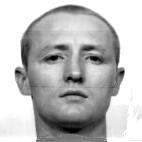
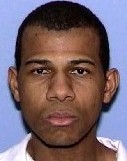
John Christopher Sawyers
Murderer Brian Kevin Rosenfeld
Murderer · USA · 1985
Brian Kevin Rosenfeld Brian Kevin Rosenfeld was sentenced to three concurrent l…
23 victims
Brian Kevin Rosenfeld
Murderer · USA · 1985
Brian Kevin Rosenfeld Brian Kevin Rosenfeld was sentenced to three concurrent l…
23 victims
 Marvin Gray
Murderer · USA · 1975
Marvin Gray was convicted killer who claimed responsibility for 23 slayings and…
23 victims
Marvin Gray
Murderer · USA · 1975
Marvin Gray was convicted killer who claimed responsibility for 23 slayings and…
23 victims
 Yahweh ben Yahweh
Murderer · USA · 1980
Yahweh ben Yahweh was born and legally named Hulon Mitchell Jr. (October 27, 19…
23 victims
Yahweh ben Yahweh
Murderer · USA · 1980
Yahweh ben Yahweh was born and legally named Hulon Mitchell Jr. (October 27, 19…
23 victims
 Russell Ellwood
Murderer · USA · 1991
Russell Ellwood was a former taxi driver. Authorities suspected him of killing…
20 victims
Russell Ellwood
Murderer · USA · 1991
Russell Ellwood was a former taxi driver. Authorities suspected him of killing…
20 victims
 Terri-Lynne McClintic
Murderer · Canada · 2009
Victoria Elizabeth Marie Stafford, an eight-year-old Canadian girl, was abducte…
1 victim
Terri-Lynne McClintic
Murderer · Canada · 2009
Victoria Elizabeth Marie Stafford, an eight-year-old Canadian girl, was abducte…
1 victim
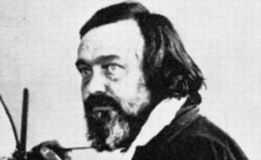 Richard Dadd
Homicide · United Kingdom · 1843
Richard Dadd was found unfit to plead and was sent to Bethleham Hospital at Sou…
1 victim
Richard Dadd
Homicide · United Kingdom · 1843
Richard Dadd was found unfit to plead and was sent to Bethleham Hospital at Sou…
1 victim
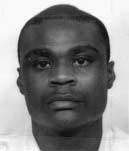 Alva Curry
Murderer · USA · 1991
Alva Curry was executed by lethal injection in Texas on January 28, 2003, and w…
2 victims
Alva Curry
Murderer · USA · 1991
Alva Curry was executed by lethal injection in Texas on January 28, 2003, and w…
2 victims
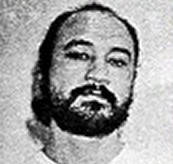 Luis Morine Mata
Murderer · USA · 1977
Luis Morine Mata and his brother, Alonzo, were at their Phoenix apartment with…
1 victim
Luis Morine Mata
Murderer · USA · 1977
Luis Morine Mata and his brother, Alonzo, were at their Phoenix apartment with…
1 victim
 Teresa Lewis
Murderess · USA · 2002
Teresa Wilson Bean Lewis was convicted of capital murder for hire for arranging…
2 victims
Teresa Lewis
Murderess · USA · 2002
Teresa Wilson Bean Lewis was convicted of capital murder for hire for arranging…
2 victims
- Gender
- male
- Country
- USA
- Location
- Harris County, Texas, USA
- Date of birth
- 1958
- Age at first offence
- 25
- Characteristics
- robbery, abuse, mentally ill
- Victim profile
- Ethyl Delaney (female, 67)
- Method of murder
- Beating with a cast-iron skillet
- Date(s) of murder
- February 2, 1983
- Years active
- 1983
- Date of arrest
- —
- Status
-
Executed
Executed by lethal injection in Texas on May 18, 1993
Case overview
John Christopher Sawyers was convicted by a jury of capital murder and sentenced to death. He was executed by lethal injection in Texas on May 18, 1993.
Ethyl Delaney, a 67-year-old widow, was murdered on February 2, 1983. Sawyers broke into Delaney’s home, stole money, three rings, and her car, and forced her into her bedroom. Once inside the house, he ripped off her clothes, slapped her, and beat her in the head four times with a cast-iron skillet.
Sawyers was intoxicated at the time of the murder. The jury found that this was insufficient for a mistrial.
After his arrest, Sawyers signed a written statement recounted the details of the crime. The statement was introduced at trial, and the jury found him guilty of capital murder. At sentencing, the jury answered yes to both special issues submitted to it, and the trial court sentenced Sawyers to death.
Timeline
- February 2, 1983 — Sawyers went to Ethel Delaney’s house on Ojeman Road, beat her in the head four times with a cast-iron skillet, and took $30, three rings, and her car.
- February 2, 1983 — Delaney was murdered in Houston.
- May 25, 1983 — Sawyers was sentenced.
- March 23, 1993 — The United States Court of Appeals for the Fifth Circuit issued its decision in John Christopher Sawyers, Petitioner-appellant, v. James A. Collins, Director, Texas Department of Criminal Justice, Institutional Division, Respondent-appellee (986 F.2d 1493).
- April 21, 1993 — Rehearing and rehearing en banc were denied.
- May 18, 1993 — Sawyers was executed by lethal injection in Texas and pronounced dead at 12:23 a.m.
- Two days before May 18, 1993 — The case went to the Supreme Court and a stay of execution was denied.
The offence
On February 2, 1983, Sawyers forced neighbor Ethyl Delaney into her bedroom after breaking into her home. He took $30, three rings, and her car.
Once inside Delaney’s house, Sawyers ripped off her clothes, slapped her, and beat her in the head four times with a cast-iron skillet. After the skillet broke on the fourth hit, Sawyers stated that blood started coming out of Delaney’s head so he assumed she was dying. Sawyers then took Delaney’s purse, where he found her car keys with the rings and some money, and left the house closing the door behind him. He took her car and drove straight to the pawn shop and pawned the rings for $200.00. He then went and picked up Desma Hejl and Carl Peterson and drove around and had a wreck in the car later that night.
Verbatim confession statement
On Wednesday February 2nd, 1983, I went to Ethel Delaney's house on Ojeman Road. I went there to talk to her to make up my mind whether or not I should steal her car from her and to decide whether or not I should murder her. I decided I was going to murder her.... I went to the kitchen and I grabbed a cast iron skillet from under the stove and went back into the bedroom and hit her on the head with it four times. The skillet broke on the fourth hit, the handle broke on it. Blood started coming out of her head so I assumed she was dying. I took the frying pan back to the kitchen and put it under the stove along with the broken handle. I went back to the bedroom and found her purse, her car keys were in there with the rings and some money, it was over thirty dollars. I took the purse and left the house closing the door behind me. I took her car and I drove straight to the pawn shop and pawned the rings for $200.00. Then I went and picked up Desma Hejl and Carl Peterson and we went riding around and I had a wreck in the car later that night.
Trial Record, vol. XVIII, at 36 (State's Exhibit 34).
Victim
Ethyl Delaney was a 67-year-old widow of Houston. Delaney lived next door to Sawyers in Northwest Houston. Delaney lived alone, and she was a notary public and property manager. Delaney previously notarized some of Sawyers’ personal papers. Delaney was the mother of Judge Joe Delaney of Bryan.
Investigation and arrest
Sawyers was arrested for Delaney’s murder after being involved in a traffic accident while driving her car.
Trial
Sawyers was convicted by a jury of capital murder, and the trial court sentenced him to death.
Evidence and witnesses
Two acquaintances testified about Sawyers’ condition at the Tacoma Car Wash on the day of the murder:
- Desma Hejl testified that when Sawyers arrived at the car wash, he was “pretty well waxed out,” “pretty high,” “too hyper to be normal,” and “talking faster than normal.” Hejl testified that Sawyers said he had taken Mandrex, “a Mexican qualuden,” earlier that day. Hejl testified that Sawyers arrived in a new car, and that both Hejl and Howard testified that Sawyers showed Howard several rings which he claimed to have received from his ex-wife.
- Chrystal Howard testified that when Sawyers arrived at the car wash, “[i]t seemed like he might have been intoxicated or under the influence of something else.”
The evidence revealed that Sawyers had already murdered Ethyl Delaney when he arrived at the car wash.
Sentencing
At the punishment phase, the court submitted two special issues to the jury:
- Issue No. 1 — “Do you find from the evidence beyond a reasonable doubt whether the conduct of the defendant, John Christopher Sawyers , that caused the death of the deceased was committed deliberately and with the reasonable expectation that the death of the deceased or another would result?”
- Issue No. 2 — “Do you find from the evidence beyond a reasonable doubt whether there is a probability that the defendant, John Christopher Sawyers , would commit criminal acts of violence that would constitute a continuing threat to society?”
The jury answered yes to both special issues, and the trial judge sentenced Sawyers to death as directed by the Texas Code of Criminal Procedure.
Sentencing
Sawyers was sentenced to death on May 25, 1983.
Appeals and post-conviction proceedings
Direct appeal
On direct appeal, the Texas Court of Criminal Appeals affirmed Sawyers’ conviction and sentence.
Federal habeas corpus and certificate of probable cause
Sawyers filed a petition for a writ of habeas corpus in federal district court pursuant to 28 U.S.C. § 2254, claiming:
- the special issues submitted to the sentencing jury did not enable them to give mitigating effect to evidence that he was intoxicated at the time of the offense; and
- he was denied effective assistance of counsel because his trial attorney advised his relatives that he probably would not receive the death penalty, and therefore they need not testify in his behalf at sentencing.
The district court denied Sawyers’ petition, holding that both claims failed on the merits, and that the mitigation claim was also procedurally barred. The district court also denied a certificate of probable cause to appeal.
Sawyers then sought a certificate of probable cause to appeal, arguing:
- the mitigating evidence claim was wrongly rejected on procedural default grounds and on the merits; and
- he was entitled to an evidentiary hearing regarding his ineffective assistance claim.
The United States Court of Appeals for the Fifth Circuit reviewed Sawyers’ application and denied his request for a certificate of probable cause to appeal, and vacated the stay of execution.
Penry/intoxication mitigating evidence claim
The case addressed whether the Texas special issues permitted the jury to give mitigating effect to evidence of Sawyers’ intoxication, referencing Penry v. Lynaugh and related Supreme Court decisions.
The district court had rejected Sawyers’ mitigation claim on two alternative grounds:
- procedural bar due to failure to preserve; and
- lack of factual support and/or merits.
The Fifth Circuit concluded that the state-law procedural default did not bar federal review because the Texas Court of Criminal Appeals had not relied on procedural default and instead had denied Sawyers’ Penry claim on its merits alone, citing Selvage v. Collins.
Verbatim quotations from the Fifth Circuit opinion (procedural posture and key propositions)
“Therefore, a sentencing jury in a capital murder case may not be prevented from considering any mitigating evidence presented by the defendant which relates to the defendant's character or the circumstances of the offense.”
“A certificate of probable cause to appeal will not be granted unless the petitioner makes a substantial showing of the denial of a federal right.”
“the petitioner need not show that he should prevail on the merits.... Rather, he must demonstrate that the issues are debatable among jurists of reason; that a court could resolve the issues [in a different manner]; or that the questions are 'adequate to deserve encouragement to proceed further.'”
“When it is unclear whether the state court's judgment rests on state procedural grounds or on the merits of the federal claim, the basis for the state court judgment is identified by applying a presumption fashioned by the Supreme Court in Ylst v. Nunnemaker:”
“Therefore, Sawyers ' Penry claim does not make a substantial showing of the denial of a federal right, and does not justify the issuance of a certificate of probable cause to appeal.”
Ineffective assistance of counsel claim (family witnesses)
Sawyers argued in state habeas proceedings that trial counsel was ineffective by underestimating the likelihood of receiving the death penalty, and advising relatives that they need not testify at sentencing.
The state trial court found:
- counsel never underestimated the likelihood that Sawyers would be sentenced to death;
- counsel did not advise Sawyers’ family that it was unlikely he would receive the death penalty, or that their testimony was unnecessary;
- counsel made a tactical decision not to introduce evidence of Sawyers’ substance abuse and naval service because it was not likely to be regarded as mitigating.
The state habeas trial court also found that Sawyers’ counsel decided not to introduce naval service evidence because Sawyers had been discharged from the navy due to “fraudulent enlistment concerning a prior marijuana charge.”
Sawyers presented affidavits from his relatives. O’Brien submitted an affidavit stating he never advised the family that it was unlikely Sawyers would receive the death penalty and never told them attendance at trial was unnecessary.
The district court presumed the state trial court’s findings were correct and concluded Sawyers “unquestionably received effective assistance of counsel.”
The Fifth Circuit addressed the propriety of an evidentiary hearing in federal court and held that a paper hearing was sufficient in the circumstances presented, concluding no material factual disputes remained unresolved and no evidentiary hearing was required.
Other details
Sawyers’ family and upbringing
Sawyers’ mother died when he was very young. His father was described as a “Right-Wing” minister. Sawyers’ father testified on his behalf during the trial.
Charlie Baird, one of Sawyers’ lawyers, said Sawyers was truly sorry for his actions but did not offer any remorse to the Delaney family.
The narrative also stated that Delaney and Sawyers never came into contact with one another.
Intoxication issues at trial and in post-conviction proceedings
Sawyers was intoxicated at the time of the murder; however, the jury felt this was insufficient for a mistrial.
During federal proceedings, the district court found written findings that there was no evidence that Sawyers was intoxicated at the time he committed the capital murder. It found that at most, the evidence showed that after killing Delaney, he visited friends who believed he was intoxicated or “high,” and that there was no evidence adduced at trial that demonstrated that the capital murder was in any way drug-related.
The Fifth Circuit also addressed the idea of timing and evidence from the confession versus witness testimony, including how Desma Hejl and Chrystal Howard testified that Sawyers still had the rings when he arrived at the Tacoma Car Wash.
Supreme Court and execution stay
The case went to the Supreme Court two days before the execution, but a stay of execution was denied. Sawyers then knew it was all over.
Sawyers was pronounced dead at 12:23 a.m. after being executed by lethal injection on May 18, 1993. His family witnessed his execution. His eyes were closed and he answered “No” for his final statement.
People named in the proceedings and witness testimony
- James A. Collins, Director, Texas Department of Criminal Justice, Institutional Division — respondent-appellee.
- Chief Judge POLITZ, KING, and EMILIO M. GARZA — circuit judges.
- EmiliO M. GARZA — circuit judge authoring the opinion.
- Richard Travathan and Doug O’Brien — trial attorneys.
- Alex Bunin — appeals attorney.
- Charlie Baird — one of Sawyers’ lawyers.
- Desma Hejl — acquaintance/witness.
- Chrystal Howard — acquaintance/witness.
- Desma Hejl and Carl Peterson — were picked up by Sawyers after the pawn shop and went riding around.
- Desma Hejl and Chrystal Howard testified about rings and Sawyers’ condition at the Tacoma Car Wash.
- Judge Joe Delaney of Bryan — related to the victim as Delaney’s son.
- Judge Joe Kegans — presided over the trial and later presided over the state habeas proceeding.
Outcome
Sawyers’ application for a certificate of probable cause to appeal was denied, and the stay of execution was vacated. Sawyers was executed by lethal injection in Texas on May 18, 1993.
Spotted an error, or have more information about this case?