
Sara Kruzan
Homicide Andrea Yates
Homicide · USA · 2001
Andrea Pia Yates (born Andrea Pia Kennedy on July 2, 1964) was a former Houston…
5 victims
Andrea Yates
Homicide · USA · 2001
Andrea Pia Yates (born Andrea Pia Kennedy on July 2, 1964) was a former Houston…
5 victims
 Coleen Thompson
Homicide · USA · 2002
Coleen Thompson was a former intensive care nurse at Shady Grove Adventist Hosp…
5 victims
Coleen Thompson
Homicide · USA · 2002
Coleen Thompson was a former intensive care nurse at Shady Grove Adventist Hosp…
5 victims
 Christine Paolilla
Homicide · USA · 2003
Christine Marie Paolilla was an American woman born on Long Island, New York on…
4 victims
Christine Paolilla
Homicide · USA · 2003
Christine Marie Paolilla was an American woman born on Long Island, New York on…
4 victims
 Melissa Marvin
Homicide · USA · 1999
Melissa Lynn Marvin was a 29-year-old waitress and amateur surfer at the time o…
4 victims
Melissa Marvin
Homicide · USA · 1999
Melissa Lynn Marvin was a 29-year-old waitress and amateur surfer at the time o…
4 victims
 Abby Grason
Homicide · USA · 2004
Abby Grason was a 25-year-old woman of Chicago. Her history included mental ill…
2 victims
Abby Grason
Homicide · USA · 2004
Abby Grason was a 25-year-old woman of Chicago. Her history included mental ill…
2 victims
 Timothy Stuart Ring
Murderer · USA · 1994
Timothy Stuart Ring was a former Department of Corrections officer who particip…
1 victim
Timothy Stuart Ring
Murderer · USA · 1994
Timothy Stuart Ring was a former Department of Corrections officer who particip…
1 victim
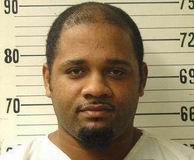 James Stout
Murderer · USA · 1995
James P. Stout and three accomplices were accused of carjacking, abducting and…
1 victim
James Stout
Murderer · USA · 1995
James P. Stout and three accomplices were accused of carjacking, abducting and…
1 victim
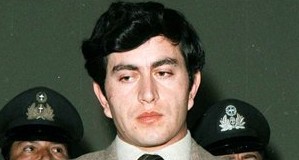 Kyriakos Papaxronis
Serial killer · Greece · 1981
Kyriakos Papaxronis (Κυριάκος Παπαχρόνης) was a serial rapist and murderer, kno…
3 victims
Kyriakos Papaxronis
Serial killer · Greece · 1981
Kyriakos Papaxronis (Κυριάκος Παπαχρόνης) was a serial rapist and murderer, kno…
3 victims
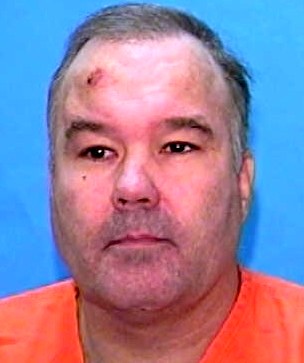 Ray Lamar Johnston
Murderer · USA · 1997
Ray Lamar Johnston was convicted in the Thirteenth Judicial Circuit, Hillsborou…
2 victims
Ray Lamar Johnston
Murderer · USA · 1997
Ray Lamar Johnston was convicted in the Thirteenth Judicial Circuit, Hillsborou…
2 victims
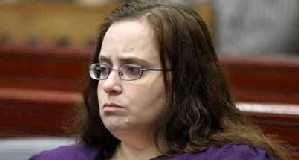 Carolyn Riley
Murderer · USA · 2006
Carolyn Riley was convicted in Plymouth County Superior Court of second-degree…
1 victim
Carolyn Riley
Murderer · USA · 2006
Carolyn Riley was convicted in Plymouth County Superior Court of second-degree…
1 victim
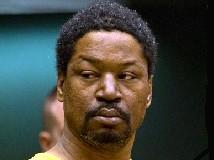 Anthony Kirkland
Serial killer · USA · 1987
Anthony Kirkland (born September 13, 1968) was an American serial killer. In 19…
5 victims
Anthony Kirkland
Serial killer · USA · 1987
Anthony Kirkland (born September 13, 1968) was an American serial killer. In 19…
5 victims
- Gender
- female
- Country
- USA
- Location
- Riverside County, California, USA
- Date of birth
- January 8, 1978
- Age at first offence
- 16
- Characteristics
- juvenile (16), kidnapping, child abuse, sexual abuse, torture, domestic violence, drug addict, arsonist, mentally ill
- Victim profile
- George Gilbert Howard, 36 (her alleged pimp)
- Method of murder
- Shooting
- Date(s) of murder
- March 10, 1994
- Years active
- 1994
- Date of arrest
- 4 days after
- Status
-
Life imprisonment
Sentence commuted to 25 years with the possibility of parole on January 2, 2011; later reduced to 15 years to life, plus four years, on January 18, 2013; granted suitable for parole on June 12, 2013
Case record: Sara Kruzan
Identity and early life
Sara Jessimy Kruzan was born on January 8, 1978. She was raised by her mother in Riverside, California, where she was an honor roll student. Her father was serving long prison terms and she met him only three times during childhood.
During her childhood, Kruzan experienced severe depression, resulting in numerous hospitalizations.
Kruzan experienced abuse and instability in childhood. Her mother was mentally ill, emotionally unstable, and addicted to cocaine. She battered Kruzan and Kruzan’s sister physically and psychologically since they were infants. One of Kruzan’s earliest memories described her mother smacking her across the face until blood splattered from her nose onto a nearby dresser.
Child Protective Services opened an investigation in 1989 due to being notified by Kruzan’s school of bruises on Kruzan’s body. In 1993, Child Protective Services determined it unsafe for Kruzan to reside with her mother.
Kruzan witnessed her father shooting up heroin in a bathroom on an occasion when she met him. When Kruzan was 11 years old, she began leaving home without permission. Her mother physically assaulted Kruzan and forced her out of her residence. At age 11, Kruzan was hospitalized for attempted suicide, and she was sent home rather than being provided adequate safety.
Kruzan was raised with an older sister and a single mother on welfare.
Child-sex trafficking and intimate partner battering
At age 11, Kruzan met George Gilbert “G.G.” Howard. Howard was twenty years her senior. Kruzan stated in court records that, upon their introduction, Howard began grooming her for a life of prostitution. She testified that by the age of 13, she became a victim of human trafficking. Under Howard’s control, Kruzan was forced to work as a child prostitute and subjected to sexual abuse.
Kruzan testified that Howard picked her up while she was walking home from school. Howard bribed Kruzan with ice cream, then took her to his residence where he undressed her and molested her. Kruzan was then indoctrinated into the child-sex trade.
At age 12, Kruzan’s mother set Kruzan up with a 23-year-old “mentor” who furnished Kruzan with alcohol and raped her repeatedly over the course of a year. In the State of California under PC 261.5, sex with a minor was defined as rape.
At age 13, Kruzan was gang raped by three men. Kruzan’s mother refused to allow Kruzan to press charges, insisting it would backfire and that Kruzan had “asked for it”.
Also at age 13, 33-year-old George Gilbert Howard raped Kruzan [PC 261.5] and then immediately began to sexually exploit Kruzan, selling her body for three years in the child-sex trade. Howard threatened Kruzan and set her in dangerous situations, including the dangers of prostitution.
At age 15, Kruzan was hospitalized after surviving a fatal car crash. She was then placed in five or six foster care homes. During the following five months, Kruzan repeatedly ran away in order to return to Howard.
Kruzan was described as being subjected to intimate partner battering, and two key experts concluded that Kruzan suffered effects of intimate partner battering at the time of the shooting and that expert testimony would have affected the outcome. Dr. Linda S. Barnard concluded:
“Sara was suffering from the effects of intimate partner battering in March 1994 and her behaviors and actions were affected – if not controlled by – the years of abuse she endured. By failing to have an expert on intimate partner battering and its effects to explain the many complexities involved in this case, Sara Kruzan’s defense was severely limited.”
Dr. Nancy Kaser-Boyd concluded:
“Ms. Kruzan clearly suffered the common effects of intimate partner battering on the night of the shooting. Most young people [suffering from intimate partner battering and its effects] respond well to therapy and become healthy adults with therapeutic intervention.”
Plans to escape
In November 1993, Kruzan attempted to escape child sex slavery by going to Ontario with a 15-year-old male friend. Kruzan’s mother threatened to report kidnap, leading Kruzan to return to her mother’s neighborhood.
Kruzan’s friend found a place where the two could temporarily stay with the friend’s uncle, James Earl Hampton. Hampton was described as a convicted felon and drug dealer out on parole. It was also stated that “James E. Hampton, Prisoner ID P23654, has since been convicted of rape and attempted murder, and is serving out a life sentence in the State of California.”
Kruzan hoped to borrow money from Howard to get her own apartment. When Hampton caught wind of the plan, he continued his murderous threats and devised a plan for Kruzan.
The offence
In March 1994, when Kruzan was 16, she moved into a Rubidoux-area home belonging to James Earl Hampton.
Kruzan arranged to meet George Gilbert Howard on March 9 for a date and agreed to spend the night with him.
On March 10, Kruzan shot Howard in the neck at close range in a room at the Dynasty Suites Motel. After the shooting, Kruzan took $1,500 from Howard’s wallet and took the keys to Howard’s Jaguar.
Kruzan then went to meet Hamilton and her boyfriend, Johnny Otis in a local supermarket. Howard’s body was discovered by a member of the motel’s housekeeping staff.
Later facts described that Hampton ordered Kruzan to call Howard to arrange that Kruzan and Hampton meet, and Hampton provided Kruzan with a pistol. Hampton brought Kruzan to a third party who would bring Kruzan to meet with Howard. Kruzan and Howard proceeded to a movie theater where Kruzan began to receive several pages from Hampton, who instructed “187” (as Kruzan knew to be the California Penal Code Section for Murder). Howard escorted Kruzan to the Dynasty Suites Hotel where Howard had raped Kruzan on prior occasions.
While Howard paid for the room, Kruzan called Hampton and asked to speak with Kruzan’s friend. Hampton declined to allow it and threatened Kruzan that they would not survive if Kruzan did not follow through with the murder and robbery of Howard.
Passed midnight in the hotel room, Howard put on a pornographic movie and began undressing and molesting 16-year-old Kruzan. It was described that Howard took out a large sex toy and Kruzan dreaded being raped by Howard. When Howard turned to plug the sex toy into the wall, Kruzan shot him. Kruzan took Howard’s money and keys as instructed, yet left behind her purse, identification, and shoes. Kruzan delivered the car and money to Hampton. Hampton held a gun to Kruzan’s head and instructed Kruzan on what to say if questioned. Hampton brought Kruzan to another residence and ordered Kruzan to be locked away in a room for days. After Hampton brought Kruzan to Hampton’s mother’s house, Kruzan was arrested.
Investigation and arrest
Law enforcement officials found Kruzan’s identification card and purse left behind in the motel room. A warrant was issued for Kruzan’s arrest.
Kruzan was arrested in Pomona on March 14, 1994.
During questioning, Kruzan made a confession to the police.
Trial
Kruzan was tried in Riverside County Superior Court with Judge J. Thompson Hanks presiding. The testimony lasted two and a half days.
Kruzan testified that she killed Howard because Hampton had ordered it and had threatened to kill both Kruzan and Kruzan’s mother if Kruzan did not carry out his orders. Kruzan’s defense attorney was David Gunn. It was also stated that Gunn told the court of information provided to the police by Hamilton.
Neither Hamilton nor Otis were charged with the crime due to a lack of legally sufficient corroborating evidence to support Kruzan’s statement. The jurors were not aware that Howard had sexually assaulted, raped, and indoctrinated Kruzan into the child-sex trade.
Freer cautioned jurors not to be swayed by the appearance of an attractive, petite teenager who may not fit their image of a murderer. In addition to the closing arguments, it was stated that no expert witnesses spoke in Kruzan’s defense and that Kruzan agreed to nearly every leading question the prosecutor asked.
A California Youth Authority evaluation concluded Kruzan was amenable to treatment in the juvenile justice system. A local judge, at the urging of the prosecutor Tim Freer, transferred Kruzan to adult court.
It was also stated that a probation officer assigned to Kruzan’s case overlooked PC 190.5, granting court discretion to sentence minors convicted of first degree murder to 25 to life with the possibility of parole. The probation officer incorrectly stated that state law required a life without possibility of parole sentence.
Kruzan had no priors and was described as 16 years old at the time of the shooting and 17 years old at sentencing.
Sentencing
A Riverside Superior Court jury found Kruzan guilty of first degree murder. The verdict affirmed two special circumstances: that Howard was murdered during a robbery, and that Kruzan had been lying in wait to kill Howard. The jury’s findings justified a sentencing of life imprisonment with no possibility of parole.
On Thursday May 11, 1995, a Riverside Superior Court jury of seven women and five men found Kruzan guilty of first degree murder.
On May 10, 1995, Kruzan was sentenced at age 17 to life in prison, plus four years, without possibility of parole.
Kruzan’s sentencing also reflected the conviction of first degree murder [PC 187] of George Gilbert Howard.
Appeals and judicial reform advocacy
Kruzan attracted national attention from individuals and judicial reform groups advocating for a retrial due to her status as a juvenile convicted of murder and sentenced to life without parole.
Some campaigning groups suggested Kruzan was suffering from Battered Person Syndrome.
The National Center for Youth Law spoke out against frequent sentencing of juveniles to life without parole, with Kruzan mentioned as an example.
In February 2009, Human Rights Watch published a video on YouTube featuring Kruzan to highlight a campaign for a ban on sentences of life without parole for juveniles in California.
In November 2010, change.org began a petition to then-current California Governor Arnold Schwarzenegger to grant clemency.
Democratic Senator Leyland Yee stated:
"Life without parole means absolutely no opportunity for release.... It also means minors are often left without access to programs and rehabilitative services while in prison. This sentence was created for the worst of criminals that have no possibility of reform and it is not a humane way to handle children. While the crimes they committed caused undeniable suffering, these youth offenders are not the worst of the worst."
Kruzan’s final appeal was dated July 19, 2012, and it was granted several extensions.
Clemency and later sentence changes
On January 2, 2011, Kruzan was granted clemency by Governor Arnold Schwarzenegger, who commuted her sentence to 25 years with the possibility of parole.
It was stated that on January 18, 2013, a settlement removed Kruzan’s appeal for a new trial and reduced her sentence from first to second degree murder, with a reduction to 15 years to life, plus four years, and that she became eligible for a parole hearing.
On June 12, 2013, Kruzan was found suitable for parole and was awaiting final confirmation from Governor Brown regarding conditions of parole.
Other details
Kruzan was described as a survivor of child molestation, rape, child-sex trafficking, and intimate partner battering.
Sara Kruzan was described as being incarcerated at the Central California Women’s Facility in Chowchilla and later as residing in an honors dorm in a women’s facility in the State of California while awaiting a final decision regarding parole conditions. She had earned a college degree and had been named Woman of the Year by Correctional Officers.
Free Sara Kruzan was founded in 2006 by Kim Deanne. Earth Saylove, a Boston artist, began organizing in 2010. Carrie Christie, a San Diego activist and close ally, came to organize on the ground in California in 2012. The Global Human Rights Campaign to Free Sara Kruzan was restructured in 2011-2012.
It was also stated that organizers launched activities alongside supporters to create a positive public atmosphere in support of Kruzan’s release.
On September 17, 2012, Carrie Christie hand-delivered the change.org petition of over 800 pages and more than 25,000 signatures to the Riverside County District Attorney’s Office.
In October, the campaign’s “Sara Kruzan” bridge barricade prompted the Tense Reunions episode on Dr. Phil.
Additional content described a settlement on January 18, 2013 and asserted that the reduction removed Kruzan’s appeal for a new trial while reducing her sentence.

Spotted an error, or have more information about this case?