
Virginia Larzelere
Murderer Bobbie Sue Terrell
Murderer · USA · 1984
Bobbie Sue Dudley Terrell was a Pinellas County nurse and worked as the night s…
12 victims
Bobbie Sue Terrell
Murderer · USA · 1984
Bobbie Sue Dudley Terrell was a Pinellas County nurse and worked as the night s…
12 victims
 Megan Huntsman
Murderer · USA · 1996
Megan Huntsman was 40 at sentencing. She was a mother of three children who wer…
6 victims
Megan Huntsman
Murderer · USA · 1996
Megan Huntsman was 40 at sentencing. She was a mother of three children who wer…
6 victims
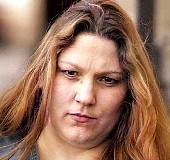 Angela Johnson
Murderer · USA · 1993
Angela Jane Johnson was convicted in federal court of aiding and abetting the m…
5 victims
Angela Johnson
Murderer · USA · 1993
Angela Jane Johnson was convicted in federal court of aiding and abetting the m…
5 victims
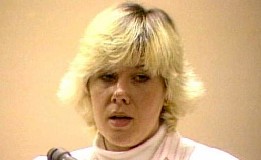 Catherine May Wood
Murderer · USA · 1987
Catherine May Wood was an American caregiver who worked at the Alpine Manor Nur…
5 victims
Catherine May Wood
Murderer · USA · 1987
Catherine May Wood was an American caregiver who worked at the Alpine Manor Nur…
5 victims
 Michele Kalina
Murderer · USA · 1996
Michele Kalina pleaded guilty to murder for one of five infants she initially w…
5 victims
Michele Kalina
Murderer · USA · 1996
Michele Kalina pleaded guilty to murder for one of five infants she initially w…
5 victims
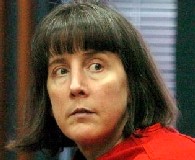 Amy Bishop
Murderer · USA · 1986
Amy Bishop — biology professor and perpetrator · James Anderson — Bishop’s husb…
4 victims
Amy Bishop
Murderer · USA · 1986
Amy Bishop — biology professor and perpetrator · James Anderson — Bishop’s husb…
4 victims
 Bai Ningyang
Mass murderer · China · 2006
Bai Ningyang carried out an attack at a kindergarten in Shiguan village in Gong…
12 victims
Bai Ningyang
Mass murderer · China · 2006
Bai Ningyang carried out an attack at a kindergarten in Shiguan village in Gong…
12 victims
 Brian Burdett
—
Brian Burdett fue condenado a muerte por la muerte de su mujer, Moira Burdett.…
Brian Burdett
—
Brian Burdett fue condenado a muerte por la muerte de su mujer, Moira Burdett.…
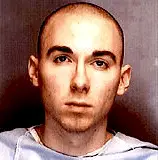 Benjamin Nathaniel Smith
Murderer · USA · 1999
Benjamin Nathaniel Smith committed suicide by shooting himself on July 4, 1999.…
2 victims
Benjamin Nathaniel Smith
Murderer · USA · 1999
Benjamin Nathaniel Smith committed suicide by shooting himself on July 4, 1999.…
2 victims
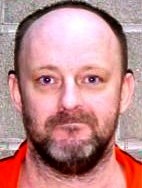 Lemuel Prion
Murderer ? · USA · 1992
October 24, 1992 — The arms of the 21-year-old female victim were discovered in…
1 victim
Lemuel Prion
Murderer ? · USA · 1992
October 24, 1992 — The arms of the 21-year-old female victim were discovered in…
1 victim
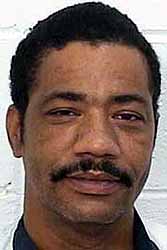 Jose Martinez High
Homicide · USA
Jose Martinez High · July 26, 1976 — Jose High, Nathan Brown and Judson Ruffin…
1 victim
Jose Martinez High
Homicide · USA
Jose Martinez High · July 26, 1976 — Jose High, Nathan Brown and Judson Ruffin…
1 victim
- Gender
- female
- Country
- USA
- Location
- Edgewater, Volusia County, Florida , USA
- Date of birth
- December 27, 1952
- Age at first offence
- 39
- Characteristics
- parricide, murder-for-hire, to collect insurance money
- Victim profile
- Norman Larzelere, 40 (her husband)
- Method of murder
- Shooting (shotgun)
- Date(s) of murder
- March 8, 1991
- Years active
- 1991
- Date of arrest
- May 5, 1991
- Status
-
Sentenced to death
Sentenced to death on May 11, 1993; resentenced to death on August 1, 2008; conviction upheld on direct appeal and habeas corpus petition denied
Case information
Virginia Gail Larzelere (white) was born on 12-27-1952 and was 38 years old at the time of the crime. The case involved the murder of white male (her husband), Norman Larzelere, about age 40.
Virginia Larzelere was indicted in the Seventh Judicial Circuit, Volusia County. The case listed:
- DC#: 842556
- Volusia County, Seventh Judicial Circuit
- Case#: 91-2561CFAES
- Sentencing judge: The Honorable John W. Watson, III
- Trial: The Honorable John W. Watson, III
- Trial attorney: John Wilkins – Private Attorney
- Direct appeal: Christopher S. Quarles – Assistant Public Defender Attorney
- Collateral appeals: David D. Hendry – CCRC-M
Timeline
- 03/08/91 — A masked gunman entered Norman Larzelere’s dental office, chased Norman, shot him with a shotgun, and fled; Norman died shortly after being shot.
- 05/11/93 — Virginia Larzelere was sentenced to death.
- 05/21/93 — Direct appeal was filed to the Florida Supreme Court (FSC# 81,793, 676 So. 2d 394).
- 03/28/96 — The Florida Supreme Court affirmed conviction and sentence.
- 07/11/96 — Rehearing denied by the Florida Supreme Court.
- 08/12/96 — Mandate issued by the Florida Supreme Court.
- 10/09/96 — Petition for Writ of Certiorari to the United States Supreme Court (USSC# 96-6345, 519 U.S. 1043; 117 S. Ct. 615; 136 L. Ed. 2d 539).
- 12/16/96 — Petition denied by the United States Supreme Court.
- 11/25/97 — A 3.850 motion for postconviction relief was filed in State Circuit Court (CC# 91-2561-CF-A-ES).
- 08/31/00 — Amended postconviction motion filed.
- 01/14/03 — Second amended motion filed.
- 03/24/05 — Death sentence overturned and remanded for resentencing by Judge Watson.
- 04/11/05 — The State of Florida filed a 3.850 appeal (FSC# 05-611).
- 02/28/08 — The Florida Supreme Court released its opinion affirming the order insofar that it vacated the death sentence and remanded for a new sentencing proceeding before a jury.
- 04/21/08 — Mandate issued by the Florida Supreme Court.
- 08/01/08 — Circuit court resentenced Virginia Larzelere to life in prison with the possibility of parole in 25 years.
- 01/30/06 — Petition for Writ of Habeas Corpus to the Florida Supreme Court filed (FSC# 06-148).
- 02/28/08 — Habeas corpus petition denied.
- 03/14/08 — Motion for Rehearing filed.
- 04/03/08 — Motion for Rehearing denied.
- 04/21/08 — Mandate issued on the habeas corpus matter.
Background
Virginia Larzelere and her husband, Norman Larzelere, lived in Edgewater near Daytona Beach. Norman Larzelere was a dentist, and Virginia Larzelere worked as the office manager for Norman’s dentistry practice.
Virginia Larzelere was married to Norman Larzelere. Evidence at trial described Norman as the victim of a murder by a masked gunman.
A patient, a dental assistant, and Virginia were all present in the office at the time of the shooting.
The offence
During the afternoon of 03/08/91, a masked gunman entered the dental office. The gunman chased Norman down and shot him with a shotgun and then fled. Norman died shortly after being shot.
A patient who witnessed the murder heard the victim say just after he was shot, “Jason, is that you?”
The State theorized that Virginia Larzelere and her son, Jason Larzelere, conspired to kill Norman in order to cash in approximately $2 million in life insurance and $1 million in assets.
Virginia Larzelere took out seven separate insurance policies on Norman the year before his death, and the State described that she increased the amount payable in the six months before the murder from $1 million to $2 million.
The State presented evidence that in the days after the murder, Jason and Virginia reenacted the murder, with Virginia playing the role of the victim and Jason playing the role of the gunman.
Investigation
Two different men testified that they had engaged in affairs with Virginia and that she had asked them to assist her in killing her husband.
Two additional witnesses, Steven Heidle and Kristen Palmieri, received immunity and testified to incriminating statements and actions made by Jason and Virginia concerning the murder.
The immunity witnesses testified that:
- the night before the murder, Virginia sent Jason to pick up documents from a storage unit containing Norman’s life insurance policies and will;
- after the murder, Virginia said to Jason, “Don’t worry, you’ll get your $200,000 for taking care of business.”;
- Virginia told them that Jason “screwed up” by showing up at Norman’s practice half an hour late; that if Jason had arrived on time at 12:30 p.m., the dental assistant and the patient would not have been present;
- Virginia directed them to get rid of a .45 handgun and a shotgun by encasing them in concrete and disposing of them in a creek;
- in the days following the murder, Jason and Virginia reenacted the murder with Jason playing the role of the gunman and Virginia playing the role of the victim.
With Heidle’s assistance, police recovered the guns from the creek. No conclusive determination was made as to whether the shotgun was the weapon used in the murder.
Virginia gave several different versions of the murder in her testimony to the police, including changing descriptions of the gunman and the getaway car.
Virginia filed a fraudulent will designating her as the sole heir to the estate shortly after the murder. The will was submitted on the same day that one of the biggest insurance policies went into effect.
Arrest
Virginia and her son, Jason, were charged with the murder.
Trial
Virginia Larzelere and her son, Jason Larzelere, were tried separately. Virginia was tried first.
Indictment and charges
The trial record included indictment counts stating:
- Count I: First-Degree Murder
State’s evidence
The State presented testimony and evidence including:
- affairs with Virginia and statements that she asked for help killing her husband;
- testimony from Heidle and Palmieri about statements made by Virginia and actions involving documents, the disposal of guns, and reenactment of the murder;
- evidence that Virginia obtained seven life insurance policies on Norman over the prior six-year period and doubled the amount payable in the six months before the murder;
- evidence that the victim assisted in obtaining the policies but that Virginia was the dominant motivator in pursuing them;
- evidence that Virginia gave false statements and information to obtain the policies, including representations to insurance agents about canceled pre-existing policies, policies not existing, or replacing new policies;
- evidence of a fraudulent will leaving the victim’s entire estate to Virginia and the timing of its submission.
Defense and disputes at trial
Virginia testified and gave several conflicting versions of the murder to police, including differing descriptions of the gunman and the getaway car.
In her defense, evidence was presented attempting to show:
- inconsistent versions were due to distress after losing her husband;
- Norman helped obtain the insurance policies;
- Virginia’s lovers did not think she was serious about having her husband killed;
- Heidle and Palmieri were not believable and perjured themselves;
- Heidle and Palmieri were unable to obtain incriminating statements from Virginia after police requested that.
A former codefendant, Jason Larzelere, was tried separately and acquitted.
Witness statements (verbatim quotes)
Patient’s report of the victim’s words: “Jason, is that you?”
Virginia’s statement to Jason (as quoted by Heidle and Palmieri): “Don’t worry, you’ll get your $200,000 for taking care of business.”
Virginia’s post-murder explanation (as quoted in the case narrative): “Jason, is that you?”
Jury verdict and sentencing recommendation
Jury returned guilty verdicts on all counts of the indictment and recommended death by a vote of 7-5.
Sentencing
Virginia Larzelere was sentenced as follows:
- Count I: First-Degree Murder – Death
The sentencing judge found two aggravating factors:
- the capital felony was committed for financial gain;
- the capital felony was committed in a cold, calculated, and premeditated manner without any pretense of moral or legal justification (CCP).
The trial judge found no statutory mitigating factors. The trial judge found nonstatutory mitigating factors, including:
- Larzelere had the ability to adjust and conform to imprisonment-assigned marginal weight;
- Larzelere was not the shooter-assigned insignificant weight due to the judge’s finding that Larzelere was the mastermind behind the killing.
Appeals
Direct appeal
The Florida Supreme Court issued an opinion on direct appeal affirming conviction and sentence. The court described issues raised included:
- whether the trial judge improperly limited the defense’s impeachment of a witness;
- whether the trial judge erred in admitting selected portions of taped statements and in refusing the request to introduce the complete statements.
The Florida Supreme Court found all issues either harmless or without merit and affirmed conviction and death sentence.
The Florida Supreme Court’s direct appeal included language that:
- “We find that the evidence establishes beyond question that (Larzelere) was the dominating force behind this murder and that she was far more culpable than the state's two key witnesses,” according to the justices’ written statement.
United States Supreme Court petition
Larzelere filed a petition for a writ of certiorari (USSC# 96-6345), which was denied.
Postconviction relief (Rule 3.850)
A postconviction evidentiary process occurred under Florida Rule of Criminal Procedure 3.850, after which:
- the trial court denied a motion to vacate the conviction;
- granted a motion to vacate the sentence, finding ineffective assistance of counsel during the penalty phase.
The trial court’s postconviction rulings included findings that:
- counsel’s waiver of mitigation was not knowingly and intelligently made because counsel was unable to adequately advise regarding potential mitigation;
- counsel’s performance during penalty and sentencing phases was deficient due to insufficient time preparing for the penalty phase, failure to seek Defendant’s background, insufficient follow-up on an investigator’s report outlining abuse and family history, and failure to interview Defendant’s family members;
- counsel failed to obtain informed mental health evaluations sufficiently in advance of the penalty phase;
- counsel presented no mitigation evidence to the jury, and only testimony of two jail guards and limited information regarding former spousal abuse to the court;
- counsel was unable to advise on potential mitigation due to the lack of investigation.
The trial court found prejudice because, given the seven-to-five death recommendation, it could not find that childhood sexual abuse and family history “would not have tilted the balance in favor of a recommendation of life,” and explained that a life recommendation likely would have been followed by the sentencing judge.
The Florida Supreme Court affirmed in part and vacated the death sentence while ordering a new sentencing proceeding before a jury.
Habeas corpus
Larzelere filed a petition for a writ of habeas corpus raising:
- ineffective assistance of appellate counsel for failing to raise on direct appeal the constructive amendment or fatal variance claim relating to jury instructions and State closing argument; and
- cumulative effect of procedural and substantive errors depriving her of a fundamentally fair trial.
The Florida Supreme Court denied the petition.
Outcome
Florida’s postconviction appellate court affirmed the trial court’s order denying relief relative to conviction and vacating the death sentence, remanding for a new sentencing proceeding before a jury. The Florida Supreme Court denied the petition for a writ of habeas corpus.
On 08/01/08, the Circuit Court resentenced Larzelere to life in prison with the possibility of parole in 25 years.
Jason Larzelere was acquitted of the first-degree murder charge.
He was reported as acquitted at the time of his separate trial and accepted a $75,000 insurance settlement in 1994.
Other details
Case participants and roles
- Virginia Larzelere was the appellant/cross-appellee in postconviction proceedings described in the case caption.
- The State of Florida was the appellant/cross-appellee and later cross-appellee in proceedings described.
- Bill McCollum was identified as Attorney General with named assistant attorneys general in appellate filings.
- Bill Jennings and David Dixon Hendry were identified in filings as counsel for Larzelere in the appellate proceedings.
Mentioned attorneys and testimony
The postconviction proceedings referenced:
- John Wilkins and John Howes as trial attorneys whose penalty-phase performance was challenged;
- Dr. Harry Krop as a psychologist consulted by Wilkins after the jury recommendation;
- Dr. Harry Albert McClaren as a State expert forensic psychologist in postconviction proceedings;
- Dr. Bill E. Mosman as a defense expert psychologist;
- Donald Robert West as an expert witness regarding ineffective assistance of counsel claims;
- Gary McDaniel as an investigator originally hired by Wilkins;
- Claude Murrah and Harry Mathis were referenced in discussion of materials counsel did not provide to Dr. Krop.
Mitigation allegations discussed in postconviction proceedings
The postconviction proceedings discussed that the jury did not hear evidence about Larzelere’s mental health issues and sexual abuse as a child, and they discussed testimony that:
- Larzelere’s sisters testified regarding sexual abuse by her father William “PeeWee” Antley;
- Jason and Jessica Larzelere testified about alleged physical abuse by a prior husband, Harry Mathis, and alleged sexual abuse by a grandfather.
Supreme Court citations and legal standards included in the case record
The postconviction opinion referenced legal standards and cases including:
- Strickland v. Washington;
- Wiggins v. Smith;
- Deaton v. Dugger;
- Henry v. State;
- State v. Lewis;
- Cuyler v. Sullivan and Sliney v. State;
- Sochor v. State;
- Harvey v. Dugger;
- Melendez v. State.
Postconviction cross-appeal issues
Larzelere cross-appealed raising:
- denial of a claim that jury instructions constituted a constructive amendment or fatal variance to the indictment;
- claim that trial counsel was conflicted and ineffective during the guilt phase;
Verbatim quotations included in the record
“Don’t worry, you’ll get your $200,000 for taking care of business.”
“Jason, is that you?”
“We find that the evidence establishes beyond question that (Larzelere) was the dominating force behind this murder and that she was far more culpable than the state's two key witnesses,”
Spotted an error, or have more information about this case?