
Lemuel Prion
Murderer ?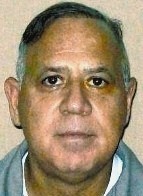 Lamont Underwood
Murderer ? · USA · 1994
Lamont Claxton Underwood, known as “L.C.,” was a former Salisbury policeman. Pr…
2 victims
Lamont Underwood
Murderer ? · USA · 1994
Lamont Claxton Underwood, known as “L.C.,” was a former Salisbury policeman. Pr…
2 victims
 John Kogut
Murderer ? · USA · 1984
John Kogut was a 21-year-old high school dropout and unemployed landscaper. In…
1 victim
John Kogut
Murderer ? · USA · 1984
John Kogut was a 21-year-old high school dropout and unemployed landscaper. In…
1 victim
 Joseph Amrine
Murderer ? · USA · 1985
Joseph Amrine was a death row inmate in Missouri. He was housed with the victim…
1 victim
Joseph Amrine
Murderer ? · USA · 1985
Joseph Amrine was a death row inmate in Missouri. He was housed with the victim…
1 victim
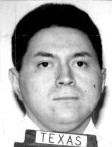 Michael Nawee Blair
Murderer ? · USA · 1993
Michael Nawee Blair was sentenced to death for the 1993 murder of 7-year old As…
1 victim
Michael Nawee Blair
Murderer ? · USA · 1993
Michael Nawee Blair was sentenced to death for the 1993 murder of 7-year old As…
1 victim
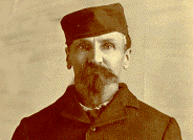 Alfred Packer
Murderer ? · USA · 1874
Alfred Packer was convicted of cannibalism after killing and eating five compan…
5 victims
Alfred Packer
Murderer ? · USA · 1874
Alfred Packer was convicted of cannibalism after killing and eating five compan…
5 victims
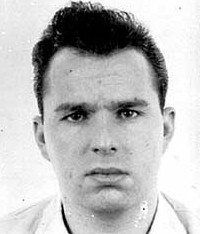 Gary Krist
Murderer ? · USA · 1959
Gary Krist Gary Steven Krist (born April 29, 1945) lived part of his childhood…
4 victims
Gary Krist
Murderer ? · USA · 1959
Gary Krist Gary Steven Krist (born April 29, 1945) lived part of his childhood…
4 victims
 Russell Williams
Murderer · Canada · 2009
Russell Williams (born March 7, 1963) was convicted murderer and rapist and a f…
2 victims
Russell Williams
Murderer · Canada · 2009
Russell Williams (born March 7, 1963) was convicted murderer and rapist and a f…
2 victims
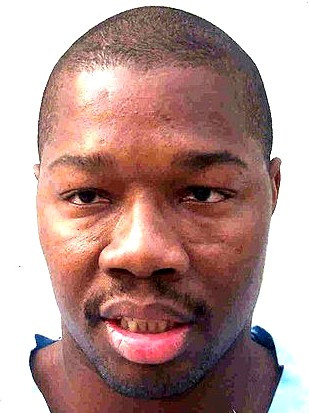 Dexter Lee Vinson
Murderer · USA · 1997
Dexter Lee Vinson was a state prisoner convicted of capital murder and sentence…
1 victim
Dexter Lee Vinson
Murderer · USA · 1997
Dexter Lee Vinson was a state prisoner convicted of capital murder and sentence…
1 victim
 Gary Gilmore
Murderer · USA · 1976
Gary Gilmore was born on December 4, 1940. He was an American career criminal w…
2 victims
Gary Gilmore
Murderer · USA · 1976
Gary Gilmore was born on December 4, 1940. He was an American career criminal w…
2 victims
 Aaron Lee Fuller
Murderer · USA · 1989
Aaron Lee Fuller was sentenced to death for the robbery, murder, and sexual ass…
1 victim
Aaron Lee Fuller
Murderer · USA · 1989
Aaron Lee Fuller was sentenced to death for the robbery, murder, and sexual ass…
1 victim
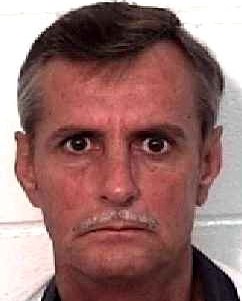 Tommy Lee Waldrip
Murderer · USA · 1991
Tommy Lee Waldrip (51) was sentenced to death on November 4, 1994. Keith Lloyd…
1 victim
Tommy Lee Waldrip
Murderer · USA · 1991
Tommy Lee Waldrip (51) was sentenced to death on November 4, 1994. Keith Lloyd…
1 victim
 Leroy Hall
Murderer · USA · 1991
Leroy Hall, Jr. was convicted of first degree premeditated murder and aggravate…
1 victim
Leroy Hall
Murderer · USA · 1991
Leroy Hall, Jr. was convicted of first degree premeditated murder and aggravate…
1 victim
- Gender
- male
- Country
- USA
- Location
- Tucson, Arizona, USA
- Date of birth
- April 27, 1962
- Age at first offence
- 30
- Characteristics
- rape, dismemberment
- Victim profile
- Diana Vicari (female, 19)
- Method of murder
- ???
- Date(s) of murder
- October 22, 1992
- Years active
- 1992
- Date of arrest
- October 31, 1997
- Status
-
Sentenced to death on August 20, 1999; conviction overturned in August 2002; on March 14, 2003, the Pima County (Arizona) Attorney's Office dismissed all charges
Timeline
- October 24, 1992 — The arms of the 21-year-old female victim were discovered in a trash dumpster in downtown Tucson, severed below the shoulders and wrapped in plastic trash bags.
- October 31, 1997 — Arizona authorities arrested Lemuel Prion while he was in prison in Utah.
- January 12, 1999 — The trial began.
- January 28, 1999 — The verdict was reached.
- August 20, 1999 — Lemuel Prion was sentenced to death.
- August 2002 — The Arizona Supreme Court unanimously overturned Prion’s conviction, citing reversible error.
- March 14, 2003 — The Pima County (Arizona) Attorney's Office dismissed all charges against death row inmate Lemuel Prion.
Background
On October 24, 1992, the arms of the 21-year-old female victim were discovered in a trash dumpster in downtown Tucson, severed below the shoulders and wrapped in plastic trash bags. The victim was identified through fingerprint comparison. The rest of the body has never been found.
Over the years Prion boasted and sang of taking a woman out into the desert, raping her, killing her, and cutting her up. This conduct was ultimately discovered by Arizona authorities.
Prion remained incarcerated in Utah for an unrelated crime.
The offence
The murder of Diana Vicari in 1999 involved evidence that the rest of the body has never been found. The case included a second incident in Tucson in late 1992. In that incident, Prion kidnapped a woman and took her to a secluded area, threatening her with a knife. Charges of kidnapping and aggravated assault from that incident were joined for trial with the murder of the first victim.
Investigation
Arizona authorities discovered Prion’s boasts and songs about taking a woman out into the desert, raping her, killing her, and cutting her up.
During the investigation, Prion was connected to the Tucson incident in late 1992 in which he kidnapped a woman and took her to a secluded area, threatening her with a knife.
Arizona authorities arrested Prion on October 31, 1997, while he was in prison in Utah.
Prion’s conviction was based largely on the testimony of Troy Olson, who identified Prion as the man who was with Vicari on the night of her murder. When police first showed Olson photographs of Prion, Olson could not identify Prion, stating: "There was no physical evidence identifying Prion as her killer," and that the person in the photograph did not look familiar. Seventeen months later, after seeing a newspaper picture of Prion labeling him as the prime suspect in the Vicari murder, Olson believed he could identify Prion.
Arrest
Arizona authorities arrested Lemuel Prion on October 31, 1997 while he was in prison in Utah.
Trial
Lemuel Prion was tried for the murder of Diana Vicari. The proceedings included the following:
- Presiding Judge: Bernardo P. Velasco
- Prosecutor: David White
- Defense: Thomas Martin and John O'Brien
- Start of Trial: January 12, 1999
- Verdict: January 28, 1999
Sentencing
- Sentencing: August 20, 1999
- Aggravating Circumstances: Previously convicted of another felony involving use or threat of violence (the simultaneously-tried aggravated assault); especially heinous, cruel, and depraved
- Mitigating Circumstances: Statutory-none proven; non-statutory-family support
Appeals
In August 2002, the Arizona Supreme Court unanimously overturned Prion’s conviction. The Supreme Court stated that the trial court committed reversible error by excluding evidence of another suspect.
The Arizona Supreme Court stated: "There was no physical evidence identifying Prion as her killer," and that the trial court abused its discretion in not allowing the defense to submit evidence that a third party, John Mazure, was the actual killer.
The Supreme Court described John Mazure as a suspect in the murder and stated that:
- Mazure was known to have a violent temper.
- Mazure saw Vicari the night of her disappearance.
- Mazure concealed information from police when they questioned him.
- Mazure appeared at work the next morning after Vicari’s disappearance so disheveled and disoriented that he was fired.
The Arizona Supreme Court held that the third-party evidence "supports the notion that Mazure had the opportunity and motive to commit this crime. . . ."
The Arizona Supreme Court also held that the trial court committed prejudicial error in failing to sever the Vicari murder trial from Prion’s trial for another crime, stating: "any connection between the two crimes is attenuated at best.”
Prosecutors admitted that Prion would most likely have been acquitted if prosecuted under the standards set by the August 2002 ruling.
Outcome
On March 14, 2003, the Pima County (Arizona) Attorney's Office dismissed all charges against death row inmate Lemuel Prion, who had been convicted of murdering Diana Vicari in 1999.
Aftermath

Spotted an error, or have more information about this case?