
Tianle Li
Murderer Miranda Barbour
Murderer · USA · 2013
Miranda Barbour, 19, defendant. · Elytte Barbour, 22, defendant and husband of…
100 victims
Miranda Barbour
Murderer · USA · 2013
Miranda Barbour, 19, defendant. · Elytte Barbour, 22, defendant and husband of…
100 victims
 Tiffany Hall
Murderer · USA · 2006
Tiffany Hall was 24 when she was charged in September 2006. She later entered a…
5 victims
Tiffany Hall
Murderer · USA · 2006
Tiffany Hall was 24 when she was charged in September 2006. She later entered a…
5 victims
 Banita Jacks
Murderer · USA · 2007
Banita Jacks was a Washington, DC resident convicted of murdering her four daug…
4 victims
Banita Jacks
Murderer · USA · 2007
Banita Jacks was a Washington, DC resident convicted of murdering her four daug…
4 victims
 Holly Grigsby
Murderer · USA · 2011
Holly Grigsby was sentenced to life in prison without parole on July 15, 2014.…
4 victims
Holly Grigsby
Murderer · USA · 2011
Holly Grigsby was sentenced to life in prison without parole on July 15, 2014.…
4 victims
 Jessica Tata
Murderer · USA · 2011
Jessica Tata was a Houston home day care owner who fled to Nigeria after a fire…
4 victims
Jessica Tata
Murderer · USA · 2011
Jessica Tata was a Houston home day care owner who fled to Nigeria after a fire…
4 victims
 Amanda Bennett
Murderer · USA · 2011
Amanda Bennett was an Indiana woman who shot her three children and set the fam…
3 victims
Amanda Bennett
Murderer · USA · 2011
Amanda Bennett was an Indiana woman who shot her three children and set the fam…
3 victims
 Xiong Zhenlin
Spree killer · China · 2009
Xiong Zhenlin was a Chinese junk dealer and the owner of a junkyard in Suizhou,…
8 victims
Xiong Zhenlin
Spree killer · China · 2009
Xiong Zhenlin was a Chinese junk dealer and the owner of a junkyard in Suizhou,…
8 victims
 Vladimir Kondratenko
Serial killer · Ukraine · 1991
Vladimir Kondratenko overdosed on prescription medication and died while in pol…
16 victims
Vladimir Kondratenko
Serial killer · Ukraine · 1991
Vladimir Kondratenko overdosed on prescription medication and died while in pol…
16 victims
 Ronnie Lee Bowling
Murderer · USA · 1989
Ronnie Lee Bowling was sentenced to death on December 9, 1992. Bowling was from…
2 victims
Ronnie Lee Bowling
Murderer · USA · 1989
Ronnie Lee Bowling was sentenced to death on December 9, 1992. Bowling was from…
2 victims
 Lois Ann Thacker
Murderer · USA · 1984
Lois Ann Thacker Thacker was sentenced to death on June 27, 1985. The sentence…
1 victim
Lois Ann Thacker
Murderer · USA · 1984
Lois Ann Thacker Thacker was sentenced to death on June 27, 1985. The sentence…
1 victim
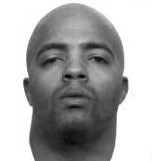 Anthony Nathaniel Bonham
Murderer · USA · 1981
Anthony Nathaniel Bonham (also shown as Antonio Nathanial Bonham) was executed…
1 victim
Anthony Nathaniel Bonham
Murderer · USA · 1981
Anthony Nathaniel Bonham (also shown as Antonio Nathanial Bonham) was executed…
1 victim
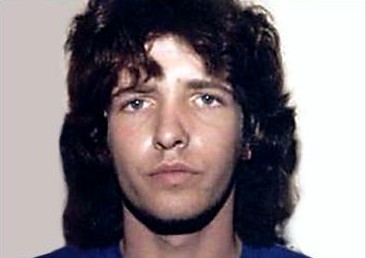 Joseph Druce
Murderer · USA · 1988
Joseph Druce (born 1965) — convicted murderer; inmate at Souza-Baranowski Corre…
2 victims
Joseph Druce
Murderer · USA · 1988
Joseph Druce (born 1965) — convicted murderer; inmate at Souza-Baranowski Corre…
2 victims
- Gender
- female
- Country
- USA
- Location
- Monroe Township, Middlesex County, New Jersey , USA
- Date of birth
- 1969
- Age at first offence
- 42
- Characteristics
- poisoner, domestic violence, drugs
- Victim profile
- Xiaoye “Alex” Wang, 39 (her husband)
- Method of murder
- Poisoning (thallium)
- Date(s) of murder
- January 26, 2011
- Years active
- 2011
- Date of arrest
- 2 days after
- Status
-
Life imprisonment
Sentenced to life in prison with no parole for 62 years on September 30, 2013
Case overview
Tianle Li was convicted of fatally poisoning her husband, Xiaoye Wang, with thallium after he sought a divorce. Li was a 44-year-old former chemist at Bristol-Myers Squibb. A Middlesex County jury convicted Li in July of fatally poisoning her husband with thallium on multiple occasions, and she was sentenced on September 30, 2013 to life in prison with no parole for 62 years.
Timeline
- April 2009 — Police were called to the couple’s home in Monroe Township over domestic disputes.
- June 2008 — Records indicated Wang moved out of the couple’s Monroe home and into a Jersey City apartment.
- July 2010 — Xiaoye Wang filed for divorce from Li, citing irreconcilable differences.
- November 2010 — Authorities said Li began poisoning Wang as early as November 2010; the state also said she ordered four bottles of thallium at work in November 2010.
- December or January 2010/2011 — Prosecutors said Li began feeding Wang thallium sometime in December or January; authorities alleged poisoning continued over a period ending with Wang’s death.
- July 2, 2013 — A Middlesex County jury deliberated for less than two hours before going home, to resume deliberations Wednesday morning.
- January 10, 2011 — Wang and his attorney reached agreements on how to split their finances and property.
- January 14, 2011 — The couple was supposed to finalize their divorce in a New Brunswick courtroom; instead Wang checked himself into University Medical Center in Princeton complaining of abdominal pain and “virus-like” symptoms.
- January 24, 2011 — A laboratory technician ran a test on Wang’s urine for thallium; results were “very positive” and “off the charts.”
- January 25, 2011 — Test results showed lethal thallium in Wang’s system; prosecutors said it was confirmed after a series of tests.
- January 26, 2011 — Wang died at University Medical Center in Princeton.
- January 28, 2011 — Authorities charged Li with hindering her own apprehension after she told police she had never worked with thallium.
- Late May 2013 — Trial testimony began, and by June 5 the trial had been in its first day week in Superior Court in New Brunswick.
- June 26, 2013 — An FBI toxicologist testified that Wang was given a fatal dose of thallium only days before he was admitted to the hospital.
- July 9, 2013 — A Middlesex County jury convicted Li of fatally poisoning her husband with thallium.
- September 30, 2013 — Judge Michael Toto sentenced Tianle Li to life in prison with no parole for 62 years; Li was ordered to spend life in state prison under the no early release act.
- February 2011 — A probable cause hearing was scheduled for April 26, with bail discussion occurring at a hearing.
- March 14, 2011 — A hearing occurred involving motions about bail reduction and evidence; bail remained $4 million on the murder charge and $150,000 on the hindering charge.
Background
Tianle Li was a Chinese citizen who lived in Monroe Township with her husband and their 2-year-old son. Her husband, Xiaoye Wang, was a computer engineer and was 39 at the time of his death. The couple began having disputes that frequently brought police to their home in Monroe Township, with calls to police beginning in April 2009. Prosecutors later said Li killed Wang after he sought a divorce.
The offence
Li was convicted of fatally poisoning her husband, Xiaoye Wang, with thallium. Prosecutors described thallium as tasteless, odorless, and highly lethal. The state presented evidence that Li poisoned Wang over multiple occasions and that Wang’s condition deteriorated after he was hospitalized, with antidote issues discussed during the proceedings.
A Middlesex County judge characterized the poisoning as planned and calculated, stating that Li sat at her husband’s bedside and watched his condition deteriorate knowing there was an antidote for the poison. The judge also characterized the act as performed in a depraved manner.
Investigation
Law enforcement brought in federal and state involvement during the investigation. An FBI toxicologist, Cynthia Morris-Kukoski, reviewed Wang’s medical records, the Middlesex County Medical Examiner’s report, and lab test results before concluding that Wang was given thallium during the week of Jan. 9, 2011. A laboratory technician for the Mayo Clinic in Minnesota testified that Wang had so much thallium in his system in January 2011 that “it was off the charts.”
Arrest and charges
Authorities charged Li with hindering her own apprehension on Jan. 28, two days after Wang died, after she told police that she had never worked with thallium, and investigators later obtained records contradicting her statements. Authorities charged Li with murder several days later.
Li was in the Middlesex County jail. Her bail was set at $150,000 on the hindering charge and raised to another $4 million after she was charged with murder. Li remained jailed in lieu of $4.15 million bail while awaiting further proceedings.
Trial
The trial took place in Superior Court in New Brunswick before Superior Court Judge Michael Toto. The trial lasted six weeks. Li sat stoically as the guilty verdict was read and did not testify in her own defense.
Domestic dispute testimony
Testimony revealed police had been called to the couple’s spacious Monroe home 16 times to intervene in domestic disputes. Wang once told officers that his wife had poisoned him.
Jury deliberations
Leading up to the guilty verdict, the jury spent more than two days listening to a replay of several witnesses’ testimony during the trial. Jurors were forced to begin deliberations all over again after one of them was excused for personal reasons and replaced by an alternate. In total, they took a little over three hours to convict Li.
Prosecutors’ evidence and arguments
Deputy First Assistant Prosecutor Christie L. Bevacqua argued that Li devised a plan to maximize her husband’s suffering and called her a “murderer.” Bevacqua said Li chose murder rather than finalizing their divorce and said Li chose death and one that put him through a lot of pain. Bevacqua also said Li kept a journal of Wang’s symptoms, calculated how to kill him, and calculated how to get away with the murder. Bevacqua said Li purposely chose a rare poison for which doctors would not immediately test when Wang was admitted on Jan. 14, 2011. Bevacqua also argued Li wanted control and was unhappy about getting divorced.
The prosecutor presented evidence including that Li ordered four bottles of thallium at work in November 2010, made efforts to purchase one-way tickets to China for her aunt, son, and herself in the days before Wang died, and visited websites for criminal attorneys and the state judiciary system the day before his death. Bevacqua said Wang would have the house, hers and his finances, and her son with Wang’s death.
Middlesex County Assistant Prosecutor Nicholas Sewitch stated that Li obtained thallium from the supply room at Bristol-Myers Squibb and that the research she was doing did not require it. Sewitch said Li ordered four bottles of thallium and that when she returned the bottles, “over 90 percent of the thallium was gone.” Sewitch also said Li applied for a rush visa for her son in order to take him to China and tried to purchase airplane tickets two days before her husband died.
At trial, the prosecutor sought to establish the poison was administered before Wang was hospitalized and not while he lay in the hospital bed. The FBI toxicologist testified that she did not believe Wang was given any poison while he lay in his hospital bed, only before he entered the hospital.
Defense arguments
Li’s attorney Steven Altman told the judge and jury that he tried to “humanize” his client at sentencing and attempted to “explain the circumstances why the person I represent is here in the courtroom.” At closing, Altman told the jury:
“There is no proof that Tianle Li gave her husband thallium,” Li's attorney, Steven Altman, said in his closing argument. “There is no proof Tianle Li transported thallium in her car or into her home to give it to her husband. Tianle Li is not guilty.”
During the trial, Altman stated that there was no evidence Li poisoned her husband or ever gave him thallium. Outside the courtroom later, the focus of Altman’s arguments included that Li spent every day at her husband’s bedside, feeding him and praying for his recovery.
Altman also argued that Li had no reason to kill her husband and that custody of their son, financial arrangements, and property settlement had been finished and they were going to sell the house, with Li to make $250,000. Altman said there was no proof divorce as a motive and told the jury “The proof and evidence do not support divorce as a motive.” He also said Li “never made an attempt to leave the country” during Wang’s hospital stay, while Bevacqua referenced records showing she sought and obtained a passport and Chinese visa for her son and made reservations for the one-way trip to China.
Witness testimony and expert evidence
An FBI toxicologist, Cynthia Morris-Kukoski, testified that thallium was “referred to as the perfect poison” because it was “odorless, colorless, tasteless and undetected by most labs” and that hospitals needed to “send to an outside lab and specifically ask for a thallium test.”
Deputy First Assistant Prosecutor Christie Bevacqua asked Morris-Kukoski how much thallium it took to kill a person and asked her to compare it to a packet of “Sweet’N Low.” Morris-Kukoski testified:
“A lethal does is an average adult is about one gram,” Morris-Kukoski said. “It is less than this packet.”
Morris-Kukoski also said:
“It is referred to as the perfect poison,” she said. “It is odorless, colorless, tasteless and undetected by most labs. Hospitals need to send to an outside lab and specifically ask for a thallium test.”
A laboratory technician for the Mayo Clinic in Minnesota, Curtis Rykal, testified that he ran a test on Wang’s urine for thallium on Jan. 24, 2011, and said:
“The results were very positive,” he said during testimony in Superior Court in New Brunswick. “They were higher than our highest reportable amount. It was off the charts, I have never seen results that high.”
Jail cell testimony
Christine Stefanelli, a former cellmate of Li’s at the Middlesex County jail where Li had been held since her February 2011 arrest, testified that Li told her she gave her husband thallium three times, including one dose through his IV tubes in the hospital.
Sentencing
On September 30, 2013, Judge Michael Toto sentenced Tianle Li of Monroe to spend life in state prison. The judge ordered that she serve life under the no early release act. Li was 44 at the time of sentencing.
Under the terms of the no early release act, Li must serve 85 percent of her sentence, or at least 62 years, six months and 19 days in prison.
The judge said:
"Ms. Li sat at her husband's bedside and watched his condition deteriorate knowing there was an antidote for the poison. This was a planned, calculated act performed in a depraved manner,"
Li cried as she thanked her mother who came from China to take care of the couple’s now 4-year-old son. Li insisted:
"I didn't murder Xiaoye Wang and I will appeal."
She said:
"we have a solid case" to appeal.
Bevacqua said Li devised a plan to maximize her husband’s suffering and argued:
"Rather than allow her husband to divorce her, Tianle Li chose murder," the prosecutor said. "She chose death and she didn't choose a simple, fast death. She chose one that put him through a lot of pain. While Li was outwardly at his bedside she was keeping a journal of his symptoms. She calculated everything — how to kill him and how to get away with his murder."
Defense attorney Steve Altman told the judge he tried to “humanize” his client and attempted to explain circumstances from Li’s life. He told the judge:
"During the trial you learned the history of her life. Immigrants always need to assimilate. You saw the conflicts that exist coming from an Eastern culture and trying to get comfortable with Western culture. I think that's what brought us here today."
Altman also said Li was westernized but the fighting began when Wang’s family came from China in 2009 after the birth of their son to help her with the child, and said:
"Li was Westernized but her in-laws came from the Eastern culture and couldn't accept the Western culture. Poor Mr. Wang was caught in the middle of the situation. There was a mix of issues and facts and cultures that gradually deteriorated and brings us here."
Appeals
Li insisted that she would appeal at sentencing, stating:
She also said:
Other details
Thallium properties and antidote issues discussed in court
Thallium was described as a highly toxic heavy metal that was tasteless and odorless and deadly in small amounts. It was also described as difficult to obtain because it was banned from commercial use and not available to the public.
The proceedings also discussed that hospitals needed to send samples to an outside lab and specifically ask for a thallium test. The heavy metal can be bought over the internet, in powder or liquid form. Before it was banned for household use in the United States almost 30 years prior, it was described as being popular as a rodenticide and insecticide and still used in the pharmaceutical industry, in glass and electronics manufacturing, and medicinally in stress tests to help diagnose coronary artery disease.
Symptoms of thallium poisoning were described as usually beginning with gastrointestinal distress, followed by increasing nerve pain, hair loss, blindness, and coma. It was described as having only one antidote, Prussian blue, which was not readily available in the United States. Doctors described heroic efforts by the New Jersey Poison Control Center and state’s department of health and senior services, and it was said that a sufficient dose of Prussian blue did not arrive until Wang was near death and nothing could be done to save him.
Divorce and custody-related events
Wang filed for divorce in July 2010 and sought joint custody of their 2-year-old son, Isaac. Li counter-sued in August 2010 citing irreconcilable differences and adding there was “no hope for reconciliation.” Wang and his divorce attorney Michael Green testified the couple reached agreements on custody and, on Jan. 10, 2011, agreed on how to split finances and property after a contentious and loud argument at the offices of the mediator addressing economic issues. The couple had a court date on Jan. 14, 2011 to finalize the divorce but never made it because Wang admitted himself to University Medical Center in Princeton with stomach pains and flu-like symptoms and joined his aunt in the Princeton hospital.
Visa, tickets, and escape-related evidence
The prosecutor said Li applied for a rush visa for her son and tried to purchase airplane tickets to China shortly before Wang died, including one-way tickets for her aunt, son, and herself for Jan. 25, 2011. Authorities said she obtained a passport for her son and visas to China and had one-way tickets booked for Jan. 25, 2011 but did not make the flight. Prosecutors also said Li visited websites for criminal attorneys and the state judiciary system the day before Wang’s death.
Family and legal action after Wang’s death
Wang’s parents filed a lawsuit against the hospital and Wang’s widow’s former employer on behalf of their grandson. They insisted the hospital failed to take Wang seriously when he suggested his wife had poisoned him and said Squibb should not have granted Li access to thallium after a fellow employee had obtained a restraining order against her.
A statement from Wang’s father, Ming Wang, was read at sentencing. Ming Wang said:
"I had to bury our son," Ming Wang said. "I'll never be able to see Xiaoye's bring smile. We will only live the rest of our lives mourning our loss."
People named
- Tianle Li — defendant; research chemist at Bristol-Myers Squibb.
- Xiaoye Wang (also referred to as Xiaoye “Alex” Wang) — victim; husband of Li.
- Judge Michael Toto — presiding judge at trial and sentencing.
- Christie L. Bevacqua — Middlesex County Deputy First Assistant Prosecutor; argued for the prosecution at trial and sentencing.
- Nicholas Sewitch — Middlesex County Assistant Prosecutor; participated in hearings and trial proceedings.
- Steve Altman / Steven Altman — Li’s defense attorney.
- Cynthia Morris-Kukoski — FBI toxicologist.
- Curtis Rykal — laboratory technician for the Mayo Clinic in Minnesota.
- Christine Stefanelli — former cellmate of Li.
- Ming Wang — Wang’s father.
- Jian Zhang — Li’s mother.
- Mrs. Li — Li’s mother’s identification in court.
- Michael Green — Wang’s divorce attorney.
- Bruce Kaplan — Middlesex County prosecutor referenced in a press release.
- Isaac — their 2-year-old son (also referenced as their grandson in the civil lawsuit context).


Spotted an error, or have more information about this case?