
Mechele Linehan
Justice miscarriage? Vickie Dawn Jackson
Serial killer · USA · 2000
Vickie Dawn Jackson was a former nurse who received a life sentence after plead…
10 victims
Vickie Dawn Jackson
Serial killer · USA · 2000
Vickie Dawn Jackson was a former nurse who received a life sentence after plead…
10 victims
 Aileen Wuornos
Serial killer · USA · 1989
Aileen Carol Wuornos was an American serial killer who killed seven men in Flor…
7 victims
Aileen Wuornos
Serial killer · USA · 1989
Aileen Carol Wuornos was an American serial killer who killed seven men in Flor…
7 victims
 Jennifer San Marco
Mass murderer · USA · 2006
Jennifer San Marco (December 6, 1961 – January 30, 2006) was a former US Postal…
7 victims
Jennifer San Marco
Mass murderer · USA · 2006
Jennifer San Marco (December 6, 1961 – January 30, 2006) was a former US Postal…
7 victims
 Judy Kirby
Mass murderer · USA · 2000
Judy Kirby was found guilty of murder for intentionally causing a head-on crash…
7 victims
Judy Kirby
Mass murderer · USA · 2000
Judy Kirby was found guilty of murder for intentionally causing a head-on crash…
7 victims
 Khoua Her
Mass murderer · USA · 1998
Khoua Her pleaded guilty and received a sentence of 50 years in prison with no…
6 victims
Khoua Her
Mass murderer · USA · 1998
Khoua Her pleaded guilty and received a sentence of 50 years in prison with no…
6 victims
 Megan Huntsman
Murderer · USA · 1996
Megan Huntsman was 40 at sentencing. She was a mother of three children who wer…
6 victims
Megan Huntsman
Murderer · USA · 1996
Megan Huntsman was 40 at sentencing. She was a mother of three children who wer…
6 victims
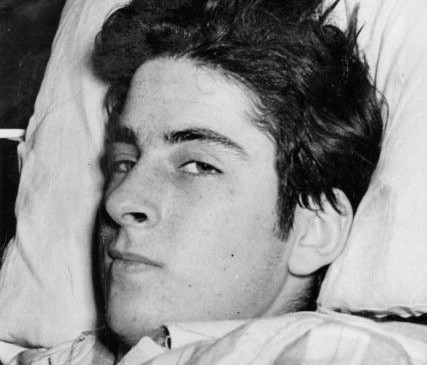 Christopher Craig
Homicide · United Kingdom · 1952
Christopher Craig Christopher Craig was ordered to be detained at Her Majesty's…
1 victim
Christopher Craig
Homicide · United Kingdom · 1952
Christopher Craig Christopher Craig was ordered to be detained at Her Majesty's…
1 victim
 Robin Lee Row
Murderer · USA · 1992
Robin Lee Row was convicted of aggravated arson and three counts of murder for…
3 victims
Robin Lee Row
Murderer · USA · 1992
Robin Lee Row was convicted of aggravated arson and three counts of murder for…
3 victims
 Stephanie Nicole Erends
Murderer · USA · 2008
Stephanie Nicole Erends was convicted of first-degree murder with special circu…
1 victim
Stephanie Nicole Erends
Murderer · USA · 2008
Stephanie Nicole Erends was convicted of first-degree murder with special circu…
1 victim
 Maria Isa
Murderer · USA · 1989
Maria Isa was a Brazilian mother who assisted in the murder of her sixteen-year…
1 victim
Maria Isa
Murderer · USA · 1989
Maria Isa was a Brazilian mother who assisted in the murder of her sixteen-year…
1 victim
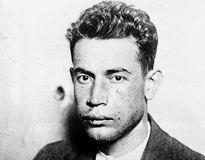 José de León Toral
Murderer · Mexico · 1928
José de León Toral (Matehuala, 23 December 1900 — Mexico City, 9 February 1929)…
1 victim
José de León Toral
Murderer · Mexico · 1928
José de León Toral (Matehuala, 23 December 1900 — Mexico City, 9 February 1929)…
1 victim
- Gender
- female
- Country
- USA
- Location
- Hope, Kenai Peninsula Borough, Alaska, USA
- Date of birth
- October 12, 1972
- Age at first offence
- 24
- Characteristics
- motive unknown, love triangle
- Victim profile
- Kent Leppink, 36 (her former fiance)
- Method of murder
- Shooting
- Date(s) of murder
- May 2, 1996
- Years active
- 1996
- Date of arrest
- October 2006 (10 years after)
- Status
-
Imprisoned
Anchorage Superior Court dismissed the murder indictment against Mechele Linehan on December 13, 2011; Alaska Court of Appeals overturned Linehan's conviction on February 5, 2010; Linehan was sentenced to 99 years in prison on April 2, 2008
Case Overview
Mechele Linehan was a former dancer and a former fiancée of Kent Leppink. She was convicted of murder and later had her conviction overturned on appeal. After reversal, Anchorage Superior Court dismissed the murder indictment against her.
People Involved
- Mechele Linehan — accused; former fiancée of Kent Leppink; romantic partner of multiple men during the relevant period, including Kent Leppink and John Carlin
- Kent Leppink — victim; a commercial fisherman from Michigan who moved to Alaska to work as a fisherman; found shot to death in Hope, Alaska
- John Carlin III — alleged co-conspirator; convicted of murder in a separate trial; died in prison
- Scott Hilke — romantic relationship partner mentioned in the relationships and in Leppink’s letter
Other named individuals in the record:
- Betsy Leppink — Kent Leppink’s mother
- Craig — Kent Leppink’s brother (called in Michigan)
- Lane Leppink — Kent Leppink’s brother (testified at trial; discussed conversations with Linehan)
- Lora Aspiotis — former co-worker and friend of Linehan until a falling out at the end of February 1996
- Scott Hilke — testified about an incident in Louisiana (Metairie)
- Ron Belden — retired state trooper who testified
- Trooper David Tullis — testified regarding discovery of the Hope note
- Brian C. Watt — donated bail money to release Linehan on bail
- Philip Volland — Anchorage Superior Court judge who presided at trial and later dismissed the indictment
- Robert Coats — Appeals Chief Judge (opinion writer)
- David Mannheimer and Mannheimer — Appeals judge; referenced in the appellate discussion
- Paul Miovas — assistant attorney general
- Rick Svobodny — deputy attorney general
- Jeff Feldman, Susan Orlansky, Alexander O. Bryner — counsel named for the appellant
- Diane L. Wendlandt, Richard A. Svobodny — Office of Special Prosecutions and Appeals and Acting Attorney General roles named
- Kevin Fitzgerald — Linehan’s attorney at trial
- Pat Gullufsen — prosecutor at trial
- Cynthia Strout — Linehan’s attorney referenced in media reporting
- Brian Brundin — Leppink’s lawyer referenced in the appellate factual discussion
- Judy Linehan — referenced as mother-in-law in sentencing testimony
- Colin Linehan — Linehan’s husband
- Judy Linehan — described as mother-in-law
- Scott Hilke — referenced as romantic relationship and evidence relating to hotel reservation and card
Timeline
- 1994 to 1996 — Mechele Linehan maintained romantic relationships with several men including Scott Hilke, John Carlin, and Kent Leppink; for several months Linehan, Carlin, and Leppink lived in the same house in Anchorage
- April 30 to May 2, 1996 — Kent Leppink was killed sometime between mid-day on April 30 and the early morning hours of May 2, according to the pathologist’s investigation
- April 27 to April 28, 1996 — Kent Leppink traveled to Hope looking for Linehan during the weekend; he changed beneficiary designations, tore up his will, and wrote the letter to his parents
- April 30, 1996 — Kent Leppink called his brother Craig in Michigan; he spoke for about an hour and a half
- May 4, 1996 — Lane Leppink learned about his brother’s death and testified about conversations with Linehan, including discussion that “she should be careful because [his] parents would blame her”
- May 5, 1996 — Linehan was interviewed by the state troopers
- October 22, 2007 — Mechele Linehan was convicted of murder
- April 2, 2008 — Mechele Linehan was sentenced to 99 years in prison and transferred to Hiland Mountain Correctional Center in Eagle River, Alaska
- October 27, 2008 — John Carlin was found bludgeoned to death in his cell at Spring Creek Correctional Center in Seward, Alaska
- February 5, 2010 — Alaska Court of Appeals overturned Linehan’s conviction
- April 28, 2010 — a judge set as a condition of bail a $250,000 appearance bond
- May 11, 2010 — Linehan was released to bail; an east coast corporate executive Brian C. Watt paid bail bondsman fee of $25,000
- December 13, 2011 — Anchorage Superior Court dismissed the murder indictment against Linehan
- August 6, 2012 — Alaska prosecutors announced they would not indict Linehan again
Background
Kent Leppink met Mechele Linehan at a striptease club. Between 1994 and 1996, Linehan and Leppink were romantically involved while Linehan also maintained a simultaneous romantic relationship with John Carlin. For several months, Linehan, Carlin, and Leppink lived in the same house in Anchorage. Scott Hilke was another important romantic relationship partner, and the appellate discussion noted Hilke lived in California.
Leppink was a Michigan native who moved to Alaska to work as a fisherman.
The offence
On May 2, 1996, Leppink was found dead in Hope, Alaska, with three .44 caliber bullet gunshot wounds. The appellate court described that Leppink was killed sometime between 6 hours and 48 hours before his body was discovered, which corresponded to sometime between mid-day on April 30 and the early morning hours of May 2.
At Linehan’s trial, the State’s theory was that Linehan conspired with John Carlin to kill Leppink. The government argued that Linehan’s motive was her status as a beneficiary under Leppink’s $1 million life insurance policy, and that Leppink changed the beneficiary designation shortly before his death.
The State said Leppink was lured to Hope by a fabricated plan in which Linehan helped Carlin compose a note that would be left for Leppink to find, falsely making Leppink think that Linehan was staying in a cabin in Hope with another man; the appellate record described no cabin existed in Hope.
Investigation
The appellate court described that when the Alaska State Troopers investigated the homicide, they interviewed Linehan, Carlin, and Hilke, but were unable to identify any culprits and the case remained unsolved for several years.
In 2004, the trooper “Cold Case Unit” reopened the investigation. Based on a review of the earlier investigation, plus new witness interviews and a forensic examination of emails and other materials recovered from two computers, the troopers concluded Carlin lured Leppink to Hope and shot him there. The troopers further concluded that Linehan was Carlin’s accomplice, soliciting Carlin to commit the murder and helping Carlin compose a note for Leppink to find.
The State later successfully prosecuted Carlin in March and April 2007 for this murder.
Trial
Charges and trial theory
At trial, Linehan was accused of conspiring with John Carlin to kill Kent Leppink.
The State’s case was lengthy and detailed but primarily circumstantial.
Evidence addressed on appeal
The appellate court identified evidentiary rulings that were challenged on appeal:
- Evidence of a letter written by Kent Leppink shortly before his death.
- Evidence that Linehan admired and wished to emulate the protagonist of the movie “The Last Seduction”.
- Evidence that Linehan worked as an “exotic dancer” (stripper).
Leppink’s letter to his parents
The appellate court described that the letter contained accusatory assertions. Leppink instructed his parents to open the letter only if he died under suspicious circumstances. In the letter, Leppink asserted that if he died under suspicious circumstances, Mechele Linehan, John Carlin, and/or Scott Hilke would probably be responsible. The letter also described Leppink’s comment that Linehan had a “split personality,” including that “the part [he] fell in love with is very beautiful,” while urging his parents “to take Mechele down,” “to [m]ake sure she is prosecuted,” and to “make sure they [i.e., Linehan, Carlin, and/or Hilke] get burned.”
The appellate discussion included a pre-trial and in-trial dispute about admissibility. The prosecutor conceded the letter could not be admitted to prove Linehan probably had a hand in Leppink’s death and argued instead for relevance to Leppink’s ensuing actions.
The appellate record quoted rulings from the trial judge and arguments from counsel, including the following verbatim excerpt attributed to the trial judge in relation to the “split personality” statement:
The Court: I don't take [the “split personality”] statement as some kind of medical or clinical diagnosis of Ms. Linehan that Mr. Leppink was making-even [if it] were being offered for the truth [of the matter asserted], which it's not. [Mr. Leppink's assertion that Ms. Linehan has a split personality] strikes me as the kind of comment that people in relationships often make about one another. And certainly Mr. Leppink had enough of a relationship [with Ms. Linehan] to have observations about Ms. Linehan, and he shared them in this letter․ In the context of [the letter], I don't find [this assertion to be] unduly prejudicial to Ms. Linehan at all. And it sort of sets in context [Mr. Leppink's] own kind of split reaction to her: on the one hand, accusing her of being involved in his death, [and] on the other hand, expressing his undying affection toward her and asking [his] parents to continue to visit her, even if she goes to jail-matters that I thought were relevant to his own state of mind. So the objection ․ to [the “split personality”] statement is overruled.
The appellate record also quoted verbatim excerpt from the trial judge’s final ruling allowing admission of the letter’s accusations and discussed how the trial judge focused on Leppink’s state of mind rather than whether the disputed issue requirement was satisfied.
“The Last Seduction”
At trial, the State sought to introduce evidence that Linehan admired and wished to emulate the movie “The Last Seduction.” Lora Aspiotis testified about the movie plot and stated that Linehan told her the protagonist was her heroine and that she wanted to be “just like her.”
The appellate record included verbatim testimony from Aspiotis about the movie:
Ms. Aspiotis: [There was one movie, “The Last Seduction”,] about a woman who's married to a doctor, and she had talked him into doing [an illegal] drug deal, selling pharmaceutical cocaine, and he got $700,000 [from selling the cocaine]․ [Later,] while he was in the shower, she stole the money, [and she] took off and went to a small town where a young man lived that she met at a bar. And she could tell right away that he was very naive, ․ just [a] pretty innocent guy. And eventually she talked him into trying to murder her husband for the insurance.
Prosecutor: And how did [the movie] end?
Ms. Aspiotis: [The naive young man] ended up in prison, and she went free with all the money.
Prosecutor: ․ What was [Linehan's] reaction to that movie?
Ms. Aspiotis: She told me that [this woman] was her heroine, and that she wanted to be ․ just like her․ She was talking about the character [in] the movie[.]
The appellate court also described that later the trial judge barred further testimony about the movie’s plot and refused to allow a screening of the entire movie to the jury after concluding there were “too many differences” between the movie and the facts of the case.
The appellate record quoted verbatim from the trial judge’s changed position:
The Court: [A]lthough there is some similarity in the theme [of the movie], the theme of manipulation, there are too many differences between the facts [of] this case ․ and the [plot of the] movie-differences that, when I read the case law on admitting these movies, would seem to be significant. We don't have a situation here of repeated viewings [by the defendant], or [of] stark similarities between scenes in the movie and the crime in question. There are significant difference[s] here[.] ․ [This evidence] seems to me to have a tendency to let jurors convict [Ms. Linehan] because of her identification with a character in the movie who committed other murders and a large theft, rather than on the basis of the evidence in this case.
Linehan as an “exotic dancer”
The trial and appellate record addressed that Linehan worked as an “exotic dancer” (stripper). The prosecutor argued that Linehan’s work explained how she met Leppink, Carlin, and Hilke and explained rivalry between the men. The trial judge allowed references to her employment, describing it as relevant to understanding the relationships and motivations, including the State’s theory that she manipulated others.
The appellate record described the trial judge’s ruling as having two components:
- relevance to explain how she met the men and understand relationships
- relevance to explain conduct and influence over the men
The appellate court concluded that any potential error in the ruling regarding use of this evidence was harmless because the prosecutor never used employment as character evidence in argument.
Verdict
On October 22, 2007, Linehan was convicted of murder.
Sentencing
On April 2, 2008, the court sentenced Mechele Linehan to 99 years in prison. The record also said she was transferred to Hiland Mountain Correctional Center in Eagle River, Alaska.
In court on sentencing, Mechele Linehan made a statement to the judge and pleaded for leniency. She said:
"I have not lived a life of greed, manipulation or that of a fictional character of a Hollywood movie," said the 35-year-old who was convicted of murdering for money.
"I beg you, from the bottom of my heart, to allow me the chance to go back to my family,"
The sentencing included quoted statements from the judge and victim’s mother:
- Superior Court Judge Philip Volland called the murder a “heinous crime” and described Linehan as a cold-hearted killer.
- The judge stated:
"In my mind I can find no principled distinction between the puppet who pulls the trigger and the puppeteer who pulls the strings," Volland said of Linehan's role.
"And in my judgment, Ms. Linehan was the puppeteer who pulled the strings."
Kent Leppink’s mother, Betsy Leppink, stated outside the courtroom:
"I feel that God has a way of answering crimes."
She also stated:
"Only if we could walk home with our son could it be over."
The record indicated that the sentence made Linehan first eligible for parole in 33 years.
Appeals
Mechele Linehan appealed her conviction for first-degree murder and challenged three evidentiary rulings. The appellate opinion stated:
- It concluded it was error to allow evidence of accusations in the victim’s letter to his parents.
- It concluded it was error to allow evidence related to Linehan expressing admiration for, and a desire to emulate, the protagonist of “The Last Seduction”.
- It concluded the evidence that Linehan worked as an exotic dancer was admissible to explain the relationship of the main actors and any potential error was harmless.
Alaska Court of Appeals overturning
On February 5, 2010, the Alaska Court of Appeals overturned Linehan’s conviction.
The appellate decision stated the conviction required reversal. It noted that Superior Court Judge Philip Volland never should have allowed the jury to hear testimony about:
- the movie “The Last Seduction”
- a letter written by victim Kent Leppink in the days before he died
The appellate decision included a quotation attributed to Appeals Chief Judge Robert Coats:
"The State's case against Linehan was circumstantial, and the evidence was subject to different interpretations and was hardly overwhelming," wrote Appeals Chief Judge Robert Coats. "We accordingly conclude that Linehan's conviction must be reversed."
The appellate discussion addressed why the limiting instructions were ineffective and described the prejudice from “accusations from the grave” and referenced that this type of evidence can have an inherent danger.
Post-appeal status and bail
The record stated that until May 11, 2010, Linehan was incarcerated at Hiland Mountain Correctional Center in Eagle River, Alaska.
On April 28, 2010, a judge set as a condition of her bail a $250,000 appearance bond.
On May 11, 2010, an east coast corporate executive, Brian C. Watt, donated the money necessary to release Linehan from prison, paying a $25,000 bail bondsman fee.
Media reporting quoted Watt regarding his beliefs about Linehan:
he wrote in an e-mail.
"I analyze complex situations for a living, and ... my conclusion (is) she is innocent. One hundred percent,"
Media reporting also stated that a court required her to stay in the Anchorage area and allowed her outside for two four-hour time periods a week, and she was not allowed to return to her home in Olympia, Wash., while being required to always be in sight or sound of one of her court-appointed third parties.
Dismissal of indictment
On December 13, 2011, Anchorage Superior Court Judge Philip Volland dismissed the murder indictment against Linehan.
The record included verbatim reasoning from Volland’s ruling:
The Court of Appeals repeatedly stated that the "letter from the grave" "appreciably affected" the jury's verdict at Linehan's trial. If it did so at a trial where the evidence was contested, defense counsel present, and the jury given an even stronger limiting instruction on the use of the letter, this court cannot find that Betsy Leppink's repetition of Kent Leppink's accusatory statement in the letter was not a decisive factor in the grand jury's decision to indict. Therefore, the indictment should be dismissed.
Other proceedings
The record stated that on August 6, 2012, Alaska prosecutors announced they would not indict Linehan again.
Media and other related details
Profiling and programs
Media reporting stated that:
- On July 27, 2008, Linehan’s case was profiled on Dateline NBC.
- An update aired on May 22, 2009.
- In 2009, Linehan’s case was profiled on the Oxygen Network series Snapped.
- In 2009, it was profiled on Investigation Discovery on the series 48 Hours on ID, with the episode named "Love and Death in Alaska".
- In 2009, Linehan’s case was profiled in a program titled Fatal Beauty: 15 Most Notorious Women.
Relationship and life-insurance dispute details included in the appellate record
The appellate record described events involving life insurance:
- In February 1996, Linehan and Leppink applied for life insurance policies on their lives.
- The insurance company would only insure Linehan’s life for $150,000 when they initially sought $1,000,000 insurance on each of their lives.
- By April 1, 1996, Linehan paid the premium for both policies.
- Leppink was the sole beneficiary of Linehan’s policy (death benefit $150,000).
- Linehan was an 80-percent beneficiary of Leppink’s policy (death benefit $800,000), with the remaining 20 percent to Leppink’s parents.
- During April 1996, Leppink changed the beneficiary designation on his policy multiple times, including:
- April 22: removed Linehan as a beneficiary and designated his parents as sole beneficiaries
- April 23: removed his parents and made Linehan sole beneficiary
- April 26: removed Linehan again and designated his father, mother, and brother Ransom as beneficiaries (as described in the appellate discussion)
The appellate discussion also included details about Leppink’s communications and behaviors close to his death, including statements to Betsy Leppink, actions during trips, and mention that the troopers searched Leppink’s vehicle following his death and found a business card belonging to Scott Hilke and a reservation in Hilke’s name at a hotel in Natchez, Mississippi.
Sentencing and testimony characterizations
The sentencing record described testimony from a nationally renowned forensic psychiatrist and testimony or letters from family members and friends. It also included that Volland concluded there were “two Linehans wrapped into one” and that Dr. Colin Linehan agreed there were “two Mechele Linehans,” distinguishing the prosecution’s narrative from Linehan known to those around her.
Conviction and subsequent events for John Carlin
The record stated John Carlin was convicted in a separate trial in April 2007 and sentenced to 99 years. It also stated Carlin was found bludgeoned to death in prison on October 27, 2008. The appellate record described Carlin’s conviction being set aside on December 12, 2008 because he died before he could complete his appeal. It also stated that no one had been charged with Carlin’s death in the media reporting.
Outcome
The Alaska Court of Appeals overturned Linehan’s conviction on February 5, 2010 due to evidentiary errors regarding:
- the letter containing accusations “from the grave”
- evidence about “The Last Seduction”
After the conviction was overturned, Anchorage Superior Court dismissed the murder indictment on December 13, 2011. Prosecutors announced on August 6, 2012 that they would not indict Linehan again.


Spotted an error, or have more information about this case?