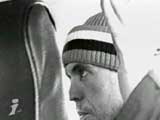
Vladimir Kondratenko
Serial killer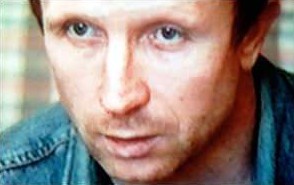 Anatoly Onoprienko
Serial killer · Ukraine · 1989
Anatoly Yuriyovych Onoprienko was born July 25, 1959, and was also known by the…
52 victims
Anatoly Onoprienko
Serial killer · Ukraine · 1989
Anatoly Yuriyovych Onoprienko was born July 25, 1959, and was also known by the…
52 victims
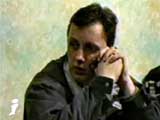 Vladislav Volkovich
Serial killer · Ukraine · 1991
The Nighttime Killers (Ночной Серийник) were responsible for a string of brutal…
16 victims
Vladislav Volkovich
Serial killer · Ukraine · 1991
The Nighttime Killers (Ночной Серийник) were responsible for a string of brutal…
16 victims
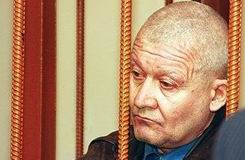 Serhiy Tkach
Serial killer · Ukraine · 1980
Serhiy Tkach (Russian: Серге́й Фёдорович Ткач, born 12 September 1952 in Kisely…
100 victims
Serhiy Tkach
Serial killer · Ukraine · 1980
Serhiy Tkach (Russian: Серге́й Фёдорович Ткач, born 12 September 1952 in Kisely…
100 victims
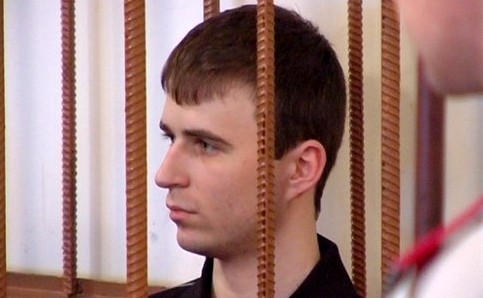 Igor Suprunyuck
Serial killer · Ukraine · 2007
Name: Igor Suprunyuck · Also known as (Ukr): Ігор Супрунюк · Also known as (Rus…
21 victims
Igor Suprunyuck
Serial killer · Ukraine · 2007
Name: Igor Suprunyuck · Also known as (Ukr): Ігор Супрунюк · Also known as (Rus…
21 victims
 Viktor Sayenko
Serial killer · Ukraine · 2007
The case was associated with “The Dnepropetrovsk Maniacs,” a media epithet for…
18 victims
Viktor Sayenko
Serial killer · Ukraine · 2007
The case was associated with “The Dnepropetrovsk Maniacs,” a media epithet for…
18 victims
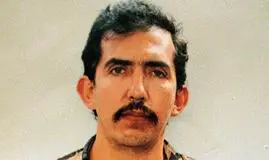 Luis Alfredo Garavito
Serial killer · Colombia/Ecuador · 1992
Luis Alfredo Garavito Cubillos, also known as "La Bestia" ("The Beast") or "Tri…
192 victims
Luis Alfredo Garavito
Serial killer · Colombia/Ecuador · 1992
Luis Alfredo Garavito Cubillos, also known as "La Bestia" ("The Beast") or "Tri…
192 victims
 George Quesinberry
Murderer · USA · 1989
George Adrian Quesinberry Jr. was executed by lethal injection at the Greensvil…
1 victim
George Quesinberry
Murderer · USA · 1989
George Adrian Quesinberry Jr. was executed by lethal injection at the Greensvil…
1 victim
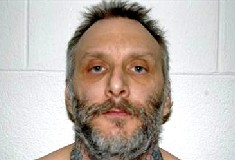 Robert Gleason
Murderer · USA · 2007
Robert Charles Gleason was serving life imprisonment for the 2007 fatal shootin…
3 victims
Robert Gleason
Murderer · USA · 2007
Robert Charles Gleason was serving life imprisonment for the 2007 fatal shootin…
3 victims
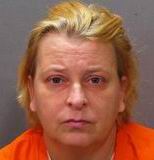 Patty Michelle White
Murderer · USA · 2011
Patty Michelle White killed her former roommate, Michele O'Dowd, and later plea…
1 victim
Patty Michelle White
Murderer · USA · 2011
Patty Michelle White killed her former roommate, Michele O'Dowd, and later plea…
1 victim
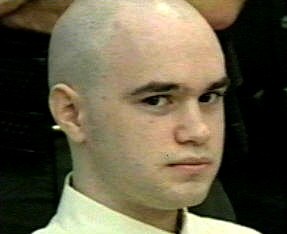 Brandon Wilson
Murderer · USA · 1998
Brandon Wilson was a drifter from Milltown, Wisconsin. He had no permanent plac…
1 victim
Brandon Wilson
Murderer · USA · 1998
Brandon Wilson was a drifter from Milltown, Wisconsin. He had no permanent plac…
1 victim
- Gender
- male
- Country
- Ukraine
- Location
- Kiev, Ukraine
- Date of birth
- 1967
- Age at first offence
- 24
- Characteristics
- serial rapist, murder-suicide, drugs, drug addict, abuse
- Victim profile
- 15 men and 1 woman
- Method of murder
- Shot with a .22 sporting rifle and stabbed or bludgeoned with a wide variety of weapons ranging from stitching awls to bricks and iron bars
- Date(s) of murder
- 1991 - 1996
- Years active
- 1991–1996
- Date of arrest
- —
- Status
-
Died in custody
Overdosed on prescription medication and died while in police custody; death was ruled a suicide on May 31, 1997.
Case record: Vladimir Kondratenko
Status and legal outcome
Vladimir Kondratenko overdosed on prescription medication and died while in police custody on May 31, 1997. His death was ruled a suicide.
Background
The Nighttime Killers (Ночной Серийник) was a media epithet for the killers responsible for a string of brutal murders in Kiev, Ukraine between 1991 and 1996. Two men, Vladislav Volkovich (Владислав Волкович) and Vladimir Kondratenko (Владимир Кондратенко), were arrested and charged with 16 murders.
Most victims were shot with a .22 sporting rifle and stabbed or bludgeoned with a wide variety of weapons ranging from stitching awls to bricks and iron bars.
The killers claimed that they began the murder spree in order to prepare themselves for an eventual career as contract killers, practicing on the homeless, and continued killing for profit and for fun.
Kondratenko committed suicide in prison during the trial. After Kondratenko’s death, Volkovich attempted to change his testimony to paint Kondratenko as the only trigger man in all of the murders. After his death, Volkovich attempted to change his testimony. Timoshin also changed his testimony.
The offence
The murders targeted multiple male victims in Kiev, Ukraine, many in their mid-to-late 30s. The killings involved shooting with a .22 sporting rifle and stabbing multiple times, sometimes after using a silenced pistol according to an initial report.
The killers’ modus operandi (MO) involved luring drivers for their cars. When the killers began killing drivers for their cars, Volkovich would hitch-hike, ask the drivers to go to an address to pick up a “friend with a box,” and the waiting friend would be Kondratenko, who would shoot the driver while Volkovich would stab him at the same time. The pair had apparently murdered at least 7 men for their cars, and most of the cars were later sold.
Investigation
Initial lead and forensic findings (Evgeniy Osechkin)
On June 18 1996, a 44-year-old factory worker named Evgeniy Osechkin was found dead near a Karavaevy Dachi train station just outside of Kiev.
An anonymous tipster called the police and claimed that someone was just shot with a silenced pistol. Forensics uncovered that the victim was actually shot with a .22 round, with a single shell casing recovered, and that he was stabbed multiple times.
The tipster was never located. Investigation determined that Osechkin had no enemies and that robbery was ruled out as a motive because Osechkin still had the salary he received the day of the murder on his person.
Investigators then looked at other murders in the area and found that some months earlier a homeless man had been shot with a .22 rifle and stabbed in the same area, about 100 meters away from the spot where Osechkin was murdered.
Investigators canvassed the area and set up surveillance at the train station.
Some people that raised suspicion were arrested, but all had alibis for the time of the murders. The investigation stalled until another murder was reported two weeks later.
Aleksandr Egorov and subsequent victim
Less than an hour after Egorov’s murder, another male victim was found several blocks away. This victim was again shot with a .22 rifle and stabbed. A description of a man seen loitering in the area matched the suspect in the Egorov and the Osechkin murders.
Fingerprints were recovered from both scenes. No match was found for the fingerprints in any databases, and the description offered few leads.
Aleksandr Shpack and prior party incident
The investigation stalled again until another murder was reported two weeks later.
The new victim was a man named Aleksandr Shpack. Prior to the murder, he was at a birthday party with his girlfriend.
After getting drunk, Shpack got into an argument with two men who crashed the party. All four then left the party.
Shpack was found shot and stabbed a short time later. Shpack’s girlfriend provided a description of the two men, matching the earlier murders. She also remembered that one of the men was named Vladimir.
September 4 unidentified victim
On September 4, yet another male victim was found in the streets. He was shot in the head and the chest with a .22 rifle and stabbed.
Shell casings found at the scene tied it with the earlier murders. The victim was never identified, and no witnesses came forward.
The investigation stalled again.
September 28: Petr Gromov
On September 28, at about 10:30 PM, another male victim aged 35 to 40 was found shot in his vehicle, a VAZ-2106. The victim was named Petr Gromov.
Gromov was shot twice in the head and stabbed multiple times. The killers pushed the body out of the car and tried to drive away, but the shots broke a window and punctured the roof. The killers abandoned the vehicle less than a block away, apparently concerned that the damage would draw unwanted attention.
Investigators concluded they were dealing with a pair of serial killers who targeted men in mid-to-late 30s. Local militsia (police) was instructed to arrest anyone matching the description on sight.
Canvassing apartments near the Gromov murder scene, police located a woman who claimed to recognize one of the suspects as a man named Vladimir who lived nearby. Police put the building she pointed out under surveillance.
Surveillance located an unlocked door in the building. There was a dead body inside the apartment, also shot and stabbed.
The victim was identified as Aleksandr Bykov. His death was estimated to have occurred on September 23.
Several unlit matches had been stuck between the door and the frame, which fell out when the door was opened. Investigators surmised that these were markers left by the killers to determine whether the door had been opened in case they ever returned.
The apartment was put under constant surveillance. A man matching the description was seen to approach the building three days later, but something spooked him. Investigators lost him when he ran into a nearby marketplace.
Arrest and confession
By the time the information was sent up the chain and the two men were ordered detained, the pair claimed one final victim, an unidentified woman they struck and killed while driving drunk at a high rate of speed in a stolen VAZ-2102.
The car was stolen in preparation for a burglary of a commercial warehouse, where they also planned to murder the lone guard.
Once detained, the men quickly confessed to over 20 murders, as well as numerous robberies, carjackings, and burglaries.
Identification as Vladimir Dmitrievich Kondratenko; Volkovich identified
Investigators had found that crime scene photographs from the Bykov crime scene contained images of a person matching a suspect’s description.
The man volunteered to assist the police in search for clues and gave them his name. He was identified as Vladimir Dmitrievich Kondratenko. However, investigators did not have his address.
Continued surveillance on a Sotzialistichna Street block where the Bykov and Gromov murders took place located Kondratenko loitering with another man matching a suspect’s description.
The second man was later identified as Vladislav Volkovich.
Theft and planned burglary for the final claimed victim
The final claimed victim was described as an unidentified woman they struck and killed while driving drunk at high rate of speed in a stolen VAZ-2102.
The car was stolen in preparation for a burglary of a commercial warehouse, and they also planned to murder the lone guard.
Trial
Co-conspirators
Two more co-conspirators were identified.
Andrei Timoshin, a former Senior Customs Inspector, was charged with one of the murders and the subsequent auto theft.
Sergei Tretyachenko, a livery driver, was charged with assisting Kondratenko with attempted auto theft in a murder / burglary scheme that was cut short by the arrest.
Charges and verdict
The case went to trial quickly.
Two main suspects, Volkovich and Kondratenko, had confessed to over 20 murders, but many earlier victims who had been homeless were never located. The two men were charged with only 16 of the murders.
Days after the trial began, Kondratenko overdosed on prescription medication and died while in police custody. His death was ruled a suicide.
After his death, Volkovich attempted to change his testimony to paint Kondratenko as the only trigger man in all of the murders. Timoshin also changed his testimony, claiming that he was unaware that the other men planned to kill their victim, and simply went along to rob a taxi driver.
Kondratenko had earlier stated that Timoshin had offered them a price to kill that particular victim, who was apparently in conflict with the inspector.
After a lengthy trial, all three living suspects were found guilty in August 2000.
Volkovich received the sentence of life imprisonment, as the death penalty had been abolished in the Ukraine.
Sentencing
Volkovich received a sentence of life imprisonment. The death penalty had been abolished in Ukraine.
Appeals
Outcome
Kondratenko died while in police custody after overdosing on prescription medication, and his death was ruled a suicide. Volkovich was found guilty and received life imprisonment in August 2000. Three living suspects were found guilty in August 2000.
Aftermath
The killings were described as a series associated with the “Nighttime Killers” epithet. Many of their earlier victims who had been homeless were never located.
Motive and psychological profile
Prosecution psychological profile: Kondratenko
According to a psychological profile prepared by the prosecution, Kondratenko had been a model child until he started school, when a constant physical abuse by his father began to take its toll.
Kondratenko was initially a good student, but his perfectionist father would severely beat him for any grade below a 5 or Excellent.
Kondratenko’s personality quickly changed. He would get on his knees and beg his teachers not to give him lower grades, but then stopped and became shy and withdrawn.
After graduation Kondratenko’s father, a construction worker, forced his son to go into an architectural college. Kondratenko dropped out after one semester.
At the age of 18 he was drafted into the Red Army. His army service was reportedly hard on Kondratenko, who was frequently injured, including a serious concussion after falling from a tank. He was also constantly abused in the atmosphere of rampant dedovshchina.
He was discharged after compulsory service and reported back home in civilian clothes, inviting a beating from his father for not being in uniform.
Kondratenko planned to go back to school but came down with a severe case of jaundice, leaving permanent disfiguring marks on his face. Kondratenko was so unhappy with his appearance that he refused to go outside for months.
He was eventually committed to a psychiatric institution by his parents, but after some time was deemed sane and released.
Unable to find a job and continuing to stay at home most of the time, the conflict between Kondratenko and his father continued to grow.
Kondratenko needed money in order to move out.
Volkovich background and discussion of contract killing
Vladislav Volkovich, according to prosecution, had “an even less interesting background than Kondratenko.”
He was reportedly one of a pair of twins, growing up in an uneventful household with no reported instances of abuse or aggression.
Growing up in poverty, Volkovich was always preoccupied with appearances and looking for ways to make money, but did not want a full-time job.
He made friends with Kondratenko, and the two men often discussed various ways of making money and various philosophical concepts, eventually deciding that “there is no such thing as morals or honor in this world”.
Motive: contract killers; practice on the homeless; continuation for profit and fun
The two men discussed becoming contract killers, viewing it as a perfect job for them.
They also discussed killing some of their friends for more immediate financial gain. They did not know how to look for contract work, and were unsure they would be able to kill a friend on the first try, so they decided to practice on the homeless.
They reportedly killed at least five before risking an attack on a more dangerous target.
They eventually settled on attacking car owners. Owning a personal vehicle was described as a considerable luxury and a sign of wealth in the former Soviet Union of the early 1990s.
The killers admitted they did not have much luck killing random car owners because most had little if any money, and taking and later selling their cars was difficult.
They continued to kill even if it did not bring financial gain because they enjoyed the act of killing.
Statements and quotations
“they were nothing to me, not people, just items in a list” “They made me feel like a superman” “They made me feel like a superman”, he said.
Volkovich stated he expressed the only regret over their last victim, the woman he had accidentally hit while drunk driving, described as the pair’s only known female victim.
“there is no such thing as morals or honor in this world” The two men decided that “there is no such thing as morals or honor in this world”.
Other details
Additional accused: motive offered by Timoshin
Kondratenko had earlier stated that Timoshin had offered them a price to kill a particular victim, who was apparently in conflict with the inspector.
Numbers of victims connected at the time of detention
By the time the investigation tied victims to the .22 killings, five more murders had been tied to the .22 killings, with a total of 11 known victims.
Timeline
- June 18 1996 — Evgeniy Osechkin, 44, was found dead near a Karavaevy Dachi train station just outside of Kiev.
- September 4 — A male victim was found in the streets shot in the head and the chest with a .22 rifle and stabbed; the victim was never identified.
- September 23 (estimated) — Aleksandr Bykov’s death was estimated to have occurred.
- September 28 (about 10:30 PM) — Petr Gromov, aged 35 to 40, was found shot in his vehicle, a VAZ-2106, and his death was followed by a discovery of an apartment body inside unlocked premises.
- August 2000 — All three living suspects were found guilty; Volkovich received life imprisonment.
Spotted an error, or have more information about this case?