
Tina Lunney
Murderer Miranda Barbour
Murderer · USA · 2013
Miranda Barbour, 19, defendant. · Elytte Barbour, 22, defendant and husband of…
100 victims
Miranda Barbour
Murderer · USA · 2013
Miranda Barbour, 19, defendant. · Elytte Barbour, 22, defendant and husband of…
100 victims
 Tiffany Hall
Murderer · USA · 2006
Tiffany Hall was 24 when she was charged in September 2006. She later entered a…
5 victims
Tiffany Hall
Murderer · USA · 2006
Tiffany Hall was 24 when she was charged in September 2006. She later entered a…
5 victims
 Banita Jacks
Murderer · USA · 2007
Banita Jacks was a Washington, DC resident convicted of murdering her four daug…
4 victims
Banita Jacks
Murderer · USA · 2007
Banita Jacks was a Washington, DC resident convicted of murdering her four daug…
4 victims
 Holly Grigsby
Murderer · USA · 2011
Holly Grigsby was sentenced to life in prison without parole on July 15, 2014.…
4 victims
Holly Grigsby
Murderer · USA · 2011
Holly Grigsby was sentenced to life in prison without parole on July 15, 2014.…
4 victims
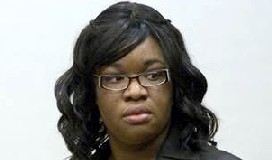 Jessica Tata
Murderer · USA · 2011
Jessica Tata was a Houston home day care owner who fled to Nigeria after a fire…
4 victims
Jessica Tata
Murderer · USA · 2011
Jessica Tata was a Houston home day care owner who fled to Nigeria after a fire…
4 victims
 Amanda Bennett
Murderer · USA · 2011
Amanda Bennett was an Indiana woman who shot her three children and set the fam…
3 victims
Amanda Bennett
Murderer · USA · 2011
Amanda Bennett was an Indiana woman who shot her three children and set the fam…
3 victims
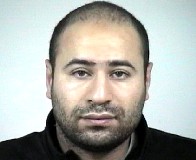 Nordine Amrani
Mass murderer · Belgium · 2011
13 December 2011 — Nordine Amrani carried out a murder–suicide attack in Saint-…
6 victims
Nordine Amrani
Mass murderer · Belgium · 2011
13 December 2011 — Nordine Amrani carried out a murder–suicide attack in Saint-…
6 victims
 Maria del Rosio Alfaro
Murderer · USA · 1990
Maria del Rosio Alfaro, also known as “Rosie” Alfaro, was sentenced to death on…
1 victim
Maria del Rosio Alfaro
Murderer · USA · 1990
Maria del Rosio Alfaro, also known as “Rosie” Alfaro, was sentenced to death on…
1 victim
 Frederick Williams
Mass murderer · USA · 2000
Frederick Williams was an off-duty firefighter who killed his wife and set fire…
4 victims
Frederick Williams
Mass murderer · USA · 2000
Frederick Williams was an off-duty firefighter who killed his wife and set fire…
4 victims
 Kelli Murphy
Murderer · USA · 2011
Kelli Lynn Murphy was a Castle Rock, Colorado mother. She filed for divorce aga…
2 victims
Kelli Murphy
Murderer · USA · 2011
Kelli Lynn Murphy was a Castle Rock, Colorado mother. She filed for divorce aga…
2 victims
 Dwight Loving
Murderer · USA · 1988
Dwight J. Loving was a private at Fort Hood, Texas at the time of the murders.…
2 victims
Dwight Loving
Murderer · USA · 1988
Dwight J. Loving was a private at Fort Hood, Texas at the time of the murders.…
2 victims
 Henry Julius Jacoby
Murderer · United Kingdom · 1922
Henry Julius Jacoby was executed by hanging at Pentonville Prison on 5th June 1…
1 victim
Henry Julius Jacoby
Murderer · United Kingdom · 1922
Henry Julius Jacoby was executed by hanging at Pentonville Prison on 5th June 1…
1 victim
- Gender
- female
- Country
- USA
- Location
- Fairfield Township, Essex County, New Jersey, USA
- Date of birth
- 1968
- Age at first offence
- 41
- Characteristics
- parricide, domestic violence, abuse, motive unclear, torture
- Victim profile
- Marie Zoppi, 74 (her mother)
- Method of murder
- Strangulation with a necktie
- Date(s) of murder
- July 23, 2009
- Years active
- 2009
- Date of arrest
- 4 days after
- Status
-
Imprisoned
Sentenced to 40 years in prison on August 13, 2013
Case record: Tina Lunney
Status
Tina Lunney was sentenced to 40 years in prison on August 13, 2013.
Timeline
- July 22, 2009 — Tina Lunney called a co-worker to say her mother “was acting weird, like depressed.”
- July 22, 2009 — Tina Lunney strangled her mother, Marie Zoppi, with a necktie and staged the scene to look like a suicide.
- July 22, 2009 — Zoppi’s credit cards were used to make payments to PSE&G, collection agencies, and to book a trip to North Carolina’s Outer Banks.
- July 23, 2009 — Tina Lunney called her husband, hysterical, and told him her mother had committed suicide.
- July 23, 2009 — Tina Lunney disappeared the next day after calling her husband the prior morning.
- July 23, 2009 — Marie Zoppi was found dead in the Fairfield home she shared with Tina Lunney, her husband Christopher Lunney, and two children.
- July 24, 2009 — Tina Lunney was reported missing by her family.
- July 27, 2009 — Police picked Tina Lunney up near her home; she confessed to strangling her mother and to writing the fake suicide note.
- July 30, 2009 — Tina Lunney pleaded not guilty to strangling her mother in Newark Superior Court.
- May 16, 2013 — The confession interview was described as a videotaped 45-minute tape played for jurors, in which Tina Lunney described applying lotion/cream and then strangling her mother with a necktie.
- May 22, 2013 — A jury convicted Tina Lunney of first-degree murder and weapons offenses.
- August 13, 2013 — Tina Lunney was sentenced to 40 years in prison.
- August 13, 2013 — Judge Thomas Moore described Lunney’s actions as “depravity and heinousness.”
Background
Tina Lunney was a Fairfield woman who was convicted of murdering her mother, Marie Zoppi. Prosecutors said Lunney spent her husband’s $30,000 inheritance, dodged debt collectors, and carried on an extramarital affair with a Fairfield police officer.
The murder occurred in the Fairfield home shared by Marie Zoppi, Tina Lunney, her husband Christopher (Chris) Lunney, and the couple’s two children. The home was described as a split-level Cole Road or Cole Road–addressed house in Fairfield.
The defense and prosecution agreed that leading up to the murder, Lunney gambled away her family’s entire savings, cheated on her husband, and deceived collection agencies while trying to keep up appearances in her upper-middle-class community.
The offence
Tina Lunney strangled her mother, Marie Zoppi, with a necktie.
Prosecutors said Lunney staged the scene to look like a suicide to gain access to her mother’s credit cards. The account given at trial included that after strangling her mother, Lunney dragged the body to the bedroom, locked the door, and then went to work. She later told her children and husband that “Nana” was out with her brother so they would not go looking for her.
Prosecutors’ motive theory linked the murder to Zoppi’s money and credit cards. The trial included testimony that Zoppi’s credit cards were used on the day of her death to pay off debts and book a trip to North Carolina’s Outer Banks.
A medical examiner testified that Marie Zoppi died of strangulation and also suffered broken ribs, suggesting her death was not a suicide.
Investigation
Assistant Prosecutor Dawn Simonetti told jurors in her opening statement that within 24 hours of Zoppi’s death, the elderly woman’s credit card was used to pay off Lunney’s electric bill and a collection agency and to book a vacation to North Carolina’s Outer Banks. Simonetti said the evidence would show Lunney purposefully and knowingly murdered her mother.
Defense attorney Albert Kapin argued that no DNA testing was conducted on the necktie used to strangle Zoppi and that no physical evidence pegged Lunney to the crime. Kapin also argued that investigators stopped at the statement from Lunney, who he said gave a false confession. Kapin pointed to procedures including that Zoppi’s hands were bagged by members of the medical examiner’s office, but her fingernails were never checked for DNA trace evidence.
Kapin argued that the confession was prompted by stress, grief, and mental illness, and that Lunney was susceptible to the powers of suggestion.
In the videotaped police interview played for jurors, Tina Lunney said she initially told police her mother had committed suicide.
Arrest
Tina Lunney was arrested on July 27, 2009, after being located walking on Long Acres Road in Fairfield at approximately 4:30 a.m. She was described as 41 at the time of her plea, and also as 41/45/46 in various parts of the proceedings.
Police dispatched to the residence at about 9:20 a.m. on Thursday, July 23 after a male called 9-1-1 reporting the victim was found unconscious on the floor of her bedroom on the lower level of the house. The autopsy conducted by the Regional Medical Examiner’s Office determined that the cause of death was strangulation.
After police found Lunney wandering near her home, authorities questioned her again and she confessed to the killing.
Trial
Tina Lunney’s trial lasted three weeks in Superior Court in Newark. She remained impassive during the proceedings as witnesses presented a profile of a troubled middle-class suburban wife and mother whose gambling plunged her family into bankruptcy. The evidence presented included that she cheated on her husband with a local police officer and used her mother’s credit cards.
A jury of six men and six women deliberated for a day and a half before returning the verdict.
Defense attorney Albert Kapin argued that the confession did not fit the facts and that Lunney’s mental state made her confession unreliable. Kapin argued there was no physical evidence, including that the necktie and Lunney’s clothing, were sent for DNA testing, and challenged whether the state conducted a full investigation.
Prosecutors presented evidence intended to corroborate the confession, including phone records and text messages. The trial also included audio recordings of Lunney identifying herself as Marie Zoppi and a call to the bank on July 22, 2009, on the day of the murder in which she said she didn’t remember her PIN number.
Simonetti challenged the defense argument that Lunney was mentally unstable, asking: “If you’re in a psychotic state, how are you capable of getting ... to Atlantic City and all the way back home?”
Verbatim quotations during trial and proceedings
Assistant Essex County Prosecutor Dawn Simonetti said: “It’s justice for Marie Zoppi ..., ” after the verdict was announced. She also said: “It was nothing less than murder and the jurors got it right today.”
Kaplin said in his summation: “Tina Lunney is a bad business person (and) she may even be a thief, but that doesn’t make her a killer,”
In Detective Robert Pracher’s questioning during the videotaped confession, Pracher asked: “What were you thinking as you were doing that?” Tina Lunney replied: “I can’t believe I’m doing this. What am I doing?” Pracher asked: “Why not stop?” Lunney answered: “I don’t know. I should have,”
In Detective Robert Pracher’s questioning, the conversation included: “I just picked it up,” (spoken by Tina Lunney), and: “She was like, gasping, or whatever, on her knees.” (Tina Lunney’s statement.)
Kaplin said: “They stopped at the statement,”
Kaplin said: “And all the financial records don’t prove murder. She killed the family life. They were being foreclosed. She was living a double life, having an affair, bouncing checks all over town and then she found her mother and she lost it.”
Kaplin said: “When you don’t have a memory of something happening, that's when you guess,”
Kaplin said: “It didn’t happen when she said, it didn’t happen the way she said, she never said why. She didn't do it.”
Simonetti asked in closing: “Are we to believe that, coincidentally, as she’s paying off all these bills with her mother’s Visa, there’s a suicide note on the couch and some stranger comes in through the window and strangles Ms. Zoppi for no reason?”
Simonetti said: “This woman took a tie from her husband’s closet and as she said in her own words, ‘I panicked, I did it, I staged it.’”
In the videotaped confession, Tina Lunney described the act as: “the most bizzarest thing.” She also asked matter-of-factly at the end of the confession: “Can I go home now?”
In a prosecutor’s description of the case theory, Assistant Prosecutor Dawn Simonetti said: “It’s all about the vacation. It’s all about certain financial things. The evidence will show Ms. Lunney purposefully and knowingly murdered her mother.”
Defense attorney Albert Kapin said: “Her circuits were overloaded. The stresses began to add up. The guilt of the affair began to add up. She was susceptible to the powers of suggestion,”
Sentencing
At sentencing, Superior Court Judge Thomas Moore called Lunney’s actions calculating and described the “depravity and heinousness” of the crime.
Lunney appeared emotionless at sentencing, wearing green prison garb, with her long wavy hair down. She was described as 46 at the sentencing proceeding.
Assistant Prosecutor Dawn Simonetti said the 40 years in prison was “an adequate sentencing for the crime.”
Assistant Prosecutor Dawn Simonetti also said Lunney faced between 30 years to life in prison, but because she had no prior record she would not receive a life sentence.
Verbatim quotations during sentencing and related comments
Assistant Prosecutor Dawn Simonetti said: “an adequate sentencing for the crime.”
Judge Thomas Moore called Lunney’s actions calculating and described “depravity and heinousness” of the crime.
Fairfield Deputy Police Chief Anthony Manna said: “The jury processed everything they were given and we got justice,” and also said: “The jury processed everything they were given and we got justice,” (with the same quote repeated in the narrative). Manna said further that he hoped the community could now “heal and get some solace.”
Ex-husband Chris Lunney declined to speak, and Simonetti said his response was, simply: “Justice was served.”
Defense attorney Albert Kapin said he plans to appeal both the verdict and sentencing but declined to comment further.
Appeals
Defense attorney Albert Kapin said he planned to appeal both the verdict and sentencing.
Outcome
A jury found Tina Lunney guilty of first-degree murder and weapons offenses on May 22, 2013.
Lunney was sentenced on August 13, 2013 to 40 years in prison.
Aftermath
Jeannine Zoppi, who attended every day of the trial, spoke about her family’s anguish and said: “It’s been a nightmare. I describe it as being in a horror movie.” She also said: “We're all traumatized,” and added, “The family is going to heal and we hope that Tina will heal, too.”
Deputy chief Anthony Manna said the verdict brought resolution to Fairfield’s first homicide in nearly 20 years. He also said: “The jury processed everything they were given and we got justice.”
Tina Lunney had written letters while missing and from jail that were read to the jury.
Verbatim quotations from letters attributed to Tina Lunney
In a letter to her husband that was read to the jury, she wrote: “Things will be better now … I’m sorry I caused you this pain. Don’t be sad. Be strong for the kids. Remember (their) birthday.”
In a letter read to the jury, Tina Lunney said: “I didn’t gamble only $10”
In that letter she instructed him to file for Social Security and food stamps and to send her death certificate to the credit card companies so he won’t have to pay the bills.
In a letter to her son, Tina Lunney wrote: “Mommy was sick. I’m happy now with Nana. I’m watching you. You know I love you so much. Try out for basketball and softball again. Love, Mom.”
In a letter from prison read by Chris Lunney in court, Tina Lunney wrote: “I took some pills. I wrote goodbye letters because when I realized what I did, I wanted to kill myself,” and: “I was worried about bills. Felt bad lying to you. It was a lot of pressure and I snapped. God forbid it was one of the kids,”
During the events around her mother’s death, Tina Lunney presented a note to her husband that read: “Tell the kids I love them. You don’t need me anymore.” Another description of the note included: “Tell the kids I love them. You don’t need me.”
Other details
Tina Lunney was described across proceedings as 35-year-old and 41-year-old and 45-year-old and 46-year-old.
Tina Lunney was described as slight and dressed in conservative suits during the trial; her hair was described as tightly pulled back during the trial and as green prison garb at sentencing.
During the three days on the lam, Tina Lunney went to the Bloomfield library where she wrote goodbye notes. She traveled to Atlantic City and was captured on surveillance footage at Trump Marina casino.
Chris Lunney filed a missing person’s report with the Fairfield police officer with whom Tina Lunney had been having an affair.
In her confession, Tina Lunney described applying cream to her mother’s neck when she grabbed a tie and strangled her, and she described dragging the body to the bedroom.
Detective Robert Pracher led questioning during the videotaped confession, which jurors watched as Tina Lunney answered questions rapidly, smiling and appearing at ease, with her head resting on her hand.
A psychologist saw Tina Lunney in jail and later diagnosed her with bipolar disorder and testified that a person in her mental state could have been delusional.
The defense attorney Kapin argued that no physical evidence pegged Lunney to the crime, including that investigators did not conduct DNA testing on the necktie and did not send items for DNA testing.

Spotted an error, or have more information about this case?