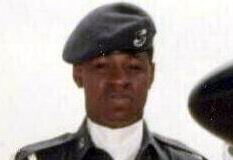
Dwight Loving
Murderer Brian Kevin Rosenfeld
Murderer · USA · 1985
Brian Kevin Rosenfeld Brian Kevin Rosenfeld was sentenced to three concurrent l…
23 victims
Brian Kevin Rosenfeld
Murderer · USA · 1985
Brian Kevin Rosenfeld Brian Kevin Rosenfeld was sentenced to three concurrent l…
23 victims
 Yahweh ben Yahweh
Murderer · USA · 1980
Yahweh ben Yahweh was born and legally named Hulon Mitchell Jr. (October 27, 19…
23 victims
Yahweh ben Yahweh
Murderer · USA · 1980
Yahweh ben Yahweh was born and legally named Hulon Mitchell Jr. (October 27, 19…
23 victims
 Russell Ellwood
Murderer · USA · 1991
Russell Ellwood was a former taxi driver. Authorities suspected him of killing…
20 victims
Russell Ellwood
Murderer · USA · 1991
Russell Ellwood was a former taxi driver. Authorities suspected him of killing…
20 victims
 Robert Martines Perez
Murderer · USA · 1994
Name: Robert Martines Perez · Other name used in proceedings: Robert Martinez P…
15 victims
Robert Martines Perez
Murderer · USA · 1994
Name: Robert Martines Perez · Other name used in proceedings: Robert Martinez P…
15 victims
 Robert Wayne Harris
Mass murderer · USA · 1999
March 15, 2000 — Robert Wayne Harris masturbated in front of a female customer…
6 victims
Robert Wayne Harris
Mass murderer · USA · 1999
March 15, 2000 — Robert Wayne Harris masturbated in front of a female customer…
6 victims
 Mary Runkle
Murderer · USA · 1847
Mary Runkle was convicted of first-degree murder for the death of her husband,…
1 victim
Mary Runkle
Murderer · USA · 1847
Mary Runkle was convicted of first-degree murder for the death of her husband,…
1 victim
 Charles Sinclair
Serial killer? · USA / Canada · 1980
Charles Sinclair was described as having been sought for killings that were lin…
13 victims
Charles Sinclair
Serial killer? · USA / Canada · 1980
Charles Sinclair was described as having been sought for killings that were lin…
13 victims
 Mustafa Raheem
Murderer · USA · 1999
Mustafa Raheem was sentenced to death for the 1999 murders of a mother and her…
2 victims
Mustafa Raheem
Murderer · USA · 1999
Mustafa Raheem was sentenced to death for the 1999 murders of a mother and her…
2 victims
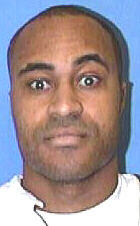 Demarco McCullum
Murderer · USA · 1994
Demarco Markeith McCullum was executed by lethal injection in Texas on November…
1 victim
Demarco McCullum
Murderer · USA · 1994
Demarco Markeith McCullum was executed by lethal injection in Texas on November…
1 victim
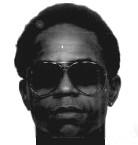 James Russell
Murderer · USA · 1974
James Russell was executed in Texas on September 19, 1991. Russell was charged…
1 victim
James Russell
Murderer · USA · 1974
James Russell was executed in Texas on September 19, 1991. Russell was charged…
1 victim
- Gender
- male
- Country
- USA
- Location
- Fort Hood, Texas, USA
- Date of birth
- ???
- Characteristics
- armed robbery, rape?, attempted rape, serial rapist
- Victim profile
- Pvt. Christopher Fay / Retired Army Sergeant Bobby Sharbino (taxicab drivers)
- Method of murder
- Shooting
- Date(s) of murder
- December 12, 1988
- Years active
- 1988
- Date of arrest
- Next day
- Status
-
Sentenced to death
Sentenced to death (1989); execution date not stated
Case information
Dwight J. Loving was a private at Fort Hood, Texas at the time of the murders.
The offence
Dwight J. Loving was convicted, contrary to his pleas, by a general court-martial of premeditated murder, felony murder, attempted murder, and robbery (5 specifications), in violation of Articles 118, 80, and 122, Uniform Code of Military Justice, 10 USC §§ 918, 880, and 922, respectively.
The court-martial evidence included Loving’s undisputed videotaped confession.
Robberies and taxi murders
On the night of December 11, 1988, he committed two armed robberies of convenience stores, netting less than $100.
He then decided to rob cab drivers. On December 12, during the course of those robberies, Loving murdered two taxicab drivers and attempted to murder a third.
Murder of Pvt. Christopher Fay
Pvt. Christopher Fay was an active duty soldier working for extra money as a cab driver.
At approximately 8:00 p.m. on December 12, Fay drove Loving from Killeen, Texas, to a secluded area of Fort Hood, where Loving robbed him at gunpoint.
After taking Fay’s money, Loving shot Fay in the back of the head. While watching blood “gushing out” of Fay’s head, Loving shot Fay in the back of the head a second time.
Fay’s dead body was discovered by another soldier at Fort Hood a short while later.
Murder of retired Army Sergeant Bobby Sharbino
After fleeing to his Fort Hood barracks, Loving called for a second cab at 8:15 that same evening.
The second cab, driven by retired Army Sergeant Bobby Sharbino, drove Loving from Fort Hood to a secluded street in Killeen, Texas.
Loving robbed Sharbino at gunpoint, ordered him to lie down on the seat, and murdered him by shooting him in the head.
Attempted murder of a third cab driver; escape
After the second murder, Loving socialized with his girlfriend and others at local nightclubs.
Later that evening, he robbed and attempted to murder a third cab driver. The cab driver successfully defended himself, but Loving escaped on foot.
Investigation, confession, and arrest
Loving was arrested by Army investigators the next day.
He made a videotaped confession and later reviewed and signed a written transcript of the confession.
The court-martial confession was summarized as follows:
Dissatisfied with the meager amount of money he had obtained from the 7-Eleven robberies, appellant made the intentional and considered decision to rob taxicab drivers. On the night of 12 December 1988, appellant called for a taxicab to take him from a grocery store in Killeen to his barracks at Fort Hood. The driver of the taxicab was an Army private [Fay] who was moonlighting for extra money. After entering the taxicab and after arriving at Fort Hood, appellant directed the driver to park in a dark secluded area behind the barracks. He produced a pistol, held the pistol to the driver’s head, ordered the driver to shut off the car’s motor and lights, and demanded all the driver’s money. After replying "bullshit" to the driver’s protests that he had surrendered all of the money, appellant shot the driver in the back of the head. While looking at the hole in the back of the victim’s head and the blood "gushing out," appellant cocked the pistol and shot him in the back of the head again. The taxi driver died as a result of these gunshot wounds.
The court-martial evidence also included descriptions of the killing as follows:
After entering the taxicab and after arriving at Fort Hood, appellant directed the driver to park in a dark secluded area behind the barracks. He produced a pistol, held the pistol to the driver’s head, ordered the driver to shut off the car’s motor and lights, and demanded all the driver’s money. After replying "bullshit" to the driver’s protests that he had surrendered all of the money, appellant shot the driver in the back of the head. While looking at the hole in the back of the victim’s head and the blood "gushing out," appellant cocked the pistol and shot him in the back of the head again.
Trial
Verdict and sentence by court-martial
A general court-martial convicted appellant, contrary to his pleas, of premeditated murder, felony murder, attempted murder, and robbery (5 specifications), in violation of Articles 118, 80, and 122, Uniform Code of Military Justice, 10 USC §§ 918, 880, and 922, respectively.
The court-martial sentenced appellant to a dishonorable discharge, total forfeitures, and to be put to death.
Aggravating factors found
At appellant’s court-martial the members unanimously found the following three aggravating factors proved beyond a reasonable doubt:
- “. . . The premeditated murder of Bobby Gene Sharbino was committed while the accused was engaged in the commission or attempted commission of a robbery.”
- “. . . Having been found guilty of the felony murder of Christopher Fay as set forth in specification 3 of Charge I, the accused was the actual perpetrator of the killing.”
- “. . . Having been found guilty of premeditated murder of Bobby Gene Sharbino, the accused was also found guilty of another violation of Article 118, UCMJ, in the same case.”
The members unanimously found that any extenuating and mitigating circumstances were substantially outweighed by any aggravating circumstances.
Appeals
Direct appeal and Supreme Court
On direct appeal appellant raised 70 issues.
After specifically addressing each issue, the Court affirmed the decision of the Court of Military Review, which had affirmed the findings and sentence: 41 MJ 213, 229 (1994), modified on reconsideration , 42 MJ 109 (1995).
The Supreme Court affirmed the Court’s decision: 116 S.Ct. 1737 (1996).
Petition for extraordinary relief; Court of Criminal Appeals
After the Supreme Court’s decision, appellant filed a petition for extraordinary relief in the nature of a writ of mandamus with the Court of Criminal Appeals, electing to raise only one issue: that he was entitled to extraordinary relief because his death sentence was based in part on a conviction of felony murder that was unsupported by a unanimous finding of intent to kill or reckless indifference to human life.
The Court of Criminal Appeals summarily denied relief in an unpublished order dated September 9, 1996.
Writ-appeal petition; Court of Appeals for the Armed Forces
Appellant then filed a writ-appeal petition with this Court, which was granted on November 5, 1996, and set the petition for oral argument.
For the reasons set out below, the Court affirmed the decision of the Court of Criminal Appeals denying the petition for extraordinary relief.
Outcome
The decision of the United States Army Court of Criminal Appeals denying the petition for extraordinary relief was affirmed.
Chief Judge COX and Judge CRAWFORD concur.
Legal analysis included in the decision
Constitutional issues regarding felony murder under Article 118(4)
During oral argument before the Supreme Court, Justice Scalia questioned the constitutional validity of Article 118(4) because it is punishable by death but does not require an intent to kill.
The Supreme Court stated:
Article 118(4) by its terms permits death to be imposed for felony murder even if the accused had no intent to kill and even if he did not do the killing himself. The Eighth Amendment does not permit the death penalty to be imposed in those circumstances. Enmund v. Florida , 458 U.S. 782, 801, 102 S.Ct. 3368, 3378-3379, 73 L.Ed. 2d 1140 (1982). As a result, additional aggravating factors establishing a higher culpability are necessary to save Article 118. 116 S.Ct. at 1742.
Appellant argued that felony murder under Article 118(4) was constitutionally infirm as a capital offense because it does not require an intent to kill, and further argued that the second aggravating factor—that he was the actual perpetrator of the killing in the felony murder of Mr. Fay—was constitutionally defective because it was unsupported by a unanimous finding of intent to kill or reckless indifference to the value of human life.
Appellant argued that the court members were told that there were two death-eligible offenses when there was only one, and that there were three aggravating factors when there were only two.
Defense Reply stated:
Defense Reply at 8.
Appellant asked the Court for:
“a writ of habeas corpus or other appropriate extraordinary relief setting aside the death penalty . . . and ordering” a sentencing rehearing.
The “actual perpetrator of the killing” aggravating factor
The court analyzed the “triggerman” aggravating factor and held that the aggravating factor in RCM 1004(c)(8) is constitutionally valid on its face, provided it is understood to be limited to a person who kills intentionally or acts with reckless indifference to human life.
The Court held:
we are satisfied that in this case the court members understood the term to mean an intentional killing.
The Court held that the military judge’s failure to define the term “actual perpetrator of the killing” was not error under the particular facts of this case, and that any deficiency was harmless beyond a reasonable doubt.
The Court stated:
we hold that no clarifying instruction was required.
The Court also stated:
we are satisfied beyond a reasonable doubt that any such deficiency did not affect the sentencing process.
The Court further held:
no appellate reweighing is required because the error was harmless beyond a reasonable doubt.
Separate opinions included in the record
SULLIVAN, Judge (concurring in part and in the result)
SULLIVAN agreed with denying the petition for extraordinary relief and agreed with the analysis and conclusion that any error in use of RCM 1004(c)(8) was harmless beyond a reasonable doubt, but wrote separately regarding validity of the aggravating factor.
SULLIVAN wrote:
Nevertheless, I would also hold that RCM 1004(c)(8) (“actual perpertrator [sic] of the killing”) is a valid aggravating factor which permits imposition of the death penalty for felony murder in this case.
SULLIVAN included background on Article 118 and described that appellant stood “convicted before this Court of two capital violations” including premeditated murder of Bobby Sharbino and felony murder of Christopher Fay.
SULLIVAN also summarized appellant’s argument:
It is now clear that Private Dwight J. Loving’s death sentence violates the Eighth and Fourteenth Amendments. Because Private Loving was convicted of felony murder pursuant to Uniform Code of Military Justice, Article 118(4), 10 USC § 918(4) (1982) [UCMJ], and because the aggravating circumstance was that Private Loving was the "trigger-man" in that felony murder (Manual for Courts-Martial, United States, 1984, Rule for Courts-Martial [RCM] 1004((c)(7)(B)(2)), his sentence of death is incompatible with the Eighth Amendment requirement that: "a capital-sentencing scheme must ‘genuinely narrow the class of persons eligible for the death penalty and must reasonably justify the imposition of a more severe sentence on the defendant compared to others found guilty of murder.’" Lowenfield v. Phelps , 484 U.S. 231, 244 (1988) (quoting Zant v. Stephens , 462 U.S. 862, 877 (1983)). Writ-Appeal Petition at 1.
SULLIVAN included quoted text from RCM 1004 in effect at the time of trial, including:
(c) Aggravating factors . Death may be adjudged only if the members find, beyond a reasonable doubt, one or more of the following aggravating factors: * * * (8) That only in the case of a violation of Article 118(4), the accused was the actual perpetrator of the killing [.] (Emphasis added.)
SULLIVAN addressed and rejected Enmund-based challenges, and concluded that the “actual perpetrator of the killing” aggravating factor was not legally insufficient under the Supreme Court’s Loving decision.
EFFRON, Judge (concurring in part and dissenting in part)
EFFRON concurred in denying the petitions for extraordinary relief and reconsideration insofar as either action would require reconsideration of findings of guilty affirmed upon mandatory review, 41 MJ 213 (1994).
EFFRON dissented with respect to affirming the sentence, stating that fundamental questions regarding the legality of the sentencing proceeding remained unresolved.
EFFRON wrote that three commissioned officers executed sworn affidavits describing sentencing procedures used in the case, and that the majority refused to permit inquiry into voting procedures used to impose the death penalty.
EFFRON described the voting procedures in general terms, including that:
- all voting was by secret written ballot,
- a proposed sentence must be in writing and contain the complete sentence,
- members vote on each proposed sentence in its entirety, and vote first on the least severe sentence,
- ballots are counted by the junior member,
- a death sentence requires a unanimous vote,
- after a sentence is adopted, members may not reconsider unless instructed by the military judge and they agree by secret written ballot.
EFFRON wrote:
In view of the unresolved questions regarding unlawful command influence during the sentencing proceeding, I would remand this case for factfinding proceedings to determine if the procedures designed to protect against unlawful command influence were violated.
EFFRON identified six separate procedural deviations described in Judge Wiss’s dissent during initial review, including alleged failures to vote on aggravating factors and on whether aggravating circumstances outweighed extenuating and mitigating circumstances, submission failures for written sentence proposals, a separate vote issue on a life sentence before death, ballot counting by the president rather than the junior member, and a second vote ordered by the president without military judge reconsideration instructions.
Timeline
- December 11, 1988 — Loving committed two armed robberies of convenience stores, netting less than $100.
- December 12, 1988 — Loving murdered Pvt. Christopher Fay and retired Army Sergeant Bobby Sharbino, and attempted to murder a third cab driver; he fled after the third cab driver incident.
- After December 12, 1988 — Loving was arrested by Army investigators and made a videotaped confession; he later reviewed and signed a written transcript of the confession.
- January to April 1989 — Appellant was tried between January and April 1989 at Fort Hood, Texas.
- September 9, 1996 — The Court of Criminal Appeals summarily denied relief in an unpublished order.
- November 5, 1996 — The writ-appeal petition was granted and set for oral argument.
- February 26, 1998 — Decided by the United States Court of Appeals for the Armed Forces (opinion date shown).
Other details
- Loving was described as “one of nine military personnel death row.”
- The executions of Loving and Ronald A. Gray were described as the first by the U.S. military since 1961.
- The murders involved a cab driver being directed to a secluded area behind barracks, and the taking of money at gunpoint.
- Evidence included detailed descriptions of the victims’ shootings and the robbing at gunpoint.
- Loving socialized with his girlfriend and others at local nightclubs after the second murder.
- Loving escaped on foot after the attempted murder of a third cab driver.
- The “actual perpetrator of the killing” term was not defined by the military judge, and defense counsel did not request definition or object to the lack of definition.
Spotted an error, or have more information about this case?