
Maria del Rosio Alfaro
Murderer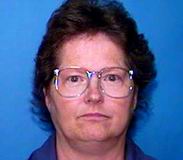 Bobbie Sue Terrell
Murderer · USA · 1984
Bobbie Sue Dudley Terrell was a Pinellas County nurse and worked as the night s…
12 victims
Bobbie Sue Terrell
Murderer · USA · 1984
Bobbie Sue Dudley Terrell was a Pinellas County nurse and worked as the night s…
12 victims
 Megan Huntsman
Murderer · USA · 1996
Megan Huntsman was 40 at sentencing. She was a mother of three children who wer…
6 victims
Megan Huntsman
Murderer · USA · 1996
Megan Huntsman was 40 at sentencing. She was a mother of three children who wer…
6 victims
 Angela Johnson
Murderer · USA · 1993
Angela Jane Johnson was convicted in federal court of aiding and abetting the m…
5 victims
Angela Johnson
Murderer · USA · 1993
Angela Jane Johnson was convicted in federal court of aiding and abetting the m…
5 victims
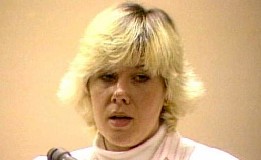 Catherine May Wood
Murderer · USA · 1987
Catherine May Wood was an American caregiver who worked at the Alpine Manor Nur…
5 victims
Catherine May Wood
Murderer · USA · 1987
Catherine May Wood was an American caregiver who worked at the Alpine Manor Nur…
5 victims
 Michele Kalina
Murderer · USA · 1996
Michele Kalina pleaded guilty to murder for one of five infants she initially w…
5 victims
Michele Kalina
Murderer · USA · 1996
Michele Kalina pleaded guilty to murder for one of five infants she initially w…
5 victims
 Amy Bishop
Murderer · USA · 1986
Amy Bishop — biology professor and perpetrator · James Anderson — Bishop’s husb…
4 victims
Amy Bishop
Murderer · USA · 1986
Amy Bishop — biology professor and perpetrator · James Anderson — Bishop’s husb…
4 victims
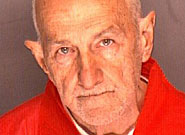 Roger Kibbe
Serial killer · USA · 1977
Roger Reece Kibbe was a middle-aged husband with a lengthy record that included…
7 victims
Roger Kibbe
Serial killer · USA · 1977
Roger Reece Kibbe was a middle-aged husband with a lengthy record that included…
7 victims
 Victor Dewayne Taylor
Murderer · USA · 1984
Victor Dewayne Taylor was sentenced to death on May 23, 1986. He was convicted…
2 victims
Victor Dewayne Taylor
Murderer · USA · 1984
Victor Dewayne Taylor was sentenced to death on May 23, 1986. He was convicted…
2 victims
 Vaughn Greenwood
Serial killer · USA · 1964
Vaughn Greenwood was known as the “Skid Row Slasher.” He was suspected of killi…
11 victims
Vaughn Greenwood
Serial killer · USA · 1964
Vaughn Greenwood was known as the “Skid Row Slasher.” He was suspected of killi…
11 victims
 Hampus Hellekant
Murderer · Sweden · 1999
Karl Helge Hampus Hellekant was later known as Karl Svensson. He was born Janua…
1 victim
Hampus Hellekant
Murderer · Sweden · 1999
Karl Helge Hampus Hellekant was later known as Karl Svensson. He was born Janua…
1 victim
 Mark Alan Smith
Serial killer · USA · 1966
Mark Alan Smith was involved in multiple killings and was sentenced to a total…
12 victims
Mark Alan Smith
Serial killer · USA · 1966
Mark Alan Smith was involved in multiple killings and was sentenced to a total…
12 victims
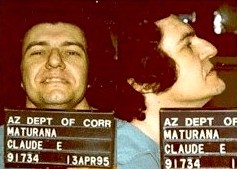 Claude Eric Maturana
Murderer · USA · 1990
Claude Eric Maturana was a French national in Arizona. He was held as an inmate…
1 victim
Claude Eric Maturana
Murderer · USA · 1990
Claude Eric Maturana was a French national in Arizona. He was held as an inmate…
1 victim
- Gender
- female
- Country
- USA
- Location
- Orange County, California, USA
- Date of birth
- October 12, 1971
- Age at first offence
- 19
- Characteristics
- burglary, robbery, drug addict, rape?, torture
- Victim profile
- Autumn Wallace, 9
- Method of murder
- Stabbing with knife (57 times)
- Date(s) of murder
- June 13, 1990
- Years active
- 1990
- Date of arrest
- June 25, 1990
- Status
-
Sentenced to death
Sentenced to death on July 14, 1992
Background
Maria del Rosio Alfaro, also known as “Rosie” Alfaro, was sentenced to death on July 14, 1992 for the murder of 9-year-old girl Autumn Wallace during a burglary and robbery in Anaheim, California, on June 15, 1990. Alfaro was 18 and pregnant with twins at the time of the murder.
Alfaro became a drug addict at 13. She became a prostitute at 14 and a single mom at 15, and was mother to 4 children at 18. She was raised in the barrio in Anaheim, California, near Disneyland. By the time she was 18, she became a murderer while pregnant with twins. She became the first woman sentenced to death in Orange County.
The offence
On June 15, 1990, 9-year-old Autumn Wallace was home alone in Anaheim, California, waiting for her older sister and mother to return from work. Alfaro was an acquaintance of Autumn’s older sister and was known to Autumn from prior occasions. Autumn opened the door for Alfaro and let her inside after Alfaro asked to use the restroom.
Alfaro was high on cocaine and heroin and needed a fix. She planned to approach the Wallace home for burglary and to steal items to sell to obtain money for drugs. When she found Autumn at home rather than expecting nobody to be present, Alfaro realized she would have to kill Autumn because Autumn would know who committed the burglary.
Alfaro took a knife from the kitchen before proceeding toward the restroom at the back of the house. She coaxed Autumn into the restroom on a ruse and stabbed Autumn more than 50 times, with the record stating that Autumn was stabbed 57 times. Autumn did not resist and made no sound when attacked, according to Alfaro’s account to investigators. After the stabbing, Alfaro ransacked the house for items of apparent value. The stolen property included items described as a portable television, a typewriter, a telephone, a Nintendo set, a video recorder, clothes, and Autumn’s typewriter, and property was missing from the Wallace home. Alfaro later stated that the stolen goods were sold for about $250 and that she sold all of it for $300.
Investigation
Investigators interviewed Alfaro during a police-taped interview and also described a 4 1/2-hour videotaped interrogation of Alfaro by two sheriff’s investigators two weeks after the killing. Alfaro said she was “wired” on cocaine and heroin when she stabbed Autumn, and she stated that she drove to the Wallace home with two male friends and her infant son to rob it, knowing that Autumn would be alone.
During her account to investigators, Alfaro said Autumn recognized her as a friend of her older sister and let her in to use the bathroom. Alfaro said that on her way through the house she grabbed a knife from a kitchen drawer and called to Autumn to help clean her eyelash curlers, saying: “That’s when I did it. I stabbed her . . . ’cause she knew who I was.”
The evidence described indicated that only members of the Wallace family and Alfaro were present in the home that day. Investigators found Alfaro’s fingerprints in the bathroom and a matched bloodstained shoe print, and they said her bloodstained shoes matched the footprint evidence. The prosecution introduced physical evidence described as 109 items, including Alfaro’s fingerprint taken from the house and her blood footprint in the bathroom.
Alfaro later changed her story. She claimed an unidentified male accomplice forced her to start stabbing Autumn and that the accomplice finished the slaying. She refused to identify the man. Police and the Orange County Prosecutor said the man never existed. Investigators said they found no evidence that anyone besides Alfaro and Wallace family members had been in the house that day. The prosecution argued that Alfaro never brought up the subject of a man being in the house until she was assigned a defense lawyer and that it was not until someone asked her if there was another person inside the house that she claimed there had been an accomplice.
In a later account, Alfaro told police that two men drove her to the Wallace home and that one of the men came into the house and forced her to kill Autumn.
Arrest
Alfaro was convicted at trial and was held while awaiting sentence, including during testimony referencing that she was being held while awaiting sentence and during her children’s visits to County Jail.
Trial
Alfaro was tried and convicted of first-degree murder with special circumstances: commission of the crime in the course of a burglary and in the course of a robbery. She was also found guilty separately of burglary, robbery, and using a knife during the other crimes.
During trial, a Superior Court judge named Theodore E. Millard agreed to a request from prosecutors barring testimony from two witnesses during the sentencing hearing.
Verdict
A jury took less than four hours to convict Alfaro of fatally stabbing Autumn Wallace 57 times in the bathroom of her Anaheim house on June 15, 1990.
As the jurors filed into the courtroom to announce their verdicts, one juror said: “This is the hard part.”
Deputy Dist. Atty. Charles J. Middleton told Superior Court Judge Theodore E. Millard that he would call no witnesses during the penalty phase and would introduce a school photo of Autumn and address the jury. Defense attorney William M. Monroe argued that saving Alfaro from the gas chamber would be monumental.
Penalty phase
At the end of the penalty phase, the jury deadlocked 10-2 on the sentence of death and the penalty phase was declared a mistrial. A second jury unanimously voted to recommend the death penalty. The trial judge upheld the jury’s recommendation and sentenced Alfaro to death.
During the penalty phase opening statement, defense attorney William M. Monroe painted Alfaro as a “woman-child” and sought life in prison without parole.
An attorney for Alfaro, William M. Monroe, said during the penalty phase opening statement that his client was a victim of the “dreaded disease of drugs” and implied she was oblivious to the crime she committed.
Testimony and statements during trial
Autumn’s mother, Linda Wallace, flanked by two surviving daughters, told the court that the jurors “did a great job” and that they made the “right decision,” and she said: “I’m just glad it’s half over with, and looking forward to the end of this. I want to see her get the death penalty. That’s what she deserves for what she did. . . . If she gets life in prison, I’ll accept that. . . . It’s been a long two years, and it’s a great relief to have it half over with.”
Linda Wallace later told Judge Theodore E. Millard: “during the trial her daughter was known simply as a young victim stabbed to death by someone she trusted.” She also said she wanted everyone to know Autumn was more than just a name, that her blond-haired, brown-eyed daughter was an A student who loved swimming and fishing and who wanted to be an artist when she grew up, and she said: “I lives ‘the nightmare daily of what Autumn went through the last moments of her life.’” She said she wanted Alfaro to pay for her crime by being executed.
Alfaro testified during trial that she was a drug addict and was high the day Autumn was killed. Alfaro described driving to the Wallace home with two male friends and her infant son to burglarize it for drug money, leaving her son outside, and stating that Autumn recognized her as a friend of her older sister and let her in to use the bathroom. Alfaro testified that she found a knife while going through the kitchen and lured Autumn into the bathroom on the pretense of getting the girl to help clean an eyelash curler. Prosecutors said that Alfaro stabbed the child several times and that she maintained throughout her trial that the man who drove her to the house did the actual killing.
Tamara Benedict, 20, testified that Alfaro often worked as a prostitute in exchange for cocaine and heroine, and she said that Alfaro would shoot up as much as 50 times a day for weeks at a time. During cross-examination, Benedict told Deputy Dist. Atty. Charles J. Middleton that she and Alfaro would often sleep with drug dealers to support their expensive habits, saying: “We had no jobs at all,” and “Sometimes we would steal from stores or get someone to steal for us.” Benedict also testified about how the girls would mix cocaine and heroin to lengthen the drug’s high, as described in the proceedings.
Alfaro cried throughout the testimonies of Benedict, her childhood friends, boyfriend Manuel Cueva and her mother, Silvia Melendez Alfaro. Silvia Alfaro testified that her daughter started her life of drugs and prostitution when she was about 12 years old, becoming progressively worse until the birth of her first child, Daniel. Silvia Alfaro testified that Maria Alfaro enrolled in several drug treatment programs but would always go back to her drug habit after several months. Silvia Alfaro also testified that during her pregnancies, Maria Alfaro usually managed to control her drug addiction, and that Silvia sent her to live with a grandmother in Mexico at one point in hopes the lifestyle would help her kick her drug habit. When she came back, Silvia testified that there was no change.
Alfaro’s mother testified that by the time Maria Alfaro was 15, she was out of control, and said: “She wore heavy makeup, black clothes and was always dirty,” and “She didn’t care how she looked.” Silvia Alfaro, 38, implored the judge to spare her daughter, telling the court: “The first time that I came here, I felt like I was sitting in the electric chair,” and “I beg you, please forgive my daughter and please forgive what she did.”
Alfaro’s attorney, William M. Monroe, reasserted Alfaro’s claim of innocence, and asked the judge to reconsider Alfaro’s youth, her drug addiction, and her being a mother of four young boys, and to send her to prison instead of the gas chamber.
When addressing jurors, Monroe argued: “Rosie Alfaro may have stabbed little Autumn Wallace, but she did not kill her.”
Monroe also said outside of court that he felt racial misconception played a vital role in the jurors’ minds, and said the Alfaro jury “could not empathize, understand or relate” to the plight of a Latino woman trapped in a world of drugs.
Deputy Dist. Atty. Charles J. Middleton brushed aside Monroe’s claim of jury bias and said the defendant was convicted only on the facts of the case. Middleton also contended that Alfaro killed Autumn because she was the only witness to the burglary.
Sentencing
On July 14, 1992, Alfaro was sentenced to death by Judge Theodore E. Millard. The sentence was characterized as automatically appealed to higher courts.
Judge Theodore E. Millard denounced Autumn Wallace’s murder as the most “senseless, brutal, vicious and callous” killing he had ever known.
During sentencing proceedings, Alfaro’s mother, Silvia Alfaro, implored the judge to spare her daughter, saying she felt like she was “sitting in the electric chair” and asking for forgiveness for what she did.
At the same time, Linda Wallace said the death sentence gave her peace and that her life had been in limbo since the day she came home from work and found her daughter’s body in a pool of blood.
As for Silvia Alfaro, she said: “I really feel for her because I know what it’s like to lose a daughter.”
Appeals
In August 2007, the California Supreme Court voted unanimously to uphold Alfaro’s death sentence. The record also states that the California Supreme Court unanimously affirmed the death sentence given in 1992 on August 26, 2007. After the California Supreme Court’s decision, appeals for Maria del Rosio “Rosie” Alfaro were described as entering the federal court system.
Outcome
Alfaro remained on California’s death row.
Other details
The record described Alfaro as joining two other women on death row, including Maureen McDermott and Cynthia Lynn Coffman, and stated that they were the only women in California to receive death sentences since 1978, when capital punishment was restored.
Autumn Wallace was described as an A student who loved swimming and fishing and who wanted to be an artist when she grew up.
The record stated that Alfaro refused to identify the alleged male accomplice and that prosecutors said the accomplice never existed. The record also stated that investigators could find no evidence that anyone besides Alfaro and Wallace family members had been in the home that day.
During the proceedings, references were made to Alfaro’s children, including that she had 4 children at 18 and that at least one child, Daniel, was mentioned as her first child.


Spotted an error, or have more information about this case?