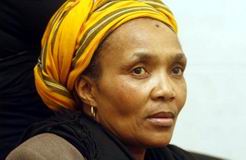
Thandi Maqubela
Murderer Mulalo Sivhidzho
Murderer · South Africa · 2006
Mulalo Sivhidzho was convicted of the murder of her husband, Avhatakali Netshis…
1 victim
Mulalo Sivhidzho
Murderer · South Africa · 2006
Mulalo Sivhidzho was convicted of the murder of her husband, Avhatakali Netshis…
1 victim
 Najwa Petersen
Murderer · South Africa · 2006
Najwa Petersen was the wife of South African singer, composer and theatre direc…
1 victim
Najwa Petersen
Murderer · South Africa · 2006
Najwa Petersen was the wife of South African singer, composer and theatre direc…
1 victim
 Johannes de Jager
Murderer · South Africa · 2008
Johannes Christiaan de Jager was sentenced to life in prison on May 27, 2014. ·…
2 victims
Johannes de Jager
Murderer · South Africa · 2008
Johannes Christiaan de Jager was sentenced to life in prison on May 27, 2014. ·…
2 victims
 Johan Kotze
Murderer · South Africa · 2012
Johan Kotze was sentenced to life in prison on July 16, 2013. · Johan Kotze — c…
1 victim
Johan Kotze
Murderer · South Africa · 2012
Johan Kotze was sentenced to life in prison on July 16, 2013. · Johan Kotze — c…
1 victim
 Johannes Kana
Murderer · South Africa · 2013
Johannes Kana was convicted for the rape and murder of Anene Booysen. Anene Boo…
1 victim
Johannes Kana
Murderer · South Africa · 2013
Johannes Kana was convicted for the rape and murder of Anene Booysen. Anene Boo…
1 victim
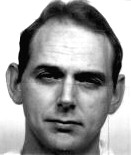 Richard Donald Foster
Murderer · USA · 1984
Richard Donald Foster was executed by lethal injection in Texas on May 24, 2000…
1 victim
Richard Donald Foster
Murderer · USA · 1984
Richard Donald Foster was executed by lethal injection in Texas on May 24, 2000…
1 victim
 Jacob Tyler Roberts
Murderer · USA · 2012
Jacob Tyler Roberts committed suicide by shooting himself the same day of a sho…
2 victims
Jacob Tyler Roberts
Murderer · USA · 2012
Jacob Tyler Roberts committed suicide by shooting himself the same day of a sho…
2 victims
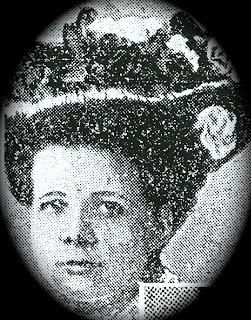 Augusta Fullam
Murderer · India · 1911
Augusta Fullam Augusta Fullam was sentenced to death in 1913. Her sentence was…
2 victims
Augusta Fullam
Murderer · India · 1911
Augusta Fullam Augusta Fullam was sentenced to death in 1913. Her sentence was…
2 victims
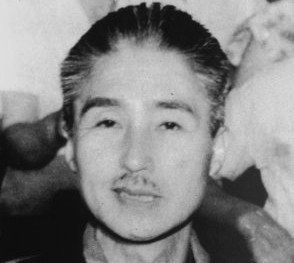 Sadamichi Hirasawa
Mass murderer · Japan · 1948
Sadamichi Hirasawa was a Japanese painter. He was also known as a tempera paint…
12 victims
Sadamichi Hirasawa
Mass murderer · Japan · 1948
Sadamichi Hirasawa was a Japanese painter. He was also known as a tempera paint…
12 victims
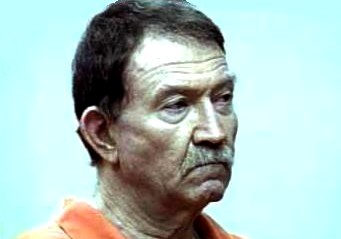 Mel Ignatow
Murderer · USA · 1988
Mel Ignatow was a resident of Louisville, Kentucky. Brenda Sue Schaeffer (Brend…
1 victim
Mel Ignatow
Murderer · USA · 1988
Mel Ignatow was a resident of Louisville, Kentucky. Brenda Sue Schaeffer (Brend…
1 victim
- Gender
- female
- Country
- South Africa
- Location
- Sea Point, Cape Town, Western Cape, South Africa
- Date of birth
- 1955
- Age at first offence
- 54
- Characteristics
- convicted rapist, domestic dispute, domestic violence, history of mental illness, rape, rapist, sexual assault
- Victim profile
- High Court Judge Patrick Maqubela (her husband)
- Method of murder
- Suffocated with clingfilm after being subdued or restrained by undetectable means, chemical or physical
- Date(s) of murder
- June 5, 2009
- Years active
- 2009
- Date of arrest
- —
- Status
-
Sentencing proceedings postponed by the Western Cape High Court; Thandi Maqubela remained in custody pending sentencing on 20 November 2013
Background
Thandi Maqubela was “humiliated and outraged” by her husband’s infidelities.
The court found that Patrick Maqubela’s serial adultery brought the couple’s relationship to an explosive point in 2009. Patrick Maqubela was in a distressed state and confided to others the day before he was killed, on June 4, 2009, that he wanted to divorce his wife.
Justice Minister Jeff Radebe saw her hours before the death and described her as angry and excitable.
The offence
Thandi Maqubela was found guilty of killing her husband, acting judge Patrick Maqubela.
The court found that Patrick Maqubela died at some point on Friday, June 5, 2009. It found that Maqubela was present while his body lay decomposing in a heated bedroom.
The court could not make a finding on how the acting judge had died. Judge John Murphy said:
“At best, there exists a mere possibility that the deceased was suffocated after being subdued or restrained by undetectable means, chemical or physical, but even here we are in danger of drifting into the realm of speculation,”
Investigation
Fingerprints were allegedly found on a piece of plastic in the flat where the body was discovered. The State alleged the plastic was used to smother Maqubela’s husband.
Warrant Officer Barend Swanepoel testified on June 11, 2009 that he and his then-commander Colonel Pretorius found the piece of plastic in a bin in the main bedroom. Swanepoel said he found nine prints on the plastic, which had been crumpled up, with two of them belonging to Maqubela. He said he had no doubt that the prints belonged to Maqubela. Who the seven other prints belonged to was still unknown.
DNA analyst Warrant Officer Ridwaan Boltman testified that he had found a “mixture” of DNA results on the plastic. Following tests on two swabs taken, Boltman said each swab of the plastic contained DNA of a maximum of two people each. The acting judge’s DNA was present, Maqubela’s DNA was not present, and “pieces” of Mabena’s DNA were present though not enough to prove the DNA was Mabena’s.
Arrest / custody
Mabena left the dock and Maqubela stood alone as a swarm of photographers jostled for a position around her. She was led down to the holding cells and remained in custody.
Trial
Thandi Maqubela was charged with the murder of her husband, Western Cape acting judge Patrick Maqubela, and she pleaded not guilty to the alleged murder.
She was also charged with fraud and theft relating to her deceased husband’s will and pleaded not guilty.
The trial-within-a-trial occurred when the prosecution launched an application to have a sworn statement made by Maqubela to a police captain concerning her husband’s death admitted as evidence against her. Defence counsel Marius Broeksma opposed the application, stating that investigating officer Captain Etienne van Ede had failed to warn Maqubela of her right to refuse to make the statement and that whatever she said could be used as evidence against her.
Currie-Gamwo countered that the warning only had application if the person making the statement was considered a suspect in the case. At the time the statement was made, Maqubela was not yet under suspicion for her husband’s murder, and a warning was not required. Currie-Gamwo said:
“An inquest is an investigation into a death where no foul play is suspected.”
Broeksma said that at the time Maqubela gave the statement, she was reasonably thought to be a suspect by one or more of those involved in the investigation, and therefore she should have been pre-warned about her constitutional rights and the statement could not be received as evidence against her.
Maqubela chose not to testify in her own defence in the Cape High Court. Defence counsel Marius Broeksma announced Maqubela’s decision in court after prosecutors Bonnie Currie-Gamwo and Pedro van Wyk closed the State’s case.
Defence attorney Randall Titus, representing Maqubela’s co-accused, businessman Vela Mabena, said Mabena likewise chose not to testify. Both Broeksma and Titus told the court their clients would close their respective cases.
The accused appeared before Johannesburg-based judge John Murphy and assessor Danie Marais and pleaded not guilty.
Motive and conduct findings at trial
In handing down the verdict, Judge John Murphy said the prosecution made out a compelling case of motive. Maqubela had been “humiliated and outraged” by her husband’s infidelities, and the court found she was “determined, in response, to destroy his career and reputation in the public domain.” Murphy said:
“Accused one was in a vengeful and destructive mode,”
Murphy said Maqubela had appointed private investigators to investigate his private life, had threateningly confronted his lovers, and had disgraced him in the eyes of his friends, relatives and colleagues. Murphy said:
“She had appointed private investigators to investigate his private life, had threateningly confronted his lovers, and had disgraced him in the eyes of his friends, relatives and colleagues.”
Murphy said the prosecution had made out a credible motive to kill because of circumstances cumulatively established, including the fact that Patrick Maqubela had decided to leave her and that she had discovered he had reinstated a life insurance policy benefiting her to the tune of millions in the event of his death.
Murphy said Maqubela’s propensity to become excitable when challenged was demonstrated more than once during her testimony.
Murphy said death from natural causes or suicide was excluded primarily by Maqubela’s conduct, a plethora of lies and her persistence in “irrational subterfuge”, which was wholly incompatible with an innocent person:
“irrational subterfuge”
Murphy said:
“She was determined, in response, to destroy his career and reputation in the public domain,”
and described her as “plainly in a destructive mode”.
Evidence about whereabouts and inferences
Murphy said Maqubela created the impression that her husband was still alive when she knew he was dead. He said the description of her activities on June 5, 2009, given in police statements and in testimony, was inconsistent with the mapping of her cellphone signals by an expert. Murphy said:
“Her two versions are so at odds that both can be rejected as untrue.”
He said she had no intention of flying to Qumbu in the Eastern Cape with her husband on that day, but sought to create a false impression to the police and other people. Murphy said:
“She knew by midday that the deceased was incapacitated or dead in the apartment,”
Murphy said it could be inferred that she was in the apartment with his body, hid the fact that he was dead, and “took steps to create the impression” that he was alive when she knew he was not.
Murphy said:
and:
“took steps to create the impression”
Forensic and other trial evidence
Plastic, prints, and DNA
The thumb and palm prints of Thandi Maqubela were allegedly found on a piece of plastic in the flat where Patrick Maqubela’s body was discovered. The acting judge’s DNA was present on the plastic. Maqubela’s DNA was not present. “Pieces” of Vela Mabena’s DNA were present though not enough to prove the DNA was Mabena’s.
Sexual products in a court robe
During the trial, “erection pills” and condoms were found in Acting High Court Judge Patrick Maqubela’s robe following his death.
Forgery and fraud regarding the will
Judge John Murphy found Maqubela guilty of forging her husband’s will and of committing fraud by causing potential prejudice to his estate.
Murphy said the document handed in as a court exhibit was:
“a ‘document falsely purporting to be a copy of a non-existing will of the deceased’ and was forged.”
He said Maqubela falsified the document “with the intent to misrepresent to the Master of the Court” that it was the acting judge’s will.
Murphy said the “will” effectively disinherited the judge’s children from a previous marriage in her favour. He said Maqubela would have been the only person to have benefited financially if the forged will had been accepted and her share of Patrick Maqubela’s estate would have increased from 60 percent to 92 percent.
Murphy said:
“The inescapable conclusion is that Exhibit D [the alleged will] was not drafted by a lawyer,”
and:
“It is even more unlikely that a professional attorney of many years standing, with extensive experience in commercial law, employed at a reputable firm of attorneys in Johannesburg, and serving as an acting judge at the time, would have drafted such a will or put his signature to it.”
Verdict
On November 7, 2013, the Western Cape High Court found Thandi Maqubela guilty of murdering Patrick Maqubela, and also found her guilty of fraud and forgery.
Judge John Murphy said:
“Accused number one [Thandi Maqubela] is found guilty and accused number two is found not guilty,”
Murphy said the acquittal of co-accused Vela Mabena was based on a finding of “not proven”, rather than “factual innocence”:
“not proven”
The court found that the prosecution had not discharged its onus and proved the case against Mabena beyond reasonable doubt.
Sentencing
Maqubela’s lawyer, Marius Broeksma, applied for a postponement until February 17 to present expert evidence on sentencing. Broeksma told Judge John Murphy he had been unable to find a clinical psychologist because of the time of year.
Prosecutor Bonnie Currie-Gamwo had no objection to the postponement and said while the trial had taken a long time, she had sympathy for the defence’s quandary.
Maqubela would remain in custody.
Appeals / outcome
The National Prosecuting Authority issued a statement that justice had been done. Eric Ntabazalila said:
“We are happy to point out that the judge found that ‘the prosecution has not discharged its onus and proved the case against him beyond reasonable doubt’.”
He added:
“In colloquial terms, as opposed to strict legal terms, our finding is one of not proven rather than an affirmation of factual innocence.”
Aftermath / reactions
Some relatives and friends were relieved the trial was over. Some of Patrick Maqubela’s sisters cried, while other relatives wore T-shirts with his picture on them.
His son, Duma Maqubela, said it had been a long four years and that the family was relieved.
Mazwaki Maqubela, Patrick Maqubela’s first wife, said it was “a sad day” and that her heart went out to Thandi Maqubela’s children and her family. She also said:
“Thandi is a danger to the community”.
She said:
“Thandi Maqubela deserved a life sentence.”
The NPA said:
“And we’re happy that the family is happy.”
Maqubela’s bail was revoked despite attempts by her attorney to have it extended. She was expected back in court for sentencing on November 20, 2013.
Other details
The court testimony included a quote in Murphy’s judgment attributed to Justice Minister Jeff Radebe, whom Maqubela had approached about her husband’s behaviour:
“Hell hath no fury like a woman scorned.”
On June 7, 2009, Patrick Maqubela’s body was found in his Bantry Bay apartment. The court found that he was killed on June 5, 2009 and that his body lay decomposing in a heated bedroom while Maqubela was present.
A policewoman gestured to Maqubela to put her hands behind her back. She smiled and complied before being led down to the cells.
Someone in the gallery shouted:
“Bye, Thandi.”
Murphy said it was unlikely Patrick Maqubela would have left almost his entire estate to his wife and disinherited some of his children when considering the state of his marriage.
Witnesses said they had been shown a dossier compiled by Maqubela containing information relating to Patrick Maqubela’s extra-marital affairs with younger women, including photographs, copies of e-mails and text messages.
Maqubela testified that she’d exposed her husband’s behaviour to get support to help him manage a bipolar disorder. The judge said the supposed bipolar diagnosis was a “deceitful fabrication” and described it as a “vengeful ploy to destroy her husband’s reputation”.
Thandi Maqubela’s business associate and co-accused, Vela Mabena, was acquitted of all charges.
Maqubela had been described as “angry and excitable” by Justice Minister Jeff Radebe hours before the death. Judge John Murphy used adjectives including “Vengeful”, “vindictive”, “lying” and “manipulative” when describing her after finding her guilty of murder, fraud and forgery.
Spotted an error, or have more information about this case?