
Mulalo Sivhidzho
Murderer Najwa Petersen
Murderer · South Africa · 2006
Najwa Petersen was the wife of South African singer, composer and theatre direc…
1 victim
Najwa Petersen
Murderer · South Africa · 2006
Najwa Petersen was the wife of South African singer, composer and theatre direc…
1 victim
 Thandi Maqubela
Murderer · South Africa · 2009
Thandi Maqubela was “humiliated and outraged” by her husband’s infidelities. Th…
1 victim
Thandi Maqubela
Murderer · South Africa · 2009
Thandi Maqubela was “humiliated and outraged” by her husband’s infidelities. Th…
1 victim
 Johannes de Jager
Murderer · South Africa · 2008
Johannes Christiaan de Jager was sentenced to life in prison on May 27, 2014. ·…
2 victims
Johannes de Jager
Murderer · South Africa · 2008
Johannes Christiaan de Jager was sentenced to life in prison on May 27, 2014. ·…
2 victims
 Johan Kotze
Murderer · South Africa · 2012
Johan Kotze was sentenced to life in prison on July 16, 2013. · Johan Kotze — c…
1 victim
Johan Kotze
Murderer · South Africa · 2012
Johan Kotze was sentenced to life in prison on July 16, 2013. · Johan Kotze — c…
1 victim
 Johannes Kana
Murderer · South Africa · 2013
Johannes Kana was convicted for the rape and murder of Anene Booysen. Anene Boo…
1 victim
Johannes Kana
Murderer · South Africa · 2013
Johannes Kana was convicted for the rape and murder of Anene Booysen. Anene Boo…
1 victim
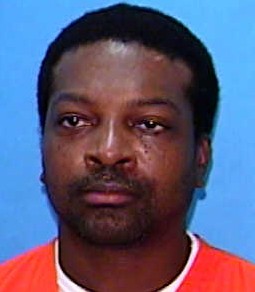 Lancelot Armstrong
Murderer · USA · 1990
Lancelot Armstrong was the defendant in Florida Supreme Court Lancelot Armstron…
1 victim
Lancelot Armstrong
Murderer · USA · 1990
Lancelot Armstrong was the defendant in Florida Supreme Court Lancelot Armstron…
1 victim
 Camille Cleroux
Serial killer · Canada · 1990
Camille Cleroux, 58, pleaded guilty in an Ottawa court to the first-degree murd…
3 victims
Camille Cleroux
Serial killer · Canada · 1990
Camille Cleroux, 58, pleaded guilty in an Ottawa court to the first-degree murd…
3 victims
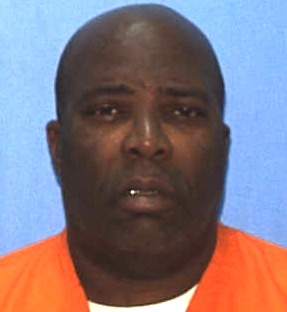 Charles L. Anderson
Murderer · USA · 1994
Charles L. Anderson was convicted and sentenced to death for the January 16, 19…
1 victim
Charles L. Anderson
Murderer · USA · 1994
Charles L. Anderson was convicted and sentenced to death for the January 16, 19…
1 victim
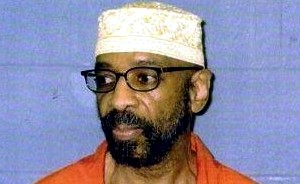 Russell Shoatz
Murderer · USA · 1970
Russell "Maroon" Shoatz (1943 - ) was a former Black Panther and Black Liberati…
1 victim
Russell Shoatz
Murderer · USA · 1970
Russell "Maroon" Shoatz (1943 - ) was a former Black Panther and Black Liberati…
1 victim
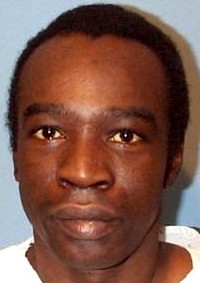 Luther Jerome Williams
Murderer · USA · 1988
Luther Jerome Williams was convicted in 1989 for the murder of John Robert Kirk…
1 victim
Luther Jerome Williams
Murderer · USA · 1988
Luther Jerome Williams was convicted in 1989 for the murder of John Robert Kirk…
1 victim
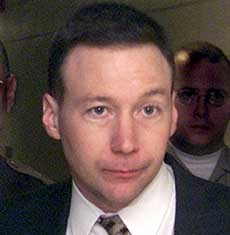 David Camm
Justice miscarriage · USA · 2000
David R. Camm was a former Indiana State Trooper who was acquitted after three…
0 victims
David Camm
Justice miscarriage · USA · 2000
David R. Camm was a former Indiana State Trooper who was acquitted after three…
0 victims
- Gender
- female
- Country
- South Africa
- Location
- Johannesburg, Gauteng, South Africa
- Date of birth
- 1977
- Age at first offence
- 29
- Characteristics
- parricide, murder for hire, to inherit
- Victim profile
- Avhatakali Netshisaulu, 31 (her husband)
- Method of murder
- Burned alive in the boot of his car
- Date(s) of murder
- December 7, 2006
- Years active
- 2006
- Date of arrest
- 3 weeks later
- Status
-
Life imprisonment
Sentenced to life in prison on February 28, 2011
Case record: Mulalo Sivhidzho
Background
Mulalo Sivhidzho was convicted of the murder of her husband, Avhatakali Netshisaulu.
Mulalo Sivhidzho was described by residents of the village she came from as the daughter of Nthathedzeni Sivhidzho, a Lutheran Church pastor in Luvhimbi village outside Thohoyandou in Limpopo. Nthathedzeni Sivhidzho also worked as a clerk at one of the government buildings in Sibasa. Nthathedzeni Sivhidzho was married to Takalani, who worked as a clerk in the department of public works, also in Sibasa. The couple was described as respected and trusted in the village, and villagers relied on them for advice.
News of Sivhidzho’s conviction divided villagers. Some described her as a “good and intelligent person”. Others said her involvement was difficult to believe given the respect the villagers had for her father. Villagers said she had played “a big role in the introduction of different sporting codes in the area, urging the youth to stay out of crime”. A neighbour who asked for anonymity said: “Mulalo played a big role in the introduction of different sporting codes in the area, urging the youth to stay out of crime. But we are still shocked to learn that she was involved in the murder of her husband.”
Another villager said Sivhidzho was difficult to associate with. “She used to cut a lone figure in the village whenever she was around, and it was difficult for us to befriend her. She would attend church whenever she was home, but one would never know what type of a person she was.”
A statement at the time of reporting said that villagers only came to know Netshisaulu at their wedding in 2005, and “that was the last time they saw him alive”. The report also said Sivhidzho was last seen officiating at her cousin’s wedding in the village last December.
A probation report was compiled into Sivhidzho’s co-murderers’ personal circumstances and background. Avhatakali’s mother, Dzudzanani Netshisaulu, told the social worker who compiled the probation report about Sivhidzho.
Social worker Annette Vergeer told the Johannesburg High Court that Avhatakali’s mother said: “She (Sivhidzho) planned to kill him after he had bought her a car and a house.” Vergeer added: “There is not a day that goes by that she does not think of the brutal manner in which her son was killed,”
The offence
Avhatakali Netshisaulu was kidnapped, robbed and burnt alive while locked in the boot of his car on December 7, 2006.
His charred remains were found in Honeydew about an hour after he called his wife to say he was being followed by two cars. He was described as on his way to a business meeting with Ntabudzeni Matzhenene.
The judge described the murder as brutal. Judge Naren Pandya said: “The murder was committed in a brutal manner. He was burnt alive. Petrol was poured over his car and he was cremated alive.”
Investigation
State prosecutor Maro Pappachristoforou disputed a characterisation of Sivhidzho as non-violent. Earlier, the State sought to rebuff a submission by Dr Eon Sonnekus, a forensic criminologist, who described Sivhidzho as a “gentle soul” and not “a violent and vindictive assassin”.
Papachristoforou disputed this by showing Sonnekus photographs depicting the aftermath of Netshisaulu’s fiery death, including his charred remains in his car’s boot.
Papachristoforou asked Sonnekus: “Would you argue that it’s quite a heinous sight… that the deceased died a very cruel and extremely violent and painful death? Would you agree that the killers… could be described as violent, horrible and vindictive,” to which Sonnekus replied “in the affirmative”.
Asked how Sivhidzho’s alleged mental disorders influenced her to commit the crime, Sonnekus said they were “a contributory factor”.
Judge Naren Pandya interjected, asking if Sonnekus was “suggesting Sivhidzho didn’t know what she was doing”. Sonnekus replied “in the affirmative”.
Papachristoforou sought to discredit Sonnekus. She argued that he was not qualified to provide “factual information” on issues like traumatic stress and mental imbalances because he was not a qualified clinical psychologist or psychiatrist. She added that his version was based on “presumptions” and “prejudiced” relatives of Sivhidzho.
To support this, Papachristoforou called Professor Gerald Labuschagne, a commander in the SA Police Service’s investigative psychology unit, to the witness stand. Labuschagne said Sonnekus was not allowed to make diagnoses on issues like clinical psychology and psychiatrist, as prescribed by the Health Professions Council Act. Labuschagne said: “The fact that there are overlaps doesn’t make you an expert,” and added there was no indication that those post-traumatic events left any lasting residue on Sivhidzho’s life.
Arrest
Sivhidzho was arrested three weeks after Avhatakali Netshisaulu was killed, and police said she confessed.
Trial
Pleas and charges
Sivhidzho, Arnold Sello and Ntabudzeni Matzhenene pleaded not guilty.
In court, Judge Naren Pandya stated that Sivhidzho had been found guilty of murder, kidnapping and malicious damage to property.
Evidence and testimonies
Judge Naren Pandya said Sivhidzho had hired her co-accused Ntabudzeni Matzhenene to recruit three men to kill her husband. The judge said: “There is no other conclusion but that she planned a plot with her co-accused to kill the deceased,” and added: “You have been found guilty of murder, kidnapping and malicious damage to property.”
The judge said witnesses corroborated each other in their testimonies. The judge stated that Sivhidzho’s 10-year-old sister-in-law and a family friend who drove them around when she realised her husband had been kidnapped testified truthfully. The judge said both testified that Sivhidzho directed them straight to the scene where the car was found burning. The judge said: “It is clear she gave direction as to where to go, obviously she knew where her husband had been killed,”.
Judge Pandya also admitted evidence of firefighters who attended the scene and later testified that Sivhidzho screamed “my husband is in the boot, look in the boot”.
Judge Pandya dismissed Sivhidzho’s application to have her bail extended.
During the trial, the court heard arguments about Sivhidzho’s confession and the circumstances in which it was obtained. Judge Pandya found it was not reasonably possibly true that Sivhidzho had been tortured by police and forced to confess.
Judge Pandya addressed the defence argument that Sivhidzho had bruises on her wrists. He said the doctor testified that the bruises might have been caused by handcuffs. Judge Pandya also said that Colonel Primrose Ngcobo, the police officer who took down the confession, had been truthful in saying Sivhidzho had waived her right to a lawyer.
Judge Pandya said: “It is reasonable to assume that a well-educated and talented person such as the accused would realise what the consequences would be when the right to remain silent is waived in any case. Her rights were explained to her and there is no indication that she asked for clearance,” and added: “It must be borne in mind that at the time of making the statement, no lawyer had been appointed. She only asked for a lawyer afterwards,”.
In her confession, Sivhidzho wrote that Matzhenene approached her with the idea of killing her husband after she told him he was cheating on her. The confession included the following text:
“I was shocked and asked him what would happen. He said no one would know.
He phoned me again in November (2006) and said everything was ready.
On Thursday my husband left the house to meet Ntambudzeni. He phoned 15 minutes later, saying he was being followed by two cars. I told him to come back.
Then Ntambudzeni sent me an SMS, and I knew they had got him,”
Judge Pandya said the statement was admitted as evidence, finding that the state had proved beyond a reasonable doubt that Sivhidzho had not been tortured. The judge stated: “Material of the accused's evidence was contradictory. She tried to divert from answering direct questions. Her evidence of torture is rejected,”.
A State prosecutor’s closing submission described additional evidence used against Sivhidzho. Maro Pappachristoforou submitted that Sivhidzho’s utterances at the crime scene, her inability to show emotion and her vindictiveness during the trial were proof that she killed her husband.
Pappachristoforou argued that the state case was corroborated by five witnesses who testified that when Sivhidzho got to the scene where the car was in flames, she screamed “my husband is in the boot”.
Pappachristoforou asked: “How could she have known that it was her husband's car? She arrived when the car was still up in flames. She said she could identify the car by its towbar. How does that happen? The state's case is corroborated by five witnesses,”.
She argued that Sivhidzho’s behaviour when she arrived at the crime scene was not that of an innocent person. Pappachristoforou said: “She was composed for someone who just lost her husband. That she screamed for firefighters to look for him in the boot does not mean she was crying,” and added: “Witnesses said she was constantly on her cellphone conducting interviews, I would have expected someone in her position to be too shocked.”
She described Sivhidzho as “a bitter person” who tried “by all means” to frustrate court proceedings and discredit anyone who tried to incriminate her. She said Sivhidzho’s greatest victim was her mother-in-law. The report said Dzudzanani Netshisaulu spent two weeks on the witness stand being cross-examined about her dead son’s finances.
Text message and alleged partial confession
The court heard that Sivhidzho sent a text message to her father-in-law after her husband’s funeral. The report said the message was a partial confession.
The text included the following:
“Part one has passed now we have to go to part two, the material part, materials put us Christians into temptations and do evil things to get materials of this world.
I trust you but the question is do you trust me, sometimes I feel like you are my real father, you are everything to me”.
The text message was sent by Sivhidzho to Mathatha Tsedu, described as the father of her husband Avhatakali Netshisaulu who had just been buried in Venda in December 2006.
Papachristoforou argued in closing that the cryptic and religious statement showed guilt. She said: “Why did she send Tsedu such a cryptic and religious statement? Who are these Christians who will be tempted by material things to do evil things? ” and said: “If one had to apply one's mind to all the facts and keep her co-accused's statements in mind, it would not be very difficult to see that she was in all probability overwhelmed with guilt and was partially confessing her evil deed,”
Sivhidzho’s explanation for sending the SMS was that she was concerned about the squabble between the Tsedus and the Netshisaulus over the burial process. The report said she said she had hoped Tsedu would read between the lines in order to get what she meant. Pappachristoforou described this explanation as “utter nonsense”.
Phone evidence about her husband being followed
The State suggested that Sivhidzho called her husband’s killers before calling the police. The report said a 38-second phone conversation was reflected from Sivhidzho’s house phone to her husband’s cellphone almost 10 minutes after he called her to say he was being followed by two cars.
This was described as contrary to Sivhidzho’s version that the last time she spoke to her husband was when he called to say he was being followed, and that all her attempted calls went to voicemail.
Papachristoforou suggested in closing that Sivhidzho was talking to one of the killers, who were said to be in possession of Netshisaulu’s cellphone. She said: “In all probability, she was talking to one of the killers to ensure that they had killed him,”
Alleged arrangements at a garage and earlier meeting
Ntabudzeni Matzhenene told the court he was promised money and described how he was recruited. In a statement he made to the police, Matzhenene said: “She promised to pay me R4000 for the job. I never received my money. When I called her the phone was off”.
The report said Matzhenene’s statement was the first to be read out after Judge Naren Pandya admitted statements by all three accused as evidence in the trial.
Matzhenene said in his statement that after meeting Sivhidzho just once, he received a call from her asking for a meeting. He said: “We met at the Spar on a Saturday. She came in a taxi. She told me she wanted to kill her husband and needed my help. I refused, but she persisted. ” and: “When I asked why she wanted to kill him she said it's because he had a lot of money, and she wanted it.”
He said after the meeting he went to the Zandspruit informal settlement and organised two Zimbabwean men, Shadrack and Abel.
The report said Matzhenene stated that “Mulalo said she would organise three men on her own.” It said that on December 7, 2006, Matzhenene and Sivhidzho arranged to meet at a garage close to Zandspruit with each of them bringing their own hitmen.
The report said Sivhidzho arrived in her husband’s car with two men, and that she then told them she was going back home to give him the car so he could come where the hitmen would attack him.
State evidence about signals and meeting allegations
Papachristoforou argued that network signals proved that Matzhenene never left his home to meet the deceased. She said the signals showed that calls he made and received through his cellphone were at his shack in Zandspruit.
Papachristoforou also argued that Sivhidzho’s claim that she never met Arnold was “a blatant lie”.
Disappearance from the mall and witness testimony by a 10-year-old
The court heard evidence about Sivhidzho disappearing from Northgate shopping mall.
State prosecutor Maro Pappachristoforou said there was a probability that when Sivhidzho disappeared for two hours, leaving her mother-in-law Dzudzanani Netshisaulu and her 10-year-old daughter stranded, she took her grocery bags to the car with her and left them in the car.
A 10-year-old testified after buying groceries at Pick n Pay, the girl, her mother and Sivhidzho went to Edgars to buy clothes. The 10-year-old said Sivhidzho disappeared and returned after two hours, without the bags she was carrying. The girl said that later when they arrived home the grocery bags were in the car.
Pappachristoforou said: “The only probability is that she took the bags with her and put them in the car when she went to see the killers at a nearby Caltex garage,”.
She said this was contrary to Sivhidzho’s version that she never left Edgars and that she was in the fitting rooms trying on clothes.
Pappachristoforou said when Sivhidzho disappeared from the mall to “meet” her husband’s killers, she left the two behind.
Sentencing
Judge Naren Pandya sentenced Sivhidzho to life imprisonment on February 28, 2011 in the South Gauteng High Court.
The report said the judge described the murder as brutal and said: “The murder was committed in a brutal manner. He was burnt alive. Mulalo was the mastermind of the crime,”
The report said Sivhidzho’s co-accused, Nthabudzeni Matsenene and Arnold Sello, were also given life sentences for their role in the murder.
The report said they were all sentenced to five years for kidnapping and three years for malicious damage to property. It said Sello was also given 15 years imprisonment for robbery with aggravating circumstances.
Sivhidzho was led away to start a life in prison on Monday (28-02-2011). The report described that the crowd shouted: “Mulalo, go well, go well, you deserve to be in jail,” and said the gallery clapped their hands in approval as the judge passed the sentence.
Sivhidzho’s parents and family members hugged her before she went to the cells. The report said she remained calm, showed no reaction, and had always maintained that she was innocent and showed no remorse.
Tsedu welcomed the sentence but said it would not bring his son back. Dzudzanani Netshisaulu, described as the mother of the deceased, said it would take time before she could come to terms with the death of her son but welcomed the sentence.
The report also said Sivhidzho’s alleged mental disorders were discussed during sentencing proceedings. Sonnekus said they were a contributory factor, while Labuschagne gave evidence about limitations on diagnosing and overlaps.
Appeals
On March 15, 2011, Johannesburg High Court acting Judge Naren Pandya dismissed Sivhidzho’s application for leave to appeal.
The report said Sivhidzho and her two co-accused, Ntambudzeni Matsenene and Arnold Sello, had their applications for leave to appeal dismissed by Johannesburg high court acting Judge Naren Pandya.
Pandy told the trio’s lawyers that the applicants had sought but failed to show that there existed exceptional circumstances calling for the court’s judgment and sentence to be set aside.
Sivhidzho’s lawyer Anneline Roestoff argued that the court had erred in convicting based largely on circumstantial evidence and argued: “This is owing to the fact that there is circumstantial evidence about which another court might arrive at a different conclusion,”
Pandya ruled that “the facts and evidence against applicant number three (Sivhidzho) were overwhelming”.
Pandya said: “The court found that the statement made by her amounted to a confession,” and “It is my view that there is no prospect of another court coming to a different conclusion. So the applicant's application for leave to appeal is dismissed.”
The report also said Sivhidzho’s assertion that her case might have been prejudiced after cross-examination of a witness by her then lawyer Christo Meiring was “curtailed” was dismissed. The report said Meiring was found to be “aggressive” towards witnesses, with many allegedly registering their dissatisfaction at his conduct.
Outcome
Mulalo Sivhidzho refused leave to appeal; her application for leave to appeal was dismissed. She remained sentenced to life imprisonment.
Other details
The report said Sivhidzho’s husband of six months, Avhatakali Netshisaulu, was kidnapped, robbed and burnt alive while locked in the boot of his car on December 7, 2006.
The report also said Sivhidzho confessed to killing her husband in a free and sober mind in the Johannesburg High Court.
The report said that Avhatakali’s father Mathatha Tsedu, described as the head of Media24’s journalism academy, said he would never come to terms with the brutal manner in which his son was slain, and said: “The fact that neither of them (murderers) had ever shown any remorse has made this even more devastating and hurtful.”
The report said that at the time of the probation evidence, Matzhenene and Arnold indicated they would appeal the guilty verdict.
The report also said that Sivhidzho was on trial with co-accused Tabudzeni Matzhenene and Arnold Sello for the murder of Avhatakali, 31, who was ambushed and bundled into the boot of his car before it was set alight.
The report said Avhatakali called his wife to say he was being followed by two cars.
The report said Sivhidzho was alleged to have disappeared from the Northgate shopping mall on the night her husband was killed.
The report included a duplicated statement about her motive: “Mulalo Sivhidzho murdered her husband because he had a lot of money - and she wanted it - according to the man she allegedly hired to do the killing.”


Spotted an error, or have more information about this case?