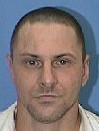
Keith Zettlemoyer
Murderer Ervil LeBaron
Murderer · USA · 1972
Ervil Morrell LeBaron (1925 to August 16, 1981) was the leader of a polygamous…
35 victims
Ervil LeBaron
Murderer · USA · 1972
Ervil Morrell LeBaron (1925 to August 16, 1981) was the leader of a polygamous…
35 victims
 Brian Kevin Rosenfeld
Murderer · USA · 1985
Brian Kevin Rosenfeld Brian Kevin Rosenfeld was sentenced to three concurrent l…
23 victims
Brian Kevin Rosenfeld
Murderer · USA · 1985
Brian Kevin Rosenfeld Brian Kevin Rosenfeld was sentenced to three concurrent l…
23 victims
 Marvin Gray
Murderer · USA · 1975
Marvin Gray was convicted killer who claimed responsibility for 23 slayings and…
23 victims
Marvin Gray
Murderer · USA · 1975
Marvin Gray was convicted killer who claimed responsibility for 23 slayings and…
23 victims
 Yahweh ben Yahweh
Murderer · USA · 1980
Yahweh ben Yahweh was born and legally named Hulon Mitchell Jr. (October 27, 19…
23 victims
Yahweh ben Yahweh
Murderer · USA · 1980
Yahweh ben Yahweh was born and legally named Hulon Mitchell Jr. (October 27, 19…
23 victims
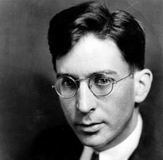 Carl Weiss
Murderer · USA · 1935
Carl Weiss died at the scene after being shot in the Capitol building in Baton…
1 victim
Carl Weiss
Murderer · USA · 1935
Carl Weiss died at the scene after being shot in the Capitol building in Baton…
1 victim
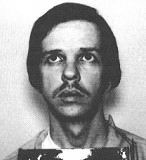 Dayton Leroy Rogers
Serial killer · USA · 1987
Dayton Leroy Rogers was sentenced to death on June 9, 1989. He was resentenced…
8 victims
Dayton Leroy Rogers
Serial killer · USA · 1987
Dayton Leroy Rogers was sentenced to death on June 9, 1989. He was resentenced…
8 victims
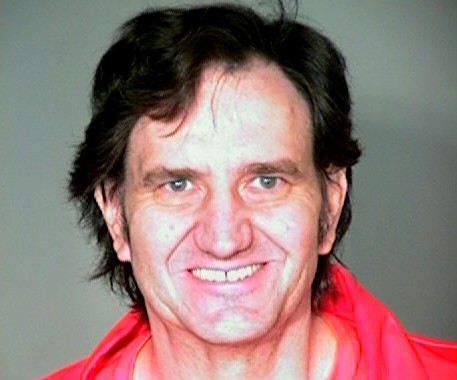 James Styers
Murderer · USA · 1989
James Styers filed a missing child report on December 2, 1989, advising police…
1 victim
James Styers
Murderer · USA · 1989
James Styers filed a missing child report on December 2, 1989, advising police…
1 victim
 Tommy Ray Pruitt
Murderer · USA · 2001
Tommy Ray Pruitt was sentenced to death on November 21, 2003. · November 21, 20…
1 victim
Tommy Ray Pruitt
Murderer · USA · 2001
Tommy Ray Pruitt was sentenced to death on November 21, 2003. · November 21, 20…
1 victim
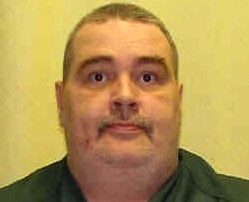 Jessie James Cowans
Homicide - Murderer · USA · 1977
Jessie James Cowans Jessie James Cowans was arrested for armed robbery when he…
2 victims
Jessie James Cowans
Homicide - Murderer · USA · 1977
Jessie James Cowans Jessie James Cowans was arrested for armed robbery when he…
2 victims
 Hendrik Jut
Murderer · Netherlands · 1872
Hendrik Jut (July 19, 1851 – June 12, 1878) was a murderer from The Hague. He k…
2 victims
Hendrik Jut
Murderer · Netherlands · 1872
Hendrik Jut (July 19, 1851 – June 12, 1878) was a murderer from The Hague. He k…
2 victims
- Gender
- male
- Country
- USA
- Location
- Dauphin County, Pennsylvania, USA
- Date of birth
- 1956
- Age at first offence
- 24
- Characteristics
- motive unknown, torture, fugitive, history of mental illness
- Victim profile
- Charles DeVetsco (male)
- Method of murder
- Shooting
- Date(s) of murder
- October 13, 1980
- Years active
- 1980
- Date of arrest
- Same day
- Status
-
Executed
Executed by lethal injection in Pennsylvania on May 2, 1995
Case identification
Keith Zettlemoyer (c. 1956 – May 2, 1995) was convicted in Pennsylvania of the October 13, 1980 murder of Charles DeVetsco and was executed on May 2, 1995 by lethal injection.
Timeline
- October 13, 1980 — Keith Zettlemoyer murdered Charles DeVetsco at a railroad yard in Harrisburg.
- April 24, 1981 — A jury trial in the Court of Common Pleas of Dauphin County resulted in a conviction of first degree murder.
- April 24, 1981 — After a brief sentencing hearing, the jury determined that the death penalty should be imposed.
- August 26, 1985 — The Court of Common Pleas denied Zettlemoyer’s petition under Pennsylvania’s Post-Conviction Hearing Act without a hearing.
- July 2, 1986 — The Superior Court affirmed the denial of the PCHA petition.
- December 23, 1986 — The Supreme Court of Pennsylvania denied Zettlemoyer’s application for leave to appeal.
- February 13, 1987 — Zettlemoyer filed a petition for a writ of certiorari in the United States Supreme Court.
- April 6, 1987 — The United States Supreme Court denied certiorari.
- July 17, 1987 — Zettlemoyer filed a petition for a writ of habeas corpus in the United States District Court for the Middle District of Pennsylvania.
- May 31, 1988 — The district court dismissed Zettlemoyer’s petition for a writ of habeas corpus.
- March 27, 1989 — The United States Supreme Court granted certiorari in Blystone v. Pennsylvania on the question of whether the Pennsylvania death penalty statute was unconstitutional because it improperly limits the full discretion the sentencer must have.
- February 28, 1990 — The Supreme Court held in Blystone v. Pennsylvania that the Pennsylvania death penalty statute, notwithstanding its mandatory language, satisfied the requirement that a capital-sentencing jury be allowed to consider and to give effect to all relevant mitigating evidence.
- February 28, 1995 — The governor of Pennsylvania signed a death warrant scheduling Zettlemoyer’s execution for the week of April 30, 1995.
- April 27, 1995 — Aldona DeVetsco and Thomas Schmidt filed a second petition for habeas corpus on Zettlemoyer’s behalf and sought a stay.
- April 29, 1995 — After a two-day evidentiary hearing, the district court concluded that DeVetsco and Schmidt lacked standing and dismissed the petition while denying the stay.
- May 2, 1995 — Keith Zettlemoyer was executed in Pennsylvania by lethal injection.
Background
Keith DeVetsco was the friend of Keith Zettlemoyer. Charles DeVetsco was scheduled to be a witness in connection with a robbery trial in which he was a potential witness in a burglary case, and Zettlemoyer murdered DeVetsco one week before DeVetsco was to testify.
Zettlemoyer was described in the procedural history as having said in the weeks before the execution that he no longer wished to fight his sentence.
The offence
Keith Zettlemoyer murdered Charles DeVetsco on October 13, 1980.
The procedural history in the federal appeal described the evidence as showing that Zettlemoyer, who knew DeVetsco was to be a witness at the ensuing trial, kidnapped and executed him so that he could not testify.
Police officers arrested Zettlemoyer in the early morning hours after they heard the shots that killed DeVetsco at a railroad yard in Harrisburg. The arrest followed the description that Zettlemoyer was heavily armed.
The victim’s body was discovered in Harrisburg, Pennsylvania.
Investigation and arrest
Two police officers arrested Zettlemoyer after they heard the shots that killed Charles DeVetsco at a railroad yard in Harrisburg in the early morning hours.
Zettlemoyer was heavily armed at the time of arrest.
Trial
Guilt phase
At the murder trial in the Dauphin County Court of Common Pleas, Zettlemoyer did not contest that he had killed DeVetsco but presented a defense of “diminished capacity.”
The jury returned a verdict of guilty of first degree murder.
Zettlemoyer’s post-trial motions were denied, and he filed a direct appeal to the Supreme Court of Pennsylvania, which affirmed his conviction and sentence.
Sentencing phase and jury findings
On April 24, 1981, after the jury returned its verdict of first degree murder, it determined that a death sentence should be imposed.
Under 42 Pa.Cons.Stat.Ann. Sec. 9711, the aggravating circumstances included:
- “The victim was a prosecution witness to a murder or other felony committed by the defendant and was killed for the purpose of preventing his testimony against the defendant in any grand jury or criminal proceeding involving such offenses.”
Mitigating circumstances included a list comprising factors such as:
- “The defendant has no significant history of prior criminal convictions.”
- “The defendant was under the influence of extreme mental or emotional disturbance.”
- “The capacity of the defendant to appreciate the criminality of his conduct or to conform his conduct to the requirements of law was substantially impaired.”
- “The age of the defendant at the time of the crime.”
- “The defendant acted under extreme duress, although not such duress as to constitute a defense to prosecution ... or acted under the substantial domination of another person.”
- “The victim was a participant in the defendant's homicidal conduct or consented to the homicidal acts.”
- “The defendant's participation in the homicidal act was relatively minor.”
- “Any other evidence of mitigation concerning the character and record of the defendant and the circumstances of his offense.”
The jury specifically found that Zettlemoyer murdered DeVetsco to prevent his testimony, and Zettlemoyer did not challenge that finding on the appeal referenced.
Evidence described in the habeas opinion
The federal appellate opinion described extensive physical evidence and conduct supporting a finding of specific intent to kill, including:
- Police testimony that they found forty-one rounds of .357 federal ammunition on Zettlemoyer’s person; twenty-four in strip packets with more deadly semi-jacketed hollow points; and seventeen loose.
- Zettlemoyer was carrying a knife with a six-inch blade and sheath, wore a shoulder holster, two beltkeepers, and an ammunition pouch.
- Police testimony that Zettlemoyer carried two handcuff keys and a canister of tear gas and wore dark clothing and black gloves.
- An inventory search of Zettlemoyer’s van near the site of the murder revealed two sets of handcuffs, two spent .22 caliber casings, and a .22 caliber pistol with holster and clip.
- A .22 caliber live round was found just outside the van on the ground.
- Police described that Zettlemoyer drove his van as far back as possible into the deserted area where the murder occurred, to a point where it could not be seen.
- Testimony that Zettlemoyer dragged the handcuffed DeVetsco, who had already been shot and was bleeding, from the van to where Zettlemoyer shot him twice more.
- The federal opinion described the nature and location of wounds and the distance from which the last two shots were fired.
- The federal opinion discussed evidence that Zettlemoyer had motive, including that one week before the murder, during jury selection for a Snyder County trial involving Zettlemoyer, the list of prospective witnesses included DeVetsco, who was expected to be a witness, and the trial was scheduled to begin one week after the murder.
Sentencing
The jury imposed the death penalty and determined it should be imposed under the Pennsylvania capital sentencing scheme.
In the federal habeas proceedings described, the Commonwealth stipulated to mitigating factors including:
- that Zettlemoyer had no prior criminal convictions, and
- that Zettlemoyer was 25 years old.
Appeals
Direct appeal and post-conviction in Pennsylvania
After the Court of Common Pleas denied Zettlemoyer’s post-trial motions, he filed a direct appeal to the Supreme Court of Pennsylvania, which affirmed his conviction and sentence as Commonwealth v. Zettlemoyer, 500 Pa. 16, 454 A.2d 937 (1982), cert. denied, 461 U.S. 970.
Zettlemoyer then filed a petition seeking a new trial under Pennsylvania’s Post-Conviction Hearing Act (“PCHA”). The PCHA petition was denied without a hearing on August 26, 1985, and the denial was affirmed on appeal on July 2, 1986. His subsequent application for leave to appeal was denied by order dated December 23, 1986.
Zettlemoyer then filed a petition for certiorari in the United States Supreme Court on February 13, 1987, which was denied on April 6, 1987.
Federal habeas corpus proceedings (Middle District of Pennsylvania and Third Circuit)
Zettlemoyer filed a petition for a writ of habeas corpus in the United States District Court for the Middle District of Pennsylvania on July 17, 1987.
The district court dismissed the petition on May 31, 1988.
Zettlemoyer appealed, and oral argument had been scheduled for March 30, 1989, but decision was deferred pending disposition of Blystone v. Pennsylvania.
The Third Circuit issued an opinion affirming the district court’s dismissal and rejected Zettlemoyer’s arguments, including challenges related to the Pennsylvania death penalty statute, ineffective assistance of trial counsel, and alleged defects in jury instructions. The procedural history included:
- the district court’s reasoning that the Pennsylvania death penalty statute was not unconstitutional as applied,
- rejection of ineffective assistance of counsel claims regarding diminished capacity testimony,
- rejection of ineffective assistance of counsel claims regarding the sentencing phase,
- rejection of challenges to jury instructions based on Caldwell v. Mississippi, Mills v. Maryland, and a claim regarding life sentence instruction.
A separate appeal addressed whether Aldona DeVetsco and Thomas Schmidt had standing as next friends to pursue further habeas relief and seek a stay. The Third Circuit denied the request for a stay and affirmed dismissal for lack of standing.
Other details
Keith Zettlemoyer’s final statement and last meal
In a final statement released before his death, Zettlemoyer said:
“I ask that the people of Pennsylvania and the Commonwealth of Pennsylvania please accept my 14 years of imprisonment and my execution now as all of my debt to society paid in full,”
and:
“And I ask that the people of Pennsylvania and the Commonwealth of Pennsylvania please forgive me of all the terrible crimes I committed against them and I thank them sincerely,”
His last meal was two cheeseburgers, french fries, chocolate pudding and chocolate milk. No alcoholic drinks were permitted.
Statements attributed to Gov. Tom Ridge
In a statement after the execution, Republican Gov. Tom Ridge said:
“Nearly 15 years ago, Keith Zettlemoyer brutally murdered his friend, Charles DeVetsco. May Keith Zettlemoyer's soul rest in peace. May the soul of Charles DeVetsco rest in peace.”
Described health concerns and competency proceedings
The federal standing decision described evidence and testimony from April 29, 1995 regarding Zettlemoyer’s competency to waive further appeals.
Zettlemoyer made statements in that proceeding, including:
“No, sir, I'm afraid that my execution is going to be stopped. If it's stopped, sir, my 14 and-a-half years of suffering will continue on in an unbroken chain for maybe another 14, 20, or 25 years. It's--the thought of all that is just deeply disturbing. I'm afraid, sir, that Mr. Wiseman may somehow convince you to issue a stay of execution and stop my execution. I have a very deep fear of that, sir, and I'm hoping that as a direct result of you sitting there, talking to me, that you are an intelligent man, and can tell that I am not mentally incompetent. I am not crazy, I'm not loony. I understand perfectly what's going on with the execution and everything, and it was my desire, which I expressed to my attorney, to come up here and try to untwist some of the terrible things that Mr. Wiseman has gotten up here and twisted. He has taken things out of context. He has twisted the truth. He has used half-truths.”
He also said:
“I have a number of health problems, and the psychiatrist and the psychologist at the SCI Pittsburgh Institution have recommended a variety of medications for me to take. And it benefits me tremendously so I always take it.”
and:
“And ten and-a-half years ago I became a Christian. And as a Christian, I have many questions and desires that I wish to know, and only God can answer those questions. So I'm very anxious to get to Heaven, so to speak, that I can finally learn the answers to all of these deep religious and philosophical questions that have come across my mind for all of these years, sir.”
The post-conviction defender organization argued that Zettlemoyer was seriously mentally ill and incapable of fighting the execution on his own. The federal appellate opinion referenced that three psychiatrists testified that he was sane and included quotes:
“I'm not crazy,”
and:
“I'm not loony. I understand perfectly what's going on with the execution and everything.”
In the standing appeal, the district court concluded that DeVetsco and Schmidt failed to sustain their burden of establishing inaccessibility, mental incompetence, or other disability on Zettlemoyer’s part, and found that Zettlemoyer knowingly, intelligently and voluntarily opted to proceed with his execution with full understanding of other options for access to courts.
Method of execution and process details
In accounts of the execution process, the state of Pennsylvania planned to use lethal injection. Described components included insertion of catheters into both arms, pumping lethal drugs and agents to stop breathing and heart function, and heart and pulse checks by a doctor in an adjacent room.
The federal narrative describing the execution process included names of officials involved in communications and oversight, including Robert W. Meyers, Harvey Yancey, Joseph Mazurkiewicz, and Gov. Ridge as the signer of the execution order. It also referenced the injection chamber being referred to as an “injection room,” and described that team members were neither prison employees nor doctors and were “technically qualified” to insert IV tubes and administer drugs intravenously.
The federal narrative described that Zettlemoyer was to be fingerprinted to verify the right man had arrived and asked if he would like to issue a final statement.
The narrative described that prison officials delivered a menu for his final meal, allowed immediate family a final visit, and allowed one clergyman and his attorney to visit as needed.
Competition of appeals and denial of stays
The district court denied a stay application and dismissed the second habeas petition for lack of standing after a two-day evidentiary hearing on April 29, 1995.
The Third Circuit affirmed the dismissal and denied the motion for a stay of execution filed in that court.
Zettlemoyer’s earlier federal habeas petition was dismissed by the district court on May 31, 1988 and affirmed by the Third Circuit.
Parties in the standing appeal
In the standing appeal, Aldona DeVetsco (mother of Charles DeVetsco) and Thomas Schmidt appealed. They filed on behalf of Keith Zettlemoyer and sought a stay.
The respondents included Martin Horn, Commissioner, Pennsylvania Department of Corrections, and Joseph P. Mazurkiewicz, Superintendent of the State Correctional Institution at Rockview.

Spotted an error, or have more information about this case?