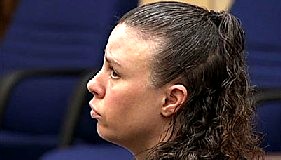
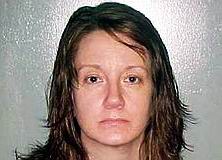
Angela McAnulty
Murderer Miranda Barbour
Murderer · USA · 2013
Miranda Barbour, 19, defendant. · Elytte Barbour, 22, defendant and husband of…
100 victims
Miranda Barbour
Murderer · USA · 2013
Miranda Barbour, 19, defendant. · Elytte Barbour, 22, defendant and husband of…
100 victims
 Tiffany Hall
Murderer · USA · 2006
Tiffany Hall was 24 when she was charged in September 2006. She later entered a…
5 victims
Tiffany Hall
Murderer · USA · 2006
Tiffany Hall was 24 when she was charged in September 2006. She later entered a…
5 victims
 Banita Jacks
Murderer · USA · 2007
Banita Jacks was a Washington, DC resident convicted of murdering her four daug…
4 victims
Banita Jacks
Murderer · USA · 2007
Banita Jacks was a Washington, DC resident convicted of murdering her four daug…
4 victims
 Holly Grigsby
Murderer · USA · 2011
Holly Grigsby was sentenced to life in prison without parole on July 15, 2014.…
4 victims
Holly Grigsby
Murderer · USA · 2011
Holly Grigsby was sentenced to life in prison without parole on July 15, 2014.…
4 victims
 Jessica Tata
Murderer · USA · 2011
Jessica Tata was a Houston home day care owner who fled to Nigeria after a fire…
4 victims
Jessica Tata
Murderer · USA · 2011
Jessica Tata was a Houston home day care owner who fled to Nigeria after a fire…
4 victims
 Amanda Bennett
Murderer · USA · 2011
Amanda Bennett was an Indiana woman who shot her three children and set the fam…
3 victims
Amanda Bennett
Murderer · USA · 2011
Amanda Bennett was an Indiana woman who shot her three children and set the fam…
3 victims
 Virginia Krall
Murderer · USA · 2006
Virginia Ann Krall was the defendant and appellant. The case was titled: The Pe…
1 victim
Virginia Krall
Murderer · USA · 2006
Virginia Ann Krall was the defendant and appellant. The case was titled: The Pe…
1 victim
 Angel Mayora Medrano
Murderer · USA · 1987
Angel Mayora Medrano was a defendant in a case involving rape. Medrano was at a…
1 victim
Angel Mayora Medrano
Murderer · USA · 1987
Angel Mayora Medrano was a defendant in a case involving rape. Medrano was at a…
1 victim
 Edward Alexander CRrowley
Murderer · United Kingdom · 2000
Defendant: Edward Alexander Crowley (also described as “Edward Alexander CRrowl…
1 victim
Edward Alexander CRrowley
Murderer · United Kingdom · 2000
Defendant: Edward Alexander Crowley (also described as “Edward Alexander CRrowl…
1 victim
 Richard William Kutzner
Murderer · USA · 1996
Richard William Kutzner was convicted of capital murder and was sentenced to de…
2 victims
Richard William Kutzner
Murderer · USA · 1996
Richard William Kutzner was convicted of capital murder and was sentenced to de…
2 victims
- Gender
- female
- Country
- USA
- Location
- Eugene, Lane County, Oregon, USA
- Date of birth
- October 2, 1968
- Age at first offence
- 41
- Characteristics
- parricide, torture, kidnapping
- Victim profile
- Jeanette Marie Maples, 15 (her daughter)
- Method of murder
- Torturing, beating and starving
- Date(s) of murder
- December 9, 2009
- Years active
- 2009
- Date of arrest
- Same day
- Status
-
Sentenced to death
Sentenced to death on February 24, 2011
Parties
- Angela McAnulty (mother of Jeanette Maples)
Background
Angela McAnulty was born in California and lost her mother to murder when she was 5. After high school, she traveled with a carnival worker and started using drugs. She had two sons and a daughter in a later marriage, and all were taken by California authorities for neglect and abuse. McAnulty bore another daughter, recovered the daughter taken by state officials, and later married a long-haul trucker. The family moved to Oregon in 2006 after adding a son.
The offence
On Dec. 9, 2009, McAnulty killed her daughter, Jeanette Maples, who was 15.
Prosecutors described the case as aggravated murder involving “intentional maiming and torture.” Witnesses and prosecutors said abuse at McAnulty’s hands mutilated, tortured, starved, and tortured Jeanette Maples to death over the course of several years, and that Maples was forced to sleep on cardboard in a room with blood spattered on walls, floor, and ceiling.
Prosecutors said the household included leather belts and torture devices, and they described chunks of Maples’ flesh. They said Jeanette Maples was made to collect dog feces, then run them in her face and mouth. Prosecutors said McAnulty would place Maples in a “torture room” and turn on a vacuum cleaner to mask the sound so the two younger children wouldn’t hear it, and that sometimes McAnulty tied Maples up.
McAnulty and her husband Richard McAnulty (stepfather of Jeanette Maples) were both accused of aggravated murder. Prosecutors said the abuse leading to Jeanette’s death started before Halloween. McAnulty pleaded guilty to aggravated murder. Her husband faced trial in May and prosecutors said they were not seeking the death penalty for him.
Investigation
A 911 call reported that Maples was not breathing at the family home off River Road. Firefighters found Jeanette Maples on her back in a dimly lit living room without her shirt on. Angela McAnulty told the first responders: “Help my baby”.
Firefighters and paramedics attempted CPR and put a tube into her lungs. Paramedics tried to make her breathe. Fire captain Sven Wahlroos testified that he asked Angela McAnulty several times about the girl’s age because the body looked small for a 15-year-old. Paramedics said Maples had no pulse.
Ryan Sheridan was the lead paramedic on scene in December 2009. He met Angela McAnulty in the driveway and testified that she talked very fast, saying Maples fell down and that last seemed well about an hour before the 911 call. Sheridan did not recall Richard McAnulty saying a word. Sheridan testified that something was not right when he found Maples inside the house off River Road. He testified that Maples had no shirt, wet hair, bruises on her face, and cuts above her eye, and that the girl was skinny, small and frail and emaciated.
Dr. Elizabeth Hilton treated Maples in the emergency room and testified that she could find no signs of life in the petite, emaciated body. Doctors pronounced Maples dead at 8:42 p.m. Dr. Hilton was told Maples had no previous medical problems, but she said cuts and wounds on the girl’s lips were old and appeared never to have received any medical care. Hilton testified that Maples’ front teeth were broken, and that there were severe wounds on her legs and back. Hilton met with the family, and Angela told the doctor Maples had been eating but had gotten very skinny lately. Hilton testified that a charge nurse asked where Maples went to school, and Angela told hospital staff Maples was homeschooled.
Investigators took away boxes of evidence. The step-grandmother Lynn McAnulty later cleaned out the house and found food padlocked in kitchen cupboards and a blood-spattered bedroom. She described the inside of the house as filthy, with junk and toys everywhere. Investigators urged Lynn McAnulty not to view Jeanette Maples’ body.
Arrest / custody
The couple was arrested later that night after Jeanette Maples was pronounced dead at a nearby hospital. Two younger children in the home were taken into protective custody.
Trial
Guilty plea and plea changes
Angela McAnulty pleaded guilty to aggravated murder on the first day of her criminal trial.
On February 1, 2011, Angela McAnulty pleaded guilty Tuesday morning to aggravated murder as a court assembled a jury to hear the case against her. Court documents showed investigators believed the couple caused Maples’ death by “intentionally maiming and torturing” her.
McAnulty also pleaded guilty to destroying or altering physical evidence in the case.
Sentencing phase and jury decision
On February 24, 2011, McAnulty spoke to the eight men and four women charged with deciding whether she should live out her life in prison or die. The jury could send her to prison for life with the possibility of parole after 30 years for pleading guilty to aggravated murder in the death of her 15-year-old daughter Jeanette Maples.
McAnulty told the jury: “I am very sorry for hurting my daughter in a very bad way”. She apologized to the detectives who interrogated her the night after her daughter died. She told the jury: “I want you to know I did wrong,” and: “and I am at peace with your decision.”
Prosecutor JoAnne Miller spent over a half hour recounting the evidence against McAnulty, and witness testimony described Jeanette Maples trying to live, stealing food from the kitchen, drinking water from the toilet, and sleeping on cardboard that McAnulty put down to keep blood off the carpet.
Miller said: “We're not talking about an angry drunk,” and: “We are talking about a cool-headed killer.” Defense attorney Ken Hadley told the jury another way to view McAnulty, saying she was not dangerous to society and that there was no evidence she intended to kill her.
Deputy DA Erik Hasselman asked the jury why the state sought the death penalty, saying: “Can you envision a set of circumstances, a set of atrocities committed by a human being that were worse than what you heard in this case?” and: “Did she make any effort to save that child? The answer is no.” Hasselman also said: “The only person who knows why Angela McAnulty hated her daughter so much is Angela McAnulty,” and: “Whatever your decision is as a group, I agree with the defendant. I am at peace with it.”
A Lane County Circuit Court jury sentenced McAnulty to death after deciding she should be sentenced to death for torturing and killing her 15-year-old daughter.
McAnulty addressed jurors for the first time on Wednesday, acknowledging she fatally abused her daughter but adding: “I did not want my little girl to die.” She did not take the witness stand, choosing instead to make a personal statement not subject to cross-examination.
Description of jury materials and evidence
The jury sat through hours of videos of police interviews as part of the prosecution’s case for death. The courtroom appeared under extra security.
Sentencing
On February 24, 2011, Angela McAnulty was sentenced to death.
Appeals
Years of appeals were scheduled to follow.
Outcome
Angela McAnulty was sentenced to death and moved into Coffee Creek Correctional Facility. Prison officials modified her cell to make it more like cells in the rest of the prison, including adding modest features such as shelving. She would spend most of her time in a cell part of the Wilsonville prison's segregation unit.
Prison officials described rules for managing death row inmates, including limitations on clothing exchanges, a single knit cap, and access to exercise, phone calls, and religious and legal services. McAnulty ate meals alone in her cell and was allowed to keep only a piece of fruit before returning the tray. She had access to the prison canteen to buy small items and could use the pay phone. Under the rules, she could exercise indoors at least 40 minutes a day, including shower time, and five times a week she could exercise in a fenced outdoor yard where she could talk to other inmates through the fence.
A public information officer at Coffee Creek, Jana Wong, said: “A work assignment will provide her an opportunity to earn her funds and practice pro-social behavior.”
Other details
Related people
- Jeanette Maples — McAnulty’s 15-year-old daughter; the victim
- Richard McAnulty — McAnulty’s husband and stepfather of Jeanette Maples; prosecutors were not seeking the death penalty against him
- Lynn McAnulty — Richard McAnulty’s mother; described as step-grandmother to Jeanette Maples
- Anthony Maples — father of Jeanette Maples; learned of the death and murder charges in a phone call from a social worker
- Anthony Maples quoted in relation to the death: “I am so crushed by this,” and: “I know that I have to accept this as God's will, but it's disgusting that this happened to my little angel.”
- Gene Evans — Human Services spokesman
- Lois Day — administrator for the DHS' Office of Safety and Permanency for Children
- Robin Christian — executive director of the nonprofit Children First For Oregon
- David Paul — Portland attorney who sued the department on behalf of children
- Steve Krasik — defense team leader (as stated)
- Aaron Hoberg — Lane County sheriff's detective referred to in court interviews
- Holly Sams — said to have called DHS office in Eugene after being told about abuse concerns
Child welfare history mentioned
Jeanette Maples was described as having been referred to child welfare authorities multiple times without rescue. Friends and relatives said she was starved and abused for years. Angela McAnulty was described as high-strung and controlling, making little money, once living in her car, and isolating children from others. In Sacramento in 1995, McAnulty lost custody of Jeanette and two older brothers because of suspected abuse and neglect. The children’s father Anthony Maples was described as in prison for drug offenses and having little contact.
Anthony Maples said officials removed Angela’s children from their home and that their two sons grew up in foster home. He said Jeanette spent 5 1/2 years in foster care in Sacramento before she was returned in 2001. He said Angela had another daughter at that time.
Jeanette started Cascade Middle School in the middle of her sixth-grade year in 2006. Friends said she loved school and liked writing and reading poetry and being away from home. Friends also said she was constantly hungry, became sad, withdrawn and anxious after the bell rang to go home, and that her mother was strict and would not allow friends to call her or let her visit or invite them over. Amber Davis said Jeanette told her in seventh grade that her mother was abusing her and that Davis told her parents and school officials about Jeanette’s bruises in 2007.
The case described the Department of Human Services investigation and internal reviews. Dr. Bruce Goldberg ordered an internal investigation into caseworkers’ contact with the family. Oregon law was described as requiring the Department of Human Services to convene a critical incident response team when a child known to state child welfare officials dies or is seriously injured.
Spotted an error, or have more information about this case?