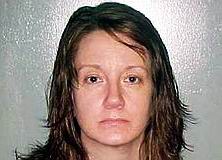
Cheryl McCafferty
Murderer Miranda Barbour
Murderer · USA · 2013
Miranda Barbour, 19, defendant. · Elytte Barbour, 22, defendant and husband of…
100 victims
Miranda Barbour
Murderer · USA · 2013
Miranda Barbour, 19, defendant. · Elytte Barbour, 22, defendant and husband of…
100 victims
 Tiffany Hall
Murderer · USA · 2006
Tiffany Hall was 24 when she was charged in September 2006. She later entered a…
5 victims
Tiffany Hall
Murderer · USA · 2006
Tiffany Hall was 24 when she was charged in September 2006. She later entered a…
5 victims
 Banita Jacks
Murderer · USA · 2007
Banita Jacks was a Washington, DC resident convicted of murdering her four daug…
4 victims
Banita Jacks
Murderer · USA · 2007
Banita Jacks was a Washington, DC resident convicted of murdering her four daug…
4 victims
 Holly Grigsby
Murderer · USA · 2011
Holly Grigsby was sentenced to life in prison without parole on July 15, 2014.…
4 victims
Holly Grigsby
Murderer · USA · 2011
Holly Grigsby was sentenced to life in prison without parole on July 15, 2014.…
4 victims
 Jessica Tata
Murderer · USA · 2011
Jessica Tata was a Houston home day care owner who fled to Nigeria after a fire…
4 victims
Jessica Tata
Murderer · USA · 2011
Jessica Tata was a Houston home day care owner who fled to Nigeria after a fire…
4 victims
 Amanda Bennett
Murderer · USA · 2011
Amanda Bennett was an Indiana woman who shot her three children and set the fam…
3 victims
Amanda Bennett
Murderer · USA · 2011
Amanda Bennett was an Indiana woman who shot her three children and set the fam…
3 victims
 Larry Allen Hayes
Murderer · USA · 1999
Larry Allen Hayes was convicted of capital murder and was executed by lethal in…
2 victims
Larry Allen Hayes
Murderer · USA · 1999
Larry Allen Hayes was convicted of capital murder and was executed by lethal in…
2 victims
 Ian Lee Stawicki
Mass murderer · Washington · 2012
Defendant: Ian Lee Stawicki (born September 16, 1971) Age at time of incident:…
5 victims
Ian Lee Stawicki
Mass murderer · Washington · 2012
Defendant: Ian Lee Stawicki (born September 16, 1971) Age at time of incident:…
5 victims
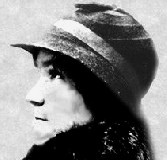 Charlotte Bryant
Murderer · United Kingdom · 1935
Charlotte Bryant, also known as Charlotte McHugh, was born in Londonderry in 19…
1 victim
Charlotte Bryant
Murderer · United Kingdom · 1935
Charlotte Bryant, also known as Charlotte McHugh, was born in Londonderry in 19…
1 victim
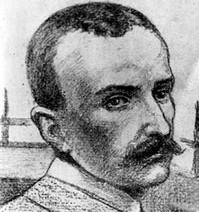 John Alexander Dickman
Murderer · United Kingdom · 1910
John Alexander Dickman was convicted of the murder of John Innes Nisbet. John I…
1 victim
John Alexander Dickman
Murderer · United Kingdom · 1910
John Alexander Dickman was convicted of the murder of John Innes Nisbet. John I…
1 victim
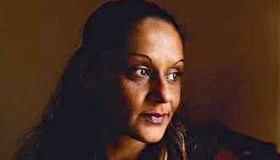 Anu Singh
Murderer · Australia · 1997
Anu Singh (born 3 September 1972) was an Australian of Indian descent who kille…
1 victim
Anu Singh
Murderer · Australia · 1997
Anu Singh (born 3 September 1972) was an Australian of Indian descent who kille…
1 victim
- Gender
- female
- Country
- USA
- Location
- Fort Thomas , Campbell County, Kentucky, USA
- Date of birth
- 1964
- Age at first offence
- 43
- Characteristics
- domestic violence, abuse, rape
- Victim profile
- Her husband, Robert McCafferty, 44
- Method of murder
- Shooting
- Date(s) of murder
- June 25, 2007
- Years active
- 2007
- Date of arrest
- Same day
- Status
-
Imprisoned
Sentenced to 18 years in prison on March 10, 2009
Parties and basic information
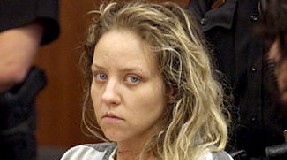
Cheryl McCafferty was convicted in the fatal shooting of her husband, Robert McCafferty.
Background
Cheryl McCafferty testified that she shot her husband in self-defense following years of abuse and one night of terror.
The offence
Robert McCafferty was found shot to death around 8 a.m. in his Fort Thomas home, at the 100 block of Madonna Place. Prosecutors said the shooting occurred while Robert was asleep in the couple’s bedroom. McCafferty told investigators her husband had threatened to kill her and their children during an early morning rage before falling asleep with a gun pointed at her side, and she managed to gain control of the weapon before Robert awoke and she shot him in fear.
Defense attorneys argued that Robert held his wife hostage and that she feared for her life, telling jurors they would not have been charged if she had killed a stranger under the same circumstances. Defense counsel said police improperly collected some evidence, rendering it unreliable, and reminded the jury of testimony suggesting the victim could have been awake when he was shot or moved afterward.
Investigation
Sgt. Christopher Carpenter testified that the gun contained three live rounds and three empty chambers when police found it covered by a fleece pullover in the couple’s bed. Police found a spent bullet casing in a bundle of clothes in the closet, where McCafferty said her husband had fired and missed a close-range shot at her, but prosecutors argued that the bullet was not fired immediately before the fatal gunshot. Assistant prosecutor Vanita Fleckinger said:
“If a shot was fired and then a shot was fired at Bob McCafferty’s head, it doesn’t match that scenario,”
Carpenter testified that at least one live round was in the chamber before the one that contained the fatal shot, and agreed with defense attorneys that cocking the hammer without firing the weapon will rotate the revolver cylinder.
Detective Raymond Metz testified that emergency medical personnel entered the home to issue a formal death declaration even though investigators were certain McCafferty was already dead from a single gunshot wound to the head. Metz said he shot six digital photographs after a reminder by one of the paramedics on the scene June 25, 2007, and defense attorney Frank Mungo said:
“Six is better than none,”
Defense counsel presented a murder-suicide checklist that police are expected to follow during those investigations, and jurors looked at one another with raised eyebrows when prosecutors raised an objection. Metz testified he was not sure whether the checklist was followed as investigators secured the crime scene and collected evidence, but prosecutors read several items from the checklist and asked if those procedures had been followed, and Metz said each had been.
Fort Thomas police Lt. Jamie Gadzala supervised the unit that photographed and collected evidence from the McCafferty home. Gadzala testified that his team arrived at the scene with officers around 8:30 a.m. but did not go into the house until a search warrant was issued sometime before 1 p.m. An ingress-egress log was entered into evidence to show that the evidence collection unit did not enter the crime scene until after 1 p.m., more than four hours after police and emergency medical personnel entered the home.
Detective Metz also testified under cross-examination that Fort Thomas EMT crews moved Robert McCafferty’s arms and removed his t-shirt before all but the first six crime scene photos were taken and before any measurements were taken at the crime scene. He said they did this to check whether Robert McCafferty was dead.
A dash camera video showed Cheryl McCafferty walking out of the house and speaking to her children and at least one neighbor before police placed her inside an ambulance, where she was examined by a paramedic. The paramedic testified that McCafferty did not complain of any injuries and that her vital signs were normal, although she appeared to be hysterical.
Prosecutors introduced the gun McCafferty used to kill her husband. Police officers reassembled the bed where McCafferty shot her husband, and prosecutor Michelle Snodgrass climbed onto the mattress and underneath a comforter to act out portions of the defendant’s testimony.
Det. Brad Adams of Fort Thomas police testified that McCafferty took out $340 cash and made a $200 online fund transfer April 30 during six transactions. Other witnesses, including the defendant, testified that she charged tens of thousands of dollars in the months prior to the slaying.
Prosecutors claimed McCafferty stole several thousand dollars from her husband’s checking account several months after the couple sold some investments to pay off her $40,000 in debt. Snodgrass said she learned of thefts shortly before the shooting and revealed them to their children. Prosecutors suggested the motive was greed and an alleged obsession with her daughter’s modeling career.
The defense disputed the evidentiary support for police procedures, arguing that the crime scene was not reliable.
Arrest
Cheryl McCafferty was charged with murder less than an hour after the June 25, 2007 slaying. She called 911 in the early morning hours of June 25, 2007 to report that she had shot and killed her husband. She was taken to St. Luke Hospital East for evaluation for several hours and was then taken to the Campbell County jail.
Investigators said she called her mother shortly before alerting authorities. Fort Thomas Police Lt. Mark Dill said the charge stemmed from evidence including a 911 call she made and statements she gave to police at the crime scene.
Trial
Charges considered and verdict
McCafferty was charged with murder and jurors also considered a third, less serious charge of reckless homicide. Jurors returned their verdict Monday evening and found McCafferty guilty of first-degree manslaughter in the fatal shooting of her husband, Robert McCafferty. The conviction carried a sentence of a minimum of 10 years to a maximum of 20.
During closing arguments, Commonwealth Attorney Michelle Snodgrass told the jury of 10 men and four women that they had a simple test to consider when deciding whether to convict McCafferty of any charges:
- If jurors believed McCafferty’s story, they must convict her on one count of first degree manslaughter.
- If they did not, they must convict her of murder.
The jury of eight men and four women did not buy McCafferty’s claim of self-defense.
Defense theory and testimony
Defense attorney Frank Mungo told jurors that McCafferty had been held hostage by her husband and feared for her life, and said she would not have been charged with a crime if she’d killed a stranger under the same circumstances. Mungo said:
“The only reason we’re in this room is this band of gold,”
and continued:
“They are husband and wife, (but) where was his ring? On the bedside table. He was a stranger to her that night.”
McCafferty testified she intended to seek a protection order against her husband and had spoken to a divorce attorney.
Prosecutors questioned whether a pattern of serious abuse existed. Mungo said prosecutors failed to cross-examine McCafferty about her claims of past abuse.
Defense also presented testimony and evidence supporting McCafferty’s account of past incidents and the events of June 25, 2007, including an account that Robert held a knife to her about a month before the shooting. Prosecutors said a knife contained fingerprints from everyone in the McCafferty family, including both adolescent children, but that the location of Cheryl McCafferty’s fingerprint suggested she could have held the weapon in a threatening manner.
Juror Jimmy Stephenson said he would have tried to persuade fellow jurors to recommend the maximum of 20 years. Stephenson said:
“She said it herself in her testimony,”
and:
“He had been sleeping for at least two hours. She had the gun, many options to get out of the room.”
Stephenson said the violence was not ongoing or immediate and that those were two conditions he said must exist to justify self-defense.
Stephenson refused to comment on whether he believed McCafferty’s testimony that her husband abused her for 16 years, but he said he also wasn’t convinced the motive was money. He said:
“Why would it be money?”
and:
“They already had a lot of money.”
Prosecutorial theory
Snodgrass suggested McCafferty’s motive was greed and an alleged obsession with her daughter’s modeling career.
During trial, Snodgrass recited McCafferty’s testimony and demonstrated the act of pulling the gun’s trigger, with the hammer clicking loudly in the packed courtroom, to demonstrate the testimony. Snodgrass said:
“Bob didn’t defend himself,”
and:
“Bob didn’t react and attack.”
Snodgrass also presented evidence described as blood spatter analysis indicating Robert McCafferty’s head had been lying on two pillows when he was shot, and enlarged photos showing his right hand curled in the same position at several stages during the initial investigation.
Evidence and procedure disputes
Defense argued that Fort Thomas police improperly collected some evidence, rendering it unreliable. Defense attorneys also focused on alleged issues with evidence collection procedures and timing of the ingress-egress log.
Detective Raymond Metz testified he regretted having allowed five emergency medical personnel inside the crime scene.
Defense presented the dashboard camera video showing McCafferty’s actions after the shooting and testimony by a paramedic that she did not complain of injuries and had normal vital signs, though she appeared hysterical.
Witnesses and juror events
Police officers testified, including Chris Goshorn, the first officer to arrive. Goshorn testified that he and another officer arrived to find Cheryl McCafferty walking outside the Madonna Place home with a blanket wrapped around herself, speaking to a dispatcher by phone. Goshorn said he told McCafferty to drop the blanket and phone and keep her hands within clear view; she complied, then fell to the ground, curled into a fetal position, and began sobbing. Goshorn said officers found Robert McCafferty in bed with a single gunshot wound to the head and a handgun wrapped inside a fleece garment near his body.
Goshorn testified that he was unsettled when Molly McCafferty asked if she could scoop up her dog as they were leaving. He also testified that neither child had asked where their parents were or what police were doing there. Goshorn said both children cried as they approached their mother and that all three hugged as Cheryl explained what had happened. Goshorn testified her mother stated:
“Your dad tried to kill me and I shot him,”
Goshorn said he helped McCafferty into his cruiser shortly before her parents arrived and asked if they could check on her, allowing McCafferty’s parents to briefly hug their daughter inside the cruiser but turning away a neighbor. Goshorn said McCafferty repeatedly asked to speak to Lt. Mark Dill but she never spoke to him.
Jurors left to deliberate before 3 p.m. and Judge Julie Ward dismissed two alternate jurors, including Thomas Younse of Alexandria. Younse said he began to doubt McCafferty’s claims of self-defense because too much time had elapsed between Robert McCafferty’s alleged assault on his wife and the shooting. Younse said:
“I think self-defense was just shot down on the evidence I saw,”
and:
“I don’t think the threat was there to provide justification to shoot him.”
Younse said he was surprised the McCaffertys’ teenage children were not later called by defense attorneys to provide testimony about prior abuse. He said it might have been shielded as he could understand why they were.
Media access dispute
Before trial began, Campbell Circuit Court Judge Julie Reinhardt Ward banned all cameras and recording devices from the courtroom other than a pen and paper. Ward said:
“There is no compelling interest for the court to allow the cameras to be kicked out,”
was said by Jill Meyer, an attorney representing the stations.
Ward said:
“You are welcome to bring a pad and pen,”
and:
“I’m not doing any more restrictions on the media than on anyone else in the trial. This protects her right to a fair trial.”
WCPO news director Bob Morford said:
“If the media said OK to that, we would never be able to cover another court case ever with anything other than paper and a pen,”
and:
“I think the judge is smart enough to know that, so I don’t know why, therefore, she would make this claim.”
Enquirer attorney Jack Greiner said:
“Dateline” and “48 Hours” had set up three cameras in Ward’s courtroom and fed the signal to a small room on the third floor of the courthouse.
and Greiner also said the ban on laptops and digital recording equipment unnecessarily inhibited reporters’ ability to do their jobs. (This content appeared in the proceedings narrative included in the record.)
Sentencing
McCafferty agreed to a sentencing deal in which prosecutors did not challenge a defense motion asking the presiding judge to rule that Cheryl McCafferty, 44, was a victim of domestic violence. This reduced the amount of time McCafferty had to serve before being eligible for parole from 85 percent to 20 percent of the sentence.
With credit for time served awaiting trial since June 25, 2007 counting toward the sentence, McCafferty would be eligible for parole early in 2011.
McCafferty waived all rights to appeal her conviction.
The family of Robert McCafferty went along with the deal for the sake of the McCafferty children, and Michelle Snodgrass said:
“It’s over,”
and:
“As of today, they can start their emotional healing. They can put this stage behind them and move on, and try and figure out how their family moves on from here.”
Frank Mungo said:
“No appeals,”
and:
“That was a part of the negotiated sentence. It’s final. This is it."
Deanna Dennison said:
“Nobody was a victor at the trial.”
She said:
“I don’t think the prosecution is a winner neither is the defense a winner in this whole thing,”
and:
“I think it’s the best resolution for those children and the best for Cheryl and for all the families involved.”
Jury deliberations did not occur before the deal on the sentence was finalized, and juror Jimmy Stephenson said he was not expecting a deal on the sentence before the jury had a chance to make a recommendation. Stephenson said:
“I wouldn’t say I’m shocked,”
and:
“but I wasn’t expecting it.”
Stephenson said:
“That would have been my input,”
and:
“I can’t speak for everyone else.”
He said:
“It’s still in the exact same position,”
in relation to photos described during trial presentation.
Cheryl McCafferty was led out of the courtroom in handcuffs after the sentencing.
Appeals
Outcome
Jurors convicted Cheryl McCafferty of first-degree manslaughter in the fatal shooting of her husband, Robert McCafferty. She was sentenced to 18 years in prison on March 10, 2009.
Aftermath and reactions
Friends and supporters were visibly shaken at sentencing; several people cried out “We love you Cheryl,” as McCafferty was led out of the courtroom in handcuffs.
Cheryl McCafferty’s family declined to speak with reporters as they left.
A statement from Robert McCafferty’s family was read by their lawyer, Dave Bender:
“Bob’s family continues to grieve the loss of a wonderful, loving person,” Bender said. “They are thankful for the prayers they have received from friends but still continue to ask for your prayers and support.”
Bob Schmitt lived in the house next door to the McCaffertys’ home on Madonna Place for 34 years and attended the sentencing. Schmitt said:
“It is sad,”
and:
“It ruined two families’ lives.”
Schmitt said he was close friends of the McCaffertys and did not want to discuss Cheryl McCafferty’s guilt or innocence or the trial verdict.
Schmitt said there was a lot about the case that was never made public and described that many people never came forward, saying:
“Fort Thomas is too worried about its image,”
and described Cheryl McCafferty as “a great mother.” He said his daughter cried thinking about how caring Cheryl McCafferty had been and said:
“She is good human who was caught up in a terrible situation,”
and:
Timeline
- June 25, 2007 — Cheryl McCafferty called 911 and told a dispatcher she had killed her husband, Robert.
- June 25, 2007 — Robert McCafferty was found shot to death around 8 a.m. in his Fort Thomas home; less than seven hours later Cheryl McCafferty was charged with murder.
- June 25, 2007 — Cheryl McCafferty was taken to St. Luke Hospital East for evaluation and then to the Campbell County jail.
- June 26, 2007 — At Cheryl McCafferty’s initial court appearance, the audience was stunned when Robert McCafferty’s brother asked a Campbell County judge to lower bond for Cheryl McCafferty; the judge refused and she remained locked up in the Campbell County jail in lieu of the $1 million bond.
- June 27, 2007 — Investigators returned to the McCaffertys’ home on Madonna Place and removed additional evidence including a kitchen knife found in a closet, bedding, two baseball bats, greeting cards to and from Robert McCafferty, and paperwork from a safe.
- June 28, 2007 — A Campbell County grand jury indicted Cheryl McCafferty on one count of murder.
- July 11, 2007 — Cheryl McCafferty appeared in Campbell Circuit Court and pleaded not guilty; Judge Julie Reinhardt Ward denied a request to reduce her $1 million bond.
- Oct. 3, 2008 — Cheryl McCafferty’s attorneys filed a motion describing alleged abuse by Robert McCafferty toward his children and wife.
- Feb. 18 — Jurors and alternates were sworn in after questioning of just the first 34 people in a jury pool of nearly 300.
- Feb. 23, 2009 — Cameras and electronic recording devices were banned from the courtroom other than a pen and paper; the trial was set to continue.
- Feb. 25, 2009 — A Fort Thomas detective testified early in the trial; jurors heard testimony about fingerprints on a knife and evidence collection procedures.
- Feb. 26, 2009 — Medical personnel were described as touching Robert McCafferty’s body before measurements were taken; the gun and evidence collection issues were discussed.
- March 9, 2009 — Jurors returned a verdict finding Cheryl McCafferty guilty of first-degree manslaughter.
- March 10, 2009 — Cheryl McCafferty agreed to an 18-year sentence; prosecutors did not challenge the domestic violence victim motion; McCafferty waived rights to appeal her conviction.
Other details
Cheryl McCafferty had been held in the Campbell County jail in lieu of $1 million bail since June 25, 2007, and the charge could send her to prison for life if found guilty of murder.
The couple’s two teenagers were described as Molly McCafferty, 15, and Patrick McCafferty, 12, who were home at the time of the shooting but not injured. Their ages were also referenced as 15 and 12 during trial discussions.
A 911 caller reported domestic trouble at the home on Sunday afternoon; Fort Thomas police Lt. Mark Dill said the department had not released the caller’s name and that the officer decided not to investigate further and did not fill out a report, take statements, or interview the third party.
Fort Thomas police Lt. Mark Dill said he was a close friend of Robert McCafferty and spent a weekend with the couple at Norris Lake, Tenn., a week before the shooting; he said he stayed away from the investigation to avoid the perception of wrongdoing.
The investigation described searches for firearms, bullets, cartridges, fabric containing evidence, computer equipment, and life insurance policies.
Robert McCafferty had no felony criminal record.
A mortgage and property details were referenced in relation to the McCafferty household; Robert’s estate had changed the locks and taken control of Robert’s checking account, a 2003 Toyota Sequoia, and a 2001 24-foot Sea Ray boat, according to records filed in Probate Court. Robert’s last will and testament called for all his assets to go to his wife, with a trust established in the children’s names in the event of Robert and Cheryl’s death.
Cheryl McCafferty worked in advertising sales for The Cincinnati Enquirer since 2005. It was also said she sold advertising for The Cincinnati Enquirer, and Robert had been a vice president of sales for a medical supply company.
Det. Brad Adams testified to specific cash withdrawal and online fund transfer activity (cash $340 and online transfer $200) on April 30 during six transactions.
Juror Jimmy Stephenson said he would have tried to persuade jurors to recommend 20 years and described his belief that the maximum was appropriate based on evidence.
Two alternate jurors were dismissed, including Thomas Younse, and Younse stayed to hear the verdict read and said he felt “some justice had been served by the manslaughter conviction.” He said:
“That’s what I was thinking in my gut from the start,”
and:
after being dismissed as an alternate.
A courtroom shout of “Guilty!” occurred when a cousin of the victim, Joan Ferris, shouted “Guilty!” as relatives walked past cameras and reporters.
Spotted an error, or have more information about this case?