
Karen McCarron
Murderer Miranda Barbour
Murderer · USA · 2013
Miranda Barbour, 19, defendant. · Elytte Barbour, 22, defendant and husband of…
100 victims
Miranda Barbour
Murderer · USA · 2013
Miranda Barbour, 19, defendant. · Elytte Barbour, 22, defendant and husband of…
100 victims
 Megan Huntsman
Murderer · USA · 1996
Megan Huntsman was 40 at sentencing. She was a mother of three children who wer…
6 victims
Megan Huntsman
Murderer · USA · 1996
Megan Huntsman was 40 at sentencing. She was a mother of three children who wer…
6 victims
 Michele Kalina
Murderer · USA · 1996
Michele Kalina pleaded guilty to murder for one of five infants she initially w…
5 victims
Michele Kalina
Murderer · USA · 1996
Michele Kalina pleaded guilty to murder for one of five infants she initially w…
5 victims
 Tiffany Hall
Murderer · USA · 2006
Tiffany Hall was 24 when she was charged in September 2006. She later entered a…
5 victims
Tiffany Hall
Murderer · USA · 2006
Tiffany Hall was 24 when she was charged in September 2006. She later entered a…
5 victims
 Banita Jacks
Murderer · USA · 2007
Banita Jacks was a Washington, DC resident convicted of murdering her four daug…
4 victims
Banita Jacks
Murderer · USA · 2007
Banita Jacks was a Washington, DC resident convicted of murdering her four daug…
4 victims
 Holly Grigsby
Murderer · USA · 2011
Holly Grigsby was sentenced to life in prison without parole on July 15, 2014.…
4 victims
Holly Grigsby
Murderer · USA · 2011
Holly Grigsby was sentenced to life in prison without parole on July 15, 2014.…
4 victims
 Allan Baker
Murderer · Australia · 1973
Allan Baker was convicted with Kevin Crump for the murder of Ian James Lamb and…
2 victims
Allan Baker
Murderer · Australia · 1973
Allan Baker was convicted with Kevin Crump for the murder of Ian James Lamb and…
2 victims
 Arthur Simpson-Kent
Murderer · United Kingdom · 2015
Name: Arthur Simpson-Kent · Age at sentencing: 49 · Age at time of offence (as…
3 victims
Arthur Simpson-Kent
Murderer · United Kingdom · 2015
Name: Arthur Simpson-Kent · Age at sentencing: 49 · Age at time of offence (as…
3 victims
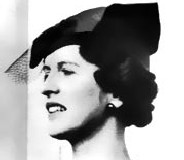 Florence Ransom
Murderer · United Kingdom · 1940
Florence Ransom was a middle-aged woman who was described as physically beautif…
3 victims
Florence Ransom
Murderer · United Kingdom · 1940
Florence Ransom was a middle-aged woman who was described as physically beautif…
3 victims
 Ernest Orville Baldree
Murderer · USA · 1986
Ernest Orville Baldree was executed by lethal injection in Texas on April 29, 1…
2 victims
Ernest Orville Baldree
Murderer · USA · 1986
Ernest Orville Baldree was executed by lethal injection in Texas on April 29, 1…
2 victims
 James Stout
Murderer · USA · 1995
James P. Stout and three accomplices were accused of carjacking, abducting and…
1 victim
James Stout
Murderer · USA · 1995
James P. Stout and three accomplices were accused of carjacking, abducting and…
1 victim
- Gender
- female
- Country
- USA
- Location
- Morton, Tazewell County, Illinois, USA
- Date of birth
- December 20, 1968
- Age at first offence
- 38
- Characteristics
- parricide
- Victim profile
- Katherine 'Katie' McCarron, 3 (her autistic daughter)
- Method of murder
- Suffocation with a plastic bag
- Date(s) of murder
- May 13, 2006
- Years active
- 2006
- Date of arrest
- Same day (suicide attempt)
- Status
-
Imprisoned
Sentenced to 36 years in prison on April 1, 2008
Overview
Karen McCarron was convicted in Illinois of killing her three-year-old daughter Katherine “Katie” McCarron, who had autism.
Background
Karen McCarron and Paul McCarron’s first child was Katherine “Katie” McCarron, who was diagnosed with autism in 2004. Paul and Katie moved to North Carolina in September 2004 to live with her paternal grandmother so Katie could attend The Mariposa School in Cary, North Carolina, a special school for children with autism and related disorders. Paul and Katie returned home to Illinois on holidays. Karen, who worked as a pathologist with the Peoria-Tazewell Pathology Group, stayed in Morton, Illinois with their younger daughter Emily and visited North Carolina occasionally. After 20 months, the family returned full-time to Illinois. Paul took Katie to their home in Illinois on May 3, 2006. On May 7, 2006, Paul returned to North Carolina to fulfill the last three weeks of his work commitment. Katie remained in Illinois under Karen McCarron’s care and under the care of her maternal grandparents, along with her younger sister.
The offence
On the afternoon of Saturday May 13, 2006, which fell on Mother’s Day weekend, Karen killed Katie by suffocating her in a plastic bag.
The indictment alleged that Karen killed Katie by holding a plastic bag over Katie’s head and then attempted to conceal the circumstances surrounding Katie’s death.
Investigation
A grand jury indicted Karen McCarron on two counts of first-degree murder, two counts of obstructing justice, and one count of concealment of a homicidal death.
Karen took an overdose of Tylenol in the very early hours of Sunday morning after she killed Katie.
Karen’s parents won a lawsuit against Karen in December of that year.
Arrest
Karen was not placed in handcuffs or restrained by police at any point when she was transported to the hospital. Officer Brent McLean asked Karen some questions in the early morning hours of May 14, 2006. Karen told McLean that she told Paul she had killed Katie and said: “[l]et's leave it at that.” When McLean asked where the garbage bag was, Karen did not respond. McLean repeated the question, and Karen said: “I know you want to get evidence on me.” She said she wanted to talk to Paul. McLean left the hospital and did not arrange for any police guard on Karen’s room.
The doctor who treated Karen on May 14, 2006, testified that Karen was lucid and coherent. The doctor assumed that Karen was in the medical profession based on the questions she asked and because Karen reviewed her medical charts and commented on them. Karen requested to speak with a psychologist. The doctor also stated that ICU patients were typically not allowed to use a telephone, but he witnessed Karen use the telephone outside her room several times between May 14 and May 16. On May 16, the doctor ordered that the telephone usage stop because it was distracting other patients. Friends and family were allowed to visit Karen in her ICU room. Police never put any restrictions on Karen, and Karen was not placed under arrest until the afternoon of May 16, 2006.
On May 14, 2006, Karen called a friend in the afternoon and told her that she had killed Katie and that she was going to confess the next day. She also called Paul’s father and told him that she had suffocated Katie with a plastic bag. Both telephone call recipients described Karen as calm.
On May 14, 2006, two Morton detectives talked to Karen in her hospital room. Karen said she might need an attorney, and the detectives told her she was not under arrest and that they just wanted a statement. Karen said she did not want to talk. The detectives asked if they could come back the next day, and Karen agreed.
On May 15, 2006, psychiatrist Sohee Lee spoke to Karen about the Tylenol overdose. Karen told Dr. Lee that she had suffocated Katie with a plastic bag and said she was feeling guilty because Katie’s autism had not been improving and because she had killed Katie. Dr. Lee testified that Karen showed no signs of delusion or psychosis.
On May 15, 2006, Morton detectives, a representative of the Department of Children and Family Services (DCFS), and Paul arrived at the hospital. Susan Grimm, a friend of Karen’s, was in the room. Grimm told Paul that she thought Karen should have an attorney present. Paul thanked Grimm and escorted her out of the room. Inside the room, Karen had no objection to the DCFS agent’s presence. The detectives told Karen she was not under arrest and was not going to be taken to the police department.
An interview commenced in which Karen confessed to the murder. The detectives discussed doing a second, recorded interview because it might be desired by the State’s Attorney’s office. Karen agreed to a second interview. The second interview occurred approximately one hour after the end of the first interview. Before the second interview, Karen was read her Miranda rights and waived them.
Trial
Karen went to trial on January 7, 2008.
Verdict
After a week-long trial, Karen was convicted of first degree murder, obstruction of justice, and concealing a homicidal death on January 17, 2008.
Jurors stated that Karen was not insane when she suffocated Katie.
Sentencing
Karen was sentenced to 36 years in prison on April 1, 2008.
The sentence was 36 years of imprisonment for the murder, plus probation on the charges of concealment of a homicide and obstruction of justice. Karen was also fined $25,000.
During sentencing proceedings, prosecutors asked for a 45-year sentence for murder. Karen’s attorney asked for a 20-year prison sentence and unsuccessfully used an insanity defense during her trial.
Karen made a statement in court before the sentence was handed down: “I have no words that will change the loss of Katie. There is never justification for murder of an innocent life. If I could take back those moments that destroyed Katie's life I most certainly would.”
Prosecutor Kevin Johnson stated that Karen faced up to 110 years for suffocating her daughter Katie in May 2006. He also sought more than $7,000 for Paul McCarron and his employer for hospital costs, but the judge would let the family court settle that during divorce proceedings. Johnson also said: “The family did indicate to me that they are relieved that this is over. They feel that justice was served and they are ready to move on and put this part of this behind them and to try to continue to rebuild their family.”
On the lesser charges, Judge Stephen Kouri sentenced Karen to probation and ordered payment of a $25,000 fine. He told both families: “You all have suffered too much” and added: “There is no formula for judges in trials like this one”.
Defense attorney Marc Wolfe said: “I'm sure this is very difficult for her. I'm sure this has been quite an ordeal, not just for her but for the family as well.”
Appeals
Karen appealed her conviction. The appellate court upheld the circuit court rulings.
In the appellate opinion dated July 29, 2010 (People v. Frank McCarron, No. 3-08-0366), the court affirmed the judgment of the circuit court of Tazewell County.
Issues on appeal and rulings
The appellate court addressed three arguments:
- Whether the circuit court erred when it denied Karen’s motion to suppress her inculpatory statements to police.
- Whether Karen was denied a fair trial because she wore an electronic monitoring device (EMD) during trial.
- Whether the circuit court erred when it found Karen failed to prove she was insane at the time of the murder.
The appellate court affirmed on all issues, concluding that it would not disturb the trial court’s rulings.
Other details
Indictment and alleged conduct
The indictment alleged Karen killed Katie on May 13, 2006 by holding a plastic bag over Katie’s head and attempted to conceal the circumstances surrounding Katie’s death.
Events described in the appellate opinion
On May 13, 2006, Karen and her mother, Erna Frank, were at the McCarron house in Morton, Illinois, with Karen’s two daughters, Katie and two-year-old Emily. Karen was a pathologist and spent an hour at work that morning. When she returned, she fed her daughters. After lunch, Karen put Emily down for a nap. Karen decided to take Katie, who had autism, for a car ride to calm her down instead of putting her down for a nap. Erna testified that it did not appear as if Katie needed to be calmed down.
Karen drove Katie to the Frank house, which was near the McCarron house. Erna’s husband was in Germany, and Karen knew that no one would be present at the Frank house. Karen parked inside the garage, closed the garage door, and took Katie inside the house. Karen suffocated Katie by placing a white plastic garbage bag over Katie’s head.
About 45 minutes to an hour after she left, Karen returned with Katie to the McCarron house. Karen carried Katie into the house, told Erna that Katie was sleeping, and carried her upstairs to bed. Karen went about her normal activities after putting Katie in bed around 1 p.m.
During the afternoon, Karen’s brother Walter came to the McCarron house. Karen sat in the kitchen with Erna and Walter, who talked to Karen about a recent trip they took. Erna and Walter did not notice any irrational behavior or incoherency in Karen. Karen went to the grocery store to get ice cream. After getting ice cream, she drove back to the Frank house and retrieved the garbage bag she used to suffocate Katie. She took the bag to a local gas station and threw it into an outdoor garbage can.
Around 4 p.m., Karen said she was going to go upstairs to check on Katie as she normally did not nap that long. Karen screamed when she went into Katie’s room and told Erna and Walter that Katie was not breathing. When police and paramedics arrived, Karen told a police officer that she found Katie not breathing approximately 2 1/2 hours after she put Katie down for a nap. The officer described Karen as coherent and conversational. Karen and a paramedic attempted unsuccessfully to resuscitate Katie.
A paramedic described Karen as unusually calm. Karen was quick to respond to questions and answered in an orderly fashion. Katie was transported to the hospital and pronounced dead.
The Peoria County deputy coroner testified that when he spoke with Karen at the hospital, Karen did not try to embrace Katie and was largely unemotional, and her demeanor was atypical for a parent whose child had just died.
Paul returned to the McCarron house from North Carolina around midnight that night. Paul had moved to North Carolina with Katie approximately 18 to 24 months earlier so Katie could attend a school for autistic children. Katie returned to Illinois around May 3, 2006. Paul was in the process of moving back to Illinois at the time of Katie’s death. When Paul arrived, he and his brother had to break into the master bedroom and bathroom to find Karen. Karen had penned a suicide note and taken numerous Tylenol pills in an apparent suicide attempt. Karen told Paul she had killed Katie. She also told her mother she had killed Katie.
When police arrived, Paul told Officer Brent McLean that Karen had something she wanted to say. After Karen did not respond, Paul told McLean that Karen said she had killed Katie. Karen was transported to the hospital in an ambulance, and her mother and a police officer accompanied her. The officer did not ask Karen questions.
Karen’s doctor described her as lucid and coherent, and the doctor witnessed her using a telephone multiple times between May 14 and May 16 before ordering usage stop due to distraction of other patients. The record reflected friends and family were allowed to visit Karen in her ICU room, and police never restricted her.
Statements and confessions
Karen told Officer McLean: “[l]et's leave it at that.” She also said: “I know you want to get evidence on me.” She told the detectives and others she confessed to suffocating Katie with a plastic bag.
During the second recorded interview, Karen stated:
- “just wanted autism out of my life.”
- “Maybe in Heaven she would be complete.”
- “wanted a life without the autism,”
- “To get rid of autism I had to kill a child.”
- “could get away with [the crime].”
The opinion also stated that Karen devised the plan to dispose of the plastic garbage bag and that when she arrived back at the McCarron house, she told Erna that Katie had fallen asleep.
Attempt at insufficiency and autism-related beliefs
Karen testified that she believed Katie was freed from autism when she died. She also testified that she made a brief attempt at suffocating Katie with a pillow on May 10, 2006, lasting only a few seconds.
Karen described feeling responsible for Katie’s autism because she allowed the child to get vaccinated. She said she began having thoughts of hurting her daughter a year before the May 2006 slaying but put them out of her mind, and that on the day of the killing the thoughts were “so intense.” She stated: “They were so intense.” She also said: “I just put my ear to her chest.” “I heard one, then I heard nothing.” and: “I loved Katie very much, but I hated the autism so, so much.” “I hated what it was doing to her. ... I just wanted autism out of my life.”
On the videotape played in court, Karen said she killed Katie hoping to “fix her” and give her peace in heaven, and stated: “Maybe I could fix her this way, and in heaven she would be complete.”
Karen said on the videotape that she took her daughter’s body back to her own house and put her in bed, and then went to the store, bought ice cream, and returned to her mother’s home to get the garbage bag because, “if things get bad, their house would be searched.”
Insanity defense expert testimony
The defense presented Dr. Joseph Glenmullen, a psychiatrist, who opined that Karen suffered from major depressive disorder, recurrent, in 2005 and that her depression developed into psychotic depression in 2006. He stated that Karen’s delusional thoughts included her statement that she was killing autism when she killed Katie. Dr. Glenmullen acknowledged the psychiatrist Karen had been seeing from approximately August 2005 to February 2006 did not observe any delusional thinking in Karen.
The State presented Dr. Terry Killian, a psychiatrist, who opined that Karen suffered from recurrent major depression and that there was no evidence of psychosis. Dr. Killian disagreed with Dr. Glenmullen’s opinion that Karen suffered from delusions, stating Karen’s comment did not fit the definition of delusion as a “fixed false belief.” Dr. Killian also found it significant that Karen’s statements about autism were usually about how autism affected her rather than Katie.
The appellate court held that the jury’s rejection of the insanity defense was not against the manifest weight of the evidence.
Electronic monitoring device issue
The appellate court discussed Karen’s argument that she wore an electronic monitoring device during trial. It stated the court did not order the defendant to wear an EMD during trial; Karen had been ordered to wear the EMD as a condition of her bond. The appellate court also stated that the court admonished the jury after the close of the evidence that the defendant was out on bond and on electronic home monitoring and that it did not affect the presumption of innocence.
The appellate decision included a specially concurring opinion by Wright, J., and noted that the electronic monitoring device issue was forfeited and that plain error review did not apply.
Quote about autism and support
Katie’s paternal grandfather, Michael McCarron, said: “This was not about autism. This was not about a lack of support”
Autism rights movement and memorials
Autism Hub held a memorial on May 24, and the disability rights group Not Dead Yet led the charge to reveal the facts of the case. The case attracted intense scrutiny within the autism rights movement and among disability advocates.


Spotted an error, or have more information about this case?