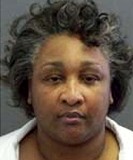
Kimberly McCarthy
Murderer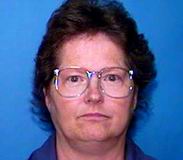 Bobbie Sue Terrell
Murderer · USA · 1984
Bobbie Sue Dudley Terrell was a Pinellas County nurse and worked as the night s…
12 victims
Bobbie Sue Terrell
Murderer · USA · 1984
Bobbie Sue Dudley Terrell was a Pinellas County nurse and worked as the night s…
12 victims
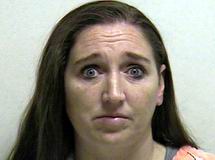 Megan Huntsman
Murderer · USA · 1996
Megan Huntsman was 40 at sentencing. She was a mother of three children who wer…
6 victims
Megan Huntsman
Murderer · USA · 1996
Megan Huntsman was 40 at sentencing. She was a mother of three children who wer…
6 victims
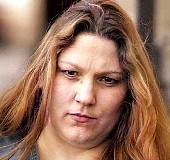 Angela Johnson
Murderer · USA · 1993
Angela Jane Johnson was convicted in federal court of aiding and abetting the m…
5 victims
Angela Johnson
Murderer · USA · 1993
Angela Jane Johnson was convicted in federal court of aiding and abetting the m…
5 victims
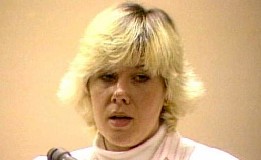 Catherine May Wood
Murderer · USA · 1987
Catherine May Wood was an American caregiver who worked at the Alpine Manor Nur…
5 victims
Catherine May Wood
Murderer · USA · 1987
Catherine May Wood was an American caregiver who worked at the Alpine Manor Nur…
5 victims
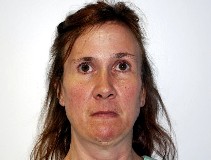 Michele Kalina
Murderer · USA · 1996
Michele Kalina pleaded guilty to murder for one of five infants she initially w…
5 victims
Michele Kalina
Murderer · USA · 1996
Michele Kalina pleaded guilty to murder for one of five infants she initially w…
5 victims
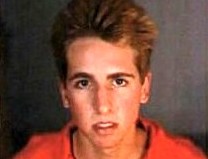 David Attias
Homicide · USA · 2001
David Attias was described as an 18-year-old student at the University of Calif…
4 victims
David Attias
Homicide · USA · 2001
David Attias was described as an 18-year-old student at the University of Calif…
4 victims
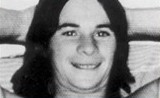 Christopher Worrell
Serial killer · Australia · 1976
Christopher Worrell was described as a rapist and was later killed in a car acc…
7 victims
Christopher Worrell
Serial killer · Australia · 1976
Christopher Worrell was described as a rapist and was later killed in a car acc…
7 victims
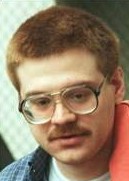 Brian Steckel
Murderer · USA · 1994
Brian Steckel was a convicted murderer who was executed in Delaware. · Septembe…
1 victim
Brian Steckel
Murderer · USA · 1994
Brian Steckel was a convicted murderer who was executed in Delaware. · Septembe…
1 victim
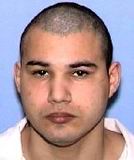 John Allen Rubio
Murderer · USA · 2003
John Allen Rubio was a Hispanic male born August 12, 1980. His education level…
3 victims
John Allen Rubio
Murderer · USA · 2003
John Allen Rubio was a Hispanic male born August 12, 1980. His education level…
3 victims
 James Duquette
Murderer · USA · 1980
James Duquette Jr. was convicted of murder and was also sentenced in connection…
2 victims
James Duquette
Murderer · USA · 1980
James Duquette Jr. was convicted of murder and was also sentenced in connection…
2 victims
 Victor Kennedy
Murderer · USA · 1980
Victor Kennedy was 37 at the time of his execution. He was executed by electroc…
1 victim
Victor Kennedy
Murderer · USA · 1980
Victor Kennedy was 37 at the time of his execution. He was executed by electroc…
1 victim
- Gender
- female
- Country
- USA
- Location
- Lancaster, Dallas County, Texas, USA
- Date of birth
- May 11, 1961
- Age at first offence
- 27
- Characteristics
- robbery, crack addict
- Victim profile
- Maggie Harding, 81, and Jettie Lucas, 85 / Dorothy Booth, 71 (her next-door neighbor)
- Method of murder
- Stabbing with knife
- Date(s) of murder
- December 1988 / July 21, 1997
- Years active
- 1988–1997
- Date of arrest
- Next day
- Status
-
Sentenced to death
Executed by lethal injection on June 26, 2013; sentenced to death on November 24, 1998, sentence reversed in 2001, resentenced to death on November 1, 2002
Case details
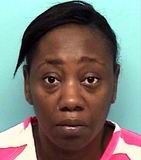
Kimberly LaGayle McCarthy was convicted in Dallas, Texas, of capital murder involving the robbery of her neighbor, Dorothy Booth.
McCarthy entered the residence of a white female aged 71 in Lancaster (Dallas County) on 7-21-1997 with the intent to rob the victim. A struggle took place, and the victim was stabbed numerous times, resulting in her death. After the killing, McCarthy used the victim's credit cards and used the victim's vehicle for transportation.
Authorities said McCarthy used the pretense of borrowing sugar to enter Dorothy Booth’s home and that Booth was attacked during the robbery, with her finger cut off to remove her wedding ring. Prosecutors said McCarthy pawned the victim's wedding ring for $200, stole the victim's Mercedes, drove to Dallas, and went to a crack house to buy cocaine. Prosecutors also said McCarthy used the victim's credit cards at a liquor store. Evidence showed McCarthy had the victim's driver’s license and attempted to take with her a tote bag containing the victim's driver's license and several of the victim's credit cards.
Co-defendants were none.
People
- Kimberly LaGayle McCarthy — defendant
- Dorothy Booth — victim, white female, age 71
- Aaron Michaels — ex-husband; testified on McCarthy's behalf during the sentencing phase; identified as the founder of the New Black Panther Party in the related reporting
- Patrick Stallings — Sergeant, Lancaster Police Department; testified at a suppression hearing
- Dwayne Bishop — Detective, Dallas Police Department; questioned McCarthy and testified at proceedings
- Harry Wilkins, Jr., aka “Smiley” — witness; testified that McCarthy was driving the victim's white Mercedes Benz station wagon when she met him on the morning of July 22, 1997 to inquire about buying crack cocaine
- Max Courtney — director of a crime lab; testified about physical evidence and how it related to McCarthy’s written statement
- Donna Aldred — Booth’s daughter; read a statement to reporters after the execution
- Randall Browning — Booth’s godson
- Leslie Lambert — Booth’s granddaughter
- Greg Davis — prosecutor; identified in related reporting as the man who prosecuted McCarthy
- Maurie Levin — McCarthy's attorney
- Jason Clark — Texas Department of Criminal Justice spokesman
- Douglas H. Parks — counsel for appellant in the Texas Court of Criminal Appeals opinion
- Karen R. Wise — Asst. DA, Dallas; counsel for State in the Texas Court of Criminal Appeals opinion
- Matthew Paul — State's Atty., Austin; counsel for State in the Texas Court of Criminal Appeals opinion
Timeline
- July 21, 1997 — McCarthy entered the residence of Dorothy Booth in Lancaster with the intent to rob the victim; Booth was stabbed numerous times and died.
- July 22, 1997 — Authorities said McCarthy pawned the victim’s diamond wedding ring and used the victim’s credit cards after the killing.
- July 23, 1997 — McCarthy used the victim's credit cards at several locations.
- July 24, 1997 — McCarthy was arrested by Sergeant Patrick Stallings; officers executed a search warrant at McCarthy’s home and found a large knife stained with Dr. Booth’s blood.
- November 17, 1998 — a jury convicted McCarthy of capital murder of Dr. Dorothy Booth; the trial judge sentenced her to death pursuant to the jury’s answers to special issues.
- December 12, 2001 — the Texas Court of Criminal Appeals opinion was issued reversing the judgment and remanding for a new trial.
- 2001 — the death sentence was reversed.
- November 1, 2002 — McCarthy was resentenced to death.
- June 26, 2013 — McCarthy was executed by lethal injection.
Background
McCarthy was born 5/11/1961 and was 36 at the time of the offense.
Her prior occupation was listed as occupational therapist, waitress, home health care, laborer.
Her prior prison record included a two year sentence for one count of forgery, received 2/12/90, released on parole 6/04/90, and discharged 12/09/91.
The case included that her victim was a white female age 71 and that McCarthy was Black.
Related reporting described McCarthy as a former nursing home therapist who became addicted to crack cocaine.
The offence
On 7/21/97, McCarthy entered the home of Dorothy Booth, described as a 71-year-old retired psychology professor, in Lancaster with the intent to rob the victim. A struggle occurred and Booth was stabbed numerous times and died.
After the killing, McCarthy used Booth’s credit cards and used Booth’s vehicle for transportation. Authorities said she had Booth’s wedding ring removed by cutting off the finger, and that she pawned the wedding ring for $200.
Investigation
At the arrest and subsequent investigation:
- Officers found a large knife stained with Dr. Booth's blood in McCarthy's kitchen cabinet above the refrigerator, and the bloody knife matched other knives found in McCarthy's kitchen.
- A DNA expert testified that McCarthy's blood was found in the homes of both the suspect and victim.
- The victim's caller ID records showed that she received two calls from an anonymous number on July 22, 1997, at 6:19 a.m. and 6:29 a.m.
Police executed a search warrant at McCarthy’s home on July 24, 1997 and found the knife.
In related reporting, DNA evidence also tied McCarthy to the December 1988 slayings of:
- Maggie Harding, 81, who was stabbed and beaten with a meat tenderizer, and
- Jettie Lucas, 85, who was beaten with both sides of a claw hammer and stabbed.
McCarthy was indicted but not tried for those slayings.
Arrest
Sergeant Patrick Stallings of the Lancaster Police Department arrested McCarthy on July 24, 1997.
At a hearing on a motion to suppress her custodial statement:
- Stallings testified that during the interview McCarthy said she wanted to give a statement, and at the beginning when they started to take the statement she asked to write it, then she invoked her right to have an attorney.
- Stallings stopped the interview at that point.
- Stallings testified that McCarthy told him she did not want to talk further.
- Stallings testified he could not interview her further because she had asked for an attorney.
Trial
Conviction and sentencing
On November 17, 1998, a jury convicted McCarthy of the capital murder of Dr. Dorothy Booth, an elderly retired professor, alleged to have occurred on July 21, 1997.
Pursuant to the jury's answers to special issues under Texas Code of Criminal Procedure Article 37.071 §§ 2(b) and 2(e), the trial judge sentenced appellant to death.
In the sentencing phase of the trial, jurors heard testimony linking McCarthy to two other 1988 murders, with testimony that:
- Maggie Harding, 81, was attacked with a meat tenderizer and knives, and
- Jettie Lucas, 85, was beaten with a claw hammer and stabbed with knives.
Written custodial statement and Edwards error
The Texas Court of Criminal Appeals reversed based on the admission of McCarthy’s custodial statement after she invoked her right to counsel.
The court described what happened after her invocation:
- Stallings arrested McCarthy on July 24, 1997.
- On July 28, 1997, Detective Dwayne Bishop telephoned Stallings regarding the case after being asked by Aaron McCarthy to speak with appellant at the Dallas County Jail.
- Stallings discussed the facts of the case with Bishop and faxed information.
- Stallings testified that he clearly told Bishop he had tried to talk to McCarthy, that she invoked her right not to talk and invoked her right to an attorney, and it was his understanding Bishop would try to get a statement.
- Bishop testified that he read McCarthy her Miranda rights on July 29, 1997, and that she indicated she wanted to continue talking without the presence of an attorney.
The court held:
- Once a suspect invokes the right to counsel, all interrogation must cease until counsel is provided or the suspect reinitiates conversation.
- There was no evidence McCarthy consulted with counsel before Bishop questioned her.
- There was no evidence she reinitiated conversations.
The court found error in admitting the statement into evidence and concluded the error harmed McCarthy, reversing and remanding for a new trial.
McCarthy’s written statement (verbatim)
Early Tuesday morning about 1:30 a.m., drugs were delivered to me at my residence by “Kilo” and “J.C.”, two guys I met in South Dallas selling drugs, about a month or so ago. Both guys stayed at my residence & partied with me. After my money & the drugs ran out, they asked if I could get some more money. I told them no. They asked me if I knew any of my neighbors I could borrow money from & I said no, not at that hour & that I had to go to work. At that time they began to be verbally abusive & threatening to harm me if I didn't. I called my neighbor “Dorothy Booth”. I'm not sure of the time & got no answer. I waited a while & called back, she answered. “Kilo” told me to hang up & I did. He told me to call back & ask her to borrow some sugar or milk instead of money over the phone, because they were going to rob her & take the car. I called back & asked to borrow sugar, she said ok. Kilo & J.C. followed me to her house, when she opened the door & saw me, to let me in they both pushed the door open & knocked her down. I was shoved back outside to her car. The driver side was unlocked & I was told to stay there & lay down in the front seat. Several minutes later they both came out with her car keys, purse, & CD player. Both guys went back into my house & came out with a jam box, cordless phone & caller ID. They told me to drive to Mi Amore motel on second avenue to make a pick up. I was told to park on the next street over & wait for them. After about 3-5 minutes or so I drove off with all the belongings they took & went to Fitzhugh to the dope house. No one answered the door so I went to Perry street dope house. I took everything out of the car & went inside to get dope. They didn't have any so “Smiley” said he would go around the corner & get me some. I gave him the keys & another girl rode with him. They came back & the police stopped them in front of the dope house on Perry street. I went to the back of the house & waited a few minutes & left out the back door to get drugs elsewhere. A few hours later I returned to Perry street dope house & “Smiley” was upset that the cops stopped him. He gave me the car keys back. He asked me if the car was stolen & I said no. He wanted to rent it out for dope so I did & left. After the dope ran out I searched the purse & found a diamond ring & credit cards. I took the ring to the pawn shop & sold it. Later I used the credit card at the grocery store & gas station to purchase cigarettes by the carton for resale at the “boot leg” for cash. I went to a friend's house to smoke dope. He sold the caller ID and cordless phone for dope money. The jambox was sold to an individual at the Mexican dude on Fitzhugh & East Grand. I got a ride with a male & female. We went to several gas stations & she went inside to use the credit cards once or twice.
The opinion also included additional verbatim statement content from the prosecution’s closing argument.
State’s closing argument excerpts (verbatim)
Now, let's assume just for the moment there was this alleged Kilo and J.C. Let's assume that. Let me show you the ways you can find her guilty. One, you can find her guilty as being the one who actually killed Ms. Booth and took her property. Two, you can find her guilty as to what they call a party. If acting with intent to promote or assist in the commission of the offense, okay, she then solicits, encourages or aids J.C. and Kilo. In her own statement she called-she called them, she aided them, she walked over there. It was because of her Ms. Booth opened the door and said, sure, you can find them as a party on that portion. There is a third portion you can find her guilty for capital murder on. That's called a conspiracy theory. Okay? What are we talking about when we talk about conspiracy. Well if people conspire to commit one offense and another offense is committed by one of the conspirators actions, then all conspirators are guilty of the offense committed. So even if you take her statement, okay, and she talks with them, that's conspiring with them about committing a robbery and she aids them, we know that, and either one of those alleged people goes in and kills Ms. Booth, then she can be convicted on conspiracy theory, theory number 3, okay, three ways you can convict.
On the TV you hear the words sometimes motive, means and opportunities. We are not required to prove motive, but I want to cover those with you to show how we put the facts of the together. Motive, financial problems, wanted crack. We know that even from her own statement. Okay?
Think about this, Folks. In her statement-here's where the truth rings. In her statement she never ever mentions the knife. What did they threaten her with if they did? Never mentions a knife. She never mentions them picking it up taking it out of the house. These are dope dealers. What did they need to get a knife for? She never mentions them taking it back to her house. She never once mentions the knife. Why? Because the knife is what ties her into the crime. In analyzing whether the constitutionally erroneous admission of a defendant's statement was harmless, we look first to Satterwhite v. Texas, 486 U.S. 249, 108 S.Ct. 1792, 100 L.Ed.2d 284 (1988).
The opinion also included an additional verbatim closing argument excerpt:
She waited outside the victim's house in a car for several minutes. Here's a person whose life has been threatened and these friendly killers leave her outside in the car unguarded, doesn't go to the police, doesn't run for help, doesn't call anybody.Does that make sense to you?That's the first wait.What about the second wait?She waited outside while the alleged killers went in her house. Just wait. Let's wait for the killer. See?Does that make any sense to you? You wait outside, doesn't run away, your life is supposed to be threatened?No, it doesn't.Three, the third wait. She waited in the car with the keys, we know, about a block off of Second Avenue for three to five minutes.Folks, common sense that there was-if there was a real Kilo and J.C., you hang around knowing that these are the type of people that can kill and you just wait on them?No, that's not true.
Sentencing
After the original November 17, 1998 conviction, McCarthy was sentenced to death.
The Texas Court of Criminal Appeals reversed the judgment and remanded for a new trial on December 12, 2001, and the death sentence was reversed in 2001.
McCarthy was resentenced to death on November 1, 2002.
Habeas corpus petition
A federal habeas corpus petition was filed by Kimberly LaGayle McCarthy on May 9, 2011 in the United States District Court for the Northern District of Texas, Dallas Division, against Rick Thaler, Director, Texas Department of Criminal Justice, Correctional Institutions Division.
The opinion of the court was delivered by Reed O’Connor, United States District Judge, and the court denied the petition and dismissed the action with prejudice, concluding that two grounds were procedurally barred and McCarthy was not entitled to relief on the remaining grounds under the Antiterrorism and Effective Death Penalty Act of 1996.
Appeals
Texas Court of Criminal Appeals (reversal)
On December 12, 2001, the Texas Court of Criminal Appeals reversed and remanded for a new trial, sustaining the first point of error based on the erroneous admission of her custodial statement.
The opinion stated:
- the trial court erred in admitting the statement into evidence;
- the error was not harmless beyond a reasonable doubt; and
- the judgment of the trial court was reversed and the case remanded for a new trial.
Federal habeas corpus
The federal habeas petition was denied and dismissed with prejudice, and a certificate of appealability was denied. The court found that McCarthy failed to show that reasonable jurists would find the constitutional claims debatable or wrong, or that reasonable jurists would find it debatable whether the petition states a valid claim of the denial of a constitutional right or that the procedural ruling was correct.
Outcome
McCarthy was executed by lethal injection on June 26, 2013.
Related reporting described her as being pronounced dead at 6:37 p.m. CDT, 20 minutes after Texas prison officials began administering a single lethal dose of pentobarbital.
Aftermath
During her final statement, McCarthy said:
This is not a loss. This is a win. You know where I'm going. I'm going home to be with Jesus. Keep the faith. I love you all,
As drug effect began, she also said:
God is great
Afterward, Booth’s daughter, Donna Aldred, read a statement to reporters:
My mother, Dorothy Booth, was an incredible woman who was taken before her time.
Randall Browning was quoted as saying:
We're just thinking about the justice that was promised to us by the state of Texas.
A statement by McCarthy's attorney, Maurie Levin, was quoted as:
500 is 500 too many. I look forward to the day when we recognize that this pointless and barbaric practice, imposed almost exclusively on those who are poor and disproportionately on people of color, has no place in a civilized society

Spotted an error, or have more information about this case?