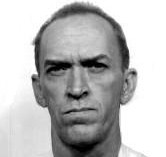
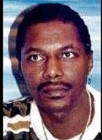
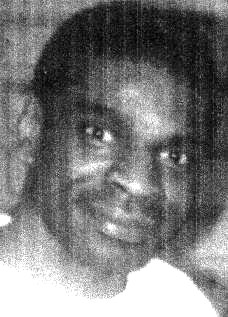
Ernest Orville Baldree
Murderer Brian Kevin Rosenfeld
Murderer · USA · 1985
Brian Kevin Rosenfeld Brian Kevin Rosenfeld was sentenced to three concurrent l…
23 victims
Brian Kevin Rosenfeld
Murderer · USA · 1985
Brian Kevin Rosenfeld Brian Kevin Rosenfeld was sentenced to three concurrent l…
23 victims
 Yahweh ben Yahweh
Murderer · USA · 1980
Yahweh ben Yahweh was born and legally named Hulon Mitchell Jr. (October 27, 19…
23 victims
Yahweh ben Yahweh
Murderer · USA · 1980
Yahweh ben Yahweh was born and legally named Hulon Mitchell Jr. (October 27, 19…
23 victims
 Russell Ellwood
Murderer · USA · 1991
Russell Ellwood was a former taxi driver. Authorities suspected him of killing…
20 victims
Russell Ellwood
Murderer · USA · 1991
Russell Ellwood was a former taxi driver. Authorities suspected him of killing…
20 victims
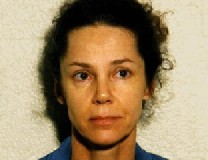 Linda Henning
Murderer · USA · 1999
Linda Henning was convicted of felony murder and kidnapping in connection with…
1 victim
Linda Henning
Murderer · USA · 1999
Linda Henning was convicted of felony murder and kidnapping in connection with…
1 victim
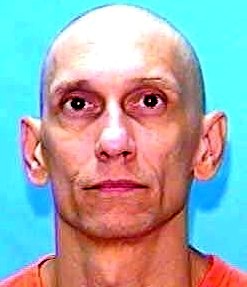 Donald Dufour
Serial killer · USA · 1982
Donald Dufour On the afternoon of July 15, 1982, a postman working Henry Balch…
5 victims
Donald Dufour
Serial killer · USA · 1982
Donald Dufour On the afternoon of July 15, 1982, a postman working Henry Balch…
5 victims
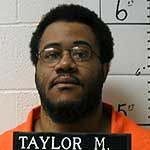 Michael Taylor
Homicide - Murderer · USA · 1995
Michael Taylor was convicted of first-degree murder and forcible rape in 1998.…
2 victims
Michael Taylor
Homicide - Murderer · USA · 1995
Michael Taylor was convicted of first-degree murder and forcible rape in 1998.…
2 victims
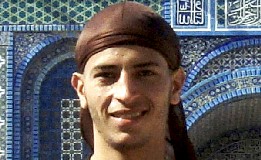 Mohammed Merah
Spree killer · France · 2012
Mohammed Merah was a French-Algerian Islamist terrorist who had previously been…
7 victims
Mohammed Merah
Spree killer · France · 2012
Mohammed Merah was a French-Algerian Islamist terrorist who had previously been…
7 victims
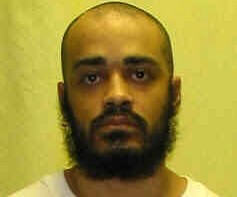 Vernon Lamont Smith
Murderer · USA · 1993
Vernon Lamont Smith n/k/a Abdullah Sharif Kaazim Mahdi was convicted in Lucas C…
1 victim
Vernon Lamont Smith
Murderer · USA · 1993
Vernon Lamont Smith n/k/a Abdullah Sharif Kaazim Mahdi was convicted in Lucas C…
1 victim
- Gender
- male
- Country
- USA
- Location
- Navarro County, Texas, USA
- Date of birth
- March 27, 1942
- Age at first offence
- 44
- Characteristics
- drug addict, robbery
- Victim profile
- Homer Howard and his wife Nancy Howard
- Method of murder
- Shooting
- Date(s) of murder
- August 20, 1986
- Years active
- 1986
- Date of arrest
- October 31, 1986
- Status
-
Executed
Executed by lethal injection in Texas on April 29, 1997
Case information
Ernest Orville Baldree was executed by lethal injection in Texas on April 29, 1997.
Timeline
- December 8, 1986 — A jury in the 13th Judicial District Court of Navarro County, Texas, convicted Ernest Orville Baldree of capital murder. The jury imposed the death penalty in the penalty phase.
- November 8, 1991 — Baldree filed his first federal petition for writ of habeas corpus and application for stay of execution in the United States District Court for the Northern District of Texas.
- October 29, 1996 — The United States Court of Appeals decided the appeal in Ernest Orville Baldree, Petitioner-Appellant, v. Gary L. Johnson, Director, Texas Department of Criminal Justice, Institutional Division, Respondent-Appellee (No. 95-10858, Federal Circuits, 5th Cir.).
Background
Baldree was convicted of capital murder by a jury in the 13th Judicial District Court of Navarro County, Texas, on December 8, 1986. The jury then heard testimony and considered evidence in the penalty phase of the trial. At the conclusion of this stage, the jury imposed the death penalty.
The Texas Court of Criminal Appeals affirmed Baldree’s conviction and sentence. The United States Supreme Court denied a subsequent petition for writ of certiorari from that decision: Baldree v. State, 784 S.W.2d 676 (Tex.Crim.App.1989) (en banc), cert. denied, 495 U.S. 940, 110 S.Ct. 2193, 109 L.Ed.2d 521 (1990).
Baldree filed two separate state court habeas petitions under TEX.CODE CRIM.PROC.ANN. art. 11.07 (Vernon 1989). The factfinding judge for these state habeas petitions was also the judge who presided over Baldree’s trial. Both state habeas petitions were unsuccessful.
The offence
On the day he killed a couple with whom he had been friends for many years and to whom he was related by marriage, Baldree gunned them down. After Baldree gunned them down, he stole money and jewelry from them. Prosecutors said he later sold the jewelry for $600 and used the money to buy drugs.
Investigation
Carl White and Kyle Barnett testified for the State at trial. Larry Bevers was a witness for the State but did not testify at trial.
Trial
Baldree was convicted of capital murder by a jury on December 8, 1986, in the 13th Judicial District Court of Navarro County, Texas. In the penalty phase, the jury heard testimony and considered evidence and then imposed the death penalty.
Carl White testified at trial that Baldree told him that he had killed two people. Kyle Barnett testified at trial that Baldree admitted to murdering the Howards.
Sentencing
After the jury imposed the death penalty in the penalty phase, the Texas Court of Criminal Appeals affirmed Baldree’s conviction and sentence.
Appeals
State direct review
United States Supreme Court
The United States Supreme Court denied a subsequent petition for writ of certiorari: *Baldree v. denied, 495 U.S. 940, 110 S.Ct. 2193, 109 L.Ed.2d 521 (1990).
Federal habeas procedural history
On November 8, 1991, Baldree filed his first federal petition for writ of habeas corpus and application for stay of execution in the United States District Court for the Northern District of Texas. The district court granted a stay of execution and referred the writ to a magistrate judge. The magistrate judge issued findings and conclusions recommending that the certificate of probable cause and the writ of habeas corpus be denied. The district court adopted the recommendations of the magistrate judge. Baldree then appealed.
The appellate court record included the procedural framing that a petitioner must first obtain a certificate of probable cause in order for jurisdiction to vest with the court, citing Washington v. Johnson, 90 F.3d 945, 949 (5th Cir.1996).
To obtain a certificate of probable cause, the appellate court stated that the petitioner must make a “substantial showing of the denial of a federal right,” citing Barefoot v. Estelle, 463 U.S. 880, 892, 103 S.Ct. 3383, 3394, 77 L.Ed.2d 1090 (1983).
The appellate court recited the standard that petitioner must demonstrate that the issues are “debatable among jurists of reason; that a court could resolve the issues in a different manner; or that the questions are 'adequate to deserve encouragement to proceed further.'” It cited Barefoot, 463 U.S. at 893 n. 4, 103 S.Ct. at 3394 n. 4 (emphasis original), quoting Gordon v. Willis, 516 F.Supp. 911, 913 (N.D.Ga.1980).
Baldree’s application for a certificate of probable cause raised four issues:
- Whether the state court’s factfinding procedure was not adequate to invoke the presumption of correctness afforded to state court factfindings under 28 U.S.C. 2254(d)(2).
- Whether Baldree was denied a full and fair hearing under 28 U.S.C. 2254(d)(6).
- Whether Baldree was denied due process of law in his state habeas proceeding in violation of 28 U.S.C. 2254(d)(7).
- Whether Teague v. Lane barred relief concerning his claims, assuming the appellate court issued the certificate of probable cause.
Recantation affidavits and alleged police coercion
The appellate court stated that the propriety of Baldree’s application for certificate of probable cause rested primarily upon three witnesses: Carl White, Kyle Barnett, and Larry Bevers. These individuals later submitted affidavits which recanted their trial testimony and prior written statements.
The affidavits alleged that police used coercion and threats which effectively forced these witnesses to testify against Baldree at trial. Baldree argued that sections 2254(d)(2), (6), (7) and (8) were violated because no hearing or discovery was allowed whereby he could further develop the facts surrounding the police coercion and misconduct alleged in the affidavits.
The appellate court described the affidavit assertions as follows:
- Carl White: White was arrested on the same day as Baldree. White testified at trial that Baldree told him that he had killed two people and provided a written statement to the police setting out Baldree’s statements to White in some detail. Baldree’s application relied on White’s new affidavit recanting White’s prior testimony. White contended in the new affidavit that the police strongly hinted that he would be indicted under more serious charges if he did not testify against Baldree, and that White stated Baldree never told him anything about killing anyone.
- Kyle Barnett: Barnett and Baldree were incarcerated together at the Navarro County jail. Barnett testified at trial that Baldree admitted to murdering the Howards. Barnett’s new affidavit alleged that law enforcement agents promised lenient treatment in a parole revocation hearing if Barnett could induce Baldree to incriminate himself.
- Larry Bevers: Bevers was a potential witness who was not called to testify. The appellate court stated that Bevers signed a written statement explaining how he purchased various pieces of jewelry from Baldree. Bevers’ statement also explained that while he was buying jewelry from Baldree at a hotel, Baldree attempted to sell him a white Cadillac parked in the hotel parking lot. The description of the Cadillac matched the description of the Cadillac taken from the Howards’ home. Bevers’ new affidavit explained that Billy Dunn had sold the jewelry to him and that he had never seen a white Cadillac at the hotel. The affidavit also stated that detectives threatened Bevers and kept harassing him until he signed a written statement that detectives prepared.
State counter-affidavits and state-court findings
In response, the State submitted affidavits of:
- Patrick Batchelor, Criminal District Attorney for Navarro County;
- John Jackson, Assistant Criminal District Attorney for Navarro County in charge of Baldree’s capital murder prosecution; and
- Officer Leslie Cotten, detective in charge of the investigation into the Howard murders for Navarro County.
The appellate court stated that these affidavits contradicted the affidavits by White, Bevers, and Barnett. The appellate court stated that the state district court chose to credit the State’s affiants and denied Baldree’s habeas petition without holding a hearing.
The appellate court quoted language from the state district court’s order:
"Petitioner has failed to demonstrate that during the trial the State's attorney presented to the jury any false or coerced testimony from Kyle Barnett or Carl White."
The appellate court also noted that the state trial court stated Baldree failed to show that the State’s attorney or law enforcement officers had exercised any form of threat or coercion to obtain the testimony or statements of Carl White.
Alleged constitutional violations raised by Baldree
Baldree argued that the state court factfinding procedure was inadequate to invoke the presumption of correctness afforded to state court factfindings under 28 U.S.C. 2254(d)(2), and that he did not receive a full and fair hearing under 28 U.S.C. 2254(d)(6). He argued due process violations under 28 U.S.C. 2254(d)(7).
The appellate court stated Baldree maintained that the affidavits showed the State knowingly presented false and misleading testimony in violation of Napue v. Illinois. The appellate court also stated that Baldree argued the affidavits showed the State failed to disclose evidence relevant to the credibility of State witnesses in violation of Giglio and Brady. The appellate court further stated that Baldree contended the district court should have granted the certificate of probable cause and the writ of habeas corpus because Barnett’s affidavit showed improper use of Barnett as an undisclosed informant in violation of Massiah. Finally, Baldree argued the federal district court improperly applied the presumption of correctness to the state court findings that his confession was voluntary.
“Paper hearing” and presumption of correctness
The appellate court discussed Buxton v. Lynaugh, 879 F.2d 140, 142-46 (5th Cir.1989), cert. denied, 497 U.S. 1032, 110 S.Ct. 3295, 111 L.Ed.2d 803 (1990), and stated that when the state trial judge also hears the state habeas claim, the judge is in a position to assess credibility of affidavits and credibility determinations can be made without a separate hearing to take live testimony.
The appellate court stated it was not necessary to hold a full-blown trial-type hearing to satisfy section 2254(d) in these situations when the state habeas judge also presided over trial. The appellate court referenced several cases addressing the sufficiency of “paper hearings” for invoking the § 2254(d) presumption of correctness where the same judge presided over trial.
The appellate court stated that affidavits recanting trial testimony were viewed with extreme suspicion by courts and cited May v. Collins, 955 F.2d at 314, and Williams v. State, 375 S.W.2d 449, 451-52 (Tex.Crim.App.1964).
The appellate court quoted the reasoning from May v. Collins:
"The level of insulation the law grants to a skeptical trial judge's assessment of recanting affidavits reflects the notion that trial judges are in the best position to compare a witness's earlier testimony with his new version of the facts. Thus, the concerns about the inadequacy of a "trial by affidavit" are even more diminished in the context of a factual dispute rooted in witness's claims that they perjured themselves at trial."
Outcome
For the foregoing reasons, the appellate court denied Baldree’s application for certificate of probable cause to appeal and dismissed the appeal.
Aftermath
Ernest Orville Baldree, 55, was executed in Texas.
Spotted an error, or have more information about this case?