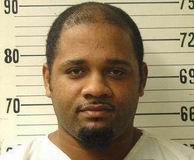
James Stout
Murderer Brian Kevin Rosenfeld
Murderer · USA · 1985
Brian Kevin Rosenfeld Brian Kevin Rosenfeld was sentenced to three concurrent l…
23 victims
Brian Kevin Rosenfeld
Murderer · USA · 1985
Brian Kevin Rosenfeld Brian Kevin Rosenfeld was sentenced to three concurrent l…
23 victims
 Russell Ellwood
Murderer · USA · 1991
Russell Ellwood was a former taxi driver. Authorities suspected him of killing…
20 victims
Russell Ellwood
Murderer · USA · 1991
Russell Ellwood was a former taxi driver. Authorities suspected him of killing…
20 victims
 Robert Martines Perez
Murderer · USA · 1994
Name: Robert Martines Perez · Other name used in proceedings: Robert Martinez P…
15 victims
Robert Martines Perez
Murderer · USA · 1994
Name: Robert Martines Perez · Other name used in proceedings: Robert Martinez P…
15 victims
 Billy Frank Vickers
Murderer · USA · 1993
Billy Frank Vickers Vickers was executed by lethal injection in Texas on Januar…
14 victims
Billy Frank Vickers
Murderer · USA · 1993
Billy Frank Vickers Vickers was executed by lethal injection in Texas on Januar…
14 victims
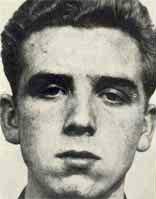 Alfred Burns
Murderer · United Kingdom · 1951
Beatrice Alice Rimmer was bludgeoned to death in her home in the Wavertree area…
1 victim
Alfred Burns
Murderer · United Kingdom · 1951
Beatrice Alice Rimmer was bludgeoned to death in her home in the Wavertree area…
1 victim
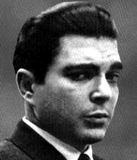 Charles Howard Schmid
Murderer · USA · 1964
Charles Howard Schmid was born on 8 July 1942 and was adopted by Charles and Ka…
3 victims
Charles Howard Schmid
Murderer · USA · 1964
Charles Howard Schmid was born on 8 July 1942 and was adopted by Charles and Ka…
3 victims
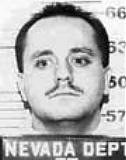 Lawrence Colwell
Murderer · USA · 1994
Lawrence Colwell (also known as Charles Durrant) was convicted of murder in the…
1 victim
Lawrence Colwell
Murderer · USA · 1994
Lawrence Colwell (also known as Charles Durrant) was convicted of murder in the…
1 victim
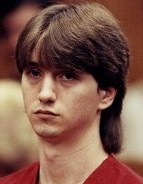 Mark Schwab
Murderer · USA · 1991
Mark Dean Schwab (born December 16, 1968; white; male; hair brown; blue eyes; 6…
1 victim
Mark Schwab
Murderer · USA · 1991
Mark Dean Schwab (born December 16, 1968; white; male; hair brown; blue eyes; 6…
1 victim
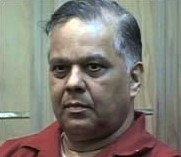 Krishna Maharaj
Murderer · USA · 1986
Krishna Maharaj (born January 26, 1939) was a Trinidad and Tobago-born British…
2 victims
Krishna Maharaj
Murderer · USA · 1986
Krishna Maharaj (born January 26, 1939) was a Trinidad and Tobago-born British…
2 victims
- Gender
- male
- Country
- USA
- Location
- Shelby County, Tennessee, USA
- Date of birth
- October 21, 1975
- Age at first offence
- 20
- Characteristics
- kidnapping, carjacking
- Victim profile
- Amber Hunter, 26
- Method of murder
- Shooting
- Date(s) of murder
- November 8, 1995
- Years active
- 1995
- Date of arrest
- —
- Status
-
Sentenced to death
Sentenced to death on May 19, 1998
Overview
James P. Stout and three accomplices were accused of carjacking, abducting and shooting Amber Hunter, 26, as she drove home from church in Memphis in 1995.
Stout was convicted of felony murder, especially aggravated kidnapping, and especially aggravated robbery of Amber Hunter.
People
- James P. Stout — defendant.
- Amber Hunter (age 26) — victim; a college graduate and bank employee; returning home from a church service when she was killed.
- Derrick Carmichael — co-defendant/accomplice.
- Robert Terrell — co-defendant/accomplice.
- Quentin Jordan — co-defendant/accomplice.
- Tonya Woodall — witness; testified that Stout, Jordan, Carmichael, and Terrell were at her apartment on November 8, 1995.
- Walter Bush — victim of a prior especially aggravated robbery introduced in the sentencing phase; testified he was car-jacked and shot in the head by Stout.
- Annette Bailey — Stout’s mother; testified about her pregnancy with Stout, her cocaine use during pregnancy, and giving Stout to her mother.
- Francis Beasley — Stout’s grandmother; testified that she raised Stout, took him to church, and discussed family circumstances.
- Sheronda Bond — Stout’s fiancée; testified about their child and their child and Stout’s older child visiting him in prison.
- Thomas Stout — Stout’s grand-uncle; testified that he was Pastor in the church attended by Stout and that he visited Stout in prison.
- Teresa Stout — Stout’s aunt; testified about closeness to Stout and his reaction to his grandfather’s death in 1991.
- Randall Stout — Stout’s uncle; testified about church involvement and that Stout was a “changed person”; acknowledged gang involvement and prior convictions.
- Makimba Fowler — witness; testified he was in jail with Stout in June 1993 and about a gang and Stout being expelled.
- Donald Justus — prison jailor; testified about seeing Stout in June 1993 with a “bruised eye.”
- Vassy Gandy — named in Stout’s statement to police.
- Rico Bowers — named in Stout’s statement to police; also discussed in trial proceedings and mitigation.
- Harold Gray — police statement referenced for possible Brady material review.
- Carl Nelson — proposed expert on gang culture; discussed in mitigation efforts.
- E. Riley Anderson, C.J. — delivered the opinion of the court.
- Adolpho A. Birch — filed a concurring and dissenting opinion.
- John H. Peay — authored the Court of Criminal Appeals’ opinion referenced in the appendix.
- Norma McGee Ogle and Alan E. Glenn — judges noted as concurring in connection with other parts of the case.
Timeline
- 1991 — Stout’s step circumstances discussed: Francis Beasley testified that she and Stout’s close family had a history that included Beasley’s husband’s death in 1991.
- June 1993 — Fowler and Justus testified that Stout was in jail and had a “bruised eye and stuff.”
- July 1, 1995 — statutory effective date discussed for felony murder definition under Tennessee law.
- May 30, 1995 — effectiveness date discussed for the current version of the felony murder aggravating circumstance.
- November 8, 1995 — Stout and three co-defendants were at Tonya Woodall’s apartment in Memphis; related events occurred the same day leading to the killing of Amber Hunter.
- November 10, 1995 — Amber Hunter died two days after sustaining the gunshot wound to her head.
- November 11, 1995 — Walter Bush testified he was car-jacked and shot in the head by Stout; also referenced in discussions of prior convictions.
- January 1997 — Stout was convicted of especially aggravated robbery; used during sentencing phase.
- May 24, 2001 — Supreme Court of Tennessee opinion delivered and Court affirmed decision.
- September 25, 2001 — death sentence affirmed and stated to be carried out on the 25th day of September, 2001 unless otherwise ordered.
- May 19, 1998 — Stated in the case status field as the sentencing date for death sentence.
The offence
On November 8, 1995, Stout and three co-defendants were at the apartment of Tonya Woodall in Memphis, Tennessee. Jordan testified that the four men left Woodall’s apartment in a blue Corsica driven by Terrell. Stout was in the front passenger seat.
Jordan testified that Stout saw the victim driving her car and said that he “was going to get this whore.” Jordan testified that the four men followed the victim for five or ten minutes, then pulled behind her car as she parked in front of her house.
Jordan testified that Stout got out of the car, grabbed the victim by her hair, put a gun to her stomach, and forced her into the backseat of her car. Stout got into the driver’s seat of the victim’s car, while Jordan got in the backseat with the victim. Stout handed the gun to Jordan.
Jordan testified that Stout asked the victim if she believed in God. When the victim said that she did, Stout said, “Well, you’re with the devil now.” Jordan testified that when he addressed Stout by name, Stout replied that the victim would have to be killed because she knew his name and had seen his face.
Jordan testified that Stout stopped the victim’s car near some railroad tracks, took the gun back from Jordan, got out of the car, and pulled the victim from the rear seat. Jordan testified that Stout asked the victim if she “wanted to hug a real man before she died.” Jordan testified that Stout embraced the victim; then Stout stepped back and shot her once in the head.
Jordan testified that after taking a suitcase from the victim’s car and trying to wipe off any fingerprints, Stout and Jordan left the scene with Terrell and Carmichael.
Derrick Carmichael testified consistently that he, Stout, Jordan, and Terrell left Woodall’s apartment in a blue Corsica. Carmichael testified that Stout spotted the victim driving her car, instructed Terrell to follow the car, and said he was going to “rob” the victim.
Carmichael testified that when the victim parked in front of her house, Stout and Jordan got out and approached her. Carmichael testified that Stout, who was armed with a gun, grabbed the victim before she made it to her house. Carmichael testified that Stout gave the gun to Jordan, who got in the backseat of the victim’s car with the victim.
Carmichael testified that Stout drove the victim’s car and Terrell and Carmichael followed them. Carmichael testified that Stout parked near some railroad tracks, got out of the car with the victim and Jordan, hugged the victim, and then shot her. Carmichael testified that Stout and Jordan got back in the Corsica and the four men left the scene.
Robert Terrell’s testimony was similar to Jordan and Carmichael. Terrell testified that as they left Woodall’s apartment, Stout was checking a small pistol for bullets and said they “were going to make a sting.” Terrell testified that Stout tried to get Terrell to follow several cars, but Terrell refused. Terrell testified that Stout told him to park the car while he went to his aunt’s house; when Terrell stopped the car, Stout and Jordan got out.
Terrell testified that he then saw Stout and Jordan driving toward him in a red car, and he followed. Terrell testified that when Stout stopped the car, Terrell saw Jordan and the victim get out of the backseat. Terrell testified that Stout hugged the victim and then shot her once in the head. Terrell testified that Stout and Jordan returned to the car Terrell was driving with some of the victim’s property.
Terrell testified that Terrell drove Stout and Jordan back to Woodall’s apartment and also saw them at the apartment the next night. Terrell testified that Jordan was upset, crying, and cursing Stout. Terrell testified that Stout said, “Well, she heard my name, so I had to kill her".
Tonya Woodall testified that Stout, Jordan, Carmichael, and Terrell were together at her apartment on November 8, 1995. She testified that on the following day she saw Jordan, who looked “depressed” and “upset.” Woodall testified that Jordan initially would not tell her what was wrong, but finally told her that Stout had killed a woman. Woodall testified that she later heard Jordan confronting Stout, but she did not hear Stout make a response.
Woodall testified that the police threatened to charge her as an accessory to the offense unless she made a statement. She testified that Stout had threatened her and her family if she testified.
Stout gave a statement to police that varied markedly from the testimony of Jordan, Carmichael, and Terrell. Stout said that he, Jordan, and two others—Vassy Gandy and Rico Bowers—were at Woodall’s apartment. When they left, Stout’s statement said they rode around in a white Mustang with Gandy driving and Stout in the backseat. Stout’s statement said Bowers, armed with a pistol, told Gandy to follow the victim’s car. Stout’s statement said that when the victim’s car stopped, Bowers got out and grabbed the victim by her hair and forced her into the backseat of her car with Jordan.
Stout’s statement said Bowers drove the victim’s car to some railroad tracks and got out of the car with Jordan and the victim. Stout’s statement said that Bowers hugged the victim, backed away about five feet, and fired one shot. Stout’s statement said Bowers and Jordan searched the victim’s car and wiped it down.
Stout’s statement said the four men returned to Woodall’s apartment where Jordan and Bowers “bragged” about what had happened. Stout denied knowing that a robbery, car jacking or killing was going to occur.
The victim, Amber Hunter, was a total stranger to Stout and was 26 years old at the time she was killed. She was a college graduate and employed at a bank. She was returning home from a church service on the night she was killed. Woodall and accomplice testimony established a gunshot wound to her head.
Amber Hunter sustained a gunshot wound to her head and remained unconscious until her death two days later on November 10, 1995.
After hearing the evidence and deliberating, the jury found Stout guilty of felony murder for the killing of Amber Hunter in the perpetration of a robbery, especially aggravated kidnapping, and especially aggravated robbery.
Charges and convictions
Stout was convicted of:
- Felony murder
- Especially aggravated kidnapping
- Especially aggravated robbery
Trial
Guilt phase
The evidence at trial was summarized through testimony from Jordan, Carmichael, Terrell, and Woodall, and through Stout’s police statement that implicated Bowers as the shooter and described the events as involving others.
During the guilt phase and later proceedings, the trial court ruled on admissibility and allowed or excluded various proffered evidence, including a Barstson-related issue described in the appendix.
Legal sufficiency and corroboration issue
Stout argued there was no evidence to corroborate the accomplices’ testimony and therefore evidence was insufficient. The Supreme Court addressed Tennessee’s requirement that a conviction not be based solely on the uncorroborated testimony of an accomplice.
The Supreme Court stated that when evaluating sufficiency, it determined whether any rational trier of fact could have found essential elements beyond a reasonable doubt and it afforded the prosecution the strongest legitimate view of evidence and inferences.
The Supreme Court concluded there was sufficient evidence supporting felony murder, especially aggravated kidnapping, and especially aggravated robbery, and there was sufficient evidence to corroborate accomplices’ testimony. The Supreme Court noted that Stout initially denied knowledge but later admitted being at the scene, admitted knowing one participant was armed and intended to steal a car, and Tonya Woodall testified that Stout threatened her and her family if Woodall testified.
Admissibility of hearsay statements
Stout asserted the trial court erred by allowing Woodall to testify that Jordan told her Stout had killed the victim and other details because the statements were inadmissible hearsay. The State maintained the statements were admissible as prior identification and as an excited utterance under Tennessee evidentiary rules.
The Supreme Court addressed:
- Prior identification under Tenn. R. Evid. 803(1.1), including the requirement that the declarant made an identification of a person after perceiving the person and that the declarant testified and was subject to cross-examination.
- The Supreme Court concluded the safeguards and elements were satisfied and the trial court did not abuse its discretion.
For excited utterance under Tenn. R. Evid. 803(2), the Supreme Court addressed the requirements for a startling event and a statement made while the declarant was under stress or excitement caused by the event. The Supreme Court noted the time interval and concluded that the trial court did not abuse its discretion in allowing Woodall to relate Jordan’s statements.
Admissibility of facts underlying an aggravating circumstance
One aggravating circumstance involved a prior conviction for a felony whose statutory elements involved violence to the person. During sentencing, the prosecution presented the testimony of Walter Bush, the victim of Stout’s prior especially aggravated robbery.
The Supreme Court addressed improper admission arguments under State v. Bigbee and distinguished the circumstances from Bigbee, citing State v. Chalmers. The Supreme Court concluded the evidence and argument did not affect the jury’s determination to the prejudice of Stout.
Admission of convictions during the sentencing phase; limiting instruction issue
Stout argued that the trial court erred by allowing the prosecutor to use his prior convictions during cross-examination of Randall Stout and by failing to instruct the jury that the evidence was limited to impeachment.
The Supreme Court discussed Tenn. Code Ann. § 39-13-204(c) and referenced the broader discretion in capital sentencing evidentiary rulings. The Supreme Court concluded that the prior convictions were properly admissible and that failure to give a limiting instruction did not affect Stout’s decision to the prejudice of the defendant.
Exclusion of mitigating evidence
During the sentencing phase, Stout sought to introduce testimony from Rico Bowers and Vassy Gandy to show Stout’s involvement was minor. Stout also sought to call Chaplain Carl Nelson to testify about gang culture and a gang’s practice of blaming criminal offenses on former members.
The Supreme Court concluded the trial court erred in determining the proposed mitigating evidence was inadmissible. However, it agreed that exclusion did not affect the jury’s decision to the prejudice of Stout and was harmless beyond a reasonable doubt.
The Supreme Court noted that Bowers and Gandy’s statements or likely testimony would inculpate Stout as leading the offenses and shooting the victim, and that the defense did not proffer how their testimony would differ. It also discussed gang culture expert testimony and the jury’s rejection of Stout’s false-accusation theory.
Sentencing
Death penalty aggravating circumstances and sentence
During the sentencing phase for felony murder, the jury found that the evidence supported three aggravating circumstances:
- Stout was previously convicted of a felony whose statutory elements involved the use of violence to the person.
- The murder was committed for the purpose of avoiding, interfering with, or preventing a lawful arrest or prosecution of Stout or another.
- The murder was knowingly committed, solicited, directed, or aided by Stout while Stout had a substantial role in committing or attempting to commit, or was fleeing after having a substantial role in committing or attempting to commit, any robbery or kidnapping.
The Supreme Court referred to Tenn. Code Ann. § 39-13-204(i)(2), (6), (7) (Supp.1995) and stated that the jury found the aggravating circumstances outweighed mitigating circumstances beyond a reasonable doubt and imposed a sentence of death.
Additional sentences
In a separate sentencing proceeding, the trial court imposed:
- Two forty-year sentences for especially aggravated robbery and especially aggravated kidnapping.
- The sentences were to be served consecutively to one another and consecutively to the death sentence.
Appeals
Supreme Court review issues
The Supreme Court of Tennessee designated seven issues for oral argument and concluded:
- The evidence was sufficient to support the jury’s verdict.
- The trial court did not commit reversible error in allowing Tonya Woodall to testify as to statements made by Quentin Jordan.
- Admission of facts underlying Stout’s prior conviction for a violent felony did not affect the jury’s determination to the prejudice of the defendant.
- The prosecutor’s use of Stout’s prior convictions to cross-examine a defense witness during sentencing did not affect the jury’s determination to the prejudice of the defendant.
- Exclusion of mitigating evidence offered by Stout during sentencing did not affect the jury’s determination to the prejudice of the defendant.
- The felony murder aggravating circumstance was properly applied.
- The death sentence was not arbitrary or disproportionate.
The Supreme Court agreed with the Court of Criminal Appeals on remaining issues included in the appendix.
Comparative proportionality review and proportionality
Stout’s appeal included proportionality review arguments under Tenn. Code Ann. § 39-13-206(c)(1) (1997). The Supreme Court reviewed similar factors involving the offense and the defendant and concluded the death sentence was not arbitrary or disproportionate as applied.
Felony murder aggravating circumstance application
Although not challenged, the Court of Criminal Appeals held the felony murder aggravating circumstance was properly applied even though Stout was convicted of felony murder. The Supreme Court addressed the issue and agreed, discussing State v. Middlebrooks and differences between the older statutory scheme and the present statutory scheme effective May 30, 1995.
Other appellate matters included in the appendix
The appendix included an issue on alleged Batson error:
- On Stout’s ninth peremptory challenge, he struck juror Moore from the venire.
- The State objected alleging a Batson v. Kentucky violation; after a hearing outside the presence of the venire, the trial court sustained the State’s objection and reseated Moore.
- The opinion described the trial court’s evaluation of the defense counsel’s stated race-neutral reasons for challenging Moore, and held the ruling was not clearly erroneous and the issue was without merit.
The appendix also included several trial-court evidentiary rulings related to Stout’s theory of defense:
- The court limited references during opening statement and excluded proffered evidence as irrelevant due to remoteness and lack of admissible proof that Stout was beaten out of the gang and remained an outsider at the time of the November 8, 1995 crimes.
- The appendix also described a claim that the State’s rebuttal argument during closing argument improperly shifted the burden of proof; it was rejected.
- It discussed a Brady-related request for in camera review of Harold Gray’s statement; the trial court refused, and the Supreme Court noted it reviewed the statement and it contained nothing requiring disclosure under Brady or supporting the defense theory.
The appendix also discussed the admissibility of Stout’s prior convictions:
- Stout’s 1993 convictions and his January 1997 especially aggravated robbery conviction were addressed in relation to impeachment and use during sentencing.
- The appendix included admission of the Bush carjacking as proof for identity, intent, and guilty knowledge under Tenn. R. Evid. 404(b) in the guilt phase.
Outcome
The Supreme Court affirmed the Court of Criminal Appeals’ judgment. The Supreme Court concluded:
- The evidence supported the jury’s finding of statutory aggravating circumstances.
- The aggravating circumstances outweighed mitigating circumstances beyond a reasonable doubt.
- The sentence was not arbitrary, excessive, or disproportionate.
The Supreme Court affirmed Stout’s sentence of death and stated it “shall be carried out on the 25th day of September, 2001, unless otherwise ordered by this Court or other proper authority.” The Supreme Court taxed costs of appeal to the State because Stout was indigent.
Quotations (verbatim)
- James P. Stout said: “was going to get this whore.”
- James P.
- James P. Stout said: “Well, you're with the devil now.”
- James P. Stout said: “Well, she heard my name, so I had to kill her"
- Stout’s statement to police included: Jordan and Bowers “bragged” about what had happened.
- Jordan testified that Stout asked the victim if she “wanted to hug a real man before she died.”
- Stout’s killing of Amber Hunter was described as Stout shot her once in the head.
- During sentencing discussion, the Supreme Court quoted Batson: “the Equal Protection Clause forbids the prosecutor to challenge potential jurors solely on account of their race.”
- In the Batson appendix, the trial court stated: “There've been eight in a row without any real articulable reason other than some vague general statements and conclusions. ․ And at this point, unless there can be some further reason articulated to convince me otherwise, I am not satisfied that the reasons given sufficiently articulate a race neutral explanation for [Moore] being challenged.”
- In the Batson appendix, the trial judge added: “It sure starts to look like they're being challenged because they're Caucasian․”
- In mitigation, Randolph Stout testified and was quoted: Stout was “one of a kind” and was a “changed person.”
Spotted an error, or have more information about this case?