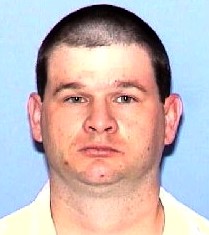
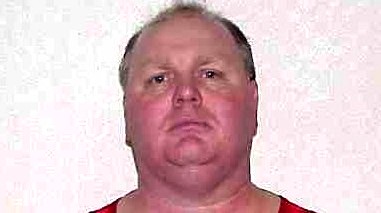
Kent Sprouse
Murderer Robert Martines Perez
Murderer · USA · 1994
Name: Robert Martines Perez · Other name used in proceedings: Robert Martinez P…
15 victims
Robert Martines Perez
Murderer · USA · 1994
Name: Robert Martines Perez · Other name used in proceedings: Robert Martinez P…
15 victims
 Billy Frank Vickers
Murderer · USA · 1993
Billy Frank Vickers Vickers was executed by lethal injection in Texas on Januar…
14 victims
Billy Frank Vickers
Murderer · USA · 1993
Billy Frank Vickers Vickers was executed by lethal injection in Texas on Januar…
14 victims
 Joseph Wood
Murderer · USA · 1989
Joseph Wood was an Arizona state prisoner who was sentenced to death on July 2,…
2 victims
Joseph Wood
Murderer · USA · 1989
Joseph Wood was an Arizona state prisoner who was sentenced to death on July 2,…
2 victims
 Mary Pearcey
Murderer · United Kingdom · 1890
Mary Pearcey (Mary Eleanor Wheeler; also known as Mary Eleanor) was born in 186…
2 victims
Mary Pearcey
Murderer · United Kingdom · 1890
Mary Pearcey (Mary Eleanor Wheeler; also known as Mary Eleanor) was born in 186…
2 victims
 John Ruthell Henry
Murderer · USA · 1975
John Ruthell Henry was convicted of three murders. He had been married to Suzan…
3 victims
John Ruthell Henry
Murderer · USA · 1975
John Ruthell Henry was convicted of three murders. He had been married to Suzan…
3 victims
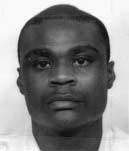 Alva Curry
Murderer · USA · 1991
Alva Curry was executed by lethal injection in Texas on January 28, 2003, and w…
2 victims
Alva Curry
Murderer · USA · 1991
Alva Curry was executed by lethal injection in Texas on January 28, 2003, and w…
2 victims
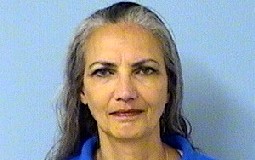 Guinevere Garcia
Murderer · USA · 1977
Guinevere Garcia was also known as Guinevere Falakassa Garcia. She was convicte…
2 victims
Guinevere Garcia
Murderer · USA · 1977
Guinevere Garcia was also known as Guinevere Falakassa Garcia. She was convicte…
2 victims
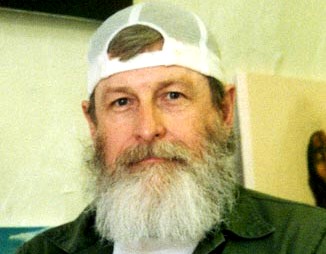 Thomas Manning
Murderer · USA · 1981
Thomas Manning Thomas Manning was born to a Boston postal clerk. He shined shoe…
1 victim
Thomas Manning
Murderer · USA · 1981
Thomas Manning Thomas Manning was born to a Boston postal clerk. He shined shoe…
1 victim
- Gender
- male
- Country
- USA
- Location
- Ellis County, Texas, USA
- Date of birth
- August 9, 1972
- Age at first offence
- 30
- Characteristics
- drug addict
- Victim profile
- Pedro Moreno / Harry Marvin "Marty" Steinfeldt III, 28 ( police officer )
- Method of murder
- Shooting
- Date(s) of murder
- October 6, 2002
- Years active
- 2002
- Date of arrest
- Same day (wounded by police)
- Status
-
Sentenced to death
Sentenced to death on March 1, 2004
Case identification
Kent Sprouse was sentenced to death in Ellis County, Texas, for capital murder committed on October 6, 2002.
- Name: Kent William Sprouse
- TDCJ Number: 999471
- Date of Birth: 08/09/1972
- Age at the time of the offence: 30
- Date Received: 03/01/2004
- Age (when received): 3
- Education Level: 1
- County: Ellis
- Race: White
- Gender: Male
- Hair Color: Brown
- Height: 5 ' 10"
- Weight: 2 22
- Eye Color: Hazel
- Native County: Native
- Native State: Prior occupation: Boone Missouri welder, construction, laborer
- Prior Prison Record: None
Timeline
- 10/06/2002 — Kent William Sprouse stopped at a gas station and food mart in Ferris, Texas, entered the store with a shotgun hanging from his shoulder, fired at two men at a pay telephone, shot Pedro Moreno, and shot Officer Harry Marvin Steinfeldt III, who died from his injuries; Moreno also died.
- 03/01/2004 — A jury sentenced Kent William Sprouse to death by lethal injection.
- 02/28/2004 — An Ellis County jury convicted Sprouse of capital murder after about 35 minutes to determine guilt; the jury sentenced him to death after 2 hours and 25 minutes of deliberation.
- 01/31/2007 — The Court of Criminal Appeals of Texas delivered the opinion affirming the trial court’s judgment and sentence of death.
The offence
On October 6, 2002, Kent William Sprouse stopped at a gas station and food mart in Ferris, Texas. When he entered the store to make his purchases, he had a shotgun hanging from his shoulder. After returning to his vehicle, he fired in the direction of two men at a pay telephone on the premises.
A customer, Brad Carroll, was startled and asked Sprouse if he was “okay.” Sprouse responded that the gun was not real and asked Carroll if he would help him get his car started. Carroll agreed and pulled his truck in front of Sprouse’s car to use booster cables. While Sprouse worked on his car, Carroll noticed boxes of buckshot in Sprouse’s vehicle, determined that the gun was real, and decided to leave. As Carroll drove away, he heard another gunshot. When he turned, he saw a bleeding man lying on the ground and Sprouse pointing his shotgun in the man’s direction.
Just after Carroll left the property, he saw a police officer’s car pull into the station. He then heard two more shotgun blasts and pistol fire.
Witness Brandon O’Neill saw Sprouse working on his vehicle while Pedro Moreno filled his truck with gas. O’Neill noticed Sprouse appeared to speak to Moreno, but Moreno did not respond. Sprouse reached into his vehicle, pulled out a gun, and shot Moreno. In response to a 911 call, Officer Harry Marvin Steinfeldt III, dressed in a police uniform and driving a police vehicle, responded to the shooting at the gas station. When Steinfeldt arrived, he noticed Moreno on the ground and then turned toward Sprouse’s car. Sprouse shot Steinfeldt twice. Steinfeldt returned fire after he hit the ground. After Steinfeldt collapsed, Sprouse walked to the side of the food mart. A second officer, Brad Lindsey, arrived and managed to take Sprouse into custody without further incident.
Moreno and Steinfeldt both died from their injuries.
Several witnesses stated that Sprouse showed no emotion and was rather nonchalant throughout the incident. In the ambulance on the way to the hospital to receive treatment for the wounds he suffered in the exchange of gunfire, Sprouse gave his name and address to the officer accompanying him. He then stated several times without prompting that he had killed an undercover officer at the gas pumps and had shot a second officer in uniform. A doctor who treated Sprouse thought he was under the influence of drugs when he was admitted, and subsequent testing revealed that he had ingested methamphetamines within the forty-eight hours preceding his arrival at the hospital. A trauma nurse stated that Sprouse was belligerent, swearing, and uncooperative regarding his medical care. She also stated that Sprouse repeated that “two cops got whacked.”
During closing arguments, lead defense attorney Jim Jenkins told jurors that the state had not proved its case of future dangerousness and asked them to carefully consider all of the trial’s testimony in determining the sentence. He argued that the state had to prove the probability of future dangerousness beyond a reasonable doubt, stating: “That’s not maybe, not probably, not clear and convincing, it’s beyond a reasonable doubt,” and also argued that it was impossible to determine the future, saying: “Each of you has to decide that (special issue). Is it even logical? Is it even possible for any of you to even vote on an issue where you try to predict what someone will do? . Is it logical to vote ‘yes’ on a question that can lead to death?”
Lead prosecutor Cindy Hellstern argued that neither special issue should be decided in Sprouse’s favor, stating: “There’s certainly a probability Kent Sprouse may commit future acts of violence,” and: “It says you may consider; it doesn’t say you must.” Chief felony prosecutor Don Maxfield described the events of October 6, 2002, stating they began with Sprouse taking a “fully loaded shotgun . to the convenience store on a Sunday afternoon.” Maxfield said Sprouse shot at two people at a pay phone before shooting Moreno through a gas pump. He also argued: “What does that tell you about Kent William Sprouse? . He knew exactly who he was aiming at and shooting.” Maxfield said Sprouse shot Moreno and then officer Steinfeldt shortly thereafter, stating: “2 minutes and 19 seconds later, he did,” and also said: “ . 2 minutes and 19 seconds after shooting Pedro Moreno, while Pedro Moreno is still breathing in his own blood, he (Sprouse) shoots officer Steinfeldt. And then what does he do? Six seconds later, he shoots Marty Steinfeldt again, who is lying on the ground. Right there, we’re way beyond a reasonable doubt about his committing future acts of violence.” Maxfield praised Steinfeldt’s actions, stating that by interrupting “a killing spree” Steinfeldt paid “the ultimate price for the safety of everyone at the filling station that day.”
Investigation and medical evidence
A doctor who treated Sprouse thought he was under the influence of drugs when he was admitted. Subsequent testing revealed that he had ingested methamphetamines within the forty-eight hours preceding his arrival at the hospital.
Dr. Chris Bell, a surgery resident who treated Sprouse at the hospital on October 6, 2002, testified that Sprouse admitted using cocaine and amphetamines. Bell also testified that subsequent testing confirmed that amphetamines, methamphetamines, and cannabis were in Sprouse’s system. Bell testified that while he felt Sprouse was under the influence of drugs when he was admitted, he did not have the same impression when he talked to Sprouse later that week.
Arrest and custody
A second officer, Brad Lindsey, arrived on the scene and managed to take Sprouse into custody without further incident.
In the ambulance on the way to the hospital, Sprouse gave his name and address to the officer accompanying him.
Trial
Conviction
A jury convicted Sprouse of capital murder committed on October 6, 2002. The Ellis County jury convicted the 31-year-old Ferris man of capital murder on Tuesday, taking about 35 minutes to determine his guilt.
Parties and proceedings identifiers
The direct appeal was captioned as:
- In the Court of Criminal Appeals of Texas
- No. AP-74,933
- Kent William Sprouse, Appellant v. The State of Texas
- On Direct Appeal from Ellis County
The opinion was delivered for a unanimous Court by Price, J.
The Court of Criminal Appeals reviewed appellant’s fourteen points of error and found them to be without merit, affirming the trial court’s judgment and sentence of death.
Facts presented at trial
During the guilt phase of trial, the Court described the sequence of events at the gas station and food mart in Ferris, Texas, including the pay telephone incident, the shooting of Pedro Moreno, the arrival and shooting of Officer Harry Marvin Steinfeldt III, and the arrival and custody by Brad Lindsey. The Court also stated that multiple witnesses said Sprouse showed no emotion and was rather nonchalant, and that Sprouse made statements during his medical transport that he had killed an undercover officer at the gas pumps and had shot a second officer in uniform.
Witnesses and testimony regarding mental state
At the guilt phase, Sprouse called witnesses who testified to his non-violent nature but also opined that he was mentally ill. One witness who claimed to know Sprouse “pretty well” testified that he never acted in a violent manner, but the witness also testified that things Sprouse told her made her suspect he was mentally ill long before the instant offense. The witness testified that Sprouse had been hospitalized at one point and told her he saw dead people, and that she often saw Sprouse talking to himself.
Another witness had known Sprouse’s family for forty years and had spent a couple of weeks with them every year around Easter. This witness testified that during Easter 2002 Sprouse behaved very differently from normal, with bursts of anger, seeing things that did not exist, hearing voices giving him commands, and saying that everyone was out to get him.
Sprouse’s mother testified that Sprouse’s behavior began to change around Christmas 2001. She stated that he was frightened and upset, thought that people were talking to him through the television, and thought that the CIA and FBI wanted to kill him. She also testified that around April or May 2002 she had Sprouse committed to a mental hospital when he refused to see a doctor on his own, and that he was back out on the street after seventy-two hours. She stated that his condition worsened after that.
Dr. Jaye Douglas Crowder, a psychiatrist appointed to examine Sprouse, testified that he interviewed Sprouse several times and also interviewed Sprouse’s friends and family members. Crowder testified that Sprouse was psychotic each time he was interviewed. Crowder stated that Sprouse had an extensive history of psychotic behavior and delusional thinking, and opined that on the day of the offense Sprouse was psychotic and paranoid, believed people were persecuting him, and did not understand the wrongfulness of his conduct.
The State called witnesses to rebut Sprouse’s case on guilt. Dr. Chris Bell testified about substances in Sprouse’s system and that his observation of drug influence changed later that week. Dr. Lisa Clayton, a psychiatrist, testified that she interviewed Sprouse and that he exhibited no signs of psychotic behavior during the interview. She testified that Sprouse told her he was not really paranoid and she concluded Sprouse was not insane at the time of the murders. Clayton did not talk with Sprouse’s friends or family members.
Two detention officers at Ellis County Jail testified they had regular contact with Sprouse during incarceration and they never saw him agitated, pacing, or talking to himself. The jail nurse testified that Sprouse received antibiotics and pain medication, and just prior to trial he received an antidepressant and sleep aid. She also testified that during a period of time Sprouse had been prescribed a drug she thought was an anti-psychotic medication; she never saw him agitated, pacing, or muttering to himself.
Dr. Richard Rogers, a forensic psychologist who had written a book about conducting insanity evaluations, testified that he spent approximately eleven hours with Sprouse while evaluating him. Rogers testified that the most likely diagnosis for Sprouse at the time of the murders was a substance-induced psychotic disorder with paranoid delusions, and that he opined Sprouse understood the wrongfulness of his acts on October 6, 2002. Rogers admitted he had not talked to Sprouse’s friends or family members and admitted he was not aware of whether Sprouse behaved strangely in the days before the murders. Rogers nonetheless opined that although Sprouse had mental illness, his psychosis did not manifest itself on the day of the murders and therefore did not prevent him from understanding that his conduct was wrong.
Punishment phase
At punishment, the State called former Ellis County Deputy Sheriff Adam Irwinsky. Irwinsky testified that he and his trainee were called out to Sprouse’s home on July 22, 2002, regarding a “disturbance with possibly a gun involved.” Irwinsky testified that when he asked Sprouse to step outside, Sprouse responded that he would not come out because they would jump on him. Irwinsky testified that he assured Sprouse that they would not jump on him and Sprouse laid down a .357 magnum handgun and came out. Irwinsky testified that Sprouse told the officers that he and his parents were having an argument that day. Irwinsky testified that no arrests were made, no guns were seized, and Sprouse left the premises with a friend.
At punishment, jurors had to unanimously answer each of two separate special issues. The first related to the probability that Sprouse would commit future acts of violence, and the second related to whether jurors found mitigating circumstances in the case that would warrant sentencing Sprouse to capital life. Under a capital life sentence, Sprouse would have served at least 40 years before becoming eligible for parole.
The Court described the sufficiency-of-the-evidence review of the future-dangerousness issue, including the view that a rational jury could have concluded Sprouse’s mental illness and drug use would affect later behavior and cause him to pose a threat to society in prison and free society, and also that officers had been called to Sprouse’s house when he was acting in a threatening manner toward his family.
The Court stated that it did not conduct a sufficiency review of the mitigation issue.
Sentencing
The jury sentenced Kent William Sprouse to death by lethal injection for the shooting death of Officer Harry Marvin “Marty” Steinfeldt III. The Ellis County jury answered the special issues required under Texas Code of Criminal Procedure Article 37.071, sections 2(b) and 2(e), and the trial judge sentenced Sprouse to death based on those answers.
Following formal sentencing by presiding Judge Gene Knize, victims’ impact statements were given in court by Harry “Butch” Steinfeldt Jr., the slain officer’s father, and Michelle Steinfeldt, the officer’s widow. The statements included the following quotations:
Harry “Butch” Steinfeldt Jr. stated:
“He was raised as a good kid. He learned to take people at face value and he loved people with an open heart. He cared about people,” the elder Steinfeldt said, addressing Sprouse.
“He was a good son and a good husband . . And you have taken all of that away. You have caused more sorrow and pain than you can ever imagine in this whole family. "And I'm talking about this family," the elder Steinfeldt said, gesturing toward a standing room only gallery of friends and family members for both his son and Moreno.
“Marty touched people,” his father said, continuing his emotional words, noting that Steinfeldt would have been the 4th of 5 living generations, with the birth of his daughter.
“You have taken all of that away. You have taken a very valuable part of this family away,” the elder Steinfeldt said.
“We only have memories left, but those memories go on. Just like the day, Oct. 6, 2002, goes on with us.”
Michelle Steinfeldt stated:
“I'm not just talking for myself. . I want you to look at her because she's too young to understand any of this. She's too young not to have a daddy who will ever take her to a dance, a daddy who won't be there to walk her down the aisle at her wedding,” Michelle said.
“Everything I'm saying to you is for the both of us so that someday I can tell her that I spoke for her, too.”
Michelle Steinfeldt also said:
“You have taken away the husband I loved and will love forever, a man of more morals and values than you can imagine,” she said, noting that she had watched Sprouse throughout the trial, describing him as projecting an "air of arrogance" up until the sentence was read.
“It was like you were thinking you had won because you had a shotgun and you killed a cop. You didn't win. You didn't win over Marty,” she said, telling Sprouse he would never have what her husband had.
“His friends and family thought the world of him,” she said.
“And you will never have a wife, who after just 14 months of marriage, had to go through this.”
Michelle Steinfeldt continued:
“Marty will be remembered as a brave, brave man. You will be remembered as a coward that hid behind a car door. You are a destroyer of lives: our family's, the Moreno family's, and your own family's,” she said, turning to where Sprouse's family members and friends sat on the other side of the courtroom.
“And your family, their pain is more than I can imagine,” she said, acknowledging their tears before continuing.
“You didn't win, you didn't win. You won that one gunshot battle but nothing else,” she said, saying that she didn't want to see any remorse now from Sprouse.
“Not for me, not for our baby. It's too late.”
She also said:
“She and her daughter would be OK, Michelle said. "Now we have something special. We have our own angel watching over us, taking care of us. And one day, we're going to be all together again.”
Appeals
The Court of Criminal Appeals of Texas affirmed the trial court’s judgment and sentence of death. The Court issued the opinion on direct appeal based on automatic review.
Issues raised and rulings
The Court addressed and overruled the following:
- Point of error four: Appellant asserted the evidence was legally insufficient to support the jury’s finding that he would be a continuing threat to society; the Court held the evidence was legally sufficient and overruled the point.
- Point of error fourteen: Appellant asserted insufficient evidence to support the jury’s “no” answer to the mitigation question; the Court stated it did not conduct such a sufficiency review and overruled the point.
- Point of error one: Appellant complained the trial court erred by allowing expert testimony without proper notice; the Court overruled the point.
- Point of error two: Appellant complained appellate counsel was not appointed pursuant to Article 26.052(k) and that the error denied meaningful review; the Court overruled the point.
- Point of error three: Appellant argued that the death penalty as applied violated the Eighth Amendment because of mental illness and reliance on Atkins v. Virginia; the Court overruled the point.
- Point of error five: Appellant argued the death penalty scheme was unconstitutional because it did not provide meaningful appellate review of mitigating evidence, re-weighing issues, and comparative proportionality; the Court overruled the point.
- Point of error six: Appellant argued the definition of mitigating evidence was facially unconstitutional; the Court previously rejected the argument and overruled the point.
- Point of error seven: Appellant argued the aggravating factors used in the statute were vague; the Court overruled the point.
- Point of error eight: Appellant contended the mitigation issue was unconstitutional under the Eighth and Fourteenth Amendments; the Court overruled the point.
- Point of error nine: Appellant asserted the statute was unconstitutional because it failed to require jurors be informed that a single holdout juror would result in an automatic life sentence; the Court overruled the point.
- Point of error ten: Appellant argued the “10/12” rule violated the constitution; the Court overruled the point.
- Points of error eleven and twelve: Appellant argued the death penalty as administered amounted to cruel and unusual punishment due to juror discretion and lethal injection drugs; the Court addressed both and overruled the points.
- Point of error thirteen: Appellant argued the mitigation question was unconstitutional because the statute did not require the State to prove beyond a reasonable doubt that insufficient mitigating evidence existed to support a life sentence; the Court overruled the point.
Expert testimony notice details
The Court addressed appellant’s complaint about expert testimony by A.P. Merillat, senior investigator for the special-prosecution unit in Huntsville. The trial court’s handling resulted in some of Merillat’s testimony being barred as expert testimony and other questions being allowed as “fact” questions after the trial court marked which questions were “fact” questions.
Other details
Additional capital murder charge
Sprouse also had been charged under a separate indictment with capital murder in Moreno’s death.
Victims
- Officer: Harry Marvin “Marty” Steinfeldt III (died October 6, 2002 at the Diamond Shamrock in Ferris).
- Bystander/customer: Pedro Moreno (also died October 6, 2002 at the Diamond Shamrock in Ferris).
- Another named officer: Brad Lindsey (arrived and took Sprouse into custody).
- Another named witness: Brad Carroll (described the pay telephone incident response).
- Another named witness: Brandon O’Neill (described observing Sprouse and Moreno at the gas station).
- Another named attorney: Jim Jenkins (lead defense attorney).
- Another named prosecutor: Cindy Hellstern (lead prosecutor).
- Another named prosecutor: Don Maxfield (chief felony prosecutor).
- Presiding judge at sentencing: Gene Knize.
Jury and sentencing structure
The jury was described as an 8-female, 4-male jury. The Court referenced special issues under Texas Code of Criminal Procedure Article 37.071.
Drug and mental illness characterization in proceedings
The Court described that subsequent testing revealed methamphetamines ingestion within forty-eight hours preceding hospital arrival, and that there was expert testimony and rebuttal testimony regarding psychosis, insanity, mental illness, and drug influence. The case narrative also described the hospital treating physician’s impression that Sprouse was under the influence of drugs and trauma nurse observations of belligerence and repeated statements.
Spotted an error, or have more information about this case?