Roland James Smith
Mass murderer Gameel Al-Batouti
Mass murderer · USA · 1999
Gameel Al-Batouti (also rendered “Gamil ElBatouty” or “El Batouty” in U.S. offi…
216 victims
Gameel Al-Batouti
Mass murderer · USA · 1999
Gameel Al-Batouti (also rendered “Gamil ElBatouty” or “El Batouty” in U.S. offi…
216 victims
 Timothy McVeigh
Mass murderer · USA · 1995
Timothy James McVeigh (April 23, 1968 – June 11, 2001) was a United States Army…
168 victims
Timothy McVeigh
Mass murderer · USA · 1995
Timothy James McVeigh (April 23, 1968 – June 11, 2001) was a United States Army…
168 victims
 Julio Gonzalez
Mass murderer · USA · 1990
Julio Gonzalez was sentenced to 174 twenty-five-year sentences (a total of 4,35…
87 victims
Julio Gonzalez
Mass murderer · USA · 1990
Julio Gonzalez was sentenced to 174 twenty-five-year sentences (a total of 4,35…
87 victims
 David Burke
Mass murderer · USA · 1987
David Augustus Burke (May 18, 1952–December 7, 1987) was an employee of USAir,…
43 victims
David Burke
Mass murderer · USA · 1987
David Augustus Burke (May 18, 1952–December 7, 1987) was an employee of USAir,…
43 victims
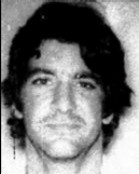 George Jo Hennard
Mass murderer · USA · 1991
George Jo Hennard carried out a mass killing at a Luby’s Cafeteria in Killeen,…
23 victims
George Jo Hennard
Mass murderer · USA · 1991
George Jo Hennard carried out a mass killing at a Luby’s Cafeteria in Killeen,…
23 victims
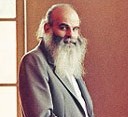 Ronald Gene Simmons
Mass murderer · USA · 1987
Ronald Gene Simmons was a retired United States Air Force sergeant. Over the Ch…
16 victims
Ronald Gene Simmons
Mass murderer · USA · 1987
Ronald Gene Simmons was a retired United States Air Force sergeant. Over the Ch…
16 victims
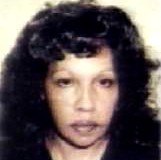 Josephine Gray
Murderer · USA · 1974
Josephine Virginia Gray, also known as Josephine Stribbling and Josephine Mills…
3 victims
Josephine Gray
Murderer · USA · 1974
Josephine Virginia Gray, also known as Josephine Stribbling and Josephine Mills…
3 victims
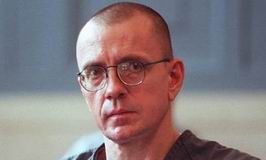 Joseph Paul Franklin
Serial killer · USA · 1977
Joseph Paul Franklin (April 13, 1950 – November 20, 2013) was an American seria…
15 victims
Joseph Paul Franklin
Serial killer · USA · 1977
Joseph Paul Franklin (April 13, 1950 – November 20, 2013) was an American seria…
15 victims
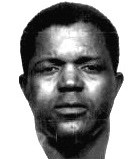 Caruthers Alexander
Murderer · USA · 1981
Caruthers Alexander was convicted of capital murder and was executed by lethal…
1 victim
Caruthers Alexander
Murderer · USA · 1981
Caruthers Alexander was convicted of capital murder and was executed by lethal…
1 victim
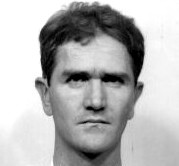 Ricky Eugene Morris
Murderer · USA · 1982
Ricky Eugene Morris was the offender. Linda Morrow was Morris’s girlfriend and…
1 victim
Ricky Eugene Morris
Murderer · USA · 1982
Ricky Eugene Morris was the offender. Linda Morrow was Morris’s girlfriend and…
1 victim
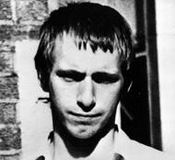 Bruce Lee
Serial killer · United Kingdom · 1973
Bruce Lee was born Peter George Dinsdale in 1960. He later changed his name to…
26 victims
Bruce Lee
Serial killer · United Kingdom · 1973
Bruce Lee was born Peter George Dinsdale in 1960. He later changed his name to…
26 victims
- Gender
- male
- Country
- USA
- Location
- Harlem, New York City, New York, USA
- Date of birth
- 1944
- Age at first offence
- 51
- Characteristics
- arson, armed robbery
- Victim profile
- Seven store employees
- Method of murder
- Smoke inhalation (set the store on fire)
- Date(s) of murder
- December 8, 1995
- Years active
- 1995
- Date of arrest
- —
- Status
-
Died in custody
Committed suicide by shooting himself; eight people were killed in the arson and shooting at Freddy's Fashion Mart in Harlem on 8 December 1995
Timeline
- 8 December 1995 — Roland J. Smith Jr. entered Freddy's Fashion Mart, ordered black customers to leave, spilled paint thinner and set several bins of clothing on fire; he shot several people, barricaded others inside, exchanged gunfire with police, set fires in the store, and ended his morning rampage by putting a bullet in his head; seven others trapped in the store burned to death.
- 29 November — A security guard told police that during protesting, one of the demonstrators said, "We're going to burn and loot the Jews."
- December 9, 1995 — John Kifner published a report describing the incident, including police statements, victims, and the ongoing investigation.
Background
Roland James Smith Jr. was 51 and lived in Harlem. He had a criminal record going back 30 years. He was described as an overzealous black activist.
Freddy's Fashion Mart was located at 272 West 125th Street across the street from the Apollo Theatre. In 1995, a black Pentecostal Church, the United House of Prayer, owned a retail property on 125th Street. The church asked Fred Harari, a Jewish tenant who operated Freddie's Fashion Mart, to evict his longtime subtenant, a black-owned record store called The Record Shack.
Sikhulu Shange owned The Record Shack. Shange’s shop had specialized in blues Motown African and Caribbean music for more than 20 years. Shange was being evicted as a subtenant of Harari apparently at the instigation of the church, according to Mayor Rudolph Giuliani.
A protest campaign occurred against the planned eviction of The Record Shack. The Rev. Al Sharpton helped sponsor protests against the clothing store and criticized investigators for quickly linking the conflagration to the protests. Sharpton also led a protest in Harlem against the planned eviction of The Record Shack and told the protesters, "We will not stand by and allow them to move this brother so that some white interloper can expand his business."
In the past several weeks, there had been a dozen or so pickets outside Freddie's urging a boycott of the store because protesters believed it did not employ blacks and was behind the threatened eviction of Shange’s business.
There were also construction crews working on a store expansion and a $5 million renovation of the church.
The offence
On 8 December 1995, Roland J. Smith Jr. turned Freddy's Fashion Mart into a fire. He entered the store with a gun and flammable liquid. Police said he pulled out a gun, ordered all the black customers to leave, and spilled paint thinner on several bins of clothing and set them on fire. The fire resulted in killing 8 people including Smith.
Police believed the attack was deliberately set as part of a bitter landlord-tenant dispute that had led to angry protests in the neighborhood.
In the store, Smith yelled for everyone to leave, started firing wildly wounding four people who managed to stumble out of the shop, and proceeded to set up barricades trapping seven people inside. He later set several fires in the store after exchanging gunfire with police.
A passer-by on 125th Street told two officers from the 28th Precinct at 10:12 a.m. that a tall man with a gun had gone into the store. As officers raced into the store, Smith was shooting. Three wounded people were helped out of the store, but one officer was pinned down trapped inside. More police, from the neighboring 25th Precinct, responded and got the officer out unhurt.
At St. Luke's Hospital, Dr. Kevin V. Sanborn, the associate director of anesthesiology, said that one of the wounded victims had said:
"a man came into the store and started the fire right away and as people tried to escape the man started to fire at them."
Four other people were shot and escaped from the store before the fire enveloped it. Police said seven victims apparently died of smoke inhalation. It was unclear whether the gunman died of smoke inhalation or the single bullet wound he suffered.
Investigation and police statements
Police said the incident arose during the protesting in recent weeks and involved a dispute over the threatened eviction of The Record Shack. Police also opened a racial bias investigation of an incident that arose during the protesting on 29 November.
Deputy Inspector Joyce Stephen, the commander of the 28th Precinct, said the Police Department sent uniformed officers to monitor the pickets and said a security guard told police that one of the demonstrators said:
"We're going to burn and loot the Jews."
Mayor Rudolph Giuliani and Police Commissioner William Bratton rushed to the scene on the day of the fire. The mayor urged New Yorkers not to rush to judgments about the case, while the investigation focused on the protests against the clothing store.
Al Sharpton criticized investigators for quickly linking the conflagration to the protests. Firefighters took more than two hours before they could reach the inside of the gutted store because of the intensity of the fire. Police found three bodies huddled together in a back room on the first floor and four more bodies clustered together in the basement.
Police stated that in the early moments of the confrontation Smith fired on two police officers who arrived on the scene; Bratton said a preliminary check of the weapons of the police officers on the scene indicated their guns had not been fired.
Police said Smith was carrying an identification card with the name Aboudima Moulika and an address on Mount Morris Park West, but they were not sure whether it was his true identity. Detectives went to the address and residents there had never heard of him and did not recognize the person in the photograph. A detective involved in the investigation said:
"We're confident he was not known at that location"
Arrest, weapon, and death
Smith was found dead with a revolver in his hand reeking of accelerant, according to police. Beside him, officials believed held the accelerant was a white container.
Smith ended his rampage by putting a bullet in his head, and he was described as having felt he had done his job for the cause.
In another description, Smith was identified as Ronnie, who liked to call himself Abubunde Mulocko. Police said Smith entered with a .38-caliber revolver and a bag of lighter fluid, yelled for everyone to leave, started firing wildly, then set up barricades trapping seven people inside, and after exchanging gunfire with police set several fires in the store.
Witness accounts and related observations
Thomas Pierre, a voter registration worker, glanced out his third-floor office window when he heard sirens and shots. He saw police rushing up and a man dressed like a construction worker staggering out of the building in pain. Pierre said:
"Suddenly the whole front went up in flames"
"It started just like that."
Al Sharpton later expressed regret for making the racial remark, "white interloper," and denied responsibility for inflaming or provoking the violence.
Other details
Fire Department officials discovered that the store's sprinkler had been shut down in violation of the local fire code.
The report said Sharpton claimed that the perpetrator was an open critic of himself and his nonviolent tactics.
The incident occurred at Freddy's Fashion Mart on 125th Street near the Apollo Theatre, and the dispute centered on threatened eviction of the Record Shack by Harari at the instigation of the United House of Prayer.
Spotted an error, or have more information about this case?