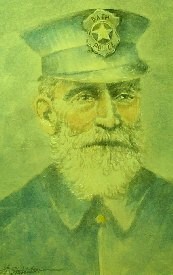
Daniel Wilkinson
Murderer Joseph LaPage
Murderer · USA · 1874
Joseph LaPage was described as a French-Canadian trapper who donned a bearskin…
2 victims
Joseph LaPage
Murderer · USA · 1874
Joseph LaPage was described as a French-Canadian trapper who donned a bearskin…
2 victims
 Louis Wagner
Murderer · USA · 1873
Louis Wagner had lived on Smuttynose Island with six Norwegian immigrants: Mare…
2 victims
Louis Wagner
Murderer · USA · 1873
Louis Wagner had lived on Smuttynose Island with six Norwegian immigrants: Mare…
2 victims
 Carlyle Harris
Murderer · USA · 1891
Carlyle Harris was executed by electrocution at Sing Sing Prison on May 7, 1893…
1 victim
Carlyle Harris
Murderer · USA · 1891
Carlyle Harris was executed by electrocution at Sing Sing Prison on May 7, 1893…
1 victim
 Charles Guiteau
Murderer · USA · 1881
Charles Julius Guiteau (September 8, 1841 – June 30, 1882) was an American lawy…
1 victim
Charles Guiteau
Murderer · USA · 1881
Charles Julius Guiteau (September 8, 1841 – June 30, 1882) was an American lawy…
1 victim
 Richard William Kutzner
Murderer · USA · 1996
Richard William Kutzner was convicted of capital murder and was sentenced to de…
2 victims
Richard William Kutzner
Murderer · USA · 1996
Richard William Kutzner was convicted of capital murder and was sentenced to de…
2 victims
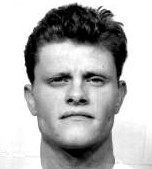 Robert Drew
Murderer · USA · 1983
Robert Nelson Drew was executed by lethal injection in Texas on August 2, 1994.…
1 victim
Robert Drew
Murderer · USA · 1983
Robert Nelson Drew was executed by lethal injection in Texas on August 2, 1994.…
1 victim
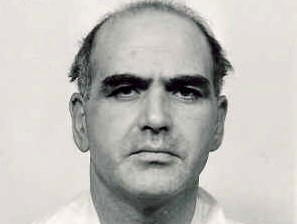 Abdelkrim Belachheb
Mass murderer · USA · 1984
Abdelkrim Belachheb was a Moroccan national. Marcelle Ford, a 32-year-old woman…
6 victims
Abdelkrim Belachheb
Mass murderer · USA · 1984
Abdelkrim Belachheb was a Moroccan national. Marcelle Ford, a 32-year-old woman…
6 victims
 Norman Kidman
Murderer · Canada · 2002
Jeffrey Baldwin was a Canadian child. He was born in Doctor's Hospital in Toron…
1 victim
Norman Kidman
Murderer · Canada · 2002
Jeffrey Baldwin was a Canadian child. He was born in Doctor's Hospital in Toron…
1 victim
- Gender
- male
- Country
- USA
- Location
- Bath, Maine, USA
- Date of birth
- 1845
- Age at first offence
- 38
- Characteristics
- police officer, escape attempt
- Victim profile
- Constable William Lawrence, 63
- Method of murder
- Shooting (.32 caliber revolver)
- Date(s) of murder
- September 4, 1883
- Years active
- 1883
- Date of arrest
- 6 days after
- Status
-
Executed
Executed by hanging at the Maine State Prison in Thomaston on November 21, 1885
Case record: Daniel Wilkinson
Background
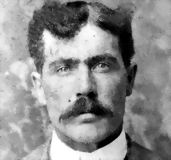
Daniel Wilkinson (c. 1845 – November 21, 1885) was the last person to be executed by Maine. He was hanged for the murder of a police officer after a burglary in Bath, Maine. It was discovered that Wilkinson was an escapee from the Maine State Prison.
The offence
In the early morning hours of September 4, 1883, Wilkinson and his accomplice John Ewitt were caught attempting to break into the D.C. Gould Ship Chandlery and Provision Store in Bath.
As Wilkinson and Ewitt were running away from one police officer, they collided with Constable William Lawrence. Wilkinson shoved a .32 caliber revolver into the face of Officer Lawrence and fired. The bullet entered Officer Lawrence’s brain and killed him instantly. Officer Lawrence did not have an opportunity to draw his own weapon.
Constable William Lawrence was affectionately known to the townspeople as “Uncle Billy” and was described as a “most respected member of the police force.” The townsfolk were deeply affected by his death.
Investigation
At the time of the incident, people initially accused rookie officer Kingsley of accidentally shooting Officer Lawrence in his haste to apprehend the burglars. That theory was disproved when a private detective, hired by the town to investigate the murder, arrested and obtained a confession to the crime from Daniel Wilkinson.
The Police Chief at the time, Marshall James Bailey, recommended that Detective James Wood of Boston be employed since his own department was not equipped to handle a homicide investigation. Wood was paid ten dollars a day plus expenses for his services and refused a one thousand dollar reward offered by City Mayor James Ledyard. The reward was for evidence that would lead to the arrest and conviction of any person or persons who caused the death of Police Officer William Lawrence. Wood declined the reward claiming that the reward could prejudice a jury.
Detective Wood tracked Wilkinson by following a lead developed in Portland, Maine. Wood described that he had been routinely checking Portland’s boarding houses. One landlady advised Wood that she had not heard from two of her boarders and still had their possessions. On checking their belongings, Wood found unusual shaped match sticks that resembled those recently found at the scene of a burglary in Brunswick, Maine, a town only a few miles south of Bath. Wood determined that the Brunswick burglary and the attempted break in Bath were alike in too many ways to ignore and concluded that both crimes were committed by the same individual. Wood then went to Bangor, Maine, where he subsequently arrested Wilkinson.
Arrest
Wilkinson was arrested in Bangor, Maine less than a week after the incident.
Wilkinson was arraigned on September 11, 1883, one week after the murder of Officer Lawrence. His accomplice, an Englishman named John Ewitt, successfully escaped to England and was not extradited due to a recent treaty agreement between the two nations.
Trial
Wilkinson’s trial began in the Bath Superior Court on January 4, 1884.
Wilkinson’s council was Herbert Heath, described as a young attorney. During the trial, Wilkinson was convicted by the jury of first degree murder on January 7, 1884. The source described Heath as “most able” but noted that the defendant was nonetheless sentenced to death after a Bath Superior Court trial that lasted only four days.
The source also described Officer Kingsley’s account of the events, including the following quotations:
“the sound of splintering wood”
“What’s going on there?”
“I blew my whistle when they ran and called out for them to stop or I’d shoot. The hind man turned his head around and said ‘ you wouldn’t shoot would you?’ I told the two to stop. Two as I thought went up Arch Street and the other went on. When I got to the corner I sang out again ‘Stop or I’ll shoot!’ There was no answer and I fired”.
Sentencing
On January 7, 1884, Wilkinson was sentenced by the judge to death by hanging.
Outcome
The death sentence was carried out at the Maine State Prison in Thomaston on November 21, 1885. Wilkinson did not die instantly from the hanging but instead slowly died of strangulation.
The source stated that the nature of Wilkinson’s death—described as similar to the executions of two other inmates the previous April—was used by anti-death penalty activists to argue that Maine should abolish the death penalty, which it did in 1887.
Aftermath
The death penalty was abolished altogether in Maine in 1887.
Wilkinson was described as the last person to die by this means in Maine because he did not immediately succumb when dropped from the gallows and instead died an “agonizing death.”

Spotted an error, or have more information about this case?