
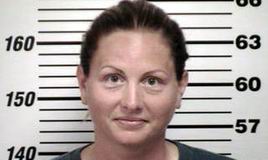
Melanie McGuire
Murderer Miranda Barbour
Murderer · USA · 2013
Miranda Barbour, 19, defendant. · Elytte Barbour, 22, defendant and husband of…
100 victims
Miranda Barbour
Murderer · USA · 2013
Miranda Barbour, 19, defendant. · Elytte Barbour, 22, defendant and husband of…
100 victims
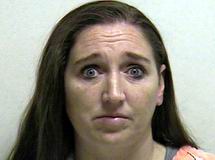 Megan Huntsman
Murderer · USA · 1996
Megan Huntsman was 40 at sentencing. She was a mother of three children who wer…
6 victims
Megan Huntsman
Murderer · USA · 1996
Megan Huntsman was 40 at sentencing. She was a mother of three children who wer…
6 victims
 Michele Kalina
Murderer · USA · 1996
Michele Kalina pleaded guilty to murder for one of five infants she initially w…
5 victims
Michele Kalina
Murderer · USA · 1996
Michele Kalina pleaded guilty to murder for one of five infants she initially w…
5 victims
 Tiffany Hall
Murderer · USA · 2006
Tiffany Hall was 24 when she was charged in September 2006. She later entered a…
5 victims
Tiffany Hall
Murderer · USA · 2006
Tiffany Hall was 24 when she was charged in September 2006. She later entered a…
5 victims
 Banita Jacks
Murderer · USA · 2007
Banita Jacks was a Washington, DC resident convicted of murdering her four daug…
4 victims
Banita Jacks
Murderer · USA · 2007
Banita Jacks was a Washington, DC resident convicted of murdering her four daug…
4 victims
 Holly Grigsby
Murderer · USA · 2011
Holly Grigsby was sentenced to life in prison without parole on July 15, 2014.…
4 victims
Holly Grigsby
Murderer · USA · 2011
Holly Grigsby was sentenced to life in prison without parole on July 15, 2014.…
4 victims
 Daniel Joe Hittle
Mass murderer · USA · 1973
Daniel Joe Hittle was executed by lethal injection in Texas on December 6, 2000…
7 victims
Daniel Joe Hittle
Mass murderer · USA · 1973
Daniel Joe Hittle was executed by lethal injection in Texas on December 6, 2000…
7 victims
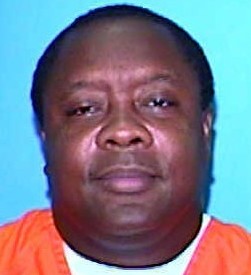 Alfred Lewis Fennie
Murderer · USA · 1991
Alfred Lewis Fennie was also known by the alias “Ezell Foster.” Fennie was indi…
1 victim
Alfred Lewis Fennie
Murderer · USA · 1991
Alfred Lewis Fennie was also known by the alias “Ezell Foster.” Fennie was indi…
1 victim
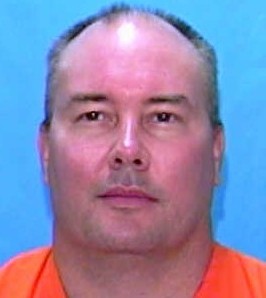 Donald Dillbeck
Murderer · USA · 1979
Donald Dillbeck (May 24, 1963) was also known as “Dill Dillbeck” and “Robert La…
2 victims
Donald Dillbeck
Murderer · USA · 1979
Donald Dillbeck (May 24, 1963) was also known as “Dill Dillbeck” and “Robert La…
2 victims
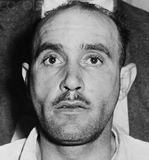 Raymond Fernandez
Serial killer · USA · 1947
Raymond Martinez Fernandez was executed by electrocution at Sing Sing prison in…
17 victims
Raymond Fernandez
Serial killer · USA · 1947
Raymond Martinez Fernandez was executed by electrocution at Sing Sing prison in…
17 victims
 Mark Schwab
Murderer · USA · 1991
Mark Dean Schwab (born December 16, 1968; white; male; hair brown; blue eyes; 6…
1 victim
Mark Schwab
Murderer · USA · 1991
Mark Dean Schwab (born December 16, 1968; white; male; hair brown; blue eyes; 6…
1 victim
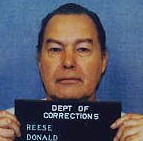 Donald Reese
Murderer · USA · 1986
Donald E. Reese was executed on August 13, 1997. · September 9, 1986 — Reese mu…
4 victims
Donald Reese
Murderer · USA · 1986
Donald E. Reese was executed on August 13, 1997. · September 9, 1986 — Reese mu…
4 victims
- Gender
- female
- Country
- USA
- Location
- Woodbridge, Middlesex County, New Jersey, USA
- Date of birth
- October 8, 1972
- Age at first offence
- 32
- Characteristics
- parricide, dismemberment, drugs, nurse
- Victim profile
- William T. McGuire, 39 (her husband)
- Method of murder
- Shooting ( .38 caliber handgun)
- Date(s) of murder
- April 28, 2004
- Years active
- 2004
- Date of arrest
- June 2, 2005
- Status
-
Life imprisonment
Sentenced to life in prison on July 19, 2007
Case information
Defendant: Melanie McGuire (born Melanie Lyn Slate on October 8, 1972) Status: Sentenced to life in prison on July 19, 2007. Where she served sentence: Edna Mahan Correctional Facility for Women in Clinton, New Jersey. Parole eligibility (as stated): Barring a successful appeal, she was not eligible for parole until she was 100 years old. In New Jersey, a life sentence was defined as a 75-year term, and under the No Early Release Act, she was required to serve 85 percent of her sentence, or 63 3/4 years.
Background
Melanie McGuire was a New Jersey nurse. She and her husband Bill had been married for five years at the time of the killing. The couple raised two sons in a Woodbridge, New Jersey apartment. Melanie worked as a nurse at a fertility clinic; her husband Bill was a computer programmer.
In April 2004, the couple planned to move to a larger home in Warren County. Melanie and Bill closed on their new house on April 28, 2004, but never moved in.
The case was widely referred to as the “suitcase murder” by various media outlets.
The offence
In April 2004, Melanie McGuire and her husband Bill were in the process of closing on a new home. That night, Melanie drugged her husband, shot him twice to death, and then dismembered his body.
Melanie later put his dismembered remains into three matching suitcases, which were later found in the Chesapeake Bay.
The remains were found in three suitcases on three separate dates near the Chesapeake Bay Bridge-Tunnel:
- A first suitcase containing Bill’s remains was found near the Chesapeake Bay Bridge Tunnel.
- A second suitcase was found, containing his head and torso.
- A third suitcase was recovered.
Virginia medical examiner findings included two bullets in the torso and separate entrance and exit bullet wounds to the head and the chest.
Investigation
Recovery of remains and identification
- May 5, 2004: A man fishing from his boat near the Chesapeake Bay Bridge-Tunnel retrieved a suitcase containing human remains.
- May 11, 2004: A graduate student out for bird-watching discovered a second suitcase; a human head and torso were recovered.
- May 16, 2004: A boater found a third matching suitcase floating near the second island of the bridge and tunnel; more human remains were inside.
- May 21, 2004: Virginia Beach police released a composite sketch. Susan Rice recognized the victim as her husband’s longtime friend and Navy buddy, William McGuire, 39.
Virginia police forwarded jurisdiction to New Jersey after concluding Bill McGuire was killed in the Garden State. New Jersey authorities later obtained jurisdiction:
- October 2004: New Jersey authorities took over jurisdiction of the murder investigation from Virginia.
- Sept. 15, 2004: Police in Virginia closed their investigation and turned the case over to New Jersey after concluding William McGuire was killed in the Garden State.
- September 2004: Virginia authorities forwarded the investigation to the state Attorney General’s Office.
Evidence linking Melanie to the killing
Investigators uncovered multiple incriminating items:
- A video showed Melanie parking Bill’s car at the Flamingo Hotel.
- Melanie purchased a .38 caliber handgun from a store in Easton, Pennsylvania with unusual wadcutter bullets. Bill was killed with a .38 caliber handgun with wadcutter bullets.
- An EZ Pass tag recorded her presence at a toll in Delaware two days after Bill’s murder; she claimed it was furniture shopping because Delaware had no sale tax.
- Melanie attempted to have an EZ Pass charge removed from her account history. An unidentified man, believed by many to be Melanie’s father, also called and attempted to have the charge removed.
- Forensics demonstrated that the plastic bags found with Bill’s remains were from the same roll of bags that Melanie had in her home.
- The luggage that Bill’s body was found in matched a set Melanie had in her basement, which was missing the same size bags as the ones found with Bill’s remains.
- Police believed Melanie used a prescription from her work to drug her husband.
Additional investigative coordination and participants were described:
- The investigation was coordinated by the New Jersey Division of Criminal Justice and the New Jersey State Police.
- It also included the Middlesex County Prosecutor’s Office, the Woodbridge Police Department, and the Virginia Beach Police Department.
Anonymous communications and related evidence
After Melanie was charged with Bill’s murder:
- August 2005: Copies of a single-spaced, four-page letter were sent to a newspaper, defendant’s former attorney, and others, addressed to the Attorney General of New Jersey. The writer claimed to have killed “Billy Mac” and described alleged knowledge not reported in the news.
- October 11, 2005: A Federal Express package was delivered to the prosecutor, containing a letter purportedly from an anonymous co-worker of Cindy Ligosh at the Weichert Realty office in Franklin Lakes. The package contained items allegedly found in the trash at the office, including a wedding ring and bracelet believed to belong to Bill, an empty Ultramax ammunition box, a key to Bill’s Nissan Maxima, a key to the lock box found in the storage facility, rubber gloves, prescription medications, and marijuana wrapped in tinfoil, along with allegedly discarded sheets of notepaper with writing identified as Cindy Ligosh’s handwriting.
The Weichert office manager, Tamar Joffee, testified that the correct address for her office was Franklin Avenue, not Franklin Road; that the wrong telephone number was listed; that the Weichert logo was a forgery; and that the office did not use Federal Express at that time.
A forensic linguistics expert, James Fitzgerald, testified about similarities between known writing samples from Melanie and the anonymous documents. A defense linguistics expert, Carole Chaski, disputed Fitzgerald’s findings and testified that Melanie could not be identified as the writer.
Despite these anonymous communications, the court later recorded that Melanie was acquitted of charges arising from the second indictment related to the anonymous communications.
Arrest
Initial charge and arrest
- June 2, 2005: Melanie McGuire was arrested at her new home in Brick, New Jersey and charged with first-degree murder.
- She was booked into the Middlesex County Adult Correctional Center.
- Bail was set at $750,000; she made her bail and was released.
- Through her attorneys, Joe Tacopina, Steve Turano, and Marc Ward, she pled not guilty.
Additional charges
- October 11, 2005: Melanie faced additional charges, with a four-count indictment coming from a state grand jury. Bail was raised to $2.1 million; she was again released.
- October 26, 2006: She was charged with two counts of hindering apprehension for allegedly writing letters to police aimed to get them off her trail. She pled not guilty and was released after posting $10,000 bail.
- November 18, 2006: Melanie hired a new defense team, Joseph Tacopina and Stephen Turano.
Trial
Trial commencement and structure
- March 5, 2007: Melanie McGuire’s murder trial commenced at the Middlesex County Courthouse in New Brunswick, New Jersey.
- The jury trial included testimony during February through April 2007.
- The prosecution called sixty-four witnesses.
- The defense called sixteen additional witnesses.
- Twenty-one witnesses qualified as experts.
- Hundreds of exhibits were admitted.
- After twenty-three days of testimony and about three days of deliberation, the jury convicted on all four charges of the first indictment and acquitted on the charges in the second indictment.
Prosecution’s theory
Prosecutors contended Melanie’s motive for murder was to take up a new life with her lover, Bradley Miller. Melanie persisted that she was innocent and claimed her husband was a compulsive gambler who owed money and believed he was killed by the Atlantic City mob.
Motive and relationship evidence
Evidence presented included:
- The State presented evidence that Melanie was involved in an intense, extra-marital love affair with Dr. Bradley Miller.
- Miller testified that the intimate relationship began in 2002.
- The State argued she told Miller her husband had threatened to take their sons and disappear if she filed for divorce.
- Shortly after Bill’s disappearance, Melanie told Miller, friends, and others that Bill argued with her in the early morning hours of April 29, 2004, and that, for the first time in their relationship, he struck her.
Computer and gun purchase evidence
Evidence included internet searches and discussions about purchasing a gun:
- On a personal computer, Google searches had been conducted between April 11 and 26, 2004, for: “undetectable poisons,” “state gun laws,” “instant poison,” “gun laws in Pennsylvania,” “toxic insulin levels,” “fatal insulin doses,” “fatal digoxin doses,” “instant undetectable poisons,” “how to commit suicide,” “how to commit murder,” “how to purchase hunting rifles in NJ,” “pesticide as poison,” “insulin as a poison,” “morphine poisoning,” “how to find chloroform,” “insulin shock,” “neuromuscular blocking agents,” “sedatives,” “tranquilizers,” “barbiturates,” “nembutal,” “pharmacy,” “chloral hydrate,” “chloral and side effects,” and “Walgreens.”
- The “chloral hydrate” search stood out because police found chloral hydrate in Bill’s car.
- A friend testified about advice relating to buying a gun and romantic interest.
- On April 26, 2004, Melanie bought a Taurus .38 caliber revolver at a gun shop in Palmer Township, Pennsylvania; identification used her Pennsylvania-issued driver’s license.
- The gun shop owner testified about bullets listed for sale and recalled the sale because she was well-dressed and because she was the first nurse who bought a handgun from him.
- After Bill’s murder was discovered, Melanie told Dr. Miller and other friends that Bill asked her to buy a gun because he could not buy one himself.
Chloral hydrate evidence
Inside Bill’s car, investigators found:
- A syringe similar to ones used at the Morristown medical practice where Melanie worked.
- A prescription bottle of chloral hydrate in the name of a woman who was a patient of Dr. Miller at the Morristown medical practice.
- The prescription was filled at 8:32 a.m. on April 28, 2004, at a Walgreens pharmacy in Edison.
- Records showed Melanie dropped off her sons at 8:20 a.m. on April 28, 2004.
- Evidence showed the Walgreens pharmacy in Edison was about 1.5 miles from the children’s daycare facility.
Miller denied writing the prescription; a handwriting expert testified the writing was not his. The expert could neither identify the signature as one written by Melanie nor exclude her as the writer. The managing partner testified doctors in his practice were unlikely to prescribe chloral hydrate, and that nurses were permitted to sign prescriptions and it was not unusual for Melanie to have signed Miller’s name.
The patient whose name was on the prescription testified that she never received a chloral hydrate prescription and had never been to the Walgreens pharmacy in Edison, and that the written prescription showed her correct date of birth and a phone number off by one digit from her telephone number.
Statements and alleged cover-up
The prosecution argued Melanie immediately began covering up the murder by creating evidence that Bill had abruptly abandoned his family, job, and new house after a violent argument. Evidence included:
- In the early morning of April 29, an email was sent from Bill’s Blackberry to supervisors stating “I will be out sick today.” Bill’s Blackberry was later found in the trunk of his Maxima in Atlantic City.
- The prosecution alleged defendant used Bill’s cell phone to place a one-minute call to his best friend in Virginia on April 30, 2004; the friend testified he did not receive a call from Bill on that date and that no message was left.
- The State alleged Melanie made a trip to Atlantic City during the night on May 1-2, 2004, allegedly with her stepfather, Michael Cappararo, to check on Bill’s car and create false evidence.
Seals, garbage bags, and suitcases
Evidence emphasized garbage bags and matching luggage:
- The medical examiner and forensic evidence described the body cut into sections and packed into three matching suitcases.
- DNA and forensic analysis were described, including DNA identification of trace evidence and human tissue found on floor mats with DNA matching Bill’s.
- Forensic experts compared garbage bags taken from the Woodbridge apartment to garbage bags found in the suitcases.
Plastics and tool mark experts were described:
- Frank Ruiz testified about plastic garbage bag manufacture and identification and concluded two sets were produced in a close timeframe.
- Thomas Lesniak testified about tool mark analysis and concluded the bags were produced on the same extrusion line.
- The defense presented polymer chemist Sally Ginter, who disputed Ruiz’s conclusions and testified that the tests showed significant differences.
Appeals court description of trial evidence and acquittals
The appellate court described the convictions as:
- Convicted of all four charges of the first indictment.
- Acquitted of the charges in the second indictment.
It further recorded that at sentencing:
- The court merged the weapons count with the murder charge and sentenced Melanie to life imprisonment subject to the No Early Release Act.
- She received a concurrent term for desecration of human remains and a consecutive term for perjury, with parole eligibility details for the perjury term.
Sentencing
Sentencing date and sentence terms
- July 19, 2007: Melanie McGuire was sentenced. She was sentenced to life in prison.
- She was also sentenced to additional consecutive time for perjury and consecutive term details were described in multiple accounts:
- One account stated the judge sentenced her to additional consecutive 2 1/2 year-term for perjury.
- Another account stated she received 10 years for desecrating human remains served concurrently, and an additional five years on one count of perjury for lying to a family court judge regarding the whereabouts of her husband after his disappearance, with two and a half years of that sentence to be served before eligibility for parole.
Judicial remarks at sentencing
Middlesex Superior Court Judge Frederick De Vesa issued the sentence and described the crime and its depravity. He stated:
"The depravity of this murder simply shocks the conscience of this court," Middlesex Superior Court Judge Frederick De Vesa said as he gave Melanie McGuire the maximum penalty. "One who callously destroys a family to accomplish her own selfish ends must face the most severe consequences that the law can provide."
Another sentencing account recorded additional remarks and framing:
"The nature and the complexity and the scope of this criminal episode involved many, many overt actions committed over a three-week period spanning four different states, and reflected a willfullness and a malice that goes far beyond the elements of the crime of murder," the judge said.
The appellate court also included a quoted sentencing statement:
The nature and the complexity and the scope of this criminal episode involved many, many overt actions committed over a three-week period spanning four different states and reflected a willfulness and a malice that goes far beyond the elements of the crime of murder in our law.
The desecration of William McGuire's remains was particularly heinous and depraved. His body was treated as trash. It was cut and sawed apart and then packaged in garbage bags. His remains were left to decompose in the waters of another state without identification so that his family and friends might always be deprived of a dignified funeral service and burial. His depravity of the murder was further manifested by the efforts on the part of the defendant to portray William McGuire as an abusive husband and a chronic gambler who was indebted to organized crime figures as part of her attempt to shift the blame for his murder to others․ [D]uring the course of the trial there was simply no credible evidence to suggest that this characterization of Mr. McGuire was in any way accurate. But perhaps most tragically the murder of William McGuire and the attack on his character has surely caused grave harm to his children. They must now grow up without a mother or father and their memories of both will be distorted and confused by the web of deception created by the defendant. The depravity of this murder simply shocks the conscience of the court.
The reference to defendant's negative portrayal of Bill did not mean arguments made by counsel in defense of the indictment; it meant defendant's words and conduct in the days and months after Bill disappeared and before she had been charged. Because of the level of premeditation, planning, and concealment demonstrated by the evidence, the court viewed the entirety of defendant's actions as a continuous episode of purposeful, depraved, and cruel conduct.
The court observed that the crimes were the result of a cold, calculated plan carried out with shocking attention to detail and callous disregard for the life of a human being and for the welfare of defendant's own children.
Family and legal comments at sentencing
Bill McGuire’s elder sister Cindy Ligosh testified and stated:
- Cindy Ligosh said she testified before the sentencing and referenced the boys being very young when Bill was nowhere to be found.
Laura Ligosh, Bill’s niece, said:
"I see the pencil sketch rendered by the Virginia police department of a body that was pulled out of the water on three separate days," she said. "No name, no voice, just lifeless eyes set in a bloated, misshapen head."
McGuire’s best friend Allison LiCalsi spoke on her behalf and said:
- During her time in jail, McGuire helped a fellow inmate cope with heroin withdrawal.
Defense counsel Joseph Tacopina made statements including:
"Melanie McGuire is innocent. We respect the jury's verdict, but we don't agree with it," he said. "She is always giving of herself, and she has gotten people through incredibly difficult times. Melanie McGuire continues to be that person today, even though she's in a place where she does not belong."
Assistant Attorney General Patricia Prezioso urged the maximum penalty and stated:
"This defendant desecrated his body then she tried to desecrate his memory," she said. "(Melanie McGuire) continues to deny her part and displays a total and complete lack of remorse. She displays an arrogance as if she is entitled to be above the law. She should never, ever walk free again."
After the sentencing, Tacopina told Court TV:
"She didn't do this, so there was no remorse," Tacopina told Court TV. "There's nothing for her to apologize for. This wasn't the day for her to explain herself."
Appeals
Appellate Division decision
The New Jersey Appellate Division case was listed as:
State of New Jersey, Plaintiff-Respondent, v. Melanie McGuire, Defendant-Appellant. Argued Oct. 27, 2010. Before Judges FUENTES, ASHRAFI and NUGENT. March 16, 2011: The court affirmed the verdict and sentence. It concluded there was no reversible error regarding trial and sentencing issues.
New Jersey Supreme Court
- September 20, 2011: The New Jersey Supreme Court declined to even hear her further appeal.
Outcome
Trial verdicts (as recorded)
The jury:
- Found Melanie McGuire guilty of first-degree murder.
- Convicted her of perjury, desecration of human remains, and possession of a weapon for an unlawful purpose.
- Acquitted her of the two counts of hindering apprehension, as well as tampering with evidence and possession of Xanax without prescription.
Sentence outcome
- July 19, 2007: She was sentenced to life in prison. In addition, she received additional consecutive time for perjury and a concurrent term for desecration of human remains.
- The appellate court later affirmed the verdict and sentence, and the Supreme Court declined to hear further appeal.
Other details
Key people mentioned
- William “Bill” McGuire: Husband of Melanie McGuire; described as a 39-year-old computer program analyst at the time of death; last seen alive April 28, 2004; remains were recovered from suitcases in the Chesapeake Bay.
- Bradley Miller: A co-worker/doctor at the fertility clinic; involved in alleged affair evidence; described as lover in motive theory.
- Cindy Ligosh: Elder sister of William McGuire.
- Laura Ligosh: William McGuire’s niece.
- Allison LiCalsi: McGuire’s best friend; spoke on her behalf at sentencing and testified that McGuire helped a fellow inmate cope with heroin withdrawal.
- Joe Tacopina, Steve Turano, Marc Ward, Stephen Turano: Attorneys representing McGuire during various stages.
- Frederick De Vesa: Judge at sentencing.
- Patricia Prezioso: Assistant state attorney involved in the sentencing proceedings.
Media and books
- The case was profiled on Snapped, Dateline NBC, Investigation Discovery’s Deadly Affairs, and TruTV’s The Investigators.
- Author John Glatt wrote a book titled “To Have and To Kill.”
Timeline of key dated events mentioned
- October 8, 1972 — Melanie McGuire was born Melanie Lyn Slate.
- 1999 — Melanie and William “Bill” McGuire were married.
- April 11-26, 2004 — Internet Google searches were conducted on the McGuires’ computer for specified topics including “undetectable poisons,” “chloral hydrate,” and “Walgreens.”
- April 26, 2004 — Melanie bought a Taurus .38 caliber revolver in Pennsylvania.
- April 28, 2004 — Melanie and Bill closed on the purchase of a home in Warren County; Bill called the gas company at 5:37 p.m. and two friends at 5:44 p.m. and 5:59 p.m. Bill later disappeared.
- April 29, 2004 — Melanie claimed Bill assaulted her; she checked into a Red Roof Inn in Edison and drove to Atlantic City.
- April 30, 2004 — Bill’s 2002 Nissan Maxima was found outside the Flamingo Hotel in Atlantic City, New Jersey.
- May 5, 2004 — First suitcase with human remains was retrieved near the Chesapeake Bay Bridge-Tunnel.
- May 8, 2004 — Bill’s abandoned car was towed to a police impound yard.
- May 11, 2004 — Second suitcase with human remains (head and torso) was recovered.
- May 16, 2004 — Third suitcase with human remains was recovered.
- May 21, 2004 — Virginia Beach police released a composite sketch; Susan Rice recognized the victim as William McGuire; Melanie signed papers seeking a divorce in New Jersey.
- May 25, 2004 — Melanie filed for divorce in Middlesex County.
- June 2, 2005 — Melanie was arrested and charged with first-degree murder; she pled not guilty; bail was set at $750,000.
- October 11, 2005 — A state grand jury returned a four-count indictment; bail was raised to $2.1 million.
- October 26, 2006 — Melanie was charged with two counts of hindering apprehension; she pled not guilty; bail was set at $10,000.
- November 18, 2006 — Melanie hired Joseph Tacopina and Stephen Turano as a defense team.
- March 5, 2007 — Trial commenced at the Middlesex County Courthouse in New Brunswick.
- April 23, 2007 — Melanie was found guilty of murder.
- July 19, 2007 — She was sentenced to life in prison.
- March 16, 2011 — The conviction and sentence were affirmed on appeal.
- September 20, 2011 — The New Jersey Supreme Court declined to hear further appeal.
Spotted an error, or have more information about this case?