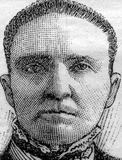
Emeline Meaker
Murderer Sarah Whiteling
Murderer · USA · 1888
Sarah Jane Whiteling was a 41 year old white woman from Philadelphia, Pennsylva…
3 victims
Sarah Whiteling
Murderer · USA · 1888
Sarah Jane Whiteling was a 41 year old white woman from Philadelphia, Pennsylva…
3 victims
 Elizabeth Potts
Murderer · USA · 1888
Elizabeth Potts (née Atherton) was convicted of murder in 1889 and was hanged t…
1 victim
Elizabeth Potts
Murderer · USA · 1888
Elizabeth Potts (née Atherton) was convicted of murder in 1889 and was hanged t…
1 victim
 Lizzie Lloyd King
Murderer · USA · 1873
Elizabeth “Lizzie” Lloyd King (born 1847) was accused of murdering Charles Good…
1 victim
Lizzie Lloyd King
Murderer · USA · 1873
Elizabeth “Lizzie” Lloyd King (born 1847) was accused of murdering Charles Good…
1 victim
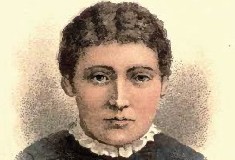 Roxalana Druse
Murderer · USA · 1884
Roxalana Druse (1847 – February 28, 1887) was the wife of William Druse and was…
1 victim
Roxalana Druse
Murderer · USA · 1884
Roxalana Druse (1847 – February 28, 1887) was the wife of William Druse and was…
1 victim
 Susan Eberhart
Murderer · USA · 1872
Susan Eberhart was a white woman aged between 17 and 21. She served as the hous…
1 victim
Susan Eberhart
Murderer · USA · 1872
Susan Eberhart was a white woman aged between 17 and 21. She served as the hous…
1 victim
 Marilyn Edge
Murderer · USA · 2013
Marilyn Edge was a mother from Scottsdale, Arizona, accused of poisoning and ki…
2 victims
Marilyn Edge
Murderer · USA · 2013
Marilyn Edge was a mother from Scottsdale, Arizona, accused of poisoning and ki…
2 victims
 John Spirko
Murderer · USA · 1969
John Spirko John Spirko will not be executed for the 1982 murder of Betty Jane…
2 victims
John Spirko
Murderer · USA · 1969
John Spirko John Spirko will not be executed for the 1982 murder of Betty Jane…
2 victims
 Cody Legebokoff
Serial killer · Canada · 2009
Cody Legebokoff (born c. 1990) was tried in the Supreme Court of British Columb…
4 victims
Cody Legebokoff
Serial killer · Canada · 2009
Cody Legebokoff (born c. 1990) was tried in the Supreme Court of British Columb…
4 victims
 Anthony Spears
Murderer · USA · 1992
Defendant: Anthony Spears (Caucasian). He lived near San Diego. · Victim: Jeane…
1 victim
Anthony Spears
Murderer · USA · 1992
Defendant: Anthony Spears (Caucasian). He lived near San Diego. · Victim: Jeane…
1 victim
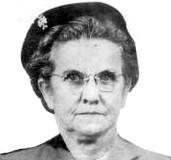 Dovie Dean
Murderer · USA · 1952
Dovie Blanche Dean was executed by electrocution on January 15, 1954. Dovie Bla…
1 victim
Dovie Dean
Murderer · USA · 1952
Dovie Blanche Dean was executed by electrocution on January 15, 1954. Dovie Bla…
1 victim
 Edward Davidson
Murderer · USA · 2008
Edward Davidson “Fast Eddie”, “the Spam King” Edward “Eddie” Davidson (July 29,…
2 victims
Edward Davidson
Murderer · USA · 2008
Edward Davidson “Fast Eddie”, “the Spam King” Edward “Eddie” Davidson (July 29,…
2 victims
- Gender
- female
- Country
- USA
- Location
- Duxbury, Washington County, Vermont, USA
- Date of birth
- June 1838
- Age at first offence
- 42
- Characteristics
- poisoner, child abuse, murder for hire, rape
- Victim profile
- Alice Meaker, 12 (the half-sister of her husband)
- Method of murder
- Poisoning (strychnine)
- Date(s) of murder
- April 23, 1880
- Years active
- 1880
- Date of arrest
- 3 days after
- Status
-
Executed
Executed by hanging on March 30, 1883
Case record: Emeline Meaker
Emeline Meaker (sometimes reported as Lucy Emeline Meaker) was convicted of murder and was executed by hanging on March 30, 1883. She was the first woman legally executed by Vermont.
Background
Emeline Meaker was born in June 1838 and died on March 30, 1883. She was described as the wife of Horace Meaker and as a child abuser. Her husband’s niece, Alice, and Alice’s brother, Henry, lived in an overcrowded orphanage.
Sometime in the spring of 1879, a child welfare worker approached Meaker and her husband to ask if they would consider taking Mr. Meaker’s eight-year-old niece, Alice, and her brother, Henry, into their home. Mr. Meaker was offered a stipend of $400 to care for Alice, and so he agreed.
Meaker was not pleased with the arrangement and beat, starved, and otherwise mistreated Alice.
In 1879, Alice and Henry got a chance for a better life when their much older half-brother Horace agreed to take them in for a lump sum of $400. Horace’s wife, Emeline, was unhappy at this extra burden. She referred to Alice as “little bitch” and “that thing.”
Meaker had a severe hearing impairment, and it was stated that Horace did, too. Neighbors later said they could hear the child’s cries from half a mile away.
Alice’s father died in 1873 and her impoverished mother sent her and her brother Henry to live in an overcrowded poorhouse. It was reported that Alice was sexually abused in the poorhouse. Alice was described as “a timid, shrinking child—of just that disposition that seems to invite, and is unable to resist—persecution.”
Meaker was described in some characterizations as a “coarse, brutal, domineering woman,” a “perfect virago,” and “a sullen, morose, repulsive-looking creature.”
The offence
In 1883, Meaker decided to kill Alice. She ordered her son Almon to get a lethal dose of strychnine from an apothecary.
Meaker and Almon seized Alice, placed a sack over the girl’s head, and took her to a remote area outside Burlington. When they arrived at a clearing by a stream, Almon handed the poison to his mother and she poured it into a drink which she gave to Alice.
While Alice thrashed about in reaction to the strychnine poisoning, Meaker forcibly held her hand over Alice’s mouth to keep the girl from crying out, keeping it there until Alice was dead, and then Almon and his mother buried Alice’s body.
A separate account described that Almon and Emeline woke Alice, shoved a sack over her head, carried her to the carriage Almon had hired in advance, and drove to a remote hill. They forced Alice to drink strychnine from her own favorite mug, which her mother had given her. It was stated that twenty minutes later the child’s death agonies ceased and Almon buried her in a thicket outside the town of Stowe.
It was stated that Meaker had earlier suggested a plan to take Alice out into the mountain wilderness and leave her there to die, but Almon thought it was too risky. In that account, Meaker convinced her twenty-year-old “weak minded” and “not over bright” son Lewis Almon Meaker to help. Almon later said his mother had persuaded him that Alice would be “better off dead” and that “she wasn’t a very good girl; no one liked her.”
Investigation
Alice’s disappearance was investigated.
Almon confessed to the local sheriff. His confession was published in the newspaper on the date set for Emeline’s execution.
On April 26, a police officer subjected both mother and son to questioning. Almon broke down, led the deputy sheriff to the burial site, and they disinterred Alice’s remains, still visibly bruised from her last thrashing.
Because the deputy’s buggy was small, Almon had to hold Alice’s corpse upright to keep it from falling out during the three-hour journey back to Roxbury.
Less than a year after Alice’s arrival, Emeline decided to do away with her. The neighbors asked where Alice had gone, and it was stated that Meaker and Almon did not get their stories straight about the unannounced disappearance, so their contradictory explanations raised suspicions.
Arrest
Meaker and Almon were both questioned by police officer(s) and were charged with murder.
Trial
At trial, both Almon and Emeline were convicted of murder and sentenced to death.
Almon’s sentence was commuted by the Vermont Legislature to life in prison because it was believed he was dominated by his mother. Emeline’s sentence was upheld.
It was stated that both Almon and Emeline tried to put as much blame as possible on the other, but both were ultimately convicted and sentenced to death.
Sentencing
Both he and Emeline were sentenced to death. Almon’s sentence was commuted to life in prison, but Emeline’s was upheld in spite of years of appeals and a try at feigning madness.
It was stated that Emeline’s violent tantrums, attempts at arson, and attacks on the prison staff did not convince anyone she was crazy and merely alienated her family and others who might have otherwise supported her.
Appeals
Emeline’s sentence was upheld in spite of years of appeals and a try at feigning madness.
Execution
On March 30, 1883, the morning of her scheduled execution, Meaker ate a large beefsteak, three potatoes, a slice of bread and butter, a piece of meat pie, and a cup of coffee.
At her request, she went to view the gallows, remarking that it was not half as bad as she thought it would be.
She sent a message to her husband through the sheriff.
Then she ate a dinner consisting of two boiled eggs, two slices of toast, one potato, one doughnut, and a cup of coffee.
Over 125 spectators gathered in the prison guardroom at the Vermont State Prison in Windsor County. It was reported that the sheriff was besieged with requests for passes to witness the hanging.
When Meaker was finally led to the gallows, and asked (by slip of paper as she was deaf) if she had anything to say, she said in a low voice:
“May God forgive you all for hanging me, an innocent woman. I am as innocent as that man standing here,”
She indicated a deputy.
None of her family was present at the execution. It was stated that her husband and children did not accept her body for burial after the execution.
Meaker was hanged at 1:30 p.m. It was stated she died 35 months after the murder. For the occasion, she wore a black cambric with white ruffles. It was stated that the gallows snapped her neck, but it still took her twelve minutes to die.
Meaker wanted her body returned to her husband, but Horace refused to accept it and it was buried in the prison cemetery.
Aftermath
It was stated that ten years after his mother’s execution, Almon died in prison of tuberculosis.
Other details
Some reports say Alice was Horace’s niece rather than his half-sister.
Almon was described as having said his mother persuaded him and that she “wasn’t a very good girl; no one liked her.”
It was stated that Meaker acted violently while in jail, but calmed as her execution date drew nearer. Once she realized she was not fooling anybody, she calmed down and passed her remaining days quietly knitting in her cell.
The crime was described as being covered in Volume 16 of the Duxbury Historical Society’s newsletter.


Spotted an error, or have more information about this case?