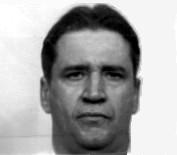
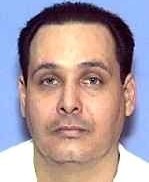
Daniel Joe Hittle
Mass murderer Francisco Paula Gonzales
Mass murderer · USA · 1964
Francisco Paula Gonzales was a passenger on Pacific Air Lines Flight 773. Gonza…
44 victims
Francisco Paula Gonzales
Mass murderer · USA · 1964
Francisco Paula Gonzales was a passenger on Pacific Air Lines Flight 773. Gonza…
44 victims
 Charles Whitman
Mass murderer · USA · 1966
Charles Joseph Whitman (June 24, 1941 – August 1, 1966) shot and killed 14 peop…
15 victims
Charles Whitman
Mass murderer · USA · 1966
Charles Joseph Whitman (June 24, 1941 – August 1, 1966) shot and killed 14 peop…
15 victims
 George Emil Banks
Mass murderer · USA · 1982
George Emil Banks was an American mass murderer and a former Camp Hill prison g…
13 victims
George Emil Banks
Mass murderer · USA · 1982
George Emil Banks was an American mass murderer and a former Camp Hill prison g…
13 victims
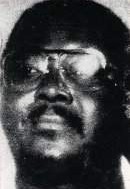 James Edward Pough
Mass murderer · USA · 1971
James Edward Pough (1948 – 18 June 1990) was an American mass murderer. On 18 J…
12 victims
James Edward Pough
Mass murderer · USA · 1971
James Edward Pough (1948 – 18 June 1990) was an American mass murderer. On 18 J…
12 victims
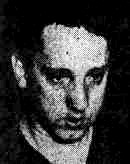 James Ruppert
Mass murderer · USA · 1975
James Ruppert killed his mother, brother, sister-in-law, and eight nieces and n…
11 victims
James Ruppert
Mass murderer · USA · 1975
James Ruppert killed his mother, brother, sister-in-law, and eight nieces and n…
11 victims
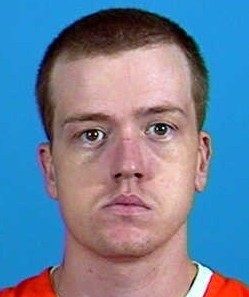 Kevin Don Foster
Murderer · USA · 1996
Kevin Don Foster was born Kevin Donald Bates on June 16, 1977, in Amarillo, Tex…
1 victim
Kevin Don Foster
Murderer · USA · 1996
Kevin Don Foster was born Kevin Donald Bates on June 16, 1977, in Amarillo, Tex…
1 victim
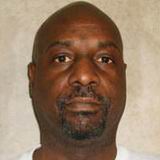 Ronald Lott
Murderer · USA · 1986
Ronald Clinton Lott was the petitioner-appellant in Lott v. Trammell before the…
2 victims
Ronald Lott
Murderer · USA · 1986
Ronald Clinton Lott was the petitioner-appellant in Lott v. Trammell before the…
2 victims
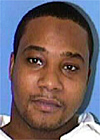 Jeffery Lynn Williams
Murderer · USA · 1994
Jeffery Lynn Williams was convicted of capital murder for killing Barbara Jacks…
1 victim
Jeffery Lynn Williams
Murderer · USA · 1994
Jeffery Lynn Williams was convicted of capital murder for killing Barbara Jacks…
1 victim
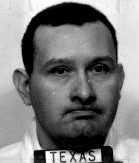 Doil Edward Lane
Homicide · USA · 1980
Doil Edward Lane was sentenced to death in Texas on February 25, 1994. His deat…
2 victims
Doil Edward Lane
Homicide · USA · 1980
Doil Edward Lane was sentenced to death in Texas on February 25, 1994. His deat…
2 victims
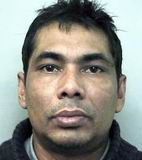 Shahidul Ahmed
Murderer · United Kingdom · 2000
Shahidul Ahmed, 41, from Bletchley, was convicted of the murder of Rachel Manni…
1 victim
Shahidul Ahmed
Murderer · United Kingdom · 2000
Shahidul Ahmed, 41, from Bletchley, was convicted of the murder of Rachel Manni…
1 victim
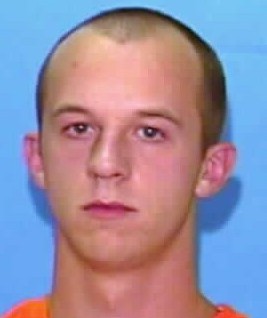 Joshua David Nelson
Murderer · USA · 1995
Joshua David Nelson was convicted in Lee County, Florida, for offenses connecte…
1 victim
Joshua David Nelson
Murderer · USA · 1995
Joshua David Nelson was convicted in Lee County, Florida, for offenses connecte…
1 victim
- Gender
- male
- Country
- USA
- Location
- Minnesota/Texas, USA
- Date of birth
- March 1, 1950
- Age at first offence
- 23
- Characteristics
- parricide, revenge
- Victim profile
- His adoptive parents / Gerald Walker, 48 (Garland police officer) / Mary Goss, 39, Richard Cook Jr., 36, Raymond Gregg, 19 and Christy Condon, 4
- Method of murder
- St abbing with knife / Shooting ( 20-gauge shotgun)
- Date(s) of murder
- 1973 / 1989
- Years active
- 1973–1989
- Date of arrest
- November 15, 1989
- Status
-
Executed
Executed by lethal injection in Texas on December 6, 2000
Case record
Daniel Joe Hittle was executed by lethal injection in Texas on December 6, 2000.
Timeline
- November 1989 — Daniel Joe Hittle was involved in a feud with Mary Goss, described in court testimony as his drug dealer.
- August 2, 1989 — Hittle was arrested as he was trying to break into Goss's home; while being taken to jail, Hittle said several times that he would “get” Mary Goss and “take care” of her.
- November 15, 1989 — Hittle attended a party at Mary Goss's home; during the same period, a neighbor overheard Hittle and his wife arguing and heard Hittle say “I am going to kill the b----.”
- About 10:30 p.m. — Tammy Goss left the party at Mary Goss's home.
- About 11:00 p.m. — A neighbor overheard Hittle and his wife arguing and heard Hittle say “I am going to kill the b----.”
- About 11:10 p.m. — Officer Gerald Walker saw Hittle's truck speeding and pulled him over; Hittle shot Walker once in the chest at close range.
- About 11:25 p.m. — A neighbor heard four gunshots at Mary Goss's home.
- About 11:45 p.m. — Tammy Goss returned to Mary Goss's apartment and found the bodies of Rick Cook, Scott Gregg and Mary Goss.
- Two days later — Christy Condon died in a hospital after being taken there and pronounced brain dead.
Background
In November 1989, Hittle was involved in a feud with Mary Goss, described in court testimony as his drug dealer.
Hittle was on parole for killing his adoptive parents in Minnesota at the time of the murders in 1989.
In 1973, Hittle was convicted in Minnesota of killing his adoptive parents. Court testimony showed that he stabbed them to death because their dog scratched his truck. He served eleven years in prison before winning parole in 1984.
Evidence at the punishment phase of Hittle's trial included that Hittle killed his adoptive parents in Minnesota because their dog scratched his truck, that Hittle showed little or no remorse for their deaths, and that he was on parole for murdering his parents at the time of his killing spree in 1989. Hittle told a friend that “killing people was not that exciting, or just not that big of a deal to him.”
The police officer who arrested Hittle for the murders of his parents recalled that Hittle threatened him when he arrested Hittle several months earlier; Hittle said to him, “I will remember you when we meet again.”
Hittle threatened police officers on at least two other occasions as well.
Hittle was abusive to his first wife. He pointed a loaded shotgun at her when she refused to turn over his car keys, then struck her one-year old daughter in the face. Hittle once gave the daughter a monkey doll, then one day took it away from her and tied it over her playpen in a hangman's noose. On another occasion, Hittle beat his first wife after she became upset over Hittle informing her he was unfaithful. Hittle brought her daughter in to watch the beating and told her to say goodbye to her mom, then Hittle began choking his wife with so much force she saw spots.
Hittle was physically and emotionally abusive towards his second wife as well. The day of a wedding shower for them, he hit her when she didn’t clean up the pieces of a mirror he broke. He also once shot out her tire, and he kicked her in the stomach when she was pregnant and past her due date. Hittle slapped his second wife's baby daughter across the face when she wouldn’t stop crying, and he failed to support the two of them financially; instead, he spent his disability pension on alcohol.
On another occasion, Hittle tied his parents' dog against a tree, shot it, and left it hanging there; he then fired another shot into the side of the house, tearing a hole in it, and laughingly said he had “air-conditioned” the structure.
During high school, Hittle killed a neighbor's dog by beating it to death with a club because it would not stop barking one night.
During Hittle's prison sentence in Minnesota, he was written up for a series of disciplinary violations including:
- possession of a knife
- two instances of possession of contraband and drug paraphernalia
- disobeying a direct order and interfering with a shakedown
- possession of marijuana
- interfering with a correctional officer
- disorderly conduct
- possession of contraband drugs and paraphernalia again
- refusing to comply with an order while already in segregation
- inciting other inmates to riot
- destruction of property while already in segregation
- disobeying a direct order and being verbally abusive again while already in segregation
- arson
- use of intoxicants
- possession of drugs and/or paraphernalia again
- fighting with another inmate
The offence
Hittle returned home, had an argument with his wife, and was seen leaving his home carrying a long-barreled gun in his pickup truck. One day after the argument with his wife, Hittle drove away carrying a 20-gauge shotgun in his pickup truck.
When Garland police officer Gerald Walker, 48, stopped Hittle for speeding, Hittle shot Walker in the chest at close range.
Hittle then proceeded to Mary Goss's home. He kicked in the door and opened fire, killing Mary Goss, 39; Richard Cook Jr., 36; and Raymond Gregg, 19.
After reloading, Hittle shot Goss's 4-year-old daughter, Christy Condon. Christy Condon was taken to a hospital where she was pronounced brain dead two days later and died.
All four people were killed by Hittle.
Evidence showed the child was killed with a different type of ammunition, meaning Hittle had to reload his 20-gauge shotgun to kill the girl. Hittle's shotgun was linked to all five murders.
Hittle's weapon was described as a loaded 20-gauge shotgun in his car.
Authorities said Hittle intended to kill Mary Goss and not leave any witnesses. In addition, prosecutors used words like “scary” and “evil” to describe Hittle.
A witness reported that Hittle told several people that he intended to kill Mary Goss and not leave any witnesses.
Investigation and arrest
On August 2, 1989, Hittle was arrested as he was trying to break into Goss's home.
On November 15, 1989, Hittle followed Tammy Goss after she left the party around 10:30 p.m. At about 11:00 p.m., Hittle’s neighbor overheard Hittle and his wife arguing and heard Hittle say “I am going to kill the b----.” The neighbor went outside and saw Hittle, with a long barreled gun in his hand, leave in his red Chevy pickup truck.
Officer Gerald Walker saw Hittle's truck speeding down the road and pulled Hittle over. As Walker approached Hittle's pickup, Hittle shot him once in the chest at close range.
After the murders at Mary Goss's home, police were looking for Hittle. It was reported that Officer Walker had radioed the license plate number of his truck.
Police spotted Hittle near his home and gave chase. After Hittle ran his truck off the road and wrecked it, he began shooting at his pursuers. He surrendered when he ran out of ammunition.
After refusing orders to show his hands, Hittle was twice engaged by a police dog. Hittle then complied with police orders and was arrested.
Trial
Hittle was charged with multiple counts of capital murder but was only tried for the murder of Officer Walker.
At the trial, a Dallas County jury deliberated for about an hour and later delivered the death sentence. Hittle did not speak with reporters in the weeks before his execution. During the trial, he said nothing and was described as merely nodding when State District Judge Richard Mays pronounced the death sentence.
Witnesses included Officer Walker's widow, Beckie Walker, and Jimmie George, a fellow Garland police officer.
Walker’s widow released a statement thanking state and local authorities for their support.
Jimmie George said, “The death of Daniel Hittle will guarantee that no police officer will ever face the danger of dealing with him again,” and added, “Therefore, the state of Texas will be a safer place in which to live and work.”
Hittle’s sister, Judy Anderson, testified against her brother and described the pain she felt when she learned that Hittle killed their parents on their Minnesota farm in 1973. Anderson said she felt some remorse and stated: “This is like a funeral,” and “He's gone. And despite everything he's done, he's part of the family.”
Prosecutors in the police slaying case were described as Toby Shook and Andy Beach. Toby Shook said, “Obviously a very violent vicious human being.” Andy Beach said, “A poster boy for the death penalty,” and “He is the classic sociopath.”
During trial testimony, it was stated that Hittle repeatedly beat his wives and threatened and beat their children and abused and killed animals.
The court documents also showed Hittle had a long-simmering feud with Mary Goss and was thrown out of her East Dallas home where there was a party that night. It was reported that about three months earlier, Goss, 39, had him arrested for slashing her tires.
Testimony showed Hittle returned home, had an argument with his wife, and was seen leaving his home carrying a long-barrel gun. Ten minutes later, Walker stopped Hittle's red pickup truck for speeding and was shot in the chest. Hittle went to the Goss house where he kicked in the door and opened fire.
Killed were Mary Goss; Richard Cook Jr., 36; Raymond Gregg, 19; and Goss’s daughter Christy Condon, 4.
Sentencing
Hittle was convicted of capital murder for the death of Officer Gerald Walker and was sentenced to death.
After the jury delivered the death sentence, Walker’s widow, flanked by Garland police, said jurors “did what they had to do.”
Becky Walker said, “There are other Hittles running around out there,” and added, “Parole laws aren't adequately protecting Americans.”
Appeals and post-sentencing
It was reported that eight courts, both state and federal, reviewed Hittle's case and rejected his appeals. The United States Supreme Court was reviewing Hittle's latest appeals.
It was reported that the United States Supreme Court rejected his appeals on Tuesday.
It was also reported that Hittle made no clemency request to Gov. George W. Bush, who had authority to grant a one-time 30-day reprieve.
Outcome
Hittle was executed by lethal injection in Texas on December 6, 2000.
It was reported that he was pronounced dead at 6:20 p.m. CST.
Hittle declined to speak with reporters in the weeks before his execution.
During his final statement, Hittle said the words “Sant ag ib Singh,” and that was the only statement he made.
Prison officials said Hittle belonged to a religious sect that followed the teachings of Singh, an Indian religious teacher who advocated love and nonviolence.
Hittle nodded, smiled and winked at his spiritual adviser, the only person he selected to watch him die.
As the drugs began taking effect, Hittle sputtered and exhaled slightly. Nine minutes later he was pronounced dead at 6:20 p.m. CST.
Other details
Officer Gerald Walker was described as the first Garland officer to be killed in the line of duty and a 17-year veteran of the suburban Dallas police force. Walker was described as being one of five people Hittle was accused of killing that night, including a 4-year-old girl.
It was reported that authorities said the Staples, Minn., couple was fatally stabbed when Hittle became enraged because he believed their dog scratched his truck.
One report stated that Hittle had to be stopped from hurting anyone else, quoting Hittle’s sister Judy Anderson.
Texas execution was described as involving the execution of the second of three scheduled for that week and the 39th that year in Texas. It was also reported that the Texas total that year was described as the most carried out by a state in American history.
It was further reported that Death Penalty Information Center said Hittle's death would lift the Texas total to equal the highest in a state since 1862 when 39 Native Americans were hanged on a single day in Minnesota.
The report stated that Hittle had been on parole for murdering his adoptive parents in Minnesota when he shot Officer Walker during a traffic stop, and that he was paroled in 1984 after serving 11 years of a 30-year term for killing his adoptive parents.
During the punishment phase, it was also said Hittle’s sister Judy Anderson lived in Minnesota, and that she felt some remorse.
Hittle’s final statement was “Santajaib Singh Ji,” the name of an Indian religious teacher who advocated love and nonviolence.

Spotted an error, or have more information about this case?