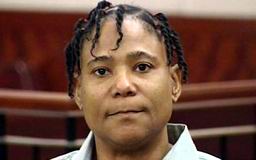
Mona Nelson
Murderer Miranda Barbour
Murderer · USA · 2013
Miranda Barbour, 19, defendant. · Elytte Barbour, 22, defendant and husband of…
100 victims
Miranda Barbour
Murderer · USA · 2013
Miranda Barbour, 19, defendant. · Elytte Barbour, 22, defendant and husband of…
100 victims
 Tiffany Hall
Murderer · USA · 2006
Tiffany Hall was 24 when she was charged in September 2006. She later entered a…
5 victims
Tiffany Hall
Murderer · USA · 2006
Tiffany Hall was 24 when she was charged in September 2006. She later entered a…
5 victims
 Banita Jacks
Murderer · USA · 2007
Banita Jacks was a Washington, DC resident convicted of murdering her four daug…
4 victims
Banita Jacks
Murderer · USA · 2007
Banita Jacks was a Washington, DC resident convicted of murdering her four daug…
4 victims
 Holly Grigsby
Murderer · USA · 2011
Holly Grigsby was sentenced to life in prison without parole on July 15, 2014.…
4 victims
Holly Grigsby
Murderer · USA · 2011
Holly Grigsby was sentenced to life in prison without parole on July 15, 2014.…
4 victims
 Jessica Tata
Murderer · USA · 2011
Jessica Tata was a Houston home day care owner who fled to Nigeria after a fire…
4 victims
Jessica Tata
Murderer · USA · 2011
Jessica Tata was a Houston home day care owner who fled to Nigeria after a fire…
4 victims
 Amanda Bennett
Murderer · USA · 2011
Amanda Bennett was an Indiana woman who shot her three children and set the fam…
3 victims
Amanda Bennett
Murderer · USA · 2011
Amanda Bennett was an Indiana woman who shot her three children and set the fam…
3 victims
 Stanley Allison Baker
Murderer · USA · 1994
Sept. 28, 1994 — Stanley Allison Baker, Jr., killed Wayne Walters during the co…
1 victim
Stanley Allison Baker
Murderer · USA · 1994
Sept. 28, 1994 — Stanley Allison Baker, Jr., killed Wayne Walters during the co…
1 victim
 Jennifer San Marco
Mass murderer · USA · 2006
Jennifer San Marco (December 6, 1961 – January 30, 2006) was a former US Postal…
7 victims
Jennifer San Marco
Mass murderer · USA · 2006
Jennifer San Marco (December 6, 1961 – January 30, 2006) was a former US Postal…
7 victims
 Arnold Axilrod
Murderer · USA · 1955
Arnold Axilrod was a dentist. He was 49 years old and had a reputation as a lad…
1 victim
Arnold Axilrod
Murderer · USA · 1955
Arnold Axilrod was a dentist. He was 49 years old and had a reputation as a lad…
1 victim
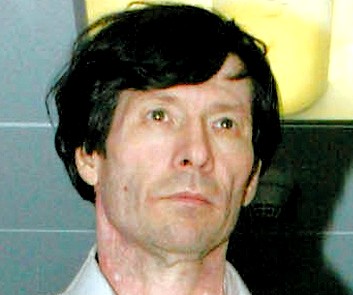 Ernest Wholaver
Murderer · USA · 2002
In July 2002, Ernest R. Wholaver, Jr. was charged with multiple sexual offenses…
3 victims
Ernest Wholaver
Murderer · USA · 2002
In July 2002, Ernest R. Wholaver, Jr. was charged with multiple sexual offenses…
3 victims
 Marianne Nölle
Serial killer · Germany · 1984
Marianne Nölle was born in 1938. She was a German serial killer from Cologne. M…
7 victims
Marianne Nölle
Serial killer · Germany · 1984
Marianne Nölle was born in 1938. She was a German serial killer from Cologne. M…
7 victims
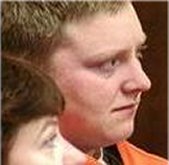 William Lembcke
Mass murderer · USA · 2000
William Lembcke killed his parents and his sister and brother at their home, th…
4 victims
William Lembcke
Mass murderer · USA · 2000
William Lembcke killed his parents and his sister and brother at their home, th…
4 victims
- Gender
- female
- Country
- USA
- Location
- Houston, Texas, USA
- Date of birth
- 1966
- Age at first offence
- 44
- Characteristics
- kidnapping, drunken rage, motive unknown
- Victim profile
- Jonathan Paul Foster, 12
- Method of murder
- Tortured to death with a blowtorch
- Date(s) of murder
- December 24, 2010
- Years active
- 2010
- Date of arrest
- 5 days after
- Status
-
Life imprisonment
Sentenced to life in prison without parole on August 27, 2013
Case record: Mona Nelson
Status / outcome
Mona Nelson was sentenced to life in prison without parole on August 27, 2013. She was found guilty in the capital murder of 12-year-old Jonathan Foster, and she was accused in the kidnapping and murder of Jonathan on Christmas Eve in 2010. Nelson chose to be tried by a judge, not a jury.
Timeline
- December 24, 2010 — Jonathan Foster vanished from the duplex where he and his mother, Angela Davis, were living with a woman who was friends with the defendant, Mona Nelson.
- December 24, 2010 (around 2 p.m.) — Foster disappeared from his family home.
- December 24, 2010 (around 6 p.m.) — Surveillance video showed a silver truck pull up to a ditch outside a building on East Hardy, where a person was seen getting out, taking a body out of the bed of the truck, and placing it on the ground; the person was recognized by neighbors and family as Nelson.
- December 28, 2010 — Jonathan’s body was found in a culvert/ditch near East Hardy and Schilder, four days after he disappeared.
- December 30, 2010 — Mona Yvette Nelson was arrested on no bond.
- January 4, 2011 — Mona Nelson made her first appearance in court; Judge Jeannine Barr apprised her of her rights and appointed Allen Tanner as her attorney.
- August 15, 2013 — Trial coverage reported that Jonathan Foster’s “dirty” shirt was used as evidence.
- August 22, 2013 — Testimony in the capital murder trial included discussion of the autopsy photographs and the forensic pathologist’s report; closing arguments were expected to be delivered soon.
- August 27, 2013 — District Judge Jeannine Barr returned with a decision finding Nelson guilty and sentencing her to life in prison without parole.
The offence
Mona Nelson was charged with capital murder in the death of 12-year-old Jonathan Foster and was accused of kidnapping and killing him on Christmas Eve in 2010. Jonathan Foster’s body was badly burned and was found face down in a ditch. Investigators concluded he had been killed and burned elsewhere because there was no indication of a fire at the scene where he disappeared.
Nelson was accused of being the last person to see Foster on the afternoon of December 24. Surveillance video showed Nelson dumping something out of her truck the night of the murder, and prosecutors argued that she burned and dumped his body. Prosecutors admitted they would not be able to establish a motive for the murder, but they claimed Nelson murdered the boy in a drunken rage and then burned and dumped his body.
Nelson denied killing Jonathan and said she was asked to get rid of a container by the boy’s stepfather, David Davis, but that she did not know a body was inside. During trial, Jonathan’s next-door neighbor and grandmother testified that they thought the stepfather might have been involved in the boy’s disappearance and murder, and the grandmother said she had not liked him from the start and originally thought David Davis had taken Jonathan. A neighbor also testified about seeing Nelson wearing the same clothing just before the child’s disappearance and the day after.
Investigation
Investigators believed Nelson acted alone. They said all family members had alibis.
Authorities found a portion of burned carpet “hit on” by a cadaver dog and recovered twine resembling the cord used to bind the boy’s hands in Nelson’s garbage. Surveillance video recorded Nelson’s Ford F-150 truck near the culvert where Jonathan’s body was found, and a witness told police a similar vehicle was seen at the boy’s home earlier in the day and identified Nelson as the occupant.
Police stated that surveillance cameras gave investigators their break, showing a silver truck at around 6pm Christmas Eve and a person recognized as Nelson moving the body from the bed of the truck to the ground. Capt. David Gott said the fire department’s dogs detected accelerants such as fuel and that no such accelerant was found; he also said they did not know how Jonathan was burned and that Mona was a welder. Authorities searched Nelson’s apartment and found torches and other welding tools, and they found twine used to tie Jonathan inside her home. Investigators believed Jonathan was taken there, killed, and burned beyond recognition the same day within hours.
Jonathan’s body was identified using dental records. A cause of death was not released publicly.
A detective described Nelson’s interview history as involving several occasions before and after she was charged with capital murder, and testified that Nelson’s testimony was choppy and she was changing her story. In that testimony, the prosecutor asked Brian Harris: “When did she first realize what she was dumping was a little boy's body?” Harris replied: “She said when the investigator showed her the picture of the charred body and I told her I was that investigator.” The prosecutor asked: “Was there any discernible, physical reaction?” Harris said: “No.”
Defense counsel, Alan Tanner, cross-examined Harris about why no polygraph exam was given, asking about whether Nelson would agree to a polygraph exam; Harris replied that “All three times she said OK,” and then Harris responded “No” when asked if he had ever done one. Defense pointed out that “You never did one?” and Harris replied, “No,” and then “And you never did one? Harris replied, “No.” “You never followed through with it?” Harris replied, “That’s right.”
Arrest and pre-trial
Mona Nelson, 44, was charged with capital murder in the death of 12-year-old Jonathan Foster. She made her first appearance in court on Monday, January 4, 2011. After leaving the courtroom for her cell, she burst into wracking sobs. Her court-appointed attorney, Allen Tanner, later said: “She cried her eyes out.” Tanner also said: “She's not the stone-cold mean woman like the cops have made out.”
In 182nd District Court, Judge Jeannine Barr apprised Nelson of her rights and appointed Tanner as her attorney. Tanner said he planned to meet with Nelson in the next few days and said, “I don't know anything yet,” and “I haven't gotten any reports from the state.” He added: “I, hopefully, will find out what's going on. There just seem to be a lot of unanswered questions.”
Nelson was held at the Harris County Jail with no bond. She did not attend an earlier hearing in which a Harris County magistrate deemed probable cause existed for her arrest and detention.
Houston activist Quanell X attended Monday’s court session at the request of Nelson’s family. After meeting with Nelson, Quanell X said the woman admitted dumping the boy’s body and that he believed someone else may have been responsible for the killing. Quanell X said: “I believe this case is a drug debt.” He added: “I do not believe that she had a motive to kill the boy. … I don't believe this case is solved at all, and I would urge the public not to rush to judgment.”
Investigation ongoing: Houston Police homicide Capt. David Gott invited Quanell X to share information with investigators. Gott said: “Obviously, it's very hard to tell whether she acted on her own, considering that we don't have all the details of the offense.” Gott added: “She didn't give us a confession. She didn't tell us a lot of the things she's telling Quanell X.” Gott acknowledged the investigation was continuing and said: “There's always the possibility that there could be someone else involved, but right now there's nobody else who's being targeted and it doesn't look like there's going to be charges filed on anybody else.”
Nelson pleaded guilty to an aggravated robbery charge in 1984 in return for 10 years’ probation. Her probation was revoked in 1991 and she was sent to prison. She was paroled in October 1994. Police described her criminal history as including aggravated robbery, drug charges, and threatening a woman.
In a news conference prior to trial, a homicide detective described Nelson as cold and said: “There's only been one or two people I've ever talked to that had eyes like she did; it was pretty cold.” The activist Quannell X said Nelson’s mood had changed after she counseled her.
Nelson told investigators she did not know what was in the container, saying she was drunk on vodka, and she said she randomly chose a ditch in northeast Houston because she was “basically just drunk and driving and listening to music.” Nelson said: “I didn't know what was in it until they were showing me pictures in the interrogation room.” She also said: “I’m innocent, and an innocent person is going to prison.”
Trial
Nelson was tried in a capital murder case without a jury; she chose to be tried by a judge, not a jury. Her attorney advised her against it. The trial was expected to last a couple of weeks.
Witness testimony and evidence
Jonathan’s mother, Angela Davis, testified. Deborah Wrigley reported that Davis delivered heart-wrenching testimony, saying that on Christmas Eve a strange woman answered the phone and Davis could hear her son in the background, after which the line went dead. When Davis arrived home, she said: “I ran up and down the street banging on doors, standing in the parking lot, hollering my son's name.” Davis said she found no one at the home and that cartoons were still on the TV and a game was up on the computer screen. Davis testified that the only thing missing was: “The only thing missing in this house is his tan T-shirt with a guitar on it, a pair of jeans, his white sneakers and his black stuffed cat that my grandmother made him.” Davis also said: “There was no struggle.”
Jonathan’s grandmother, Mary Gifford, testified about Jonathan coming home to Texas after living with relatives in Mississippi and Missouri in 2010 and said: “We talked about him going to live with his mother. That's when he said that was his wish for his birthday. He was really, really happy. He was flourishing, he was complete,” Gifford said.
Neighbor Rita Jackson testified that she saw Nelson just before the child’s disappearance and the day after wearing the same clothing. In court, the prosecutor asked about a white shirt and Jackson said: “It was dirty.”
Jonathan’s stepfather, David Davis, testified. He admitted he had hit the boy’s mother in the past, said he loved her son and never harmed him, and was ruled out as a suspect after being questioned by police for 12 hours. His whereabouts the night the boy disappeared were established and he was described as a key witness for the state.
Autopsy testimony
Dr. Paul Radelat, a pathologist testifying for the defense, admitted he had not actually examined Jonathan’s body and instead viewed photographs and read the forensic pathologist’s report. Radelat said: “I believe he was dead by the time he was burned. & This child was turned into a piece of firewood. & I can't say with any certainty what burned him. & There is no clear-cut cause of death.”
Radelat testified that investigators may never know what happened to Jonathan and said: “You have to think some sort of smothering event. & It's very difficult to come up with any conclusion, the body was badly charred. Any external evidence was gone. & We don't have any affirmative evidence that he was smothered, but smothering wouldn't leave any affirmative evidence.”
The prosecutor asked questions about a contusion on Jonathan Foster’s chest. Radelat testified: “Yes.” The prosecutor asked if he could have been punched, kicked, or hit with an object; Radelat answered yes to each possibility. The prosecutor asked: “Have you ever done any autopsies on someone burned by an oxy-acetylene torch?” and Radelat said: “No.”
Police interview testimony
A detective from the Houston Police Department testified about an interview that lasted about an hour and 15 minutes, describing Nelson’s testimony as choppy and changing her story. The detective described that Nelson first realized what she was dumping was a little boy’s body only after being shown the picture of the charred body, and Harris responded: “She said when the investigator showed her the picture of the charred body and I told her I was that investigator.”
Forensic evidence from clothing
Trial coverage reported that an FBI scientist said he found Nelson’s blood and DNA on several areas of Jonathan Foster’s Looney Tunes sweatshirt. A legal analyst described the evidence as “enough to convict.” The analyst’s view was that damaging evidence was sufficient to legally convict.
Sentencing
District Judge Jeannine Barr returned with a decision on Tuesday morning. When asked if she had anything to say, Nelson said: “I’m innocent, and an innocent person is going to prison.” Nelson was sentenced to life in prison without parole on August 27, 2013.
Appeals / legal arguments following conviction
Nelson’s attorney Allen Tanner said he had begun the process of filing an appeal based on insufficient evidence to convict. Tanner said: “We believe someone else kidnapped this child and someone else killed this child. I do not believe Mona Nelson committed this offense,” he said.
Prosecutor Connie Spence said she was “extremely convinced, I am 100-percent convinced that there was no other person that was involved in this case....everything leads to Mona Nelson, absolutely,” Spence said. City of Houston Victim’s Advocate Andy Kahan said the verdict was justice for Jonathan’s family and said: “It doesn’t get any worse than this. She’s about as cold blooded diabolical killer as I’ve ever experienced being involved in the criminal justice system. And she’s where she belongs right now,” he said.
Spence also said: “But they are still left with the question: Why did she kill the boy and burn and dump his body?“ and later said: “I hope that one day, maybe ten years down the line, she writes me a letter and says I wanna talk to you and I wanna tell you what happened,” Spence said.
Other details
Nelson was described as having been a maintenance worker and welder in Houston prior to her arrest and trial. She was described as a 44-year-old grandmother. Nelson attended but did not graduate from Bellaire High School.
Nelson said she had five grandkids and loved kids. She said she had 26-year-old twins, a boy and a girl, who lived in north Texas. Nelson’s sister, Angie Johnson, said Nelson spent the four days after the murder, including Christmas Day, with her and showed no signs of doing anything illegal, saying: “She showed no signs of doing anything to anybody illegal,” Johnson said, and “I don't believe at all she has anything to do with killing a child. That's not Mona.”
Detective Mike Miller said about the case: “There are few cases that impact homicide detectives in this matter, this is one of them.” Miller also said: “Doing what I do, I don't try to be surprised anymore, but his body did lay there in a ditch, and it take some time to report it. I don't have an explanation for that, but yeah I was shocked by that.” Miller said he did not go into detail description, saying: “For the sake of the family, I'm not going to go into detail description. There's been enough of that in the media, of Jonathan's body; it was incredibly horrible.”
Miller also said: “Once we arrived at her house, we stumbled into a wealth of evidence, evidence that showed perhaps his body was burned at the residence, evidence that showed the items he was burned with, evidence that had us pretty shaken up in collecting it.” Miller added: “She decided when the time was right and she swooped down and took him when she saw the time was right, and she saw an opportune moment.” Miller said: “I've worked in Homicide Division 14 years and this is the worst case I've been a part of -- an innocent 12 year old who everybody says was happy, outgoing and well-liked by everyone in the neighborhood. It's an absolute tragedy that can't be put into words.”
When asked by media about motive, prosecutors said they would not be able to establish a motive for the murder, and coverage said a motive had not been identified. An article said: “To this day, a motive has not been identified.”


Spotted an error, or have more information about this case?