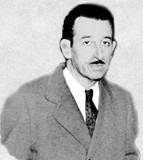
Arnold Axilrod
Murderer Gary Duane Rardon
Murderer · USA · 1962
Gary Duane Rardon killed a man in 1962 and later served 4 years for manslaughte…
4 victims
Gary Duane Rardon
Murderer · USA · 1962
Gary Duane Rardon killed a man in 1962 and later served 4 years for manslaughte…
4 victims
 Charles Howard Schmid
Murderer · USA · 1964
Charles Howard Schmid was born on 8 July 1942 and was adopted by Charles and Ka…
3 victims
Charles Howard Schmid
Murderer · USA · 1964
Charles Howard Schmid was born on 8 July 1942 and was adopted by Charles and Ka…
3 victims
 Thomas Ivey
Murderer · USA · 1993
Thomas Treshawn Ivey was executed by lethal injection in South Carolina on May…
3 victims
Thomas Ivey
Murderer · USA · 1993
Thomas Treshawn Ivey was executed by lethal injection in South Carolina on May…
3 victims
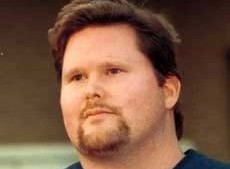 Richard Scott Baumhammers
Spree killer · USA · 2000
Richard Scott Baumhammers (born May 17, 1965) was an American immigration attor…
5 victims
Richard Scott Baumhammers
Spree killer · USA · 2000
Richard Scott Baumhammers (born May 17, 1965) was an American immigration attor…
5 victims
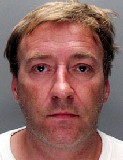 Graham Heaps
Murderer · United Kingdom · 2008
Defendant: Graham Heaps (44-year-old labourer) Victim: Francesca Bimpson (3-yea…
1 victim
Graham Heaps
Murderer · United Kingdom · 2008
Defendant: Graham Heaps (44-year-old labourer) Victim: Francesca Bimpson (3-yea…
1 victim
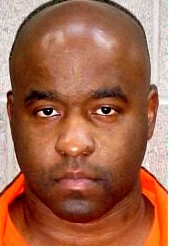 Aryon Williams
Murderer · USA · 1990
Aryon Williams was convicted in Superior Court (Pinal) of first-degree murder,…
1 victim
Aryon Williams
Murderer · USA · 1990
Aryon Williams was convicted in Superior Court (Pinal) of first-degree murder,…
1 victim
- Gender
- male
- Country
- USA
- Location
- Minneapolis, Minnesota, USA
- Date of birth
- 1905
- Age at first offence
- 50
- Characteristics
- rape
- Victim profile
- Elizabeth Mary Moonen, 21 (three months pregnant)
- Method of murder
- Strangulation
- Date(s) of murder
- April 23, 1955
- Years active
- 1955
- Date of arrest
- —
- Status
-
Died in custody
Sentenced to a minimum 5-year term; released in 1964 because of his health; died in Ohio in 1972
Case record: Arnold Axilrod
Background
Arnold Axilrod was a dentist. He was 49 years old and had a reputation as a ladies' man. His office was above the Hoop De Do nightclub at 16th Street and Nicollet Avenue. His patients were mainly nightclub performers and hat check girls. Since he began practicing in 1928, the only blemish to his reputation was an anonymous phone call made to the police six months before Mary Moonen was killed. The caller told police that Axilrod had sedated her during an office visit and raped her while she was unconscious, but the accuser refused to reveal her name or to file a complaint, so her allegations were never investigated.
The offence
John J. Cowles Jr., backing his Pontiac out of his Lake of the Isles garage in Minneapolis, noticed what appeared to be a bundle of clothes in the alley. When he got out of his car to inspect, Cowles discovered the lifeless body of a young woman.
When police arrived, they turned the body over and discovered that the woman's face had been scratched and bruised, and that her throat bore a bluish mark. Her body was found near Axilrod's home, and she was identified by her driver's license as Elizabeth Mary Moonen, age 21, of 9 East 17th St. in Minneapolis.
During the course of the autopsy, forensic pathologist John Coe discovered that Moonen was three months pregnant. Traces of semen in her vagina led him to conclude that she had intercourse just prior to her death. The autopsy also found that she was strangled. Coe described the injury to the throat consistent with manual strangulation.
The strongest evidence at trial included the autopsy report delivered by Dr. Fred Brauti, after Coe contracted hepatitis and his doctor refused to allow him to testify.
Investigation
After securing the crime scene, the body was transported to Minneapolis General. Forensic pathologist John Coe chose a young intern, Dr. Fred Brauti, as his assistant for the Moonen autopsy. That afternoon Brauti began the procedure by making a Y-shaped incision in Moonen's chest, opened the rib cage, and removed organs for Coe to examine. Coe examined the lungs, which were congested, which he considered a possible indicator of suffocation. Coe also found injury to the brain caused, it seemed, by a lack of oxygen rather than a blow. Coe found her facial injuries consistent with a struggle.
Coe examined Moonen's throat and stated:
"Very commonly in manual strangulation, the small bone in the larynx is crushed or fractured," he explains. "On the outside, you look for bruises. On the inside, you'll find bleeding at the site."
Coe found both the bruises and bleeding at the site and declared Moonen's death a homicide.
Police investigators drew up a list of suspects based on Coe's findings. Investigators first turned to Dr. Glen Peterson, who had signed the prescription. Peterson confirmed that Moonen was indeed his patient and told investigators that Moonen identified the baby's father as a local dentist named Arnold Axilrod.
A timeline of events discussed at trial included that Moonen's threat to expose Axilrod as the father occurred during a late night drive, and Moonen was discovered early on the morning of April 22, 1955. The preliminary investigation showed bruising and finger marks on her neck.
The prosecution and defense disputed the time of death. The pathologist, brought into court in a wheelchair suffering from hepatitis, put Moonen's time of death between 7 p.m. on April 22 and 5 a.m. the next morning. The prosecution argued the death occurred before midnight, while Axilrod's defense team argued it occurred after that time to provide an alibi.
The defense presented evidence that Mary had eaten a large meal and had engaged in sexual intercourse shortly before her death, and there was no indication the intercourse was anything but consensual. Two defense witnesses testified that no body was at the crime scene between 9:30 p.m. and 12:30 a.m. Axilrod showed no signs of any “marks, scratches, or blemishes.”
Arrest
After Mary’s body was discovered near his home, Axilrod was arrested four days after the discovery. When the police questioned Axilrod, he admitted that he'd given Moonen a ride on the evening of her death and that the two had quarreled.
Trial
In the fall of 1955, Axilrod went on trial for murder in Hennepin County District Court. The case had garnered national attention, and a seat in the courtroom was one of the hottest tickets going. Defending Axilrod was local criminal defense attorney Sydney Goff, which local newspapers took to calling "The new Clarence Darrow of the Midwest."
Before the trial began, Coe contracted hepatitis, and his doctor refused to allow him to testify. The strongest piece of evidence, the autopsy report, would be delivered by Dr. Brauti.
Coe recalled his participation and courtroom access, stating:
"I felt so bad for him," Coe recalls. "I considered myself to be inexperienced, and he had even less training and had to go up against Syd Goff in open court."
Coe also described attempting to convince his internist and later being allowed to testify in a wheelchair:
"At first he said I could go to court in my hospital bed, but there was no way I was going to do that. I was finally able to convince him to let me testify in a wheelchair."
Coe explained to the jury how the bruises on Moonen's neck were consistent with strangulation and what his internal examination confirmed. Coe said:
"I explained to the jury how the bruises on her neck were consistent with strangulation, and that my internal examination confirmed that conclusion, given that this is the only way to break or fracture the hyoid bone. I'd conducted a very thorough autopsy and was confident of my findings," Coe says.
At the end of the weeks-long trial, the jury found Axilrod guilty of manslaughter. The verdict was accompanied by a five- to twenty-year sentence, based on police work and on Coe's testimony.
After the trial, Coe said:
"The Axilrod case made me realize how little I knew about forensic medicine," Coe says. "I realized that if I was going to be called on in the future to testify in court, I was going to have to be better educated."
Coe also discussed training available at the time:
"At the time, however, the only formal training available was an eight-week course administered by the Armed Forces Institute of Pathology (AFIP)."
During the period after Axilrod’s arrest, nearly 2 dozen women came forward to confirm that he gave them seconal in his operatory and that they passed out. Axilrod admitted giving the women tranquilizers but said their fatigue might have contributed to their losing consciousness. Axilrod told the press from his jail cell:
“Some patients get pretty jumpy when you start to drill,” he told the press from his jail cell. “I prepared the capsule myself. I ground up a combination of seconal or nembutal with Anacin.”
The women did not accuse Axilrod of molesting them, and none showed any signs of sexual assault, including their clothes being disarranged. A teenager told police that one time she awakened in Axilrod’s office at 1 a.m. and that he had to drive her home. Mary’s sister testified that on one occasion Axilrod “talked suggestively” to her and another time had “made a pass at her.” Despite those interactions, she referred Mary to Axilrod when she needed dental work.
At trial, additional witnesses clouded the issue. Donald Newton, Mary’s brother-in-law, was brought from jail where he served a 90-day term for indecent exposure for entering a nurse's residence “partially unclad.” While behind bars, he reportedly told two cellmates that he “could crack the case wide open.” One cellmate was an alcoholic “unresponsive to treatment,” and the other was under psychiatric care; both claimed Newton told them that Mary knew Axilrod wasn't the father of her child and that, because he had money and a reputation to protect and had an opportunity thanks to the pills, she planned to extort money from him. On the stand, Newton refused to testify, taking the Fifth Amendment on the grounds that what he knew might incriminate him. The prosecution argued to have the prisoners’ statements excluded and to keep them off the stand. Newton was eventually convicted of being a habitual criminal and was given a life sentence.
A taxi driver testified that he saw Mary get out of Axilrod’s car and into another vehicle driven by two men.
Axilrod had made statements to police and later recanted parts of them. When police questioned him, his statement included that "[Moonen] accused me of being the father, and said she'd expose me to the world." When the police told him that Moonen had been choked to death, Axilrod replied:
"If she was strangled, I must have done it. I was the only one there."
The narrative also included Axilrod’s claim of blacking out and remembering nothing, with statements including: "From what you say, I must have pushed her out," and "There was no one else there." He also claimed that Mary threatened “to expose me to the world” and that this caused him to get “boiling mad” and “black out.” The narrative also states that after he regained his composure, he told police that Mary had disappeared, and that he never admitted killing Mary but conceded that “if I did it, I did it. Everything will come out all right in the end.”
During a confrontation in the Hennepin County jail, Fanny Axilrod confronted her husband. The exchange included:
“Did you do it?” she asked, referring to the pregnancy. “No,” he replied. “Will you swear to it?” Fanny asked her husband. “By God, I swear,” he replied.
Sentencing
The jury found Axilrod guilty of manslaughter and sentenced him to a minimum 5-year term, with a five- to twenty-year sentence referenced in connection with the verdict. Coe’s testimony and police work were described as central to the outcome. The sentence included a minimum 5-year term.
Appeals
No appeal details were included.
Outcome
Axilrod was released in 1964 because of his health. He died in Ohio in 1972.
Aftermath
The case was described as involving disputed facts not in evidence, including whether Mary brought about her death by pushing the wrong button at the wrong time. The narrative also stated that the coroner testified it was unlikely that Mary would have delivered the baby even if she had lived, and it was probable that at some point she would have spontaneously aborted the fetus.
Spotted an error, or have more information about this case?